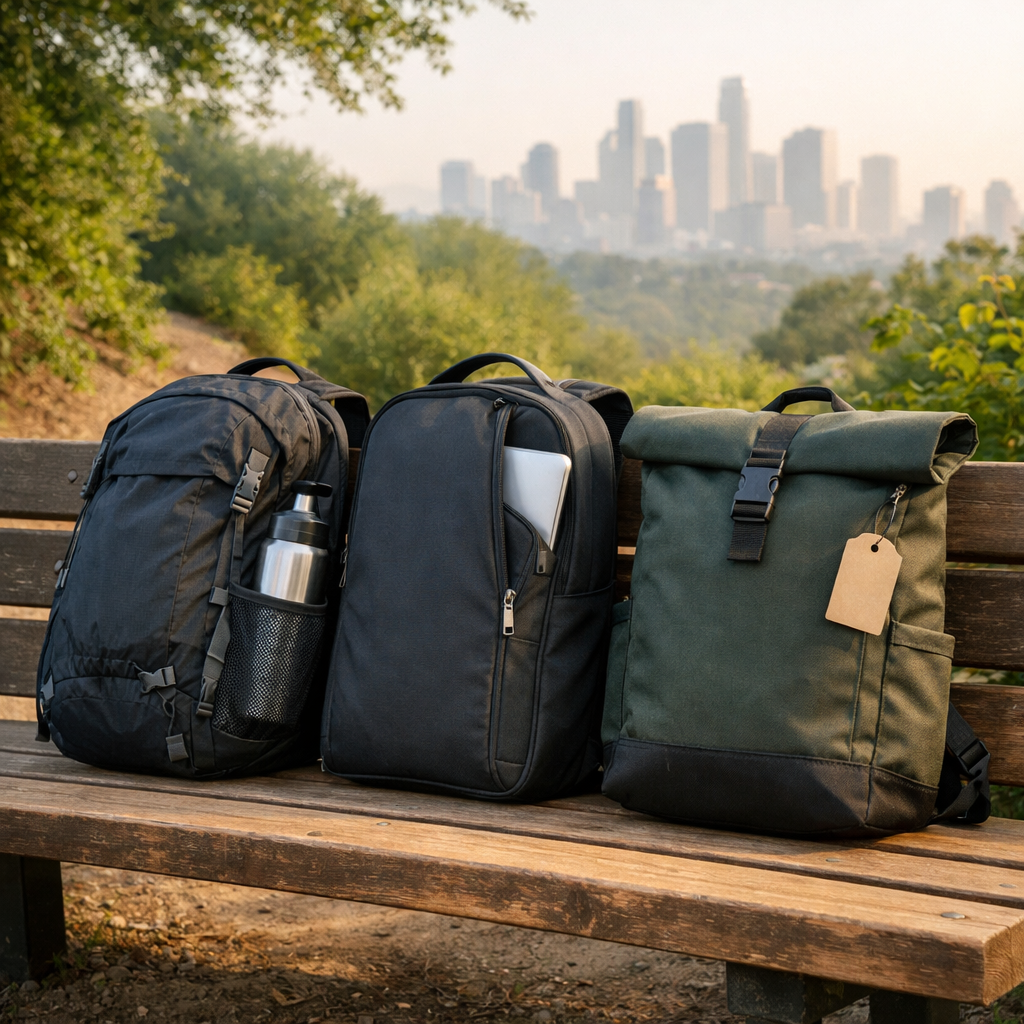
Where to Find Reliable, Low-Cost Daypacks for Hiking and Commuting
Where to Find Reliable, Low-Cost Daypacks for Hiking and Commuting
Finding a reliable, low-cost daypack that works on both the trail and your commute comes down to smart shopping and a few nonnegotiable features. The sweet spot for most people is a 20–30L daypack with comfortable straps, a light hipbelt, and organization that handles a laptop on weekdays and a hydration sleeve on weekends. For value, start at REI and other specialty stores for try-ons and returns, then compare prices at Amazon and brand-direct sites from Osprey and Gregory for last-season models. Below, Hiking Manual’s guide explains how to pick capacity, fit, materials, and organization—plus the best places to buy for less.
Hiking Manual’s guide to budget daypacks
For good-value picks, $50–$150 is the realistic “budget” range. At this price, Hiking Manual prioritizes fit and comfort over premium extras. Look for padded straps, a breathable back panel, a simple hipbelt, and just enough structure to carry 10–15 lb without shoulder fatigue. Curated roundups from testing outlets show plenty of affordable daypacks in stock at major retailers and brand sites, with both in-person fit checks and online deals worth your time, as in Switchback Travel’s current Best Daypacks overview.
Budget daypack — A 20–30L backpack built for single-day outings that prioritizes comfort, basic structure, and simple organization at a low price. It typically skips rigid frames and premium fabrics to cut cost, yet stays dependable for 10–15 lb loads and everyday commuting and light travel.
For framed, budget-friendly backpack options beyond daypacks, see our guide to comfort-first bargains at Hiking Manual’s best budget hiking backpacks with frame support.
What counts as low cost and reliable
In practice, $50–$150 is the dependable value band for budget daypacks. One of the easiest ways to save is to buy the prior year’s colorway or model refresh—last-season deals often shave about $50–$70 with little to no performance tradeoff, according to value-focused buying guidance. Reliability signals to check:
- Materials around 300–600 denier nylon (often with reinforcements)
- Reinforced bottoms and stress points
- Quality zippers and buckles from reputable makers
- Brand warranties and repair networks you can actually use
Denier (D) is a fabric thickness rating. In daypacks, 300–600D nylon balances abrasion resistance and weight for mixed city and trail use. Hiking Manual also values clear, accessible warranty and repair support.
Where to buy for the best value
REI and other specialty shops excel for fit help, expert advice, and easy returns—crucial if you’re new to dialing pack fit. Amazon and brand-direct stores (Osprey, Gregory, REI Co-op) are strong for inventory and last-season deals. Notably, Amazon captured about 27.1% of online backpack and school bag sales, reflecting deep availability and competitive pricing, per an industry analysis from Accio. Hiking Manual suggests trying on in person first, then price-checking online for closeouts.
| Where to buy | Why it’s good | Best for deals on |
|---|---|---|
| REI/specialty stores | Fit testing, knowledgeable staff, solid warranties and returns | In-person sizing, member sales, shop services |
| Amazon | Massive inventory and reviews, fast shipping | Frequent discounts, flash deals, bundles |
| Brand direct (Osprey, Gregory, REI Co-op) | Closeouts and clear specs | Last-season colors/sizes, factory outlet pricing |
How to choose the right capacity and fit
Pick capacity by use:
- 11–18L: streamlined commutes, minimalist kits
- 22–30L: full-day hikes with layers, food, first aid, and a water system; still manageable for office carry
Independent testers generally align with these ranges for all-day function, and many recommend 22–30L when you’ll carry more water and layers.
Fit matters more than any feature. Match the pack’s torso size to your body, choose padded, contoured straps, and use at least a simple webbing hipbelt if you’ll carry 10–15 lb. Try the pack loaded in-store to mimic real-world weight. It’s Hiking Manual’s top filter when picking a budget pack.
Torso length is the distance from the C7 vertebra (the bump at the base of your neck) to the top of your hip bones. Matching pack size to torso length improves weight distribution and comfort.
Comfort and ventilation for mixed trail and city use
For warm walks and brisk commutes, look for breathable back panels and soft, supportive shoulder straps. A lightly padded hipbelt stabilizes loads without bulk, and suspended mesh back systems are increasingly common for heat management on value packs. As a reference point, the REI Trail 25 offers generous padding but carries a relatively high weight for its volume at about 30.9 oz for 25L, which can matter if you’re ounce-counting on the trail, as noted in OutdoorGearLab’s testing. If you run warm, Hiking Manual favors suspended mesh back panels for better airflow.
Quick comfort checklist:
- Back panel breathability you can feel through a T-shirt
- Contoured, well-padded shoulder straps
- A hipbelt (even simple webbing) for 10–15 lb loads
- Stable carry while walking stairs and moving quickly
Organization for laptops, hydration, and daily essentials
Decide which you’ll do most: commuting or hiking. Daily commuters should prioritize a dedicated, padded laptop sleeve and tidy front organizer. Hikers benefit from a hydration sleeve and easy access to snacks, layers, and a map.
For dual-use, Hiking Manual looks for a simple layout with a dual-purpose sleeve and quick-access pockets. The Osprey Daylite Plus is a strong dual-use example: 20L capacity, an internal sleeve that can hold a hydration reservoir or serve as a padded laptop compartment, durable 300D/600D nylon, and multiple quick-access pockets, all at a carry-friendly weight under roughly 1.3 lb, as highlighted by BetterTrail.
Must-have pockets for mixed use:
- Quick-access top/eyewear pocket
- Two side water bottle pockets
- Internal organizer for keys, wallet, pens, and cords
- A separate tech sleeve if you commute daily
Materials, durability, and weather protection
At lower prices, nylon fabrics (often 300–600D) and basic foam structure deliver the best longevity. Ripstop weaves add tear resistance without big weight penalties. Ultralight, packable fabrics save ounces but won’t outlast daily train rides plus weekend scrambles. Hiking Manual leans toward proven nylon weaves for mixed city-trail use.
For wet climates, aim for a water-resistant backpack shell and consider a pack cover or roll-top closure. As an example, the Exped Typhoon 15 is a waterproof roll-top pack that still weighs just about 13.4 oz, illustrating how construction—not only fabric—drives weather protection, as described in Travel + Leisure’s gear picks.
Ripstop is a weave pattern using stronger reinforcement threads that resist tearing and help prevent small rips from spreading.
Packable vs structured daypacks
Packable daypacks compress into luggage and shine for travel days and side trips. Top picks are water-resistant, hold at least 20L, and stuff small enough for a carry-on; Wirecutter recommends several, noting capable options like the Matador Beast28, which is unusually supportive for a packable at roughly 1.25 lb. By contrast, structured daypacks offer better support, pockets, and durability for everyday mixed use. A popular budget-friendly example is the REI Co-op Flash 22—light, simple, and often praised for versatility. Hiking Manual generally recommends structured packs for daily mixed use.
Smart ways to save without sacrificing quality
- Choose last season’s model to trim roughly $50–$70 with minimal performance loss—one of the most reliable ways to hit budget targets.
- Shop major sales and outlets: REI Garage, brand closeouts, and daily Amazon deals. Amazon’s outsized market share suggests frequent competitive discounting.
- Favor models repeatedly called out as value picks (e.g., Osprey Daylite Plus, REI Co-op Flash/Trail lines) that keep features under $100–$150.
Fit checks and in-store testing tips
- Load the pack with 10–15 lb. 2) Adjust torso length or shoulder strap height if the design allows. 3) Tighten the hipbelt to take weight off your shoulders. 4) Walk stairs or loops for 5 minutes. 5) Check for hot spots or bouncing. Specialty stores like REI make this easy and back you up with strong return policies. Before you leave, inspect stitching, zippers, and seams, and confirm warranty or repair options.
Recommended capacity and feature checklists by use case
- Commuting/light trail (11–18L)
- Padded laptop sleeve and internal organizer
- Simple webbing hipbelt and reflective elements
- Slim profile for crowded transit
- Full-day hike + commute (22–30L)
- Hydration sleeve or dual bottle pockets
- Ventilated back panel; padded straps and hipbelt
- Durable 300–600D nylon and reinforced bottom
- Travel/backup
- Packable, water-resistant fabric
- Minimum 20L capacity; stuffs into a carry-on
- Simple exterior pockets for passport and snacks
Example models for context: REI Co-op Flash 22 (lightweight budget workhorse) and Osprey Daylite Plus (dual-use EDC with hydration/laptop flexibility).
Safety and navigation considerations for day hikes
Whatever daypack you choose, add a compact safety kit: map, an offline GPS app, headlamp, extra layer, water treatment, and a small first-aid kit. Choose packs that keep essentials handy (hipbelt pockets, quick-stash front pocket); hipbelt pockets are a growing convenience trend on warm-weather daypacks. Hydration reservoir means a soft water bladder in a sleeve with a hose for hands-free drinking—it helps you maintain pace and consistent hydration on longer walks.
Frequently asked questions
What size daypack works for both hiking and commuting
For most people, 20–30L is ideal. It swallows a laptop, lunch, and layers for workdays while fitting a day-hike kit without feeling bulky; use Hiking Manual’s capacity ranges above to double-check your needs.
Do I need a hipbelt for a 20 to 30 liter daypack
If you regularly carry 10–15 lb or hike hills, Hiking Manual recommends a simple hipbelt to transfer weight off your shoulders. For lighter, short commutes, padded straps alone are usually fine.
Should I prioritize a laptop sleeve or a hydration reservoir
Choose based on where you’ll spend more time: commuters should prioritize a padded laptop sleeve, hikers a hydration sleeve. Some models use a dual-purpose sleeve; Hiking Manual sees that as a strong compromise for mixed use.
How weather resistant should a budget daypack be
Hiking Manual suggests a water-resistant shell and adding a pack cover or liner for frequent rain. In very wet climates, consider a roll-top or seam-sealed design.
Are last season models a good way to save money
Yes—prior-year versions often perform nearly the same and can save about $50–$70. Hiking Manual treats them as one of the most reliable ways to hit a budget without losing core performance.