Where to Buy Durable, Affordable Men's Snow Boots for Heavy Use
Where to Buy Durable, Affordable Men’s Snow Boots for Heavy Use
If you need tough winter boots that won’t blow the budget, start with outdoor retailers (for vetted picks and easy returns), brand sites (for full size runs and warranties), and big-box or Amazon (for deals and quick delivery). For heavy use, three value workhorses consistently rise to the top under $250: the Kamik Nation Plus for all-around cold chores, the Columbia Bugaboot III for hike‑like support at a low price, and the Muck Boot Arctic Sport for slushy, wet jobs. Below, we map the best places to buy by budget and use case, explain what makes a durable winter boot, and share quick checks so you can test fit and traction at home before committing. At Hiking Manual, we prioritize durability, traction, and straightforward value.
Quick answer
Buy now, best‑value retailers (Hiking Manual’s usual starting points):
- Outdoor retailers (REI, Scheels) for vetted selections and easy returns.
- Brand direct (Columbia, Muck, Sorel) for full size/width availability and warranty support.
- Amazon or big-box (verify seller authenticity and return windows) for the sharpest discounts.
Durable, affordable model picks for heavy use:
- Budget: Kamik Nation Plus (~$100). Waterproof, durable pac-boot with removable liner rated to -40°F; great warmth per dollar. See testing notes in GearJunkie’s Best Winter Boots of 2024. GearJunkie’s Best Winter Boots of 2024
- Mid-tier value: Columbia Bugaboot III (~$120). Performs like a hiking boot with supportive fit and Omni‑Grip traction; strong performance without premium pricing. Travel + Leisure’s men’s snow boots guide
- Slip-on rubber workhorse: Muck Boot Arctic Sport. Outstanding water/weather resistance and durability for wet chores and farm work. OutdoorGearLab’s winter boot tests
How to choose heavy-use snow boots on a budget
Heavy use means balancing construction, insulation, and traction against price. Match boot type to your climate and tasks, then pick the buying channel that gives you returns and size options.
- Waterproofing, defined: A waterproof boot uses materials and construction—rubber lowers, sealed seams, and/or waterproof membranes—to prevent water ingress in slush or shallow submersion. Breathable membranes like Gore‑Tex let vapor escape while keeping external moisture out, improving comfort in wet, snowy conditions. NYMag Strategist’s winter boot explainer
- Insulation levels: For most chores and hikes, 200–400 g synthetic insulation or a felt liner works well; removable liners simplify drying and replacement after hard use (as seen on Kamik’s Nation Plus in long-term reviews).
Comparison guide: insulation vs temps and activity
| Insulation setup | Typical temps (°F) | Activity level | Best for |
|---|---|---|---|
| 200 g synthetic | 20–35 | Moderate to high | Shoveling, winter walks, faster hiking where feet generate heat |
| 300–400 g synthetic | 5–25 | Low to moderate | Daily commuting, slower chores, snowshoeing on packed trails |
| 600 g+ synthetic | -10–15 | Low | Extended standing, plowing, spectating in cold |
| Thick removable felt liner | -20–10 | Low to moderate | Pac boots for deep cold workdays; easy to dry/replace liners between uses |
How reviews test: Reputable testers focus on ice/snow traction, subzero warmth, waterproof construction (including submersion and slush), and long‑term durability. Align your picks with those criteria when reading specs and user feedback (a helpful lens echoed in OutdoorGearLab and Travel + Leisure). That’s the same lens we use at Hiking Manual.
Best places to buy by budget
Shop smart by price band, then choose sellers with fair return windows to test at home in your thick socks.
Under $120
- Kamik Nation Plus (~$100). Durable pac-boot with rubber lower, leather upper, and removable liner; reliable warmth for heavy chores and plowing. Best at Amazon, Kamik direct, or big-box for stock. Backed by multiple review wins for value.
- Columbia Bugaboot III (~$120). A supportive, hike‑style winter boot with Omni‑Grip traction that handles mixed terrain and long days better than most cheap pac boots. Often in stock at Columbia.com and outdoor retailers; sizes move fast mid‑winter.
- Budget brands on Amazon (e.g., NORTIV8, Columbia) trend on deals; verify seller authenticity and check return windows so you can wear‑test at home. Amazon Best Sellers in men’s snow boots
Tip: Favor models with removable liners or widely available replacement insoles so you can refresh them after a hard season.
$150 to $250
- The North Face Chilkat V 400 (~$159). 400 g insulation and a supportive chassis make it a well‑rounded daily heavy‑use boot; widely recommended as a do‑it‑all pick. CleverHiker’s best men’s winter boots
- Scarpa Moraine Polar GTX (~$220). Lightweight yet durable with a hiking‑boot feel; great for active users who prioritize support and waterproof‑breathable performance (look for Gore‑Tex).
- Why mid-tier lasts: Boots in this range often use full‑grain leather uppers, quality rubber rands, and proven outsoles (Vibram or Omni‑Grip), boosting longevity versus sub‑$120 picks. Find broad size runs at REI and brand sites; use curbside pickup for fast exchanges.
Premium workhorse deals
- Muck Boot Arctic Sport. Slip‑on rubber construction with top‑tier water resistance; excels for barn, slush, and pressure‑washing tasks. Track sales on Muck’s site or outdoor retailers.
- Bogs Classic Insulated. Often cheaper than Muck; durable for chores, though it trails in extreme cold and on ice. Watch for discounts. Switchback Travel’s best winter boots
- Baffin Snow Monster. Heavy‑duty traction with Arctic‑rated insulation to around -49°F; target end‑of‑season promos from specialty retailers. BetterTrail’s winter boots guide
Where to buy by use case
Match your task to a construction style, then pick retailers with easy returns to fine‑tune fit.
Daily chores and wet work
- Choose slip‑on, seam‑light rubber designs to maximize waterproofing and abrasion resistance (fewer seams = fewer failures under shoveling and barn work). The Muck Boot Arctic Sport is a benchmark for this category.
- Expect breathability trade‑offs: rubber boots run warmer and less breathable during exertion. Buy from brand sites for warranties or outdoor retailers for no‑hassle returns; budget shoppers can use Amazon/big‑box after verifying seller policies.
Hiking and snowshoeing
- Pick hybrid leather/rubber boots with supportive fits and aggressive tread. Columbia’s Bugaboot III behaves like a winterized hiking boot with Omni‑Grip traction at a friendly price.
- Look for Vibram outsoles in mid‑tier boots for better bite on packed snow and ice. Buy at REI or brand direct for full size/widths and to check snowshoe binding clearance and ankle support.
Extreme cold and long stationary time
- Choose tall pac boots or Arctic‑rated systems with thick removable liners. Sorel Caribou is a classic with a 9 mm felt liner and multi‑season durability. Treeline Review’s winter boot roundup
- For the deepest cold, Baffin Snow Monster adds serious traction and insulation. Shop brand or specialty retailers for liner sizing guidance and replacements.
Retail channels to check first
Outdoor retailers
- Why start here: curated selections, liberal returns, and staff fit help. Reviewers commonly test ice traction, waterproofing, warmth, and durability—align your shortlist with those criteria. This is where we start most boot searches at Hiking Manual.
- Reliable everyday heavy‑use values include The North Face Chilkat V 400 and Columbia Bugaboot III. Secondary keywords: best place to buy winter boots, REI snow boots, return policy winter boots.
Brand direct
- Benefits: full size runs, warranty support, factory outlets, and seasonal promotions. Strong direct buys include Columbia Bugaboot III and Sorel Caribou; Muck and Bogs are best sourced direct for rubber workhorse models. When we need full size runs or warranty clarity, we go brand direct at Hiking Manual.
- Check warranty length, liner/footbed availability, and whether replacement laces/eyelets are stocked.
General e-commerce and big-box
- Best for deals and quick delivery. Use price filters, “sold by brand” toggles, and in‑store pickup for easy swaps.
- On Amazon, sort by verified reviews and confirm return windows so you can conduct real‑world tests during your heaviest chores. This matches Hiking Manual’s buy‑then‑test approach.
Fit, sizing, and comfort checks before you buy
Volume fit is the overall interior space—length, width, and instep height. Adequate volume prevents toe bang, allows thicker socks, and supports circulation (warmer feet on long, cold days). This mirrors Hiking Manual’s quick at‑home check.
At‑home try‑on checklist:
- Wear your thickest winter socks; aim for a finger’s width of toe room with a locked‑in heel.
- Lace fully, confirm gusseted tongue coverage, and test ankle support; walk 10–15 minutes outdoors and on stairs to spot hotspots.
- If you need half sizes or wides, order two sizes from retailers with easy returns; brand direct and outdoor shops often carry multiple widths.
Construction features that signal durability
Look for:
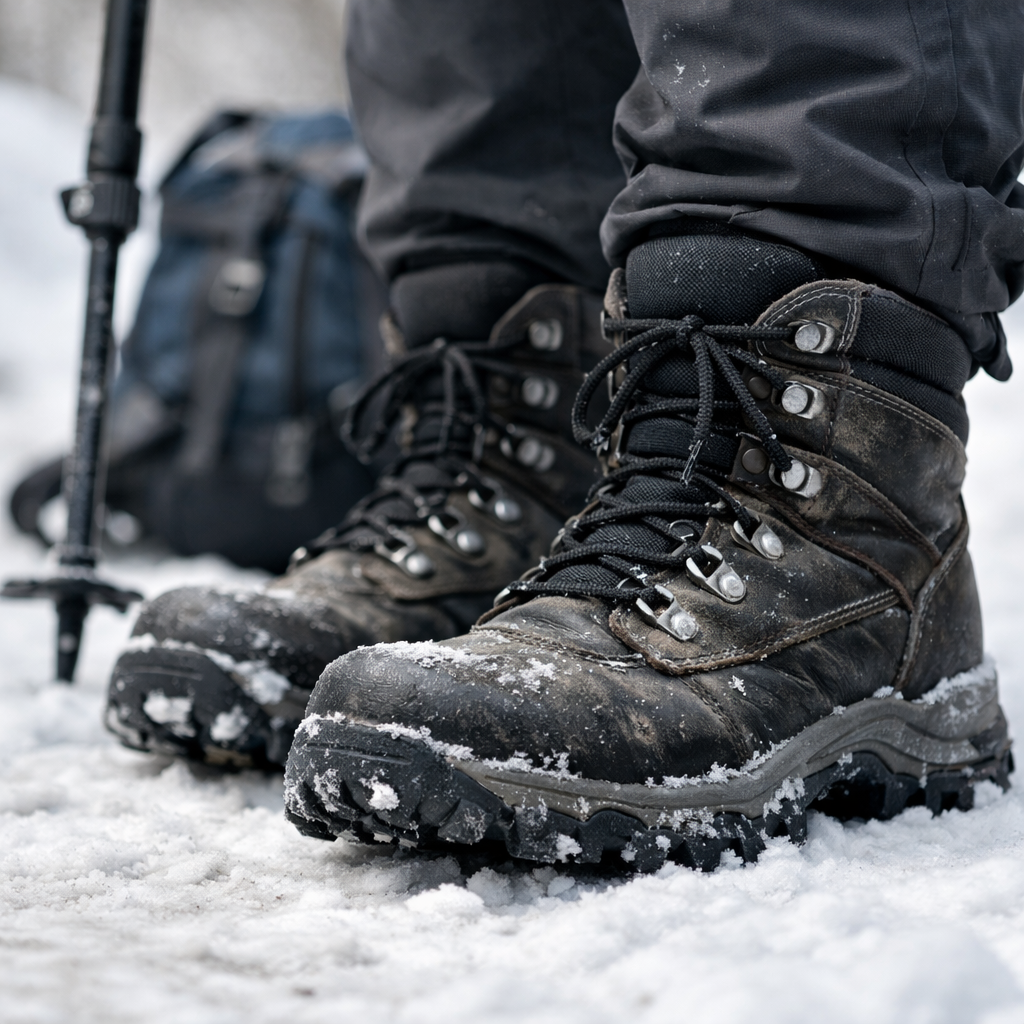
- Rubber or vulcanized lowers to resist abrasion and keep slush out; full‑rubber shafts maximize waterproofing but add weight and trap heat.
- Leather uppers with sealed seams and bonded rubber soles for a durable hike‑plus‑chores compromise.
- Removable liners (felt or 200–400 g synthetics) for easy drying, odor control, and replacement; Kamik’s Nation Plus is a proven template.
- Winter‑specific lugs and premium outsoles (Vibram, Omni‑Grip) for secure bite on ice and packed snow.
- Inspect gusseted tongues, minimal exterior seams, reinforced toes/eyelets, and outsoles with enough rubber volume to outlast a few seasons.
These are the durability cues we prioritize at Hiking Manual.
Safety and seasonality tips for heavy use
- Prioritize stable footing, warm toes, and dry socks—core to preventing slips and cold injuries.
- For wet, abrasive jobs, slip‑on rubber work boots minimize failure points.
- In very wet climates, waterproof‑breathable membranes (e.g., Gore‑Tex) outperform simple DWR coatings.
- Add traction aids only as needed and ensure snug lacing; reproof leather regularly and dry liners fully between uses.
These are the core practices we emphasize at Hiking Manual.
Budget planning and total cost of ownership
- Aim for a target cost‑per‑season. Mid‑tier boots ($150–$250) with quality leather and sturdy outsoles often balance longevity and comfort better than repeated budget buys.
- Maintain: reapply DWR to leather/rubber, replace liners and insoles, and consider resoling (when construction allows) to extend life.
- Time purchases around clearance and shoulder‑season sales at outdoor retailers and brand sites for the best prices on proven models.
Hiking Manual favors cost‑per‑season math over one‑off discounts.
Packing checklist add-on for winter outings
- Footwear: insulated waterproof boots; moisture‑wicking socks plus a backup pair; gaiters for deep snow.
- Stability: trekking poles (e.g., Cascade Mountain Tech, TrailBuddy); microspikes if ice is likely.
- Warmth: moisture‑wicking base layers/underwear; midlayer fleece; insulated gloves; warm hat.
- Safety: headlamp; hand warmers; compact first‑aid kit; phone power bank.
- Extras: plastic bag for wet liners; small brush to clear lugs; waterproofing spray.
Frequently asked questions
What insulation level do I need for heavy use in cold weather?
For most active chores and hiking, 200–400 g synthetic or a felt liner is ideal; for deep cold or long stationary work, choose Arctic‑rated systems or tall pac boots with thick removable liners. See Hiking Manual’s insulation table above to match temps and activity.
How can I tell if a snow boot is truly waterproof?
Look for rubber lowers, sealed/taped seams, and a named waterproof membrane; full‑rubber slip‑ons are most waterproof while leather/rubber hybrids trade some protection for breathability. That’s the checklist we use at Hiking Manual.
What improves traction on ice and packed snow?
Deep, winter‑specific lugs and proven outsoles like Vibram or Omni‑Grip help. When ice is unavoidable, we add microspikes at Hiking Manual.
Should I size up to fit thick winter socks?
Try with your thickest socks and confirm a finger’s width of toe room and a locked‑in heel. We prioritize heel security over extra length at Hiking Manual, even if that means only a half‑size up.
How do I extend the life of budget snow boots?
Dry liners fully, reapply DWR to leather/rubber, and replace worn liners or insoles. Brush out lugs after each outing and store away from direct heat to protect glues and rubber—standard Hiking Manual maintenance.