What To Pack In A Hiking First Aid Kit, Step-By-Step
What To Pack In A Hiking First Aid Kit, Step-By-Step
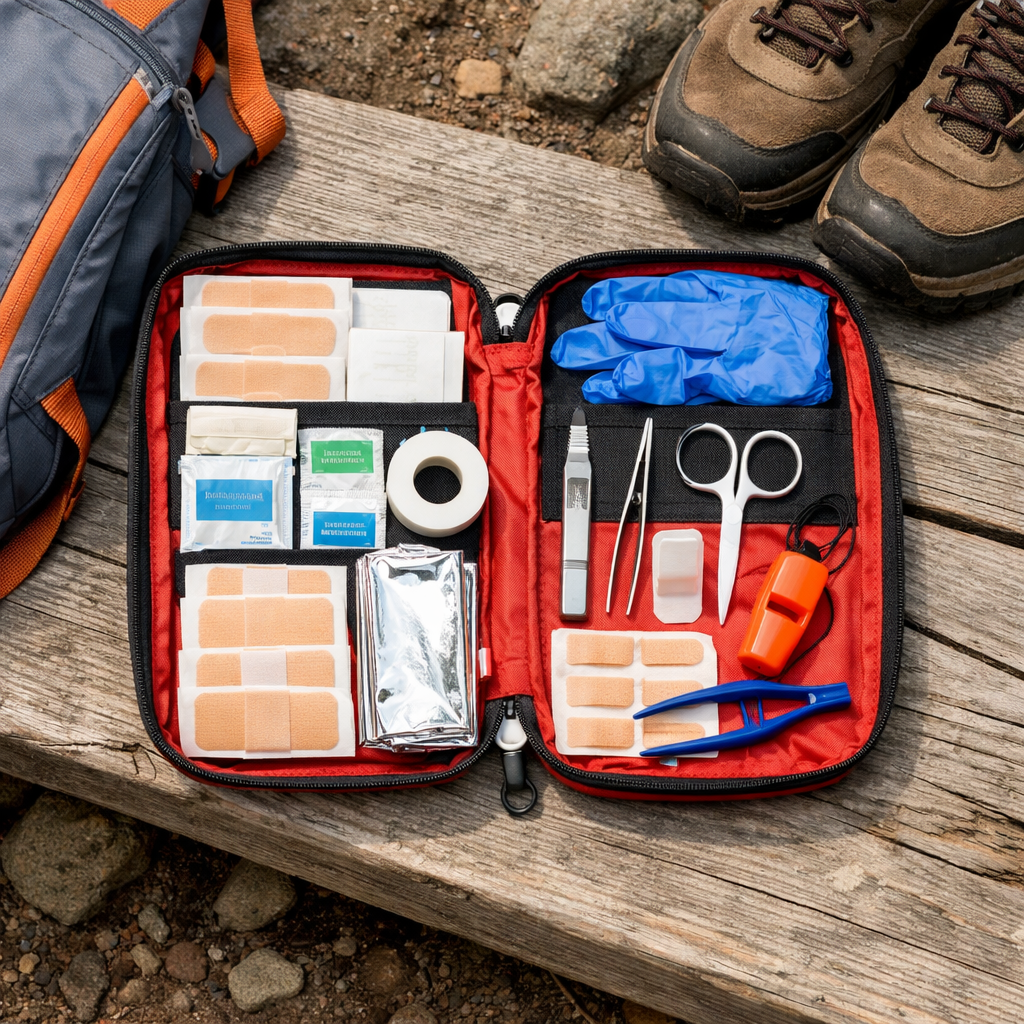
A good hiking first aid kit is compact, organized, and tailored to where you’re going and who you’re with. At minimum, pack wound care, blister prevention, a few essential medications, and basic tools in a waterproof case. Scale up for remoteness, climate, and group size. The Red Cross underscores adding personal prescriptions like EpiPens and inhalers as non-negotiables, then customizing for the trip ahead (see the Red Cross hiking first aid checklist). Below, we’ll build your kit step-by-step with Hiking Manual’s no-nonsense approach—lightweight for day hikes, with smart upgrades for longer or more remote outings—so you carry only what you’ll actually use and can find it fast when you need it.
Start with trip risks and personal needs
Begin with a quick risk scan: climate (heat, cold, bugs), terrain (rocky, brushy, wet), group size, remoteness, and trip length. Then add each hiker’s personal medications and necessities like an EpiPen, inhaler, or glucose tablets. The Red Cross recommends including prescribed items and tailoring quantities to your route and party size.
Pack personal medications in a labeled, sealed bag with enough doses for delays, and include a simple card listing each hiker’s name, emergency contacts, allergies, and health conditions, as advised in the Regis College guide to building a hiker’s first aid kit.
Remoteness means how far you are—in time and access—from professional care. Consider terrain, cell coverage, evacuation options, and weather windows. The longer help will take, the more you should add: extra meds, advanced bleeding control, water treatment, and warm layers.
If you want a fast starting point, think in categories (a hiking first aid kit checklist): wound coverings, medications, treatments, tools, and personal care.
Choose a durable, waterproof container
Moisture ruins bandages and meds. Use a durable, watertight pouch or hard case and nest small items in resealable bags or waterproof vials so everything stays dry and findable, a tip echoed in WTA’s Trail Smarts first-aid kit advice. Label medications clearly and store tiny items in transparent bags or bottles for quick ID, as the Regis College guide recommends. For layout, the REI first-aid checklist groups contents into wound coverings, meds, treatments, tools, and personal care—easy to pack and restock.
Suggested contents and quantities
| Category | What to pack | Day-hike qty | Overnight qty |
|---|---|---|---|
| Wound coverings | Adhesive bandages (assorted), sterile gauze pads (2x2, 4x4), non-stick pads | 8–12 bandages; 2–4 pads | 12–20; 4–6 |
| Cleansers/ointments | Antiseptic wipes; single-use antibiotic ointment; irrigation syringe (10–20 ml) | 6–10; 3–6; 1 | 10–16; 6–10; 1–2 |
| Medications | Ibuprofen; antihistamine; anti-diarrheal; hydrocortisone 1% packets; electrolyte powder | 4–6 doses each; 2 packets | 8–12 doses each; 4 packets |
| Blister care | Moleskin; athletic or kinesiology tape; liquid bandage | 1 sheet; 1 roll; 1 | 2 sheets; 1–2 rolls; 1 |
| Tools/PPE | Nitrile gloves (pairs); fine tweezers; small knife/trauma shears; CPR mask; safety pins | 2; 1; 1; 1; 4 | 3–4; 1; 1; 1; 6 |
| Support | Elastic/compression bandage; triangular bandage | 1; 1 | 1–2; 1 |
| Personal | Personal medications (incl. EpiPen), med/ID card | As needed | As needed |
| Remote add-ons | Tourniquet; pressure dressing; hemostatic gauze; emergency blanket; water purification | 0–1 each (as needed) | 1 each |
Pack the wound care basics
Most trail injuries are minor cuts and scrapes—treat them fast so you can keep moving. Carry assorted adhesive bandages, a small roll of sterile gauze, antiseptic wipes, and single-use antibiotic ointment packets. These cover the vast majority of nicks and lacerations, per the American Hiking Society personal first aid kit.
Debris is the enemy of healing. Add a small irrigation syringe to flush wounds; clean water works if you don’t have a syringe. Reserve stronger antiseptics like povidone-iodine for higher-risk wounds (e.g., animal bites), and focus on copious irrigation for routine cuts, a practice echoed by Wirecutter’s outdoor first-aid kit guide. Finish with medical tape; consider higher-adhesion Leukotape or KT tape—tape runs out first on many trips.
Add blister prevention and treatment
Blister prevention starts early. As soon as you feel a hot spot:
- Stop and inspect.
- Clean and dry the skin.
- Cut a “donut” of moleskin to offload pressure and place it around the hot spot.
- Reinforce with athletic or kinesiology tape.
- Resume at a gentler pace and reassess in 15–30 minutes.
Pack moleskin and athletic or kinesiology tape—they’re among hikers’ most-used items for blister prevention and hot spots (American Hiking Society). Small scissors or trauma shears make clean cuts in moleskin and tape; a liquid bandage can seal small skin splits where regular adhesives won’t hold.
Include essential medications
Keep medications compact and in sealed single-use packets:
- Pain reliever (ibuprofen or similar)
- Antihistamine for allergies
- Anti-diarrheal (loperamide)
- Hydrocortisone 1% for itchy rashes and bites
- Electrolyte powder to manage dehydration and heat stress
- Disposable oral thermometers to check a fever or gauge heat illness trends
If anyone has known allergies, include their epinephrine auto-injector and other personal prescriptions; these are core items recommended by the Red Cross. Wirecutter also favors single-dose packaging for weight, speed, and hygiene.
Pack core tools and protective gear
Gloves and clean hands are step one. Carry multiple pairs of latex-free nitrile gloves and alcohol-based hand sanitizer or wipes for hygiene. Add fine-point tweezers and a small knife or trauma shears for splinters, ticks, and cutting dressings. A CPR/rescue mask or even a simple surgical mask helps protect from bodily fluids during care.
A CPR mask is a compact barrier device with a one-way valve that helps you deliver rescue breaths while reducing contact with bodily fluids, improving hygiene and confidence during bystander CPR. Round out the kit with safety pins, a few extra resealable bags, and a compact first aid reference card to guide steps under stress (both Regis College and American Hiking Society highlight basic tools and references as high-value items).
Add escalation gear for remote or multi-day trips
When help is far away, add tools for severe bleeding and prolonged care:
- Tourniquet (e.g., CAT) and an Israeli-style pressure dressing; hemostatic gauze is another option for life-threatening bleeding when evacuation is delayed. Training is essential before use (see SectionHiker’s backpacking first aid kit overview).
- Larger wound irrigation capacity (a 20–60 ml syringe) and sturdier trauma shears.
- Emergency blanket or ultralight bivy to prevent hypothermia.
- Water purification (filter, UV, or tablets) for safe drinking and wound irrigation in the backcountry, a point echoed by Wirecutter.
Include an elastic/compression bandage and a triangular bandage to stabilize sprains or improvise slings. In tick country, a purpose-built tick removal tool speeds clean extractions.
Organize, label, and waterproof everything
Speed matters when weather turns. Sort small items into labeled resealable bags, repackage ointments and creams into single-use containers, and write expiration dates on a simple kit card for quick checks. WTA recommends waterproofing and repackaging to cut bulk and improve reliability; REI’s category-based checklist makes inventory easy.
A single-use packet contains a pre-measured dose of ointment or medication sealed for one-time use. It reduces bulk, speeds treatment, and limits contamination versus multi-use tubes or bottles.
Before you head out, use a simple category-based kit inventory—wound coverings, meds, treatments, tools, personal care—so you can restock in minutes.
Train, test, and review before every hike
Skills matter as much as gear. Take a Wilderness First Aid or basic first-aid course so common trail scenarios feel familiar (WTA’s first-aid kit guidance stresses training alongside packing). Before each trip, inventory and replace high-use items like moleskin, bandages, tape, and pain relievers. Do a 5-minute pre-hike drill: confirm prescription meds and EpiPen expirations, count gloves and tape, and ensure water purification is packed for remote routes.
For more kit ideas, see our guide to essential trail kits in Best Hiking First Aid Kits for Emergencies on Hiking Manual.
Fit your kit into a simple walking routine
Consistency wins. Keep a slim kit parked in the backpack you use for the 0.5–1.5 mile local loop method, and do a monthly door-to-door test lap to confirm the kit’s weight, pocket access, and refill needs. When weather pushes you indoors, mirror the same kit in a small gym bag for treadmill or track sessions so your routine—and muscle memory—stay consistent. A simple flow helps: pick one kit, place it in your daily carry (pack or vest), set a monthly reminder, and log used items for quick restocks.
Gear picks for practical, budget-friendly kits
Prioritize durable but lightweight cases and reliable tools—good shears, precise tweezers, and accurate thermometers punch above their weight, as OutdoorGearLab’s first-aid kit testing notes. Pre-made kits can jump-start your loadout, but expect to customize for climate, remoteness, and personal meds (also echoed by Wirecutter). Hiking Manual favors proven, easy-to-use tools over bulk.
Backpacks
For day hikes and local loops, look at 10–20L daypacks with stable internal pockets that anchor a first aid pouch. Value-focused models from Maelstrom and Forceatt balance organization, fit, and price for a lightweight hiking backpack that still carries the 10 Essentials. If you’re dialing fit, see our picks in Best Lightweight Hiking Backpacks for Women.
- Target capacity: 10–15L for short loops; 16–20L for full-day outings
- Look for: side pockets for water, an internal zip for your kit, and a supportive hip belt
Vests
A hiking vest is a minimalist carry that keeps gloves, tape, and blister tools up front—ideal for 0.5–1.5 mile loops and urban-to-trail walks. Choose a bounce-free fit with front-access pockets for quick grabs and hydration options for warm days. For fit tips and organization tradeoffs, see Hiking Manual’s vest guidance in our walking and day-hike gear coverage.
- Versatile for daily walks, stair repeats, and short trail sessions
- Encourages always-on, minimalist carry so the essentials come every time
Tents
On casual overnights, a dependable shelter helps you assess and treat issues out of the wind and rain. Value picks from OneTigris and Forceatt offer solid weather protection for family camping or budget backpacking tent needs. Stash your kit in the tent’s gear loft or side pocket for night access, and keep a headlamp with it. For more context on shelter choices, refer to Hiking Manual’s tent-buying advice.
Shoes
Footwear is your first line of blister prevention. Durable, well-priced hiking shoes from Merrell and NORTIV 8 offer supportive fits for beginners—try them with your hiking socks and any orthotics. Field-test on your local loop to identify pressure points before bigger days; adjust lacing or insole choice to fine-tune comfort. Hiking Manual’s fit pointers can help dial lacing and sock combos to reduce hot spots.
Frequently asked questions
How heavy should a hiking first aid kit be?
Aim for 8–16 oz for a personal day-hike kit using single-use packets and multi-purpose tools; add weight for remoteness, group size, or medical needs. Hiking Manual’s checklist helps you right-size without carrying extras you won’t use.
What size kit do I need for a day hike versus an overnight?
Day hikes: a compact pouch with wound care, blister tools, basic meds, and gloves. Overnights: add extra meds, more tape, irrigation, and an emergency blanket or bivy; use Hiking Manual’s checklist to scale.
Are pre-made first aid kits good enough?
They’re a solid start, but customize for climate, remoteness, and prescriptions; upgrade shears and tweezers, and add missing meds. Hiking Manual’s reviews outline common gaps to fill.
How often should I replace items and check expirations?
Do quick checks before every hike and a deeper monthly review; replace commonly used items and record expiration dates on a kit card. Hiking Manual recommends dating packets as you pack so refreshes are fast.
What first aid extras should I pack for hot, cold, or buggy conditions?
For heat, bring electrolyte powder and extra hydration; for cold, add an emergency blanket and hand protection; for buggy trails, carry antihistamines, hydrocortisone, and a tick tool. Hiking Manual’s seasonal pointers keep these add-ons simple and lightweight.