Water-Resistant vs Water-Repellent Puffer Vests: Eco Insulation Explained
Water-Resistant vs Water-Repellent Puffer Vests: Eco Insulation Explained
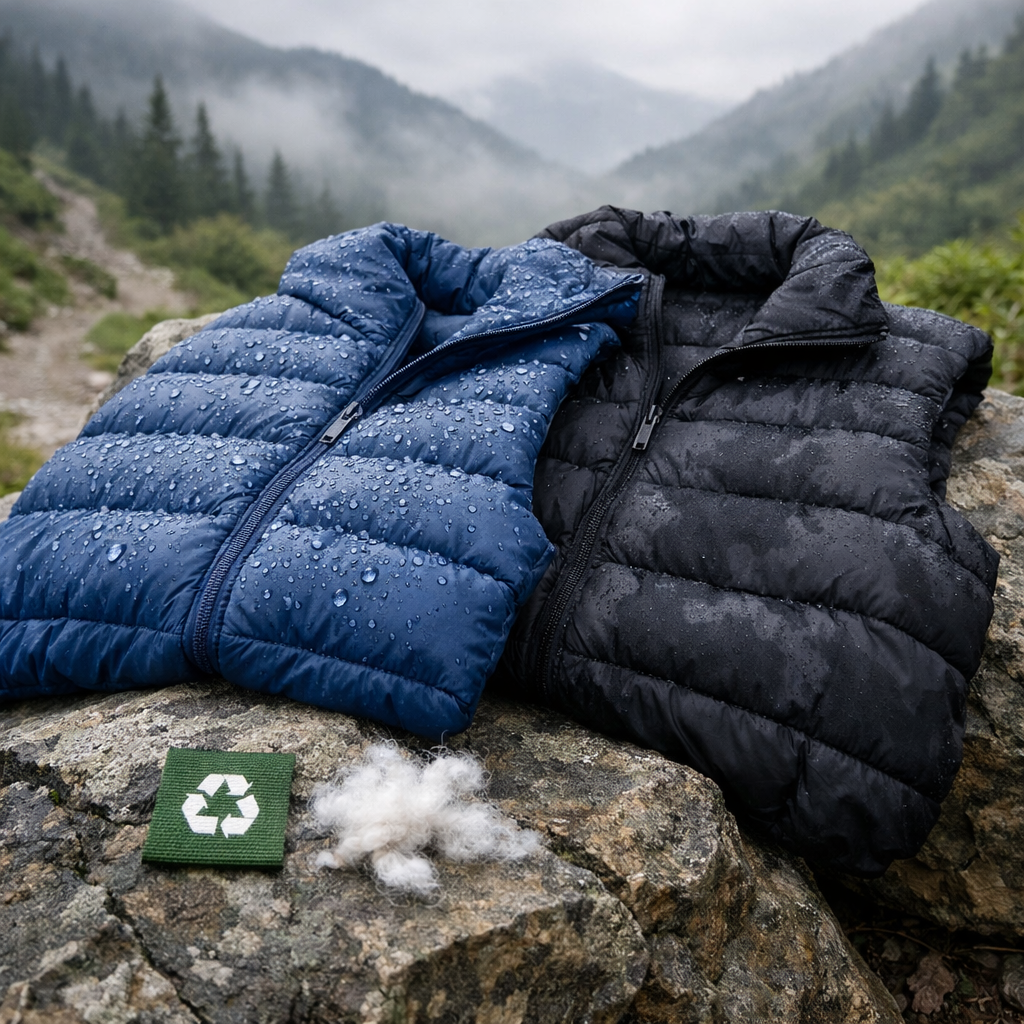
A puffer vest can be both water-resistant and eco-conscious—many models pair tight-weave nylon or polyester shells with recycled synthetic fill or responsibly sourced (RDS) down. Water-resistant sheds light rain or snow, while water-repellent is a surface treatment that briefly beads moisture. For damp hikes, recycled synthetic insulation is the safer bet because it stays warmer when wet and dries faster than down—and it’s the option Hiking Manual typically recommends for mixed conditions. Below, Hiking Manual breaks down how water-repellent vs. water-resistant protection actually feels on trail, and which eco insulation suits your climate, pace, and layering system.
Quick answer for hikers
Yes—you can get a water-resistant puffer vest with eco insulation (recycled synthetic or RDS down). Expect it to handle mist, flurries, and brief showers, but not downpours, which will eventually overwhelm the fabric’s resistance, as outlined in Puffit’s comparison of water protection levels.
“Water-resistant protects against brief, light moisture; waterproof blocks water under pressure and typically uses membranes and taped seams” (Trespass’s jacket advice). For eco options, recycled polyester fills and RDS down are common—synthetic retains warmth better when damp (as noted in ExplorersWeb’s puffer vest guide).
What water-repellent means
Water-repellent refers to a surface treatment—most often a Durable Water Repellent (DWR) finish—that lowers surface tension so water beads and rolls off instead of soaking in. It’s excellent for short, light exposure, adds water-shedding with minimal weight, and needs periodic restoration as the finish wears off with use and washing (Gorewear on water-resistant vs. waterproof gear). When beading fades, reproof the DWR to regain rain protection.
What water-resistant means
Water-resistant indicates the shell fabric itself—a tight-weave nylon or polyester vest, often with a DWR finish—can resist light rain or snow but will wet-out with sustained exposure. It’s below waterproof in protection, yet typically more breathable and packable for everyday layering. As a rough benchmark, Hydrostatic Head around 1,500 mm is often cited as the lower bound of “resistant,” though consumer vests rarely list lab ratings (Triple F.A.T. Goose’s explainer).
How they differ in real trail use
- Water-repellent (DWR-forward) vests bead water briefly and shine during drizzles or high-output climbs; they need periodic reproofing as beading declines.
- Water-resistant vests add a tighter shell weave for better passive protection in light rain/snow, but they’ll still wet-out over time.
- Waterproofing generally adds weight and stiffness and can reduce breathability; most vests remain water-resistant for comfort during movement. In heavy or prolonged rain, Hiking Manual advises layering a waterproof shell over your vest (a common styling and function tip in Travel + Leisure’s outerwear picks).
Feature-by-feature at a glance:
| Feature | Water-repellent (DWR-treated) | Water-resistant (tight-weave + possible DWR) | Trail impact |
|---|---|---|---|
| Water shedding | Excellent initial beading | Good beading + slower soak | Comfort in light precip |
| Exposure tolerance | Minutes in drizzle/spray | Light rain/snow; eventual wet-out | Plan bail-out or shell |
| Breathability | High | High–moderate | Better for active hikes |
| Maintenance | Needs reproofing | Needs reproofing | Restore when beading fades |
| Best use | Intermittent drizzle, fast pace | Cool, mixed weather, daily wear | Bring a waterproof shell if forecast turns |
Eco insulation options explained
Two proven fills dominate: down and synthetic. Down delivers the best warmth-to-weight and compressibility but loses loft when wet. Synthetic insulation retains more warmth when damp, dries faster, and is easier to care for—advantages that matter in shoulder-season mist and creek spray (as covered in ExplorersWeb’s puffer vest guide). Eco credentials Hiking Manual looks for include Responsible Down Standard (RDS) labeling, recycled polyester shells and fills, and Oeko-Tex-certified fabrics, which you’ll see across many modern vests (noted in Byrdie’s eco-minded vest picks).
Responsible down
Down excels for warmth-to-weight and packs small, but moisture can collapse its loft unless the down is treated (hydrophobic down) and/or protected under a reliable shell. Prioritize RDS certification for animal welfare. Choose down for cold, dry trips or when you’ll layer under a dependable waterproof shell. Hiking Manual prioritizes RDS labels when selecting down vests.
Recycled synthetic
Recycled synthetic (often recycled polyester) is the wet-weather workhorse: it dries faster, keeps insulating when damp, and tolerates frequent washing and DWR reproofing with less loft loss. Many recycled polyester vests pair a DWR finish with a tight-weave shell, creating a reliable, eco insulation choice for drizzle-prone trails. It’s the default pick we reach for on wet, shoulder-season hikes.
Hybrid and treated fills
Hybrid fills blend down and synthetic, or use treated, water-repellent down to improve damp resilience while preserving loft and packability. They’re smart for variable mountain weather and shoulder seasons. Compare fill weights and mapped distribution (core vs. sides) to fine-tune warmth and mobility. Hiking Manual weighs fill mapping and shell fabric before opting for a hybrid.
Fit and layering for women and men
Look for a layering-friendly cut with armholes that allow pole plants and scrambling, a drop-tail hem for coverage, an adjustable or elastic hem to seal drafts, and multiple pockets placed clear of hipbelts. Women’s puffer vest fit should allow room at the chest and hips to layer over a fleece while maintaining harness and pack compatibility; a slightly longer back hem helps with coverage under a pack.
When to choose water-repellent vs water-resistant
- Choose water-repellent (DWR-forward) for high-output hikes in intermittent drizzle where quick water shedding, beading, and breathability matter.
- Choose water-resistant (tight-weave shell plus DWR) for light rain/snow and everyday trail wear; expect eventual wet-out in prolonged exposure.
- Bring a waterproof shell if heavy rain is possible—layering remains your most reliable rain protection strategy.
Care and reproofing to extend vest life
- Test: Sprinkle water on the shell; if it fails to bead and starts pooling, it’s time to restore the DWR.
- Restore: Follow wash care—many vests regain DWR performance with a gentle machine wash and low tumble dry, or with spray-on/wash-in reproofing products.
- Plan on periodic DWR restoration across the garment’s life; coatings naturally degrade with abrasion, dirt, and washing. For more tips across shells and vests, see our water-repellent outerwear guidance (Hiking Manual’s water-repellent outerwear guides).
Budget and value considerations for hikers
Plenty of budget water-resistant puffer vests sell under $50, while premium pieces climb in price for advanced fills and higher-end shells (see broad pricing in Amazon’s packable vest listings).
Hiking Manual’s value checklist:
- Durable nylon or polyester shell, tight-weave construction, and clean stitch quality.
- Insulation matched to climate—synthetic for damp reliability, down for cold/dry efficiency.
- Realistic maintenance: DWR reproofing every so often; simple wash care supports long-term value in a packable vest.
How to layer with shells, fleece, and base layers
- Base: Wear a moisture-wicking tee or thermal base layer.
- Mid: Add a fleece midlayer (grid fleece breathes well) for warmth and vapor transfer.
- Outer: Use your puffer vest to lock in core warmth; in sustained rain, add a waterproof shell. Synthetic insulation resists compression and keeps more warmth when damp, smoothing this layering system.
Trail planning with weather and GPS apps
- Check hourly precipitation and wind before you go to decide between water-repellent vs. water-resistant—and whether a waterproof shell belongs in your pack.
- Use GPS hiking apps with offline maps and user reviews to gauge exposure, bail-out options, and sheltered spots. Hiking Manual recommends downloading maps before you lose signal and cross-checking your route with the latest forecast.
Frequently asked questions
Can I get a water-resistant puffer vest with eco insulation
Yes. Look for tight-weave nylon/poly shells labeled water-resistant with recycled polyester insulation or RDS down; Hiking Manual prefers synthetic for damp conditions.
Do these vests keep me dry in rain
They handle light rain or snow but will wet out in prolonged or heavy precipitation. Hiking Manual recommends carrying a waterproof shell if steady rain or thunderstorms are possible.
Down or synthetic for damp, shoulder-season hikes
Choose synthetic. It retains warmth when damp and dries faster than down—Hiking Manual’s go-to for drizzle or mist.
How often should I restore DWR on a vest
Hiking Manual’s rule of thumb: restore DWR whenever water stops beading—often after several wash cycles or heavy use. A gentle wash and tumble dry or a spray-on reproof usually brings back beading.
What temperature range suits a puffer vest on trail
Most puffer vests excel for cool 40–60°F hikes over a base or fleece. Hiking Manual adds a shell for wind or precipitation and switches to sleeves if temps drop further.