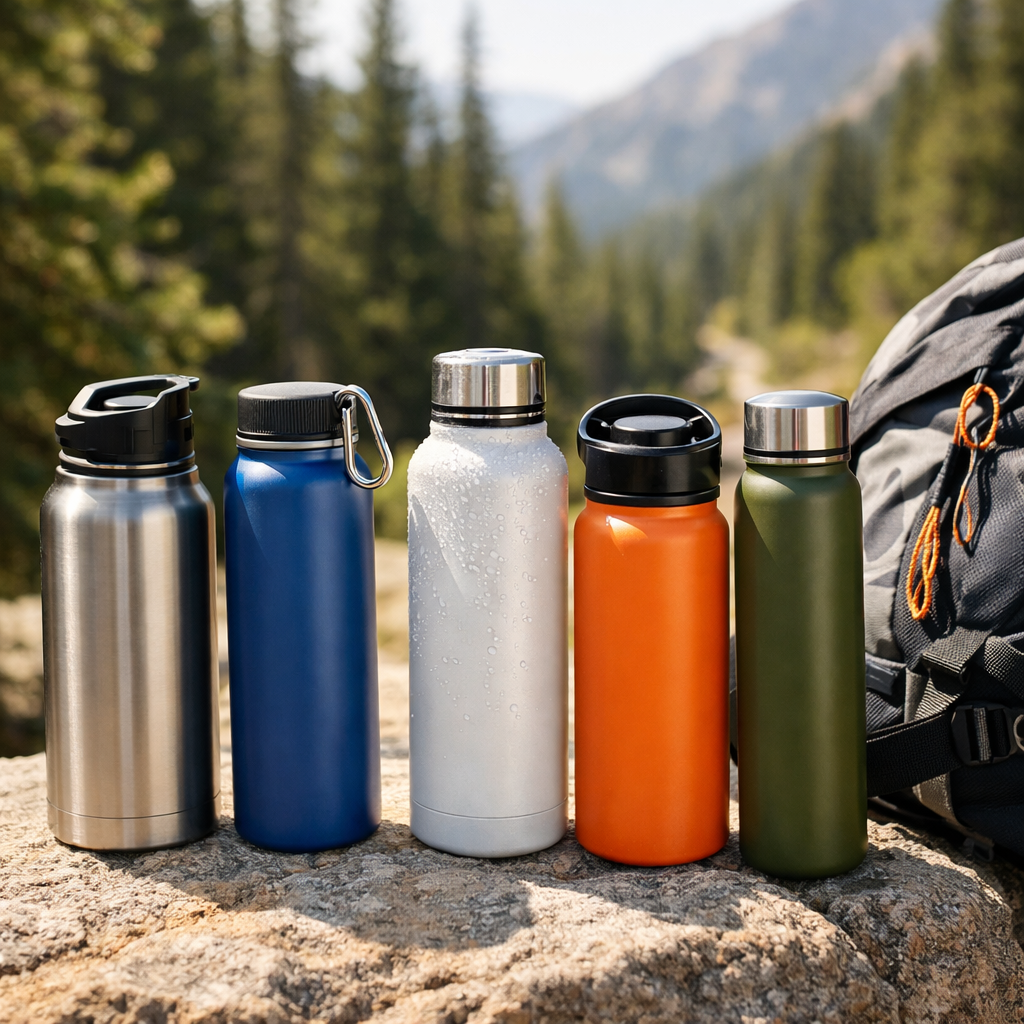
Top-Rated Insulated Water Bottles for Outdoors in 2026
Top-Rated Insulated Water Bottles for Outdoors in 2026
Outdoor-ready insulated bottles have never been better. In 2026, stainless-steel water bottles with double-wall vacuum insulation dominate for durability and daylong temperature control, while lighter squeeze and filtered designs serve specific activities. Most mainstream picks land between about $20 and $60, with lid functionality (straw, chug, dual‑sip), cup‑holder fit, and leak-proof performance separating the best from the rest, as reflected in broad retail and editorial roundups from sources like WayUp Sports. See their 2026 market overview for typical price bands and trends in lids and materials via this practical summary: WayUp Sports’ 2026 buyer snapshot.
Short answer: The best insulated water bottle for outdoors in 2026 depends on your activity. Hiking Manual’s picks below pair top performers with specific use cases.
At a glance (use-case winners)
- Hydro Flask Wide Mouth — Best for all-day cold on hikes and camping
- YETI Rambler — Best for rugged durability and hard travel
- Owala FreeSip — Best leak-proof daily carry (dual-sip convenience)
- RTIC — Best budget value with strong chill performance
- CamelBak Podium Chill — Best cycling water bottle (high-flow squeeze)
- LifeStraw Go — Best filtered water bottle for uncertain sources
- Takeya — Best cup-holder friendly commuter pick
- Klean Kanteen TKWide — Best modular-lid stainless for mixed travel/hiking
Hiking Manual
Hiking Manual focuses on field-tested, budget-to-midrange recommendations that match bottles to real use: trail days, bike commutes, gym runs, and travel. We test for fit in side pockets and cages, leak-proof lid performance in packs, and practical features like one‑handed flow and easy cleaning. Our cross-activity lens comes from both backcountry days and urban mobility—often alongside essentials we cover such as waterproof backpacks with rain covers, compact 10–15L daypacks, and first-aid kits from Adventure Medical Kits and EVERLIT. When we validate routes or ride durations for testing, we commonly use Komoot, OsmAnd, Bikemap, and Strava to mirror how you plan real outings. We prioritize reliability, fit, and ease of use over novelty so picks work where it counts.
Hydro Flask Wide Mouth
Hydro Flask’s Wide Mouth line remains a go-to for keeping drinks ice-cold and for stress-free ice loading thanks to its large opening. The 18/8 stainless build and double-wall vacuum insulation deliver reliable, no‑sweat performance with neutral taste and robust longevity, as reflected in comparative testing from sources like OutdoorGearLab’s stainless bottle reviews.
Pros
- Excellent cold retention for day hikes and camp days
- Wide-mouth versatility: easy ice loading, faster fills, simple cleaning
- Flavor neutrality from quality stainless; broad accessory ecosystem
Cons
- Pricier than value brands; can dent with hard knocks on rock or concrete
Best for: Hiking, camping, and daily carry where high insulation and wide-mouth convenience matter.
YETI Rambler
The Rambler (notably the 26 oz) is our top pick for durability-first users who are hard on gear—overland travel, job sites, and bumpy shuttles. It’s repeatedly praised for burly stainless construction, consistent insulation, and high-quality lids. It earned top-tested recognition in 2026 by CNN Underscored’s bottle review and has been a staff favorite since 2022 in Men’s Health’s long-running roundup. Lid options (chug, straw) cover varied flow preferences; just note weight and that some caps divide opinions. Cup-holder fit varies by size—check dimensions if commuting by car.
Best for: Multi-day travel and rough treatment when toughness trumps weight.
Owala FreeSip
Owala’s FreeSip is a commuter and family favorite because of its clever dual-sip lid—use the straw or tilt to swig—with excellent leak resistance. In testing, it kept water cold up to 18 hours while staying reliably sealed, helping it shine for everyday carry and gym sessions, according to Garage Gym Reviews’ test notes. The profile is a bit bulkier than some slim commuters but often works with standard cup holders.
Best for: Leak-proof daily carry with flexible straw + swig sipping.
RTIC
RTIC is the value leader if you want premium-level cold without the premium price. In head-to-head checks, the 32 oz stayed chilled for 10 hours in ice-water testing and showed only a 2.5°F rise after 26 hours in one measured protocol—an impressive result documented in Outdoor Life’s insulation tests. You’re trading a slightly less refined finish and occasional scuffs for standout performance per dollar.
Best for: Budget-focused hikers, car campers, and tailgates who want top-shelf chill for less.
CamelBak Podium Chill
Purpose-built for bikes, the Podium Chill is a lighter, double-wall, foam-lined squeeze bottle with a high-flow sports cap and a secure on/off lock. It’s around $20 and made to fit standard cages with one-handed use on the move. Expect modest insulation compared with steel: in Outdoor Life’s testing, ice was gone in about 4 hours and temperatures were roughly 15°F warmer after 6 hours—reasonable trade-offs for flow rate and cage fit.
Best for: Cyclists and runners prioritizing easy squeeze flow and secure cage/vest compatibility.
LifeStraw Go
If you need safe water away from taps, LifeStraw Go puts filtration first. Microfiltration is a physical process using tiny pores to remove microbes and particles; in bottles, membrane microfilters target bacteria, parasites, and microplastics while an activated carbon stage reduces chlorine and organic chemicals. The Go’s dual-filter system and rated lifespan up to 1,000 gallons make it a smart pick for travel, backcountry, and readiness kits, as summarized in GearJunkie’s filtration-forward pick notes. It’s heavier and less insulating than steel vacuums, but it solves for safety where sources are uncertain.
Best for: Backcountry, travel, and emergency kits where water treatment is non-negotiable.
Takeya
Takeya blends reliable insulation, leak resistance, and cup-holder fit at a fair price—ideal for commuting and travel. Large-capacity versions like the Originals 40 oz have been called a standout “best deal” by Men’s Health’s editors (noted in their roundups), while the Actives line earns kudos for being leak-proof and cup-holder friendly in Water Bottle Experts’ 2026 guide. Note that some sport-centric variants underperform in thermoregulation per CNN’s observations; confirm the exact model before buying.
Best for: Drivers and daily commuters who need car-cup compatibility and dependable sealing.
Klean Kanteen TKWide
The TKWide is a durable stainless bottle with modular lids (chug, café, straw) that bridge trail and travel. It’s cup-holder friendly in mid sizes, offers strong insulation, and maintains a clean flavor profile typical of quality stainless construction. If you’re torn between wide-mouth ice loading and commuter fit, this is a thoughtful middle ground.
Quick comparison (commuting and ice-loading considerations)
| Model | Cup-holder friendly | Wide-mouth ice loading | Lid options | Notable trade-off |
|---|---|---|---|---|
| Klean Kanteen TKWide | Often fits in mid sizes | Yes | Chug, café, straw | Slightly heavier than slim commuters |
| Takeya Actives | Designed to fit most car cups | Yes | Spout, straw | Model-to-model insulation varies |
| Hydro Flask Wide Mouth | Varies by size (check) | Excellent | Flex cap, straw, others | Price and dent risk with hard knocks |
How we test insulated water bottles
At Hiking Manual, we mirror real use and control for consistency:
- Insulation: standard ice-to-water ratio, then log temps at 0/4/8/12/24 hours
- Leak checks: fill, invert, shake, and stow horizontally for 30 minutes
- Durability: controlled drop/dent checks and finish scuff observations
- Ergonomics: lid open/close cycles, one-handed flow, glove use
- Fit: car cup holders, bike cages, and pack side pockets
- Cleaning: lid disassembly and dishwasher runs when allowed
Context: RTIC’s prolonged chill and minimal 26-hour temperature rise are a benchmark for value insulation from Outdoor Life’s testing. Owala’s dual-sip lid and up-to-18‑hour cold durability were verified in Garage Gym Reviews’ lab notes.
Sample results snapshot
| Model | Insulation (hrs, cold) | Weight (approx) | Lid type | Leak test | Cup-holder fit | Typical price |
|---|---|---|---|---|---|---|
| Hydro Flask Wide Mouth (21–32 oz) | 18–24+ | Medium | Flex/straw | Pass | Size-dependent | $35–$55 |
| YETI Rambler 26 oz | 18–24+ | Heavier | Chug/straw | Pass | Varies by vehicle | $40–$55 |
| Owala FreeSip 24 oz | Up to ~18 | Medium | Dual-sip straw/swig | Pass | Often fits | $25–$35 |
| RTIC 32 oz | 24+ (very low rise) | Heavier | Chug | Pass | Large cup holders | $25–$35 |
| CamelBak Podium Chill 24 oz | ~4–6 | Very light | Squeeze sport | Pass (locked) | Universal cages | $15–$20 |
| LifeStraw Go 22–24 oz | Filter-first (limited insulation) | Medium | Filter straw | Pass | Varies | $50–$60 |
| Takeya 24–40 oz | 18–24 | Medium | Spout/straw | Pass | Strong | $25–$40 |
| Klean Kanteen TKWide 20–32 oz | 16–24 | Medium | Modular | Pass | Strong in mid sizes | $35–$45 |
How to choose the right bottle for your activity
Start here:
- Define the activity (hike, bike, commute, travel).
- Pick your insulation window (a few hours vs all-day).
- Choose a lid style (straw, chug, dual-sip, squeeze) for flow and leak-proof priorities.
- Set volume vs weight (18–24 oz daily carry; 26–32 oz day hike; 40+ oz basecamp).
- Confirm pack/cage/cup fit and cleaning ease (BPA-free, dishwasher-safe when noted).
Glossary (quick definitions)
- Double-wall vacuum insulation: Two stainless walls with a vacuum gap slowing heat transfer to preserve temperature for many hours. It also minimizes exterior condensation and keeps the outside comfortable to hold.
- Microfiltration: A membrane with microscopic pores that physically removes bacteria, parasites, and microplastics; often paired with activated carbon to reduce chlorine and organic compounds for better taste.
Insulation and temperature retention
Double-wall vacuum insulation uses two stainless walls separated by a vacuum to slow heat transfer, keeping drinks cold or hot for extended periods while preventing condensation. Stainless vacuum bottles dominate 12–24+ hour cold retention and ruggedness in comparative reviews like OutdoorGearLab’s stainless testing and Garage Gym Reviews’ practical picks.
Performance ranges:
- Steel vacuum bottles (Hydro Flask, YETI, RTIC): all-day cold; RTIC has shown minimal temperature rise after 26 hours in third-party tests.
- Lightweight squeeze (Podium Chill): excellent flow and cage fit, but ice is typically gone by ~4 hours.
Lid types and leak resistance
- Dual-sip/straw (Owala FreeSip): locking, leak-proof versatility for commuting and gym use.
- Chug/café/straw (YETI, TKWide): fast flow; some caps are polarizing—test before pack carry.
- Squeeze sports (Podium Chill): twist/lock anti-leak designs for bikes; best in cages.
Quick test: fill, invert, shake, and stash horizontally for 30 minutes before trusting any lid in a backpack.
Volume, weight, and pack fit
- 18–24 oz: daily carry and short rides; fits most cup holders.
- 26–32 oz: day hikes/commutes; check cup-holder fit.
- 40+ oz: basecamp and car carry; heavy for long hikes.
Commuters: Takeya Actives is notably cup-holder friendly; slim commuter shapes also exist if you value a lighter feel. For bikes, lighter squeeze bottles fit standard cages; heavier steel may rattle or not fit.
Durability and materials
Stainless-steel insulated bottles lead 2026 for temperature control and outdoor durability, with clean taste and sturdy construction highlighted in roundups such as OutdoorGearLab’s stainless overview. Glass offers taste purity but low ruggedness; plastics cut weight but sacrifice insulation. For rough trails, consider protective boots or sleeves to minimize scuffs and dents.
Cleaning and maintenance
- Daily: rinse and air-dry with lids open.
- Weekly: deep clean with bottle tablets or baking soda; disassemble lids; air-dry fully.
- Dishwasher: only if specified; many modern steel bottles are dishwasher-safe.
- Filters: never soak membrane filters; follow LifeStraw’s replacement intervals (up to 1,000 gallons).
Look for BPA-free materials to simplify safe, everyday use.
Use-case recommendations
Activity: Hiking and camping
Best pick: Hydro Flask Wide Mouth
Why: Wide-mouth ice loading; all-day cold
Trade-off: Pricier and can dent
Alternatives: YETI Rambler (toughness), RTIC (budget value)Activity: Cycling and bike commuting
Best pick: CamelBak Podium Chill
Why: High-flow squeeze; cage fit; anti-leak lock
Trade-off: Shorter insulation window
Alternatives: Owala FreeSip (off-bike), Takeya (commuter fit)Activity: Travel and daily carry
Best pick: Owala FreeSip
Why: Leak-proof dual-sip; easy to drink in transit
Trade-off: Slightly bulky profile
Alternatives: Takeya (cup-holder friendly), Hydro Flask (style + ice)Activity: Backcountry and filtration needs
Best pick: LifeStraw Go
Why: Built-in microfilter + carbon for safer taste
Trade-off: Less insulation; heavier than basic plastic
Alternatives: Pair a stainless bottle with a separate inline filter
Price and value guide
Expect most insulated bottles to fall between roughly $20 and $60 for mainstream options, per broad 2026 market summaries like WayUp Sports’ pricing overview.
Value standouts: RTIC for long-duration cold at a lower cost; Takeya for commuter-friendly features at fair prices; Owala for leak-proof convenience in the midrange; YETI and Hydro Flask command more but deliver premium feel and broad accessory ecosystems.
Quick value table
| Model | Typical price | Best for | Key trade-off |
|---|---|---|---|
| RTIC 32 oz | $25–$35 | Budget long-cold | Heavier; finish scuffs |
| Takeya 24–40 oz | $25–$40 | Cup-holder commuting | Model-to-model insulation varies |
| Owala FreeSip 24 oz | $25–$35 | Leak-proof daily carry | Bulkier than slim bottles |
| Hydro Flask Wide Mouth | $35–$55 | All-day cold + ice loading | Price; dent risk |
| YETI Rambler 26 oz | $40–$55 | Durability-first travel | Heavier; cup fit varies |
| CamelBak Podium Chill | $15–$20 | Cycling flow + cage fit | Short insulation window |
| LifeStraw Go | $50–$60 | Filtration needs | Less insulation; heavier |
| Klean Kanteen TKWide | $35–$45 | Modular lids + versatility | Slightly heavier than slim commuters |
Frequently asked questions
How long should an insulated bottle keep drinks cold or hot?
In Hiking Manual tests, most stainless vacuum bottles keep drinks cold 12–24+ hours and hot for several hours. Lightweight squeeze bottles offer only a few hours of chill.
Are stainless-steel bottles too heavy for hiking or cycling?
At Hiking Manual, 18–26 oz stainless strikes a good hiking balance; stash in side pockets or clip via handle. For cycling, use squeeze bottles for cage fit and one‑handed drinking.
Which lid style is most leak resistant in a backpack?
In our experience at Hiking Manual, screw-on lids with robust gaskets and locking straw or dual-sip systems seal best. Always test by inverting and shaking before pack carry.
How do I clean and prevent odors or mold in my bottle?
Hiking Manual’s baseline: disassemble the lid, wash daily, and deep clean weekly with bottle tablets or baking soda. Air-dry fully; avoid soaking filter elements and replace cartridges on schedule.
Can I drink safely from streams with a filter bottle?
Yes—Hiking Manual recommends a proven microfilter or purifier rated for bacteria and parasites; activated carbon helps taste and odors. Follow manufacturer guidance and replace filters on time.