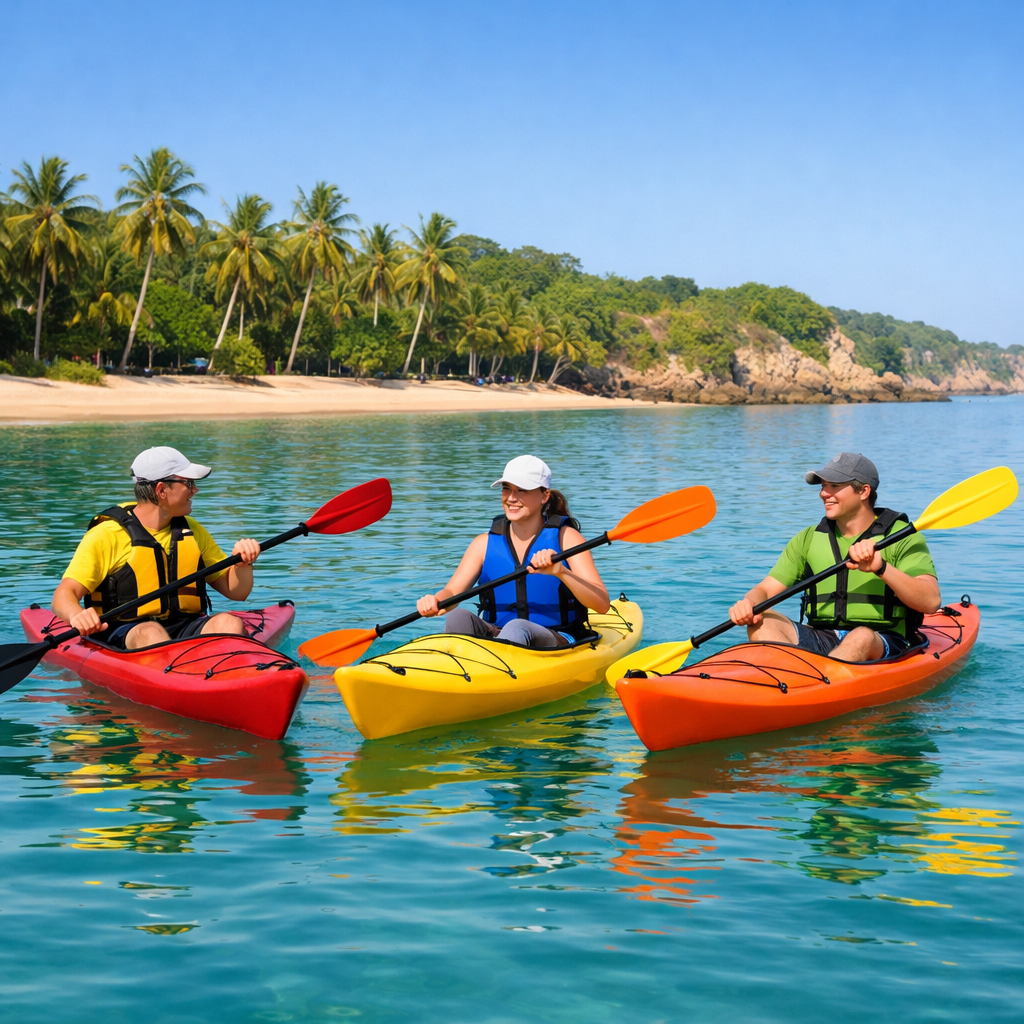
Top-Rated Beginner Kayaking Spots Worldwide, Vetted by Instructors
Top-Rated Beginner Kayaking Spots Worldwide, Vetted by Instructors
New to paddling and looking for low-stress waters? This guide spotlights top-rated beginner kayaking destinations instructors use for first-timer success—places with calm water kayaking, easy put‑ins, short routes, and reliable outfitters. You’ll also get quick booking and rental advice, plus when guided kayak tours make sense—often the right call for your first outing.
Beginner-friendly waters: Calm, sheltered areas where wind, waves, and current are limited and predictable. Expect short distances, easy access and egress, nearby rentals, and a clear turnaround point. Ideal examples include protected bays, mangrove lagoons, inland lakes, and channels shielded by reefs or islands.
Sit-on-top vs. recreational kayak: Sit-on-tops are open-deck boats that are stable and easy to reboard after a swim—great for warm water and short sessions. Recreational sit-insides have a cockpit for a drier ride and better tracking, suiting cooler climates and longer, calmer lake or bay days.
How we vetted these spots
- Sheltered water and short, scannable routes that limit wind, waves, and current
- Straightforward access, parking, and on-site or nearby rentals
- Wildlife and scenery without committing to long miles
- Instructor endorsements and operator reliability—many reputable operators recommend guided trips for novices to manage tides and launches, a common refrain in global paddling roundups (see this best places to kayak guide).
Hiking Manual
Our planning playbook is simple: reduce stress before you ever touch the water. We translate our hiking-style vetting to paddlesports by prioritizing sheltered routes, clean logistics (parking, bathrooms, marked put‑ins), and map-and-forecast cross‑checks—charts or maps, tide/current checks, wind windows, and a clear turnaround plan.
We also sweat comfort and budget. Our checklists cover fit (boat capacity and cockpit sizing), safety (PFDs and leashes where appropriate), and smart rentals before you buy. For first sessions, favor guided outings and stable kayaks: sit-on-top models for warm water swims; recreational sit-insides for cooler regions and longer flatwater days, in line with mainstream gear guidance.
If you’re mapping your own lake day, pair a local map with simple parking intel—see our lake parking info tools for easy launches close to services.
How to choose beginner-friendly waters
A quick 5-step decision path:
- Pick water type: lake, protected bay, mangrove lagoon, or canal beats open coast.
- Check wind/wave exposure: look for short “fetch” (distance wind can build waves).
- Scan currents/tides (coast): aim for slack or gentle flows.
- Confirm access and egress: marked put‑ins, parking, bathrooms.
- Secure rentals/guides nearby: bookable sessions reduce friction on day one.
Sheltered water: A protected area where landforms (islands, reefs, mangroves) limit wind fetch and wave size, with minimal current and fewer boat wakes. That calmer surface lets beginners practice strokes, steering, and landings without battling chop—ideal for building confidence and skills.
Quick green-light checklist
- Wind forecast ≤10–12 mph during paddle window
- Short fetch and no swell exposure
- Marked, gently sloped launch with parking and bathrooms
- Nearby rentals or guided sessions Many top beginner picks are protected bays and mangrove lagoons highlighted in global destination roundups.
Safety and planning basics for first trips
- Weather and wind check: confirm a stable 2–3 hour calm window.
- Tide/current check (if coastal): time your launch near slack.
- Route length ≤2–3 hours: turn around at halfway by time, not distance.
- Share a float plan: text route, timing, and contact info to a friend.
- PFD on at all times: adjust snugly; bring water, sun protection, and a dry layer.
For day-one confidence, book a guide. Instructors manage tides, wildlife rules, and launch/landing techniques so you can focus on fundamentals—advice echoed repeatedly by reputable destination and operator guides.
Gear-fit micro-checklist (examples to set expectations)
- Wilderness Systems Pungo 120: 12'2", 49 lbs, 325 lb capacity, $1,219 MSRP—stable, tracks well for calm lakes and bays (see beginner kayak models and specs).
- Eddyline Caribbean 10: 10’, 40 lbs, 200 lb capacity, $1,299 MSRP—light, sit-on-top stability for warm-water outings.
- Oru Inlet: ~20 lbs, ~7-minute setup—folding option for small cars and stairs.
Broughton Archipelago and Johnstone Strait, British Columbia
Snapshot: A maze of protected channels with abundant wildlife and widely used beginner tours; Johnstone Strait sees 200+ orcas each summer, with Steller sea lions, porpoises, and humpbacks frequenting the Broughtons (see this sea kayaking destinations overview).
- Why it works: Sheltered passages dampen swell; guides handle currents, crossings, and wildlife approach protocols—prime for orcas by kayak.
- When to go: July–September for calmest weather and peak whale presence.
- Wildlife: Orcas, humpbacks, Dall’s porpoises, sea lions, bald eagles.
- Launch hubs: Telegraph Cove, Port McNeill, Port Hardy. Search “British Columbia kayaking tours” for beginner day trips and easy overnights.
Magdalena Bay, Baja California Sur
Barrier islands create a protected gray whale lagoon each winter, enabling calm, instructor-led paddles with camp support and whale-safe protocols. For Baja kayaking for beginners, this is a seasonal standout, while the Sea of Cortez offers separate, mostly lee-side options nearby.
- Best window: Late January–March for mother-calf gray whale viewing.
- Format: Guided day paddles or basecamp programs only; follow ethical distance and approach rules.
- Notes: Book early; Pacific-side protected bays are gentler than exposed coastlines. Secondary keyword: gray whale lagoon.
Galápagos Islands bays
Novices get the best of the archipelago via instructor-led, small-group sessions in protected bays—quieter than big-ship landings and rich with wildlife. Expect half-day outings with beach launches and clear wildlife buffers.
- Safe bay examples: Academy Bay (Santa Cruz), Itabaca Channel (Baltra/Santa Cruz), Puerto Villamil harbor (Isabela).
- Structure: 2–3 hour paddles, snorkeling add-ons, strict no-approach wildlife etiquette.
- Booking: Choose “Galápagos kayaking tours” that cap group size and include naturalist guidance.
Eastern Coast of Bali
Amed, Sanur, and Nusa Dua often offer calm, morning-glassy seas framed by reefs and headlands—an easy on-ramp for Bali kayak tours. Many resorts and local operators tailor first-timer sessions with simple beach launches and snorkel add-ons.
- Go early: Light diurnal winds favor sunrise-to-midmorning windows.
- Reef sense: Watch coral heads at low tide; wear booties for shore entries.
- Areas: Amed coastline, Sanur lagoon, Nusa Dua’s protected waters—great for Amed kayaking intros.
Eastern Cuba coast near Holguín and Gibara
Short coastal stages, town-to-town landings, and operator support make this stretch approachable and culture-rich.
- Why it works: Coastal shelter, short daily paddles, and arranged logistics remove guesswork.
- Sample day: Morning paddle to a fishing village for lunch, afternoon museum or plaza stroll, shuttle return.
- Best months: Late winter–spring shoulder seasons; verify outfitter permits and guide credentials. Recommended: guided multi-day for navigation and landing sites. Secondary: Cuba sea kayaking, Holguín kayaking tours.
Kealakekua Bay, Hawai‘i
Known for calm mornings and clear water, Kealakekua Bay tours typically run ~3 hours and pair gentle paddling with snorkeling—excellent Hawaii beginner kayaking. Many operators handle permits and landings for Ka‘awaloa, simplifying rules and reef protection (see this US kayaking day trips roundup).
- Timing: Early mornings before onshore winds; avoid swell days.
- Essentials: Reef-safe sunscreen, no-touch coral policy, respect spinner dolphins from distance.
- Booking: “Kealakekua Bay tours” with permitted guides streamline access.
La Jolla Cove, San Diego
Sheltered coves, sea caves, and frequent sightings of seals, sea lions, and dolphins make La Jolla a classic starter zone. Guides handle cave-entry rules, currents, and wildlife buffers so you can focus on strokes and safe surf landings.
- Launch: La Jolla Shores; arrive early for parking.
- Seasons: Summer is warmest with clearest water; shoulder seasons are quieter but watch swell.
- Rules: Cave entry typically with guides only; maintain wildlife distances. Secondary: La Jolla sea caves kayak, San Diego kayak tours.
Door County Peninsula, Wisconsin
Protected bays, family-friendly half-day tours, and limestone shorelines turn Door County into a Midwest training ground. Many local operators emphasize guided intros to cover technique and local rules, with gear picks that keep beginners stable and dry.
- Beginner routes: Peninsula State Park bays; Cave Point only when calm.
- Wind note: Favor ≤12 mph and offshore-protected launches.
- Local insight: Door County kayak types and tips outline stability and fit for first-timers.
Boundary Waters and Minnesota lakes
With over 1,000 lakes and streams in the Boundary Waters, novices can string together endless flatwater progressions; Lake Itasca—the Mississippi headwaters—is a compact, confidence-building option around 1.8 square miles (see this best places to kayak feature).
- Easy loops: Short out-and-backs from public landings on Ely or Gunflint-side lakes; day permits are straightforward.
- Portage tip: Use lightweight boats or wheels where allowed; pack in drybags.
- Caveat: Lake Superior can swing from placid to punishing—treat it as advanced unless guided. Secondary: Minnesota lake kayaking, Boundary Waters outfitters.
Belize Barrier Reef and cayes
Shallow, clear waters behind the reef create short island hops perfect for guided Belize kayak camping, with snorkeling on patch reefs and sandy caye camps.
- Wind window: Mornings tend to be calmer; plan legs with wind and tide.
- Navigation: Follow chains of cayes as handrails; heed ranger zones and reef rules.
- Booking: Caye-to-caye kayaking programs bundle kayaks, snorkel gear, and camps (see a Belize Barrier Reef paddling guide).
Virginia Key mangrove lagoons, Miami
Near-downtown calm water makes Virginia Key’s lagoons (including Lake Lamar) a go-to for Miami kayaking for beginners. Expect easy rentals, tide-neutral channels, and approachable wildlife like manatees and the occasional loggerhead turtle (see a Miami kayaking spots guide).
- Best time: Early mornings for glassy water and wildlife activity.
- Etiquette: Idle near manatees, give right-of-way, and never chase.
- Logistics: Simple beach launches, bathrooms, and nearby parking.
Karimunjawa and Raja Ampat islands, Indonesia
Karimunjawa’s marine reserve protects coral, mangroves, and 400+ fish species, with sheltered islets ideal for guided novice paddles; Raja Ampat delivers equally biodiverse, reef-fringed lagoons for calm explorations between islets (see best places to kayak worldwide).
- Format: Resort-based day tours or simple liveaboard motherships.
- Tips: Reef-safe practices; avoid standing on coral; heed local guide requirements.
- Keywords: Raja Ampat kayak, Karimunjawa marine reserve.
What to book and rent as a beginner
Sit-on-top kayak (40–50 words): An open-deck boat that trades speed for stability and simplicity. Easy to mount/dismount, drains quickly after splashes, and feels low-risk for warm-water swims. Ideal for beach launches, short sessions, and family-friendly kayaking where reboarding confidence matters most.
Recreational sit-inside kayak (40–50 words): A closed-cockpit day boat built for calm water. You sit lower for a drier, more efficient ride that tracks straighter on flatwater. Better in cooler climates and on longer, sheltered routes; pair with a properly fitted PFD and optional spray skirt.
Comparison picks (rent before buying)
| Model | Length | Width | Weight | Capacity | Setup time | MSRP |
|---|---|---|---|---|---|---|
| Eddyline Caribbean 10 | 10' | 29" | 40 lbs | 200 lb | — | $1,299 |
| Wilderness Systems Pungo 120 | 12'2" | 29" | 49 lbs | 325 lb | — | $1,219 |
| Oru Inlet (folding) | — | — | ~20 lbs | — | ~7 min | — |
Booking tips
- Choose guided tours first; confirm guide–guest ratios, PFDs included, launch lesson, and clear weather-cancel policy—use a simple checklist (like Hiking Manual’s) to compare operators.
- Ask for stable boats matched to your size and conditions.
- Many destinations in this guide explicitly recommend guided tours for novices to manage tides, wildlife, and landings—take the easy win.
Frequently asked questions
What makes a kayaking spot beginner-friendly?
Calm, sheltered water with minimal wind and current, short distances, easy access, and nearby rentals or guides. Bays, mangrove lagoons, and protected channels are ideal places to learn—Hiking Manual’s beginner checklist helps you spot these quickly.
Should I book a guided tour for my first kayak trip?
Yes. A guide handles tides, currents, launch/landing, and local wildlife rules so you can focus on skills and safety; it’s the fastest, safest way to enjoy your first paddle and is Hiking Manual’s default recommendation.
Sit-on-top or sit-inside: which is better for beginners?
In warm climates, sit-on-tops are stable and easy to reboard after a swim; in cooler regions or longer days, recreational sit-insides keep you drier and track well. Hiking Manual steers first-timers to the option that fits local water and season.
What kayak size and weight capacity should I choose?
Pick a stable, wide hull with capacity that covers your body weight plus 25–50 lbs for gear. Many beginners do well with recreational 10–12 ft models for easy handling; use Hiking Manual’s capacity buffer (body weight + 25–50 lbs).
How long should my first paddle be?
Aim for 2–3 hours on calm water with a turnaround at halfway. Short, guided sessions help you learn strokes and landings without getting overtired—Hiking Manual’s preferred start.
Can I kayak with wildlife safely as a beginner?
Yes—if you follow guide instructions and keep respectful distances. Choose destinations with clear wildlife protocols and calm waters—Hiking Manual highlights these to reduce stress on animals and you.