Top-Rated Backpacking Packs for Heavy Loads: Best Support and Comfort
Top-Rated Backpacking Packs for Heavy Loads: Best Support and Comfort
Carrying 40–60+ pounds? Start by matching your heaviest trip weight (food, water, fuel included) to a pack’s stated comfortable load rating, then prioritize torso fit and hipbelt comfort. Framed, reinforced models are the best backpacking packs for heavy loads because they transfer weight to your hips, resist barreling, and keep balance stable on uneven ground. “Comfortable load rating” means the weight a pack can carry while maintaining proper weight transfer to the hips, stable balance, and minimal hot spots for most users over typical backpacking distances. Below, we highlight the most comfortable backpacking packs that reliably support 40–60 pounds, and show how fit, frame design, and materials affect comfort and value.
Hiking Manual
We test and recommend packs with one goal: make heavy loads feel lighter without overspending. Our short list balances durability, suspension quality, and price—mixing premium haulers with strong-value picks in both men’s and women’s fits. Tradeoffs are real: heavier, framed backpacking packs usually carry weight more comfortably, while ultralight designs cut base weight but can feel harsh once you pass about 40 pounds. If you’re building a kit on a budget, see our guide to budget frame-support packs, and if you need inclusive sizing, explore plus-size backpack picks:
- Budget frame-support guide: https://www.hikingmanual.com/best-budget-hiking-backpacks-with-frame-support-for-ultimate-comfort/
- Plus-size backpack picks: https://www.hikingmanual.com/best-hiking-backpacks-for-plus-size-hikers-top-picks-for-comfort/
Osprey Aether and Ariel
Osprey’s Aether/Ariel 65 are feature-rich, adjustable load-haulers designed for frequent 40–60 lb trips. They pair a supportive internal frame with a well-padded, sculpted hipbelt for excellent load transfer, plus on-the-fly torso adjustability to tune fit for long days. Expect a durable build and thoughtful features (genuine organization, external lash points, raincover compatibility) that shine on longer routes with bear canisters or winter gear. The Aether/Ariel 65 typically runs around $370 and is a favorite among hikers willing to carry a slightly heavier pack for superior comfort under heavy loads, with the Ariel offering a women’s-specific fit option recognized in CleverHiker’s best backpacks list (https://www.cleverhiker.com/backpacking/best-backpacking-backpacks/).
Deuter Aircontact Ultra and Aircontact Pro
Deuter’s Aircontact line is a “bombproof” choice trusted on guiding trips for its stable, durable carry and abrasion-resistant fabrics—Deuter specifies partially recycled 235-denier polyamide for extra toughness, per Wildland Trekking’s guide (https://wildlandtrekking.com/wildland-gear-guide/best-backpacking-backpacks/). The lighter Aircontact Ultra 50+5 weighs about 2,189 g (4 lb 13 oz) at 55 L, while the burlier Aircontact Pro 75+10 has shown a comfortable load around 45 lb in lab testing. The tradeoff is weight; the payoff is exceptional stability under heavy loads. Dual access and efficient compression help keep dense kits compact.
Gregory Baltoro and Deva
Gregory’s Baltoro/Deva are classic heavy-haulers with plush hipbelts and a supportive suspension that stays comfortable with 50–60 lb expedition-style loads. In testing, the Baltoro 75 weighed about 4 lb 13.2 oz with a usable 75 L volume and abundant external pockets that reduce rummaging and fatigue on long days—details highlighted in GearJunkie testing (https://gearjunkie.com/packs/best-backpacking-backpack). Choose these for extended trips, shoulder-season or family carry, and any itinerary where stability and organization trump shaving ounces.
Granite Gear Blaze 60
The Granite Gear Blaze 60 is the standout light heavy hauler: roughly 3.0 lb with real support up to about 50 lb when packed well. A stiff frame sheet, efficient compression, and streamlined pocketing make it appealing to hikers minimizing base weight without sacrificing support. It’s an excellent match for 40–50 lb kits, long food carries, and anyone transitioning from ultralight toward a more forgiving, framed backpack for backpacking—performance echoed in OutdoorGearLab’s reviews (https://www.outdoorgearlab.com/topics/camping-and-hiking/best-backpacks-backpacking).
Fjällräven Kajka
Fjällräven’s Kajka series prioritizes durability, sustainability, and a sturdy frame feel. It’s a premium choice for those who value simple reliability over weight savings. Model differences matter: lab data on the Kajka X-Lätt 45 showed a comfortable load near 25 lb and a measured volume of 52 L—evidence that the line varies and buyers should verify model-specific load ratings and capacity. For heavy loads, consider larger Kajka capacities and confirm the comfortable load rating before purchase.
Gregory Paragon and Maven
Gregory’s Paragon (men’s) and Maven (women’s) balance support, access, and value. The Paragon 50 lists at about $269.95 with a competitive weight near 1.5 kg and a full-length side zipper, and the family spans 40/50/60 L with Maven women’s 38/48/58 L. The Paragon 60/Maven 58 has been named a best overall value around $300, with an approximate weight of 3 lb 8 oz and a max recommended carry near 50 lb. For 35–50 lb loads, these feel lighter on trail, deliver handy side access, and provide a comfortable hipbelt without premium pricing.
REI Co-op Trailmade and Rook or Renn
For budget-conscious hikers, REI Co-op’s Rook/Renn 65 deliver a lab-tested comfortable load around 35 lb at roughly 4 lb 9 oz—solid value for newer backpackers dialing in gear. Trailmade 60 stands out for inclusive sizing, offering hipbelt spans of 32–42 inches (M–XL) and 42–52 inches (XXL–4XL), making it easier to achieve a secure wrap. If your kit consistently exceeds 40 lb, consider stepping up to Osprey, Gregory, or Deuter for stiffer frames and thicker belts.
How to choose a heavy-load backpack
Use this quick flow from Hiking Manual to land on the best load-carrying backpack for you:
- Weigh your full kit with water and food.
- Match that weight to a pack’s comfortable load rating.
- Dial torso length to shift weight off shoulders.
- Test hipbelt fit with 20–30 minutes of walking and stairs.
- Check access and compression to keep the load compact and stable.
“Load transfer” is how a pack shifts weight from your shoulders to your hips using the frame and hipbelt; good transfer reduces shoulder fatigue and improves balance.
A few models at a glance (approximate specs; verify current pricing and sizes):
| Model | Weight | Capacity | Comfortable load | Price notes |
|---|---|---|---|---|
| Granite Gear Blaze 60 | ~3.0 lb | 60 L | Up to ~50 lb | Mid-priced, excellent weight-to-support |
| Gregory Paragon 60 / Maven 58 | ~3 lb 8 oz | 60 / 58 L | Up to ~50 lb | Around $300 value |
| Gregory Baltoro 75 / Deva 70 | ~4 lb 13 oz | 75 / 70 L | 50–60 lb | Premium, very stable |
| Deuter Aircontact Ultra 50+5 | 4 lb 13 oz | 55 L | ~40–50 lb | Premium-light hauler |
| Deuter Aircontact Pro 75+10 | Heavier | 85 L total | ~45 lb (lab) | Premium guiding-level |
| Osprey Aether/Ariel 65 | ~5 lb | 65 L | 50–60 lb | Around $370 |
| REI Co-op Rook/Renn 65 | ~4 lb 9 oz | 65 L | ~35 lb | Budget-friendly |
| REI Co-op Trailmade 60 | ~4–5 lb | 60 L | ~30–40 lb | Budget, inclusive sizing |
Suspension and frame
A rigid internal frame, frame sheet, and stays are the backbone of stable heavy-load carry; they enable true load transfer and control sway for 35–60+ lb hauls, as affirmed by Backpacker’s 2024 pack tests (https://www.backpacker.com/gear/backpacks/best-backpacking-packs/). The Granite Gear Blaze is a good example: at around 3.0 lb, it still supports roughly 50 lb thanks to a stout frame and smart compression. Choose framed packs for routine 40–60 lb loads; lighter frames are fine for sub-40 lb if you pack carefully.
Hipbelt fit and comfort
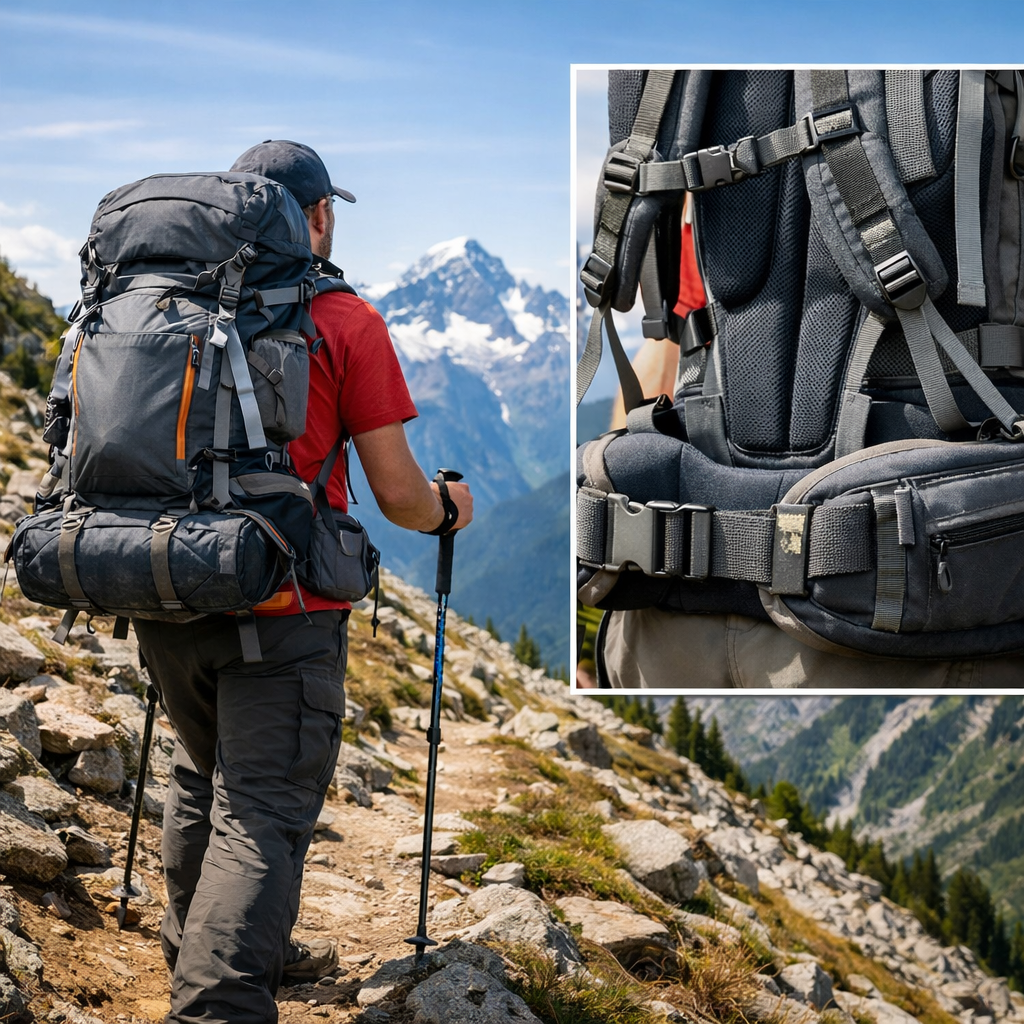
The hipbelt is the primary comfort driver under heavy loads. Look for wide, well-padded, contoured belts with secure pockets and solid buckles to prevent slippage and hot spots. Try multiple sizes and follow the tightening sequence—hipbelt first over the iliac crest, then shoulder straps, then load-lifters—using real weight. Women’s-specific belts (Ariel, Deva, Maven) often wrap the iliac crest more comfortably for improved pressure distribution.
Torso sizing and adjustability
Torso length determines center of gravity and shoulder load. Adjustable or multi-size torso systems help fine-tune balance and reduce shoulder strain. Quick fit test: with the pack loaded, the shoulder strap anchor should sit slightly behind the top of your shoulders, and load-lifters should angle at roughly 45 degrees. Record your measured torso length during fitting to guide online purchases.
Materials, access, and compression
Durable fabrics and reinforced high-wear zones matter when kits push past 40 lb. Side or J-zip access speeds organization, and robust compression straps keep gear tight to your back to limit sway. Deuter’s use of partially recycled 235-denier polyamide in the Aircontact line is a good durability benchmark. Full-length side zips (e.g., Paragon), dual access points, and effective compression systems all contribute to stability with heavier loads.
Weight, capacity, and trip profile
Heavier, more durable packs typically haul more comfortably but add carry weight and cost; ultralight models cut base weight but may limit comfort once you approach 40–60 lb. Capacity heuristics:
- 50–60 L: 3–5 days with shoulder-season insulation or a bear can.
- 60–75 L: winter, guiding, or carrying family gear. Match the comfortable load rating to your heaviest expected carry, then size down only if your kit consistently trends lighter.
Quick picks by use case and budget
- If you’ll carry 40–60 lb often, choose framed, reinforced models.
- If your loads hover 35–45 lb, consider lighter frames that still list ~35–50 lb comfort.
Best for 40 to 50 pounds
- Granite Gear Blaze 60: about 3.0 lb and supports up to ~50 lb—top weight-to-support balance.
- Gregory Paragon 60 / Maven 58: roughly 3 lb 8 oz, max recommended near 50 lb, strong value around $300.
- Osprey Atmos AG LT 65 (alt pick): trims weight from the classic Atmos while retaining standout comfort for mid-heavy loads.
Best for 50 to 60 pounds
- Osprey Aether/Ariel 65: very durable, feature-rich load-haulers around $370—excellent for extended heavy loads.
- Gregory Baltoro/Deva: proven heavy-haulers; Baltoro 75 at ~4 lb 13 oz with organization that tames expedition kits.
- Deuter Aircontact Ultra/Pro: bombproof feel and trusted stability; the Pro shows ~45 lb comfortable load in lab testing with guiding-level durability.
Best budget for weekend heavy loads
- REI Co-op Rook/Renn 65: comfortable around ~35 lb at ~4 lb 9 oz—excellent value for newer backpackers.
- REI Co-op Trailmade 60: inclusive hipbelt sizing supports more bodies affordably.
- Upgrade to a stiffer frame if your kit regularly exceeds 40 lb.
Best lighter-weight heavy hauler
- Granite Gear Blaze 60: standout at ~3.0 lb with ~50 lb support.
- Gregory Paragon 50/60: balanced suspension with side-zip access and strong value.
- Note: Ultralight models (e.g., REI Flash, Zpacks) excel for sub-30–40 lb but sit outside this heavy-load focus.
Best women’s heavy-load fit
- Osprey Ariel 65: women’s-specific version of Aether; adjustable and supportive for 40–60 lb.
- Gregory Deva: plush hipbelt and frame tuned for heavier hauls with organization that eases load management.
- Gregory Maven 58: women’s-specific value pick balancing weight and support up to ~50 lb.
Frequently asked questions
What pack features matter most for carrying 40 pounds or more?
A rigid internal frame, a wide well-padded hipbelt, and an adjustable torso are the biggest comfort drivers; durable fabrics, side or J-zip access, and strong compression keep heavy loads stable. See Hiking Manual’s heavy-load picks above for examples that check these boxes.
How much weight can a backpacking pack comfortably carry?
Most standard packs feel best around 30–45 lb, while reinforced models push into the 50–60 lb range; always match your heaviest expected load to the pack’s comfortable load rating. Use Hiking Manual’s comfortable-load guidance to match your kit.
Are larger packs always better for heavy loads?
No—capacity helps with bulk, but true comfort comes from the frame, suspension, and hipbelt; a smaller, well-framed pack can out-carry a larger, minimally supported one. Hiking Manual reviews prioritize suspension quality over sheer volume for this reason.
What is the difference between ultralight and heavy-load packs?
Ultralight packs prioritize low base weight for sub-30–40 lb kits, while heavy-load packs add frame rigidity, padding, and durability to keep 40–60 lb loads comfortable. If your loads are often 40 lb or more, choose from Hiking Manual’s heavy-load picks above.
How should a heavy-load pack fit for best comfort?
Set torso length so shoulder straps sit just behind the shoulder tops with load-lifters near 45°, then tighten the hipbelt first over the iliac crest, followed by shoulder and sternum straps. This is the same sequence we use at Hiking Manual during fit checks.