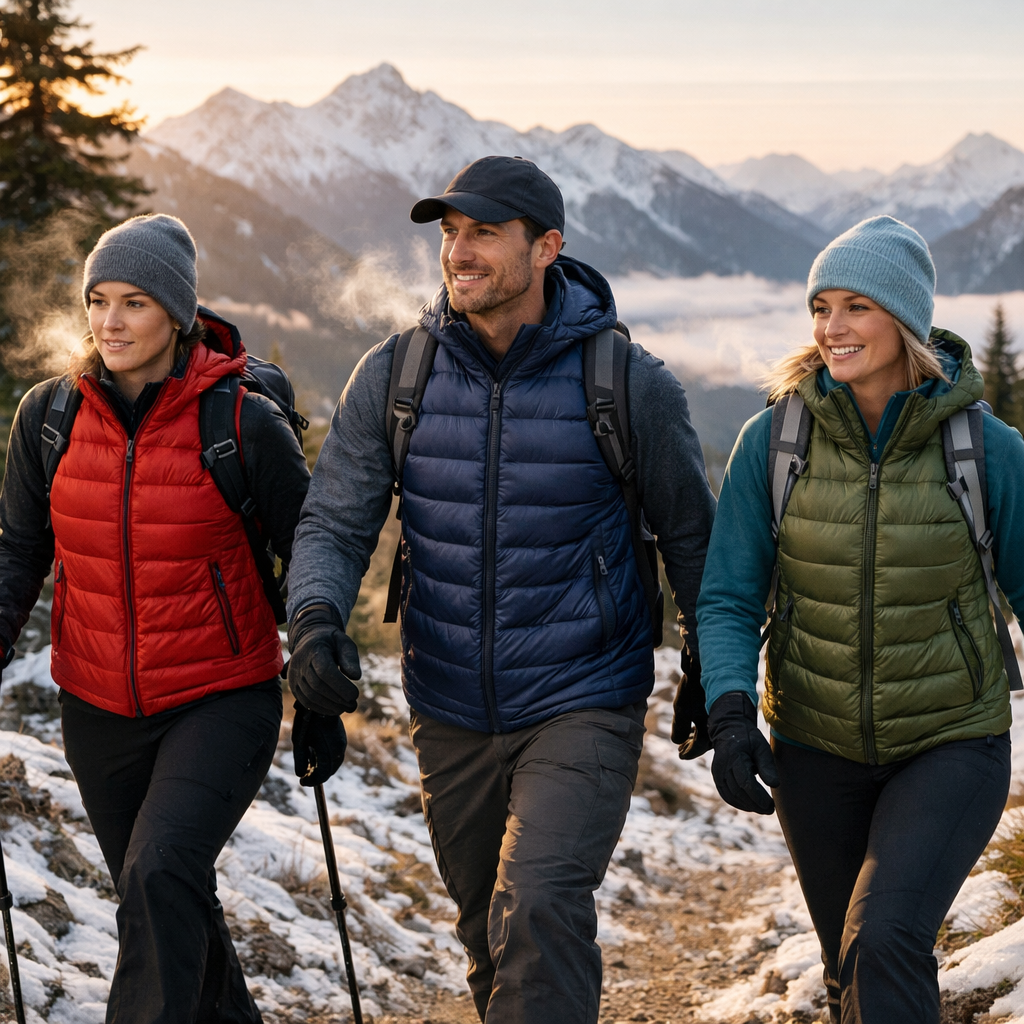
Top 9 Trusted Puffer Vests for High-Output Winter Days
Top 9 Trusted Puffer Vests for High-Output Winter Days
High-output winter days—fast hikes, ski tours, snowshoe laps, brisk bike commutes—demand a vest that keeps your core warm without cooking you on the climb. The sweet spot is mobility plus ventilation, with heat you can add or dump quickly. Below are nine trusted puffer vests, from long‑runtime heated options for stop‑and‑go cold to ultralight down picks for steady aerobic use. Quick guide to best use-cases:
- Venture Heated: App-controlled surges for cold stops and night commutes [Outdoor Life testing].
- Muddy Nucleus Heated: Heat-first, hooded refuge for sleet and wet chairlifts [Outdoor Life testing].
- Weston Heated: Simple controls, 3-hour high bursts for transitions and camp breaks [Outdoor Life testing].
- Venustas Upgraded Quilted: Max runtime for long, sit-down warmth [Outdoor Life testing].
- Mountain Hardwear Ghost Whisperer: Ultralight, packable down for fast, sweaty climbs [Treeline Review].
- Eddie Bauer Reissue Down Bomber: Tailored, adjustable fit for draft control [Travel + Leisure].
- Quince Responsible Down: Best-value everyday down at $100 [Byrdie].
- Canada Goose Cypress: Premium durability and polished travel style [Byrdie].
- Lands’ End Wanderweight Down: Budget-friendly, easy-moving starter layer [Byrdie].
Hiking Manual
Our trail-tested approach prioritizes layers that move with you, manage moisture, and pack down small. Most days we run a base + breathable fleece + puffer vest, then add a shell only for wind, sleet, or long stops. We match insulation to intensity: ultralight down or synthetic for continuous aerobic use; heated vests for cold chairlifts, belays, and stop‑start commuting. We ground our recommendations in independent test data and real trail mileage so each pick matches a clear use case.
We plan routes with offline maps and recent user reviews, and we build versatile kits that cross seasons. If you’re dialing in the rest of your system, see our guides to breathable midlayers and shells (for example, our overview of fleece midlayers and cold‑weather shells), plus cold‑weather tents and vestibule‑friendly shelters for winter basecamps:
- Best hiking vests for layering
- Fleece jackets for snow sports
- Best hiking jackets for cold weather
- Best hiking tents for cold weather
Venture Heated Puffer Vest
If your output varies—bootpacks, lift lines, dog walks after dark—fast, controllable heat is gold. In testing, Venture’s vest delivered a measured 128.7°F with granular control via a Bluetooth app (10 heat steps) or simple 3‑button modes; it heats the collar, and the whole setup is machine‑washable when the battery is removed, backed by measured output and easy care (see Outdoor Life’s 2025 heated vest tests).
Best for: cold stops, chairlift waits, and commutes; less ideal for max‑aerobic climbs where you’ll overheat.
Quick specs:
- Heat output: up to 128.7°F measured [Outdoor Life].
- Controls: 10-setting app + on‑vest 3 modes; collar heating.
- Runtime: varies by setting; expect several hours total.
- Charging/battery: 7.4V pack; charges via included cable.
- Layering/bulk: moderate; fits over a breathable fleece.
- Shell breathability: medium; not air‑permeable enough for hard climbs.
Muddy Nucleus Heated Vest
This is a next‑to‑skin, heat‑first design for wet snow and exposed ridges, where features beat minimal bulk. Testing recorded ~127°F with a long‑lasting battery in controlled runs, plus a heated hood and water resistance. Expect a bulkier fit and reduced breathability; size up if you want a midlayer underneath. It shines for spectators, anglers, and start‑stop users who want a hooded refuge in sleet or wind (performance and features per Outdoor Life’s testing).
Weston Heated Vest
A commuter‑friendly staple with intuitive chest‑button controls (low/med/high), Weston produced ~126.5°F and roughly 3 hours on high in testing, with USB‑C charging and fuzzy hand pockets for quick warmups; it lacks a lumbar zone, so warmth concentrates up front and chest. Use it for evening trailhead transitions, icy sidelines, or camp chores when a 3‑hour high burst is plenty (data from Outdoor Life’s 2025 roundup).
Venustas Upgraded Quilted Vest
If you prioritize extended, sit‑down warmth, Venustas stood out for delivering more than 5 hours on the highest setting in testing—exceptional for long belays, dawn photo missions, or winter tailgates. Breathability isn’t its forte; run low or medium while moving and pair with a breathable fleece to buffer moisture, then crank it at stops (runtime validated in Outdoor Life’s tests).
Mountain Hardwear Ghost Whisperer Vest
The benchmark packable down vest for high-output days. Fill power measures how much down lofts for a given weight; higher numbers (800–900) trap more air per ounce, improving warmth‑to‑weight and compressibility. Total warmth still depends on fill weight and construction. The Ghost Whisperer’s ultralight build lofts fast after sweaty climbs, stuffs into a pocket, and delivers on‑demand core warmth without the bulk of sleeves—perfect for ski tours and quick summits where overheating risk is real (context and definitions via Treeline Review).
Eddie Bauer Reissue Down Bomber Vest
A tailored fit with hem bungees helps trap heat without flap, and testers highlighted the comfortable collar for swapping between thin and thick midlayers. Check that the hem drawcord cinches smoothly and the collar stands high enough to block ridge winds without chafing. It is a durable, style-forward piece that slides from urban to trail use (fit notes from Travel + Leisure’s outdoor vests coverage).
Quince Responsible Down Puffer Vest
Named a best overall pick around $100 for its quality down and easy everyday versatility, Quince is the value play for new hikers building a foundational kit. Pair it with a breathable fleece for moisture control during brisk walks and easy hikes, and double‑check sizing consistency and returns if you’re ordering your first down piece (recognition and pricing context from Byrdie’s roundup).
Canada Goose Cypress Puffer Vest
A premium, long‑term investment with refined construction and a glossy, travel‑ready shell. The Cypress is built for the long haul—an appealing choice if you want one vest to last years and look polished off‑trail. It balances warmth with upscale styling and durable materials (positioning and finish noted by Byrdie).
Lands’ End Wanderweight Down Vest
A lightweight, budget‑friendly layer that plays well with aerobic movement. It is an easy starter down vest for day hikers who want mobility and simplicity without overspending. Check the DWR and shell fabric specs for abrasion resistance where pack straps run (value and use‑case aligned with Byrdie’s testing).
How to choose a puffer vest for active winter use
Match your vest to your intensity and stop frequency. If you take long, cold breaks or commute in biting wind, choose heated. If you move continuously and sweat, go ultralight down or synthetic for breathability and packability. Heated models in independent tests reached the mid‑120s°F with runtimes around 3–5+ hours on high—great at rest, but warm while climbing (test anchors from Outdoor Life). For down, look at fill power and fill weight, not just the number; air‑permeable shells help prevent sweat chill (construction insights from Treeline Review).
Comparison at a glance:
| Type | Insulation | Breathability | Packability | Temp regulation | Best use | Pros | Cons |
|---|---|---|---|---|---|---|---|
| Heated | Carbon fiber elements + battery | Low–medium | Medium | On-demand via buttons/app | Stop–start, commutes, cold spectating | Immediate heat, long stops | Battery weight, bulk, limited runtime [Outdoor Life] |
| Ultralight down | 800–900 fill down | Medium (depends on shell) | Excellent | Zips/venting; add shell at stops | Ski touring, fast hikes | Top warmth‑to‑weight, compresses small | Loses loft when soaked; drafty in wind [Treeline Review] |
| Synthetic | Polyester insulation | Medium–high | Good | Stable warmth damp; vent via zips | Wet snow, daily wear | Warms when damp, durable | Heavier for same warmth than high‑fill down |
Insulation choice and warmth to weight
Warmth‑to‑weight is the heat a garment provides relative to its mass. High fill power down (e.g., 800–900) excels here, but total warmth rides on fill weight and baffle design, too. Many vests now use recycled shells and down; thin nylon or polyester fabrics strike a balance of packability and tear resistance. Heated vests add on‑demand warmth with tradeoffs in battery weight and finite runtime (materials and design context from Treeline Review).
Breathability and moisture management
Breathability is a fabric’s ability to let moisture vapor escape. For climbs, choose lighter insulation and air‑permeable shells to avoid sweat buildup, then add heat or a beefier layer at stops. As a rough guide, many vests shine around 40–60°F (4–15°C) depending on pace, wind, and what’s underneath (temperature and layering context from Treeline Review).
Fit, mobility, and layering with fleece
Look for an athletic cut that allows full arm swing and torso twist, with no shoulder binding under pack straps. Pair your vest with a breathable fleece midlayer to buffer sweat and keep warmth steady during motion. Hem bungees and clean armholes seal drafts without restricting poling or scrambling.
Weather resistance and DWR care
DWR (Durable Water Repellent) helps water bead off the shell so insulation stays lofty in light precip. It wears off; refresh it periodically with wash‑in or spray treatments after spot‑cleaning salt and grime. Avoid fabric softeners that can block breathability. Hoods add warmth but also bulk, weight, and cost—choose based on exposure and pack space (maintenance principles aligned with Treeline Review).
Heated vest battery life and controls
Independent tests showed mid‑120s°F heat with runtimes roughly 3–5+ hours on high (e.g., Weston ~3 hours; Venustas >5 hours) [Outdoor Life]. Prefer USB‑C charging for convenience, and multi‑step controls—app or buttons—to fine‑tune heat without sweating. Pack a power bank and keep the battery in an inside pocket to preserve runtime in the cold.
Field use tips for high-output days
Start cool, vent early, add heat at stops, and stash layers fast. Keep movement efficient and navigation tight with downloaded maps and recent user feedback. Build your system around breathable midlayers and quick‑adjust vests so you stay dry on climbs and warm at pauses.
Layering system with breathable fleece
Use a wicking base + breathable fleece midlayer + puffer vest; add a wind or rain shell when exposure spikes. Fleece moves moisture off your skin so the vest’s insulation can do its job. Choose women’s and men’s fleeces with stretch panels for comfort under pack straps.
Venting on the move and fast warmth at stops
On climbs, crack zips, loosen hem bungees, or drop heated vests to low. At breaks, cinch hems, zip fully, and bump heat or throw on a packable down vest. Preheat a heated vest 1–2 minutes before stopping so you don’t chase the chill. Use fuzzy‑lined hand pockets when gloves are off.
Packing, pocketing, and compression
Stow ultralight down vests in their pocket or a 1–2L stuff sack. Keep heated batteries warm in an inner pocket. Carry phone/maps in a chest pocket, snacks in hand pockets, and a headlamp in an internal dump pocket. Thin nylon/poly shells compress well and resist abrasion reasonably for their weight (shell tradeoffs per Treeline Review).
Navigation and safety on winter routes
Download offline maps, scan user reviews, and bring a backup power bank for phone/GPS in the cold. Set a turnaround time, check the forecast, and respect daylight. Keep an emergency layer dry in a liner bag and add reflective touches for urban commutes.
Buying checklist and sizing guidance
Use this quick checklist to zero in on the right vest.
- Insulation: down, synthetic, or heated elements—match to intensity and weather.
- Fill power and fill weight: together indicate warmth‑to‑weight and total warmth.
- Shell fabric: denier, tear resistance, and air permeability.
- DWR: bead light precip; plan for refreshes.
- USB‑C charging and runtime claims (heated): verify hours by heat level and temp.
- Collar/hem seals: draft control without bunching under a hipbelt.
- Arm mobility: no chafe with poles; articulated shoulders help.
- Pockets: chest/hand/internal for maps, snacks, and headlamp.
Fit tips:
- Aerobic hiking/running: close, non‑binding torso over a base + breathable fleece.
- Belays/commutes: roomier fit for thicker midlayers without compressing insulation.
Fill power, fill weight, and shell fabric
Fill power indicates down loft; 900‑fill is top‑tier, but total warmth hinges on fill weight and construction. Most shells are thin polyester/nylon for packability and tear resistance, with growing use of recycled materials. Balance denier with expected pack‑strap abrasion (spec priorities summarized from Treeline Review).
USB-C charging and runtime claims
Evidence-backed benchmarks: Weston ran ~3 hours on high; Venustas exceeded 5 hours; many top picks hit mid‑120s°F outputs [Outdoor Life]. Validate runtime by heat level and ambient temperature, and prefer USB‑C for universal charging and faster top‑offs. Bring a 10,000mAh power bank on sub‑freezing days.
Arm mobility, hem seals, and collar height
Test armholes for chafe during pole plants and overhead reaches, and look for articulated shoulders. Hem bungees should seal drafts without riding up under a hipbelt. Choose a collar high enough to block wind but soft‑lined to avoid abrasion.
Women’s fit and mobility considerations
Seek contoured patterns and stretch panels with room for a breathable fleece that won’t crush loft. Check hem length against your pack’s hipbelt, and favor inclusive sizing and adjustable hems to fine‑tune warmth.
Frequently asked questions
Should I choose a heated vest or an ultralight down vest for winter hikes?
At Hiking Manual, we pick a heated vest for stop‑and‑go days or long breaks and choose ultralight down for steady aerobic hikes where breathability and packability prevent overheating.
How snug should a puffer vest fit for active movement?
At Hiking Manual, we aim for a close, non‑binding fit over a base and breathable fleece, with hem and collar seals to block drafts while preserving full arm swing.
What temperature range can a puffer vest cover on its own?
At Hiking Manual, most vests feel right around 40–60°F depending on pace, wind, and layers; add a shell or heated boost when temps drop or you stop moving.
How do I wash and restore loft in a puffer vest?
At Hiking Manual, we use down/synthetic‑specific detergent, rinse well, and tumble low with dryer balls or air dry; refresh DWR as needed and skip fabric softeners.
Can a vest replace a jacket in windy or snowy conditions?
In our field use at Hiking Manual, a vest plus breathable fleece often works for high‑output efforts; add a windproof or waterproof shell in strong wind, sleet, or long, cold stops.