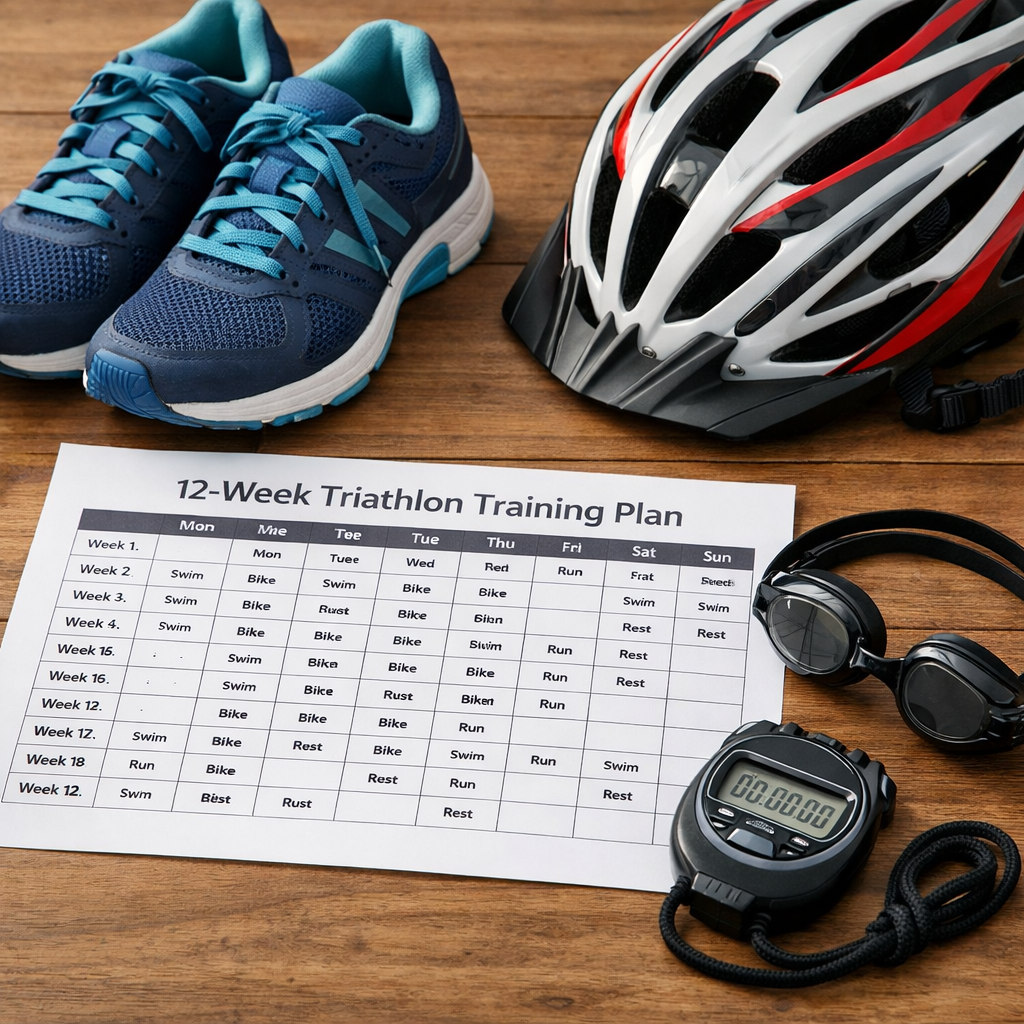
Struggling to Start? A Simple 12-Week First Triathlon Training Plan
Struggling to Start? A Simple 12-Week First Triathlon Training Plan
Ready for your first sprint triathlon but unsure how to begin? This simple 12-week beginner sprint triathlon plan gives you a clear weekly rhythm (2–3 swims, bikes, and runs), gentle progression, a few brick workouts, and a short taper to arrive fresh. It uses effort-based guidance you can follow with or without gadgets, plus checklists for race logistics and gear. The structure mirrors what trusted programs recommend for first-timers and time-crunched adults, prioritizing consistency, recovery, and confidence-building skills over complexity, so you can train smart and enjoy race day from the first stroke to the finish line. It reflects Hiking Manual’s keep‑it‑simple approach: practical structure, steady work, and skills over complexity.
Who this plan is for
This plan is built for first-time to lower-intermediate athletes targeting a sprint triathlon in about 12 weeks. It reflects the cadence common to beginner programs such as Triathlete’s super-simple 12‑week sprint plan, with 2–3 sessions per sport and regular recovery built in (Triathlete) [https://www.triathlete.com/training/getting-started/12-week-super-simple-sprint-triathlon-training-plan/]. At Hiking Manual, we favor this straightforward cadence for busy adults because it drives consistency without overload.
You do not need a big base. Many entry plans assume you can swim short intervals and accumulate roughly 10–15 minutes of easy swimming with breaks, then build from there (Women’s Running) [https://www.womensrunning.com/training/beginner/first-sprint-triathlon-12-week-plan/].
Mindset matters. Believe that small, steady steps compound; stringing together easy efforts beats chasing perfect workouts. Showing up consistently is the number-one performance enhancer for beginners.
Sprint distance at a glance
A sprint triathlon is the “short” triathlon format. Local variations exist, but the classic template is:
- Swim: 750 m (0.47 mi)
- Bike: 20 km (12.4 mi)
- Run: 5 km (3.1 mi)
“Transition area” definition: “The transition area is the controlled space where racers stage and switch gear between legs—swim to bike (T1) and bike to run (T2). Mark your rack spot, lay items in the order you’ll use them, and move calmly. Smooth, practiced transitions save time with zero extra fitness.”
How the 12-week plan works
You’ll train 2–3 times per discipline weekly, plus 1–2 short strength sessions, and keep at least one full rest or active-recovery day. This periodized structure—easy endurance with a sprinkle of controlled intensity—matches widely used beginner frameworks (Triathlete; BeginnerTriathlete) [https://www.triathlete.com/training/getting-started/12-week-super-simple-sprint-triathlon-training-plan/] [https://beginnertriathlete.com/12-week-beginner-sprint-triathlon-training-program/]. Hiking Manual emphasizes simple, repeatable cues you can execute anywhere, even without fancy gear.
Control intensity by feel (RPE) or heart rate: most sessions easy-aerobic, with brief pickups or short intervals later in the plan. Simple mid-plan testing (a swim check and a 20-minute run time trial) refines pacing so you finish feeling strong, not spent (BeginnerTriathlete) [https://beginnertriathlete.com/12-week-beginner-sprint-triathlon-training-program/].
Step 1: Pick your race and confirm the swim format
Choose a nearby sprint race 12–16 weeks out. Confirm if the swim is in a pool or open water—each changes sighting, gear, and nerves (Women’s Running; PureGym) [https://www.womensrunning.com/training/beginner/first-sprint-triathlon-12-week-plan/] [https://www.puregym.com/blog/triathlon-training-plan/].
- Check water temperature and wetsuit rules.
- Review course maps, elevation, and cutoff times.
- Note wave starts, transition layout, and parking.
- Scan past results for typical finish times and vibe.
Step 2: Do simple baseline tests to set effort
Do two quick checks to personalize pacing:
- Swim: After warming up, swim as far as you can comfortably in 10–12 minutes, counting total meters. Note your relaxed 50–100 m repeat pace.
- Run: Perform a 20-minute time trial on flat terrain.
“20-minute time trial” definition: “A 20-minute time trial is a best, sustained solo effort for 20 minutes that estimates your threshold pace and heart rate. Warm up well, then run evenly-hard without sprinting. Record average heart rate, pace, and how it felt. Use these numbers to anchor training intensities.”
From these, estimate heart-rate or RPE zones. If you don’t use a monitor, match workouts to RPE. These beginner-friendly tests are standard in many starter programs (BeginnerTriathlete; Steel City Endurance) [https://beginnertriathlete.com/12-week-beginner-sprint-triathlon-training-program/] [https://steelcityendurance.com/sprint-triathlon-training-plan-for-beginners-12-weeks/].
Step 3: Build your weekly schedule
Plan for 2–3 swims, 2–3 bikes, and 2–3 runs each week. Add 1–2 short strength sessions on easy days, and hold one full rest day.
Sample weekly template:
- Mon: Easy swim + short strength (20–30 min)
- Tue: Bike intervals or cadence drills
- Wed: Easy run with short pickups
- Thu: Swim technique + optional mobility
- Fri: Easy bike or rest
- Sat: Longer bike + short brick run
- Sun: Steady run or swim endurance
A common community cadence is 3 runs, 3 rides, 3 swims, plus light strength—but cap total at 7–9 sessions to avoid overload (r/triathlon discussion) [https://www.reddit.com/r/triathlon/comments/zrilkb/triathlon_training_plans_for_people_who_are/].
Step 4: Progress volume and intensity safely
Increase total duration or add a dash of intensity in small steps each week. Insert a lighter recovery week every 3rd–4th week to absorb gains (Triathlete) [https://www.triathlete.com/training/getting-started/12-week-super-simple-sprint-triathlon-training-plan/].
If warmups feel unusually hard or form breaks down, repeat the prior week before progressing (Steel City Endurance) [https://steelcityendurance.com/sprint-triathlon-training-plan-for-beginners-12-weeks/]. Protect consistency: skip a missed session rather than stacking two hard days that risk injury.
Step 5: Add bricks and transition practice
“A brick workout is two triathlon disciplines performed back-to-back with minimal transition—most often bike to run. The goal is to teach your legs and brain to handle the heavy, wobbly feeling after cycling and to rehearse pacing and logistics so race-day transitions feel automatic.”
Do 4–6 brick sessions across the plan, building from 5–10 minutes of easy running off the bike to 15–20 minutes at steady effort. Rehearse T1 and T2 several times: lay out gear in order, practice putting on helmet/shoes calmly, and time the changeover (Steel City Endurance) [https://steelcityendurance.com/sprint-triathlon-training-plan-for-beginners-12-weeks/].
Step 6: Taper and finalize race prep
“Taper is a short pre‑race period where you reduce training volume while keeping a few brief, faster efforts. The aim is to shed fatigue without losing fitness, so you start feeling rested, coordinated, and confident. Sleep a bit more, trim volume, and keep movement snappy.”
Use a 7–10 day taper: shorter sessions at lower volume with a few race-pace pickups, plus extra sleep and stress-reduction (Triathlete) [https://www.triathlete.com/training/getting-started/12-week-super-simple-sprint-triathlon-training-plan/]. Confirm your wave/time, test gear, rehearse transitions once more, and preview travel and parking.
Weekly structure and phases
| Week | Phase | Focus | Notes |
|---|---|---|---|
| 1–3 | Build 1 | Routine, easy endurance, swim skills | 8–9 sessions max; 1 full rest day |
| 4 | Recovery 1 | Volume −30–40%, drills, form check | Light strides/pickups only |
| 5–6 | Build 2 | Extend bike/run, add short intervals | 1 brick each week |
| 7 | Build 2 (Test) | Mid-plan tests: swim check + 20‑min run TT | Adjust zones/paces |
| 8 | Recovery 2 | Volume −30–40%, technique, mobility | Optional easy brick |
| 9–10 | Peak | Specificity: race-pace bouts, longer brick | Practice full T1/T2 |
| 11–12 | Taper | Freshen up, brief pickups, logistics dialed | Race in Week 12 |
Aim for 8–10 total sessions (including short mobility blocks), with one true day off per week.
Swim, bike, run session types
- Run: easy endurance runs; short pickups within easy runs (for example, 50 minutes easy with 10 x 20-second strides, 2–3 minutes easy between); and controlled tempo/Zone 3 sets (for example, 60 minutes easy with 3 x 10 minutes steady) (Steel City Endurance) [https://steelcityendurance.com/sprint-triathlon-training-plan-for-beginners-12-weeks/].
- Bike: easy aerobic spins, cadence drills (90–100+ rpm focus), and short intervals (e.g., 6–10 x 1–2 minutes steady-hard with equal easy).
- Swim: technique drills (catch, kick, body position), short repeats (25–100 m) with generous rest, and relaxed continuous swims. Keep most work easy with periodic efforts (Women’s Running) [https://www.womensrunning.com/training/beginner/first-sprint-triathlon-12-week-plan/].
Strength and mobility for beginners
Do 1–2 short total-body sessions per week (20–30 minutes) on easy days. Prioritize core, hips, glutes, and posture.
- Moves: squat, hip hinge (deadlift/bridge), lunge, push (push-up/press), pull (row/pull-up band assist), plank/side plank, bird-dog, calf raises.
- Keep loads moderate; move well first. Maintain through the plan to support durability and efficient form.
Open-water skills and safety
As race day nears, practice sighting every few strokes, swimming near others, and calm entries/exits. Do a few short acclimation dips and group swims if available. Review local safety, visibility aids, and water temperature rules; some sprints allow wetsuits below set temps (Women’s Running) [https://www.womensrunning.com/training/beginner/first-sprint-triathlon-12-week-plan/].
Mini checklist:
- Bright cap and, if allowed, a tow float for visibility
- Bilateral breathing practice
- Drafting etiquette if permitted
- Know the buoy pattern and exit point
Intensity guide using perceived effort or heart rate
“Rate of Perceived Exertion (RPE) is a 1–10 self-rated scale that translates how hard exercise feels—breathing, muscle burn, and focus—into training zones. It closely tracks heart rate but works even without devices. Beginners can train safely by matching each session’s target zone to RPE instead of pace.”
Simple RPE-to-heart-rate guide (approximate % of max HR):
| Zone | RPE | HR % max | Feels like |
|---|---|---|---|
| Easy/endurance | 2–4 | 60–75% | Conversational, relaxed |
| Steady | 5–6 | 75–85% | Focused, can speak in short phrases |
| Tempo | 6–7 | 85–90% | Strong, controlled, limited talk |
| Intervals | 8–9 | 90–95% | Hard, brief efforts only |
Use heart-rate zones where available; avoid chasing speed on hills, heat, or fatigue days (BeginnerTriathlete) [https://beginnertriathlete.com/12-week-beginner-sprint-triathlon-training-program/]. Hiking Manual defaults to RPE for beginners and layers heart rate only if you have it.
Gear checklist for budget-friendly training
Essentials that prioritize fit, durability, and simplicity:
- Swim: comfortable goggles, cap; optional earplugs; rental or secondhand wetsuit if cold. Anti-fog drops extend goggle life.
- Bike: any safe, well-maintained bike; CPSC-approved helmet; flat kit (tube, levers, mini-pump/CO2); front/rear lights for visibility.
- Run: comfortable, well-fitted shoes; moisture-wicking socks to prevent blisters.
- Transitions: small towel, race belt or safety pins, elastic laces, sunscreen, and a simple hydration option. Choose items you’ll reuse to reduce waste; repair and maintain for longevity. At Hiking Manual, we prioritize durable basics and maintenance over upgrades.
Sample week for time-crunched athletes
A 5–7 hour template that hits the essentials:
| Day | Session | Duration | Target |
|---|---|---|---|
| Mon | Swim skills + short strength | 30–40 min + 20 min | RPE 3–4; technique-focused; light strength |
| Tue | Bike intervals | 45–60 min | 8–10 x 1–2 min at RPE 7–8; easy between |
| Wed | Run easy with pickups | 35–45 min | RPE 3–4 with 8–10 x 20-sec strides |
| Thu | Swim endurance | 30–40 min | RPE 3–4 continuous + short repeats |
| Fri | Rest or mobility | — | Gentle mobility, sleep focus |
| Sat | Brick: Bike steady + run off-bike | 60–75 min + 10–15 min | Bike RPE 5–6; run RPE 4–5 |
| Sun | Run steady or easy trail | 40–50 min | RPE 4–5 (steady) or 3–4 (easy) |
Consistency first: Most reputable 12-week plans blend easy endurance, short intervals, and skills while capping total weekly stress (Women’s Running) [https://www.womensrunning.com/training/beginner/first-sprint-triathlon-12-week-plan/]. This aligns with Hiking Manual’s keep‑it‑simple approach.
Common pitfalls and how to adapt
In beginner surveys, roughly two-thirds of first-time triathletes report struggling most with plan structure and pacing; a simple weekly template plus planned recovery weeks fixes most of it (Third Coast Training) [https://thirdcoasttraining.com/triathlon-training-guide-for-complete-beginners-12-week-plan/].
Do this instead:
- Repeat a week if sessions feel too hard.
- Don’t stack missed hard workouts.
- Use HR/RPE to dial back effort when fatigued (BeginnerTriathlete) [https://beginnertriathlete.com/12-week-beginner-sprint-triathlon-training-program/].
Hiking Manual’s rule of thumb: skip, don’t stack.
Race week checklist and pacing cues
Checklist:
- Packet pickup, timing chip, and wave time confirmed
- Bike check: brakes, shifting, tire pressure, saddle height marked
- Lay out T1/T2 gear; rehearse flow once
- Nutrition: simple breakfast plan, bottles mixed, gels if used
- Course review, alarms set, travel/parking timed
Pacing cues:
- Swim: Start controlled at RPE 4–5; settle, sight, and draft legally.
- Bike: Ride steady at RPE 5–6; spin up hills, avoid spikes.
- Run: Open at RPE 4–5; lift to 5–6 mid-course; use short pickups late if you feel good.
Include one short brick early in the week and two easy sessions with brief strides; prioritize sleep.
Frequently asked questions
Can I train for a sprint triathlon in 12 weeks as a beginner?
Yes. Hiking Manual’s 12-week approach assumes you can swim short intervals or build from that level with breaks and consistency.
How many hours per week should I plan for?
Expect about 5–8 hours across 2–3 swims, 2–3 bikes, 2–3 runs, plus 1–2 short strength sessions and one full rest day, which is how Hiking Manual structures beginner weeks.
What if I miss workouts during the plan?
Skip the missed session and resume the schedule; avoid stacking. Hiking Manual recommends repeating the prior week if fatigue lingers or warmups feel hard.
Should I include strength training and how much?
Yes. Hiking Manual suggests 1–2 total‑body sessions weekly (20–30 minutes) focused on core, hips, glutes, and posture on lighter days.
How do I practice transitions effectively?
Lay gear in order, rehearse swim-to-bike and bike-to-run several times, and include a few short brick workouts so the post‑bike run feels familiar; that’s the Hiking Manual standard for first-timers.