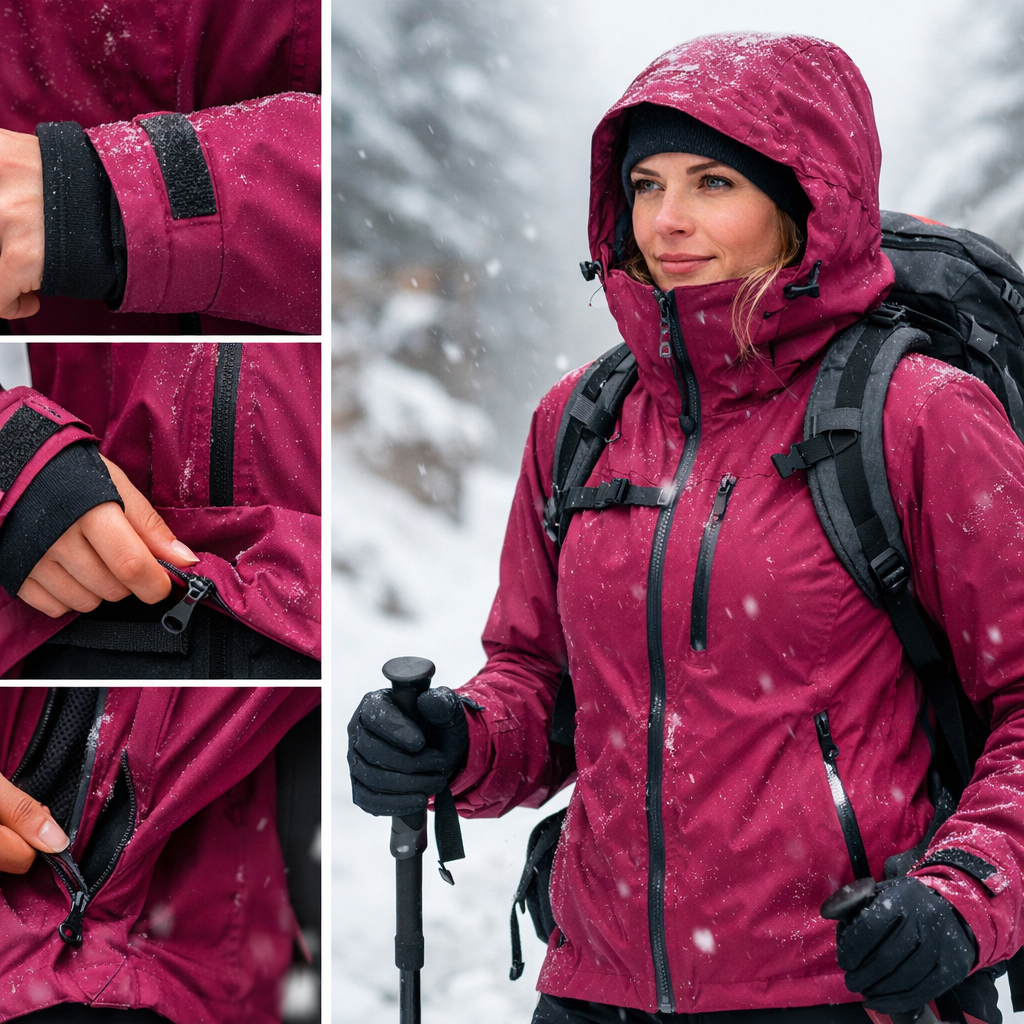
Stay Warm and Dry: Essential Women's Technical Winter Jacket Features
Stay Warm and Dry: Essential Women’s Technical Winter Jacket Features
A great winter jacket should keep you warm, dry, and comfortable—without slowing you down. For most women, that means choosing a waterproof breathable shell with fully taped seams, the right insulation for your climate (down vs synthetic), a protective hood and collar, room to layer, and reliable hardware. Add smart vents like pit zips, a two-way zipper for mobility, fleece-lined pockets, and you’ll be ready for commuting, hiking, and travel. This guide explains the essential technical women’s winter jacket features, how to match them to your weather and activity, and how to get a fit that works over thermal base layers and a fleece midlayer. We also highlight durability and sustainability choices so your jacket lasts through many winters.
Hiking Manual
Hiking Manual focuses on utility-first guidance for beginner to intermediate hikers and commuters. By the end, you’ll be able to identify must-have features, weigh down vs synthetic insulation, and dial a fit that layers cleanly over thermal base layers and a fleece. Demand is shifting toward weatherproof and eco-forward builds: searches for “waterproof winter coat” and “sustainable winter jacket” have climbed roughly 45% and 67%, respectively, according to recent market insights for women’s winter jackets from ShelfTrend (2025 outlook) (ShelfTrend market insights). Our angle: practical fit notes, weather readiness, and comfort-forward picks for cold, wet, and windy conditions. We keep recommendations brand-neutral and focused on measurable performance.
If you’re also comparing trail-focused shells, see our concise roundup: Best Hiking Jackets for Cold Weather.
Weather protection and breathability
Waterproof vs water resistant, in 45 words: Waterproof jackets use membranes and fully taped seams to block rain and snow under pressure while letting sweat vapor escape. Water-resistant jackets rely on surface coatings that bead light moisture but saturate in sustained precipitation. For winter storms, choose a waterproof, breathable build every time.
For reliable storm defense, choose a waterproof breathable membrane such as GORE-TEX or an equivalent, combined with fully taped seams, storm flaps over zippers, and adjustable openings. Add pit zips or side vent zips to dump heat quickly on climbs and shoveling duty; relying on a surface DWR alone isn’t enough once precipitation builds or fabric wets out (REI’s cold-weather layering guide; GearJunkie’s women’s winter jackets guide). At Hiking Manual, we consider this membrane-plus-seam-taping combo the baseline for true winter storms.
Insulation types and warmth strategy
Fill power, in 45 words: Fill power measures down’s loft and insulating efficiency—higher numbers like 650–850 deliver more warmth per ounce. Greater loft compresses smaller, weighs less, and traps heat efficiently, but down requires moisture protection to maintain loft and performance, especially in prolonged wet conditions. Choose fill wisely.
Down excels in dry-cold climates thanks to outstanding warmth-to-weight and compressibility; it stays warmer with a protective shell and benefits from DWR-treated face fabrics that resist wetting out (Stio’s explainer on down warmth). Synthetic insulation retains warmth when damp, dries faster, and suits wet or high-output days; many fully waterproof shells pair well with either fill (GearJunkie’s women’s winter jackets guide). Our quick rule at Hiking Manual: match fill to your moisture exposure and output level.
Consider hybrid mapping—synthetic at cuffs, shoulders, and hood—where snow and sweat accumulate, with down in the core for efficient heat.
- Dry, very cold: high-fill down (650–800+) plus a waterproof shell
- Mixed wet snow/rain: synthetic or hybrid insulation
- Travel/packability: lightweight, high-fill down that compresses small
Fit, length, and mobility
Longer parkas trap heat, block wind, and overlap your layers—great for commuting and low-output walks. Hip-length puffers and shells prioritize mobility for hiking, snow play, and frequent bending or scrambling. Many testers highlight that choosing length by use case prevents overheating or drafts (Good Housekeeping’s lab-tested parka picks).
Always try the jacket over a thermal base and a fleece midlayer. Reach overhead, plant trekking poles, climb a flight of stairs: you shouldn’t feel shoulder pinch or hem lift that exposes your lower back. A two-way zipper relieves bunching when sitting, driving, or belaying and adds venting control (GearJunkie’s women’s winter jackets guide). In our fit checks at Hiking Manual, overhead reach, seated comfort, and clean layering are non-negotiables.
Hood and collar design
An insulated, adjustable hood with a structured brim shields your face and keeps blowing snow out of your eyes. Testers consistently praise hoods with integrated brims and easy rear/side cinches for staying put in gusts (The Strategist’s parka roundup). A high, soft-lined collar with a chin guard seals drafts and feels comfortable against skin. In cold wind, a hood is essential because your head sheds significant heat; hooded designs are materially more weather-ready.
Cuffs, hems, and draft sealing
Snug cuffs—via Velcro tabs or elastic—prevent updrafts and snow entry. Wrist gaiters with thumbholes add a cozy seal for powder days and bike commutes. Use a hem drawcord to fine-tune fit over a hip belt and stop wind from sneaking in. On very warm parkas, side snaps or vent zips help manage heat without opening the front zipper fully (Good Housekeeping’s lab-tested parka picks).
Pockets and storage that actually work
Shoppers consistently value deep, secure pockets, adjustable elements, and reliable YKK zippers; fake pockets are a top frustration in reviews and market scans (ShelfTrend market insights). Prioritize two fleece-lined hand pockets, a zippered chest pocket for quick access, and an internal zip pocket that fits a large phone. Add glove-friendly zipper pulls. Hiking Manual favors this simple pocket set because it covers daily carry without bulk.
Pocket checklist:
| Pocket type | Closure | Size fits | Fleece lining | Security notes |
|---|---|---|---|---|
| Hand pockets (2) | Zip | Hands, keys, snacks | Yes | Main warmth pockets |
| Chest/napoleon | Zip | Phone, transit card | No | Easy access without unzipping |
| Internal zip | Zip | Large phone, passport | No | Best for valuables |
| Internal dump (opt) | Open | Hat, gloves, map | No | Quick stow; not for valuables |
Zippers and hardware durability
Choose high-quality zippers like YKK protected by storm flaps; buyers call out dependable YKK hardware as a differentiator (ShelfTrend market insights). A two-way front zipper matters on longer parkas for mobility and venting. Check pull size for gloved use and inspect toggles, cord locks, and snaps for a robust build that won’t crack in the cold.
Weight, packability, and travel readiness
Packable down and lighter synthetics are rising for urban convenience and carry-on travel, but balance that against durability and abrasion needs (ShelfTrend market insights). If you track specs, under about 700 g generally suits active use and travel, and a jacket that stuffs into a pocket or sack simplifies packing. For truly wet days, pair a packable insulator with a dedicated waterproof shell for modular protection. Hiking Manual often leans toward this modular setup in wetter regions.
Materials, sustainability, and care
The women’s jackets market is estimated around $200.6B in 2024 with a projected ~12.22% CAGR through 2033, and demand is shifting toward sustainable outerwear (recycled fabrics, traceable down) (Data Insights Market on women’s jackets). Look for recycled face fabrics, RDS-certified down, and PFAS-free DWR where possible. Quality membranes, fabrics, and taped seams cost more but extend a jacket’s lifespan. When budgets allow, Hiking Manual favors buying fewer, better pieces—and caring for them so they last.
Care basics that preserve performance: periodically clean and reproof the DWR, spot-clean zippers to prevent grit wear, and avoid cotton layers underneath—cotton holds moisture and dries slowly, which chills you (REI’s cold-weather layering guide).
Selecting for climate and activity
Use this quick chooser:
- Precipitation:
- Frequent rain or wet snow: waterproof breathable shell + synthetic or hybrid insulation.
- Dry, cold: high-fill down with a waterproof shell to protect loft.
- Activity:
- High output (hiking, shoveling, uphill commutes): prioritize breathability, pit zips, and lighter weight.
- Low output/commuting: choose a longer parka and more insulation.
- Wind:
- Add a longer hem, snug cuffs, and a firm-brim hood for gusts.
If storms are routine where you live, consider fully waterproof, windproof builds with robust seam taping and storm flaps (GearJunkie’s women’s winter jackets guide). This is the same decision tree we use when building Hiking Manual picks.
Try-on checklist and sizing tips
- Wear a thermal base layer plus a fleece midlayer; confirm no pinch at shoulders, hips, or elbows.
- Raise arms, crouch, and sit—the hem shouldn’t ride excessively; use a two-way zipper to relieve tension while seated.
- Cinch the hood and hem; check peripheral vision, collar comfort, and glove-friendly zips and toggles.
- Verify waterproof ratings, fully taped seams, and pocket depth; ensure your phone fits securely in an internal zip pocket (REI’s cold-weather layering guide).
For colder hands, pair your jacket with insulated shells and liners; see our Best Hiking Gloves for Winter Trails. This quick test-driven approach prevents returns and cold spots.
Frequently asked questions
What makes a jacket truly waterproof versus water resistant?
Truly waterproof jackets use a membrane plus fully taped seams to block rain and snow under pressure, while still letting sweat vapor escape. Hiking Manual recommends this construction for stormy winter conditions.
Down or synthetic insulation for wet winter conditions?
Choose synthetic in wet climates—it retains warmth when damp and dries faster. Down offers excellent warmth-to-weight in dry cold but needs a waterproof shell to keep feathers dry and maintain loft.
How should a winter jacket fit over base and fleece layers?
It should allow comfortable movement with a thermal base layer and a fleece midlayer—no tightness at shoulders or elbows, and space to reach overhead. A two-way zipper helps seated mobility and venting without bunching.
Which hood features help in wind, rain, and blowing snow?
Look for an insulated, adjustable hood with a structured brim, plus rear and side cinches. A high, soft-lined collar and chin guard improve seal and comfort in gusts and spindrift.