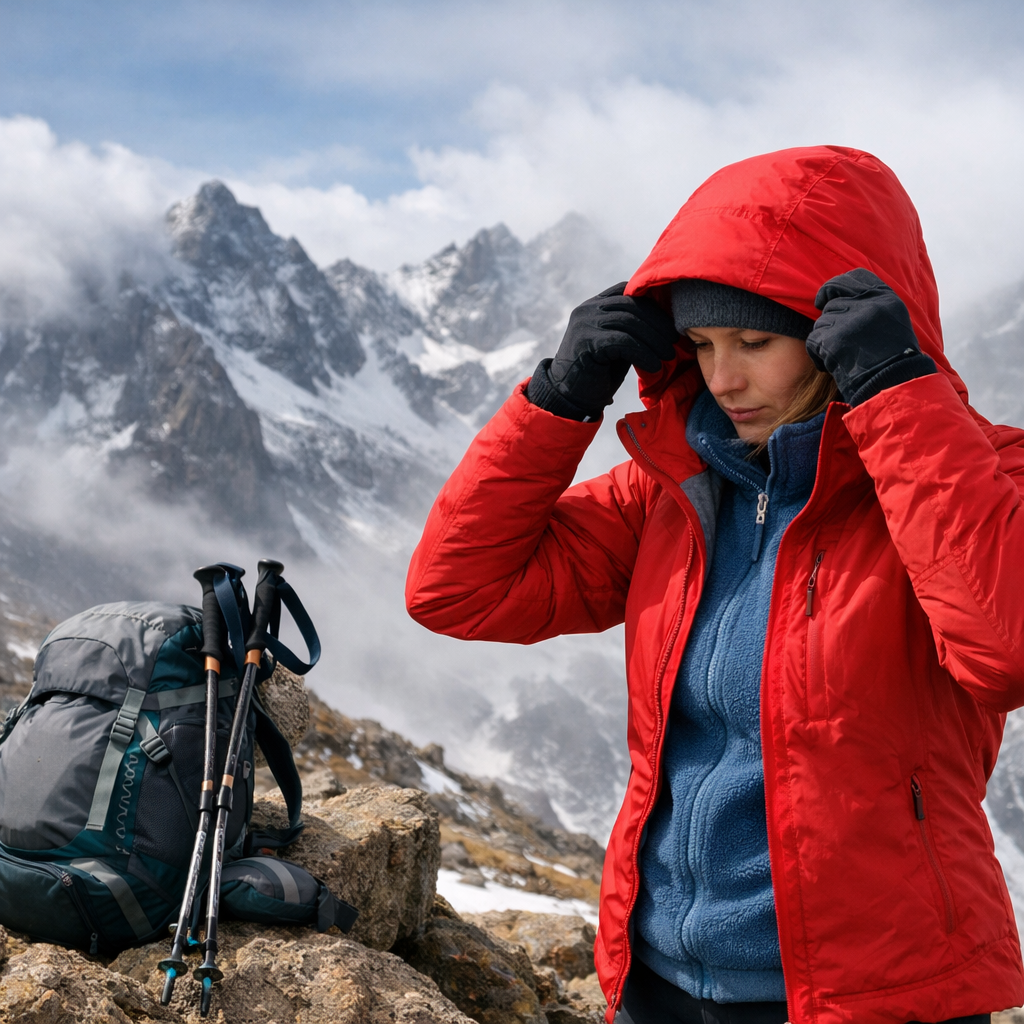
Stay Warm Above Treeline: Women’s High-Altitude Jacket Layering Tips
Stay Warm Above Treeline: Women’s High-Altitude Jacket Layering Tips
Above treeline, wind strips heat fast, sweat turns icy, and fit matters as much as fabric. To choose a women’s high-altitude jacket system, think in layers that you can vent on the climb and fortify at stops. A layering system is a clothing approach using several thin layers rather than a single bulky garment so you can fine‑tune warmth, moisture movement, and weather protection as conditions change (see the Mountain Equipment layering guide). Start with a moisture‑wicking baselayer, add a breathable midlayer for movement, carry a high‑loft “stop” puffy, and shield it all with a ventilated, windproof hardshell. Size for clean stacking—close, not tight—and test your setup on local ridges before summit day. That’s how you stay warm, dry, and safe in above‑treeline wind. Hiking Manual’s alpine layering guides follow this stack.
Quick guide (6 steps)
- Check forecast, exertion, and wetness potential.
- Start with a snug moisture‑wicking baselayer (no cotton).
- Add a breathable midlayer (grid fleece or active synthetic) for movement.
- Pack a high‑loft insulated puffy (down for cold/dry; synthetic for damp).
- Use a ventilated, waterproof/breathable shell sized to fit over all layers; pit zips help dump heat.
- Protect extremities and carry spares; fuel and hydrate deliberately.
Assess conditions and exertion level
Note four things before you pack: temperature range, wind speed, precipitation likelihood, and trip intensity. Above treeline, wind accelerates convective heat loss—the process where moving air carries heat off your body—so a fitted, wind‑blocking shell can matter more than pure insulation weight in gusts (see K2 expedition notes). Hiking Manual’s trip‑planning checklists help you translate forecast and effort into layer choices.
Work through this sequence:
- Check the forecast hour by hour for temp, wind, and precip.
- Identify wetness risk (rain, sleet, spindrift, sweat) and favor fast‑drying layers when it’s likely.
- Choose breathable layers for climbs; vent early and often.
- Plan a dedicated “stop” puffy for breaks so you trap heat before sweat cools you. A classic mountaineering stack is base + light insulator + midweight insulator + hardshell + heavy down parka over the top (Whittaker Mountaineering tips).
Convective heat loss: heat carried away by moving air. A close‑fitting, windproof shell reduces this dramatically even without adding bulk (K2 expedition notes).
Choose a moisture-wicking baselayer
Your baselayer’s job is to pull sweat off skin so a warm air layer can form. Multiple thin layers give better temperature control than one thick piece (Mountain Equipment layering guide). Never wear cotton; it soaks, dries slowly, and insulates poorly when wet (OutdoorGearLab layering primer).
Merino vs synthetic at a glance:
| Feature | Merino Wool | Synthetic (poly blends) |
|---|---|---|
| Dry time | Slower; can hold ~15% of its weight in water (NZAC cold-weather guide) | Faster-drying; sheds moisture quickly (OutdoorGearLab layering primer) |
| Warmth when damp | Stays comfortable when slightly wet | Loses comfort faster if saturated but dries fast |
| Odor control | Excellent natural odor resistance | Can retain odor without treatments |
| Durability | Softer, can be less abrasion‑resistant | Very durable and resilient to washing |
| Best use | Cool, drier, multi‑day use | Wet, sweaty, high-output or shoulder seasons |
Material cues: modern blends like drirelease with Tencel feel softer and dry fast, and antimicrobial treatments (e.g., Polygiene) extend time between washes (Mountain Equipment layering guide). Hiking Manual recommends a close‑to‑skin, women’s‑specific cut for torso warmth and fewer drafts.
Dial in a breathable midlayer for movement
Midlayers trap heat while letting moisture move outward. For climbs, lightweight grid fleece—gridded fabrics that reduce bulk while holding warmth—are a sweet spot for breathability and warmth per gram (Mountain Equipment layering guide).
Active synthetics like Polartec Alpha or POLARLOFT breathe even better during steep efforts, making them ideal when you’re oscillating between sweat and wind.
Quick selector:
- Aerobic ascent: grid fleece or an active‑insulation hoodie.
- Mixed pace or cold shade: thicker fleece or a synthetic/down hybrid.
- Prioritize long zips for venting and women’s fits that avoid hem gaping at hips.
For more fit and layer recipes, see Hiking Manual’s apparel guides.
Pack a high-loft stop layer for cold rests
When you stop, put on your warmest puffy immediately to preserve the heat you just created (Whittaker Mountaineering tips). Choose insulation by wetness risk and pack a longer‑length parka for camp or belays; it should slide over all layers without crushing loft. Deep, fleece‑lined pockets make breaks far more comfortable. Hiking Manual favors slightly longer hems for static warmth above treeline.
Down vs synthetic insulation:
| Attribute | Down | Synthetic |
|---|---|---|
| Warmth-to-weight | Best-in-class | Very good |
| Performance when wet | Loses loft; needs careful protection | Stays warmer when damp (NZAC cold-weather guide) |
| Price | Often higher for high‑fill power | Generally more affordable |
| Packability | Compresses very small | Bulkier for same warmth |
| Use cases | Cold, dry, stable weather | Mixed/wet conditions, high condensation risk |
Select a protective shell with real ventilation
Pick a waterproof/breathable hardshell with taped seams, underarm vents, and an adjustable, helmet‑compatible hood so you can block weather but dump heat during pushes (see this hardshell overview). A ≈20,000 mm waterproof rating suits prolonged rain or very wet climates; breathability plus vents matter just as much. In Hiking Manual’s guides, prioritize real ventilation you can manage in gloves over marginal fabric spec differences.
Fit: the shell should layer over mid and puffy without compressing insulation, yet not flap in gusts—flapping pumps cold air and increases heat loss (K2 expedition notes).
Pit zips: zippers under the arms that let you purge heat and moisture without opening the main zip, maintaining weather protection while you climb (hardshell overview).
Fit and women-specific considerations
Women’s cuts improve torso seal, shoulder mobility, and pocket placement that works with a hipbelt or harness. Try everything on together—base, mid, puffy, shell—with your pack and gloves. Reach overhead: the hem shouldn’t lift, and your puffy shouldn’t crush at shoulders or elbows (Mountain Equipment layering guide).
Layering room without bulk
Aim for a trim base, a breathable mid, and a shell with just enough ease to stack cleanly. Pick your puffy first: confirm your stop‑layer fits under the shell and preserves loft at pressure points.
Hood, hem and cuff adjustments
Choose jackets with adjustable hoods, cuffs, and hem drawcords to seal heat in wind while still allowing quick venting (hardshell overview). A helmet‑compatible hood, one‑hand hem cords, and cuffs that seal over gloves make a big difference above treeline.
Pocket placement and glove access
Favor chest or high hand pockets that clear a hipbelt. Deep, fleece‑lined hand pockets rewarm fingers fast at rest. Oversized zipper pulls and internal dump pockets help you stash liners or thaw a small bottle inside your jacket.
Protect extremities and carry warm spares
Hands and feet get cold first as your body preserves core warmth, so over‑insulate extremities (Whittaker Mountaineering tips). Carry spare liners or gloves; they get wet easily and are hard to re‑don when cold (NZAC cold-weather guide). For extended cold, mittens are significantly warmer than gloves; add a windproof over‑mitt when it nukes (AMC cold-weather tips). Include a neck gaiter to block drafts and a warm, windproof hat—layer a thin beanie under a thicker hood in deep cold. Hiking Manual’s glove system advice favors modular liners plus shells so you can adapt to sudden weather shifts.
High-altitude camp and fueling tips
Keep gas canisters warm; cold fuel sputters or fails—insulate canisters or keep a spare in your jacket until use (K2 expedition notes). A hot‑water bottle in an inner pocket warms hands and core (NZAC cold-weather guide). Hydrate often and eat high‑calorie snacks; dehydration and low calories raise hypothermia risk. Skip alcohol before exposure—it dilates peripheral vessels and bleeds heat from your core (NZAC cold-weather guide). Hiking Manual’s cold‑camp tips emphasize hot fluids, steady calories, and simple gear moves you can do with gloves on.
Test and refine your system before summit day
Rehearse locally on a windy ridge with similar elevation gain. Practice vent timing, swapping midlayers, and deploying your stop puffy the moment you halt. Afterward, note what got damp, what felt drafty, and what you fumbled with in gloves. Adjust fabrics and fits, then repeat until the system feels automatic. Log what you change—Hiking Manual’s layering checklist makes this quick.
Frequently asked questions
How do I choose between merino and synthetic base layers above treeline?
Pick merino for comfort and odor resistance on dry, cool days; pick synthetic for faster drying and durability in wetter, sweatier conditions—see Hiking Manual’s base layer guidance for quick picks. Never use cotton as a base—once wet, it chills you.
Should I pick down or synthetic insulation for high-altitude trips?
Choose down for the best warmth-to-weight in cold, dry weather; choose synthetic if precipitation, melt, or condensation are likely because it stays warmer when damp—Hiking Manual’s stop‑layer tips favor synthetic in mixed weather. Many hikers carry synthetic for stops and a lighter down midlayer for climbs.
How do I avoid sweating and then getting chilled during climbs?
Start slightly cool and ventilate early with pit zips—Hiking Manual prioritizes breathable midlayers you can dump heat from fast. If you stop, throw on your warmest puffy immediately so sweat doesn’t chill you as your exertion drops.
What shell features matter most in strong wind and blowing snow?
Look for a waterproof, windproof hardshell with pit zips, an adjustable helmet-compatible hood, sealed seams, and a fit that layers over your puffy without flapping. Hem and cuff adjustments help seal out drafts; Hiking Manual also looks for pit zips you can run with gloves.
How should a women’s shell and puffy fit over layers?
Your puffy should fit over base and mid without compressing loft; Hiking Manual checks for free arm movement and no hem lift. Aim for close, not tight—enough room to move and vent without flapping.