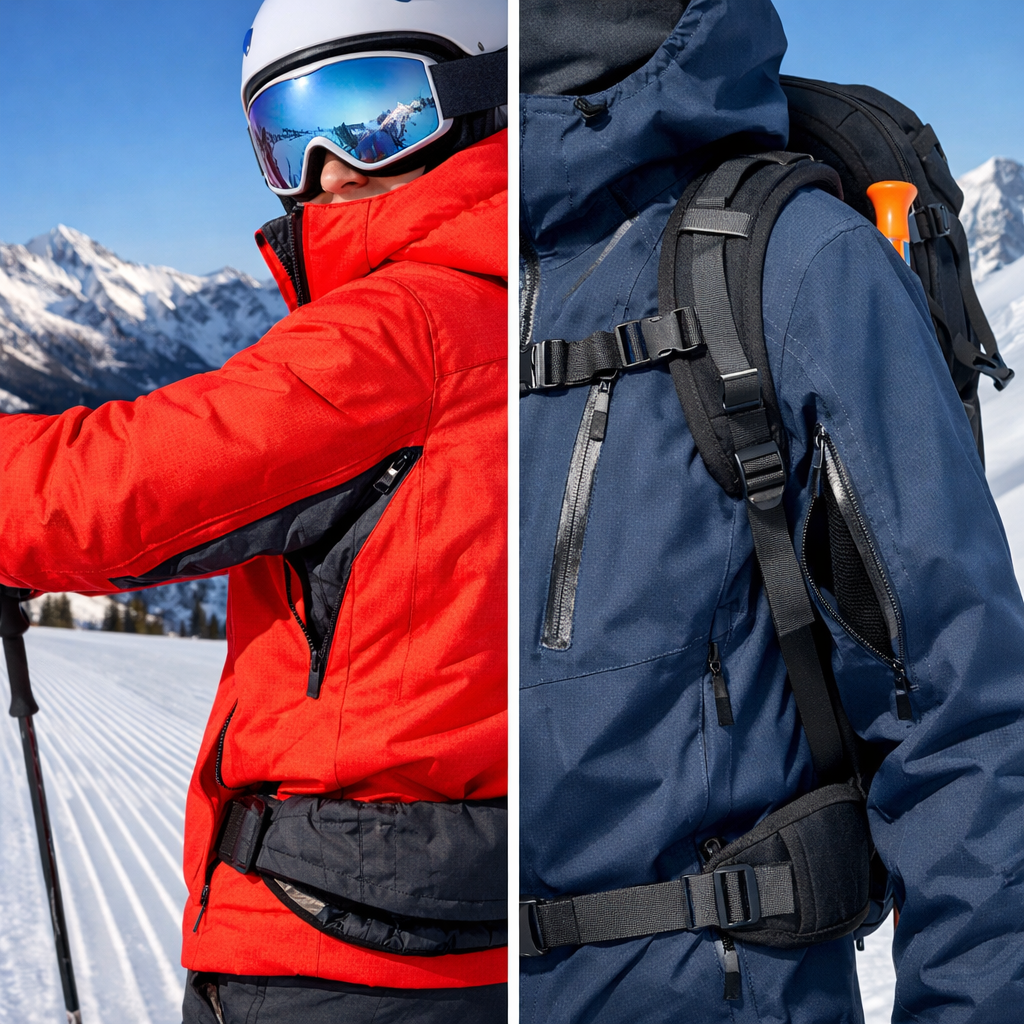
Seven Clear Differences: Resort vs Backcountry Ski Jackets
Seven Clear Differences: Resort vs Backcountry Ski Jackets
Resort ski jackets prioritize staying warm and dry for lift rides and groomed laps, while backcountry jackets focus on breathability, mobility, light weight, and packability. If you’re a first-time buyer or an occasional resort skier curious about touring, this guide breaks down the difference between resort and backcountry ski jackets with simple, step-by-step advice. We clarify ski shell vs insulated designs, explain 2L vs 3L construction, and demystify membranes like Gore‑Tex—plus how denier signals durability. You’ll get clear pros and cons for each use case, practical checklists, and budget cues so you can choose with confidence and avoid overspending on tech you won’t use.
Hiking Manual
We offer calm, beginner-first guidance that fits your pace, budget, and terrain. We focus on comfort, safety, and recovery-first planning with value-first picks. Most resort skiers lean toward insulated, durable pieces built for chairlift time and storm days. New tourers do best with breathable 3‑layer shells that vent well, move easily, and pack small. Throughout, we emphasize real-world performance—how a jacket feels on a cold lift, how it vents on a skintrack, and where to save money without sacrificing safety.
Waterproofing and membrane
“A waterproof membrane is a thin barrier laminated to fabric that blocks liquid water while allowing water vapor to escape. Common membranes include Gore‑Tex and brand‑proprietary options. Higher ratings (e.g., 20k) resist heavy, prolonged precipitation; breathability ratings indicate how quickly sweat vapor can move out.” Snow Magazine calls 20k/20k a reliable benchmark for storm-ready performance in ski shells, and testers note Gore‑Tex Pro is so breathable “you have to work really hard to sweat in this” (see Snow Magazine’s best ski jackets roundup).
Priorities diverge by terrain:
- Resort: Pair robust waterproofing (20k/20k or proven membranes) with thicker, comfortable builds for chairlift exposure, wet snow, and wind.
- Backcountry: Favor high-breathability membranes that still block storms for sustained climbs; venting speed and moisture management matter more than lab waterproof numbers.
Membrane comparison (typical traits)
| Membrane type | Waterproof rating | Breathability note | Best for | Notable example |
|---|---|---|---|---|
| Gore‑Tex Pro | Very high storm resistance; fully seam‑sealed | Top-tier vapor transmission for high output | Touring and mixed alpine | Arc’teryx Rush |
| Gore‑Tex ePE (new ePTFE alternative) | Highly waterproof; durable DWR | Balanced breathability; lighter eco‑minded laminate | Crossover resort/touring | Arc’teryx Sabre (ePE) |
| Gore‑Tex PACLITE® | Reliable waterproofing in a light package | Prioritizes low weight and packability | Lightweight touring, spring missions | Minimalist PACLITE touring shell |
Tip: Prioritize fully seam‑sealed construction and a durable water repellent (DWR) finish to maintain performance as fabric wets out. For a broad primer on membranes, ratings, and real-world tradeoffs, see Switchback Travel’s ski jacket guide.
Insulation
Insulated jackets lead traditional resort categories because they’re warm, grab‑and‑go designs that simplify layering. Backcountry users typically choose uninsulated shells to keep bulk and sweat in check during climbs, then add or shed layers as conditions shift.
“Insulation is the material inside a jacket that traps warm air to reduce heat loss. Common types include synthetic fills like PrimaLoft and natural down. More insulation increases warmth but adds bulk and can reduce breathability; shells skip insulation to allow flexible layering.” Premium pieces may pair light synthetic fills (e.g., PrimaLoft Gold) with four‑way stretch panels to boost warmth and mobility without excessive weight, as highlighted in Snow Magazine’s testing.
Layer stacks that work:
- Resort cold: insulated ski jacket + midweight base.
- Variable resort: lightly insulated (40–80 g) or shell + fleece midlayer.
- Backcountry: 3L ski shell + wicking base + active‑insulation midlayer; stash a puffy for transitions.
Construction
Price, breathability, and durability shift with construction. According to Switchback Travel’s ski jacket guide, most budget and midrange resort pieces use 2‑layer construction and run about $200–$500, while 3‑layer shells typically start around $400 and reach $750+; 3‑layer jackets generally weigh less, block wind and moisture more consistently, and breathe better—making them a go‑to for backcountry.
“2‑layer (2L) construction bonds a face fabric to a membrane with a loose liner for comfort; it’s durable but bulkier. 3‑layer (3L) construction sandwiches face, membrane, and backer into one sheet, cutting weight and bulk while improving breathability and weather integrity.”
Pros and cons
- 2L (best for resort value and comfort)
- Pros: Softer hand feel, warmer/insulated options, lower price, quieter ride on lifts.
- Cons: Heavier and bulkier; can run warmer and less breathable on climbs.
- 3L (best for touring and mixed conditions)
- Pros: Lighter, more breathable, consistent weather protection, dries faster.
- Cons: Pricier; often needs thoughtful layering for lift days.
Durability and fabric denier
“Denier (D) measures the linear mass of fibers in the fabric; higher D usually means thicker, tougher textiles better at resisting abrasion. Lower D saves weight and packs smaller but can be less durable in harsh, lift‑served environments.”
Useful ranges:
- Resort durability target: roughly 100D or higher to handle chairlift scuffs, tree brushes, and frequent wear.
- Backcountry shells: often 40D–70D for meaningful weight savings on the skintrack.
- Compromise: about 80D balances durability and weight—good for a one‑jacket quiver.
Example: The Arc’teryx Sabre uses a 3‑layer Gore‑Tex ePE laminate with an 80D face fabric—a solid crossover spec noted in BetterTrail’s ski jacket overview.
Weight and packability
Backcountry shells are engineered to compress and weigh less because every gram counts uphill. Resort jackets accept extra bulk for insulation, plush linings, and features like powder skirts and hand‑warmer pockets.
Practical packability checks:
- Confirm the jacket stuffs easily into your pack with skins, layers, first‑aid, and water.
- Check if powder skirts are removable or stowable to reduce volume on tour days.
- Ensure the hood and hem cinches are low‑profile and won’t snag inside a pack.
Quick weight‑vs‑features checklist:
- Grams: lighter for tours; weight is less critical at resorts.
- Denier: lower D saves weight; higher D boosts durability.
- Vent length: longer pit zips aid climbs.
- Pockets: keep enough for resort convenience; streamline for touring.
- Powder skirt: helpful at resorts; removable for touring.
- Helmet‑compatible hood: essential for storm skiing and ridge wind.
Breathability and venting
The core difference: touring shells rely on higher‑breathability membranes and big pit zips to dump heat on climbs, while resort designs may include vents but tilt toward insulation and comfort for passive lift time. Testers often praise long pit zips (around 12 inches) for rapid temperature control on skintracks, a detail echoed in Snow Magazine’s field notes. Stio’s shell jacket primer highlights side vents, robust DWR finishes, and lightweight, seam‑sealed PACLITE® builds as smart tools for alpine touring.
“Breathability describes how effectively a fabric lets moisture vapor escape. Higher breathability reduces sweat buildup and chills during stop‑and‑go activity. Real‑world venting—pit zips, mesh‑lined pockets, and two‑way front zips—often matters as much as lab ratings during uphill travel.”
Fit and features
Resort‑specific jackets usually have a roomier cut with a longer drop hem for chairlift comfort and powder protection. Backcountry shells lean trim and articulated to minimize bulk, reduce snagging under a pack, and improve range of motion on kick turns and bootpacks.
Feature priorities
- Universal: helmet‑compatible hood, fully taped seams, waterproof zippers for storm protection.
- Resort‑leaning: cozy collar and chin guard, powder skirt (detachable or stowable adds versatility), RFID/pass pocket, big hand‑warmer pockets.
- Touring‑leaning: long pit zips, chest pockets placed to clear a pack hip belt, two‑way front zipper for venting on steep climbs.
Simple fit test
- With a pack on, reach overhead, twist at the torso, and squat.
- Sleeves should still cover your wrists; the hem shouldn’t ride above your harness or pack belt.
- The hood should cinch securely over a helmet without pulling the collar into your face.
How to choose for your skiing style
A quick decision flow:
- Mostly lift‑served? Choose an insulated or 2L/insulated jacket with ≥100D fabric for warmth, wind blocking, and durability through storm cycles. Switchback Travel’s ski jacket guide aligns this with budget‑friendly comfort.
- Regularly tour? Pick a 3L shell (40D–70D) with a high‑breathability membrane and long pit zips for efficient moisture management on climbs.
- Split time between both? A breathable 3L crossover shell (~80D) with resort niceties (powder skirt, pass pocket) bridges seasons and trips.
Context tip: Where access allows, backcountry seasons can run longer into the shoulders—favoring breathable shells you can layer across spring and early winter, as noted in PeakRankings’ backcountry vs. resort explainer.
Example models to illustrate categories (not endorsements):
- Touring‑focused: Arc’teryx Rush.
- Value 3L: Outdoor Research Carbide, highlighted in OutdoorGearLab’s best ski jackets testing.
- Crossover: Arc’teryx Sabre (80D face, ePE laminate).
Frequently asked questions
Are 2-layer jackets good enough for occasional backcountry days?
Yes—if you prioritize budget and plan shorter tours in moderate weather; at Hiking Manual, we suggest a lighter 3L shell for frequent or sweaty climbs.
What waterproof rating should I look for if I ski mostly at resorts?
Aim for 20k/20k or a proven membrane with a sturdy face fabric; Hiking Manual favors that balance for all‑day storm protection plus comfort and durability.
Can one jacket work for both resort days and touring?
A breathable 3L shell with ~80D fabric, long pit zips, powder skirt, and a pass pocket can bridge both, and Hiking Manual recommends adding midlayers for cold lift days.
Do I need insulation if I run cold but plan to tour?
Choose a shell and manage warmth with active‑insulation midlayers; Hiking Manual’s approach keeps you warm on lifts without overheating on climbs.
How should a ski jacket fit for comfort and safety?
It should allow full reach without hem lift, keep sleeves over the wrists, and fit a helmet under the hood; a trim, not tight, fit improves mobility, venting, and pack comfort.