Pre-Run Meals for Long Runs: Steady Energy, No Stomach Surprises
Pre-Run Meals for Long Runs: Steady Energy, No Stomach Surprises
Dial in your pre-run meal and you’ll run steadier, feel calmer, and spend less time negotiating with your stomach. Here’s the simple answer to what to eat before a long run for steady energy: choose low-fat, low-fiber, carb-forward foods; time them 1–4 hours pre-run; hydrate with fluids and electrolytes; and practice your plan in training. Use the 1–4 g/kg carbohydrate ladder (matched to hours before you start) and keep last-minute top-offs small and familiar. At Hiking Manual, we favor simple, repeatable routines you can test in training. The result is reliable energy and no stomach surprises—so you can focus on the miles, not the bathroom line.
The simple fuel plan for long runs
- Keep it simple: choose low-fat, low-fiber foods and favor higher simple carbohydrates to reduce GI issues and speed digestion (a common pre-run pitfall is too much fat or fiber) [What to Eat Before and After a Long Run, fANNEtastic food].
- Hit an evidence-based target: consume 1–4 grams of carbohydrate per kilogram of bodyweight in the 1–4 hours before you start. Match grams to hours and run length [What to Eat Before a Long Run, Outside].
- Quick-start number: many runners do well with 50–90 g total carbs before or early into runs longer than 60 minutes—use this as a testable starting point [The Proper Way to Fuel Before a Long Run, Runner’s World].
Simple carbohydrates Simple carbohydrates are quick-digesting sugars found in foods like white bread, bananas, rice cakes, gels, and sports drinks. They raise blood glucose rapidly, making them ideal immediately before and during long runs when you need fast energy and minimal stomach workload. They’re your easy fuel on go day.
Step 1: Set your timing window
Eat a pre-run meal 1–4 hours before you run to prevent hunger dips and stabilize blood sugar; match portion size to the window you choose [What to Eat Before Running, Healthline]. The easy ladder: 1 hour ≈ 1 g/kg carbs; 2 hours ≈ 2 g/kg; 3 hours ≈ 3 g/kg; 4 hours ≈ 4 g/kg [What to Eat Before a Long Run, Outside].
- Early starts: favor a 60–90-minute snack window.
- Mid-morning/afternoon runs: use a 2–3-hour full meal window.
- Last-minute: top off with 15–25 g of quick carbs 15–20 minutes pre-run.
Step 2: Pick the right carbs and keep fat and fiber low
Prioritize easy-to-digest carbs and keep fat and fiber minimal. High-fat, high-fiber, or unfamiliar foods before running are common triggers for GI distress—especially on long efforts. Fats digest slowly and can feel heavy if eaten close to the start [What to Eat Before Running, Healthline]. If you’re eating more than 1 hour before, include a small amount of protein (about 10–15 g) to support muscles without slowing digestion.
GI distress GI distress is exercise-related digestive discomfort—cramps, bloating, nausea, or urgent bathroom needs. It’s often triggered by high fat, high fiber, unfamiliar foods, dehydration, or under-practiced fueling. Simplifying pre-run foods, matching meal size to timing, and rehearsing your plan during training markedly reduces risk on long runs.
Step 3: Build your meal by the clock
3–4 hours before
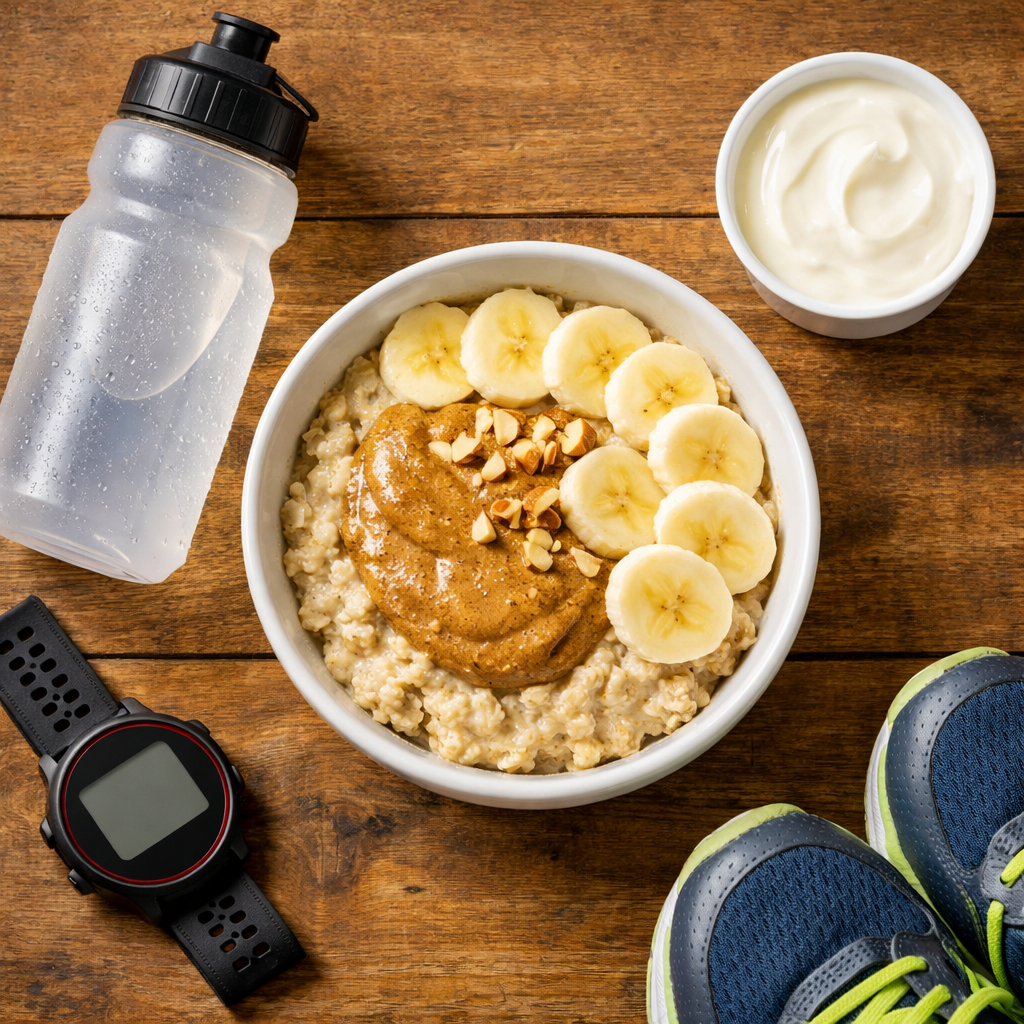
Aim for a fuller meal that’s mostly carbs, moderate protein, and minimal fat/fiber to top off glycogen without rocking your stomach. Examples include a bagel (about 50–60 g carbs) with a little peanut butter and a banana, or oatmeal with milk/yogurt and honey. Pancakes or waffles with syrup and fruit, a fruit–oats–yogurt smoothie, or a white rice bowl with egg whites and a splash of soy sauce all fit the template.
1–2 hours before
Choose lighter, carb-forward snacks that are easy to digest. Good picks include toast with jam, half a plain bagel, low-fiber cereal, a banana, applesauce, rice cakes, or dates [What to Eat Before a Long Run, STYRKR]. A thin layer of nut butter on toast with sliced banana remains a reliable, widely tolerated combo. If you include protein and you’re >60–90 minutes out, keep it small (10–15 g) and low-fat.
0–60 minutes before
Now it’s all about fast carbs and small portions. Grab a small banana, gel, chews, pretzels, a sports drink, or a rice cake. Keep the last-minute top-off to roughly 15–25 g carbs in the final 15–20 minutes and make sure it’s familiar and low-fiber [What to Eat Before a Long-Distance Run for Energy, Xendurance].
Step 4: Hydrate smart with fluids and electrolytes
Arrive at the start hydrated—not sloshy. As a baseline, sip 16–24 oz of fluid in the 1–3 hours pre-run [What to Eat Before a Long Run, Eat for Endurance]. In the final hour, aim for roughly 8–12 oz, sipping slowly to avoid a bouncing stomach (a common pre-run mistake). Adding sodium can increase thirst drive and help retain fluids; sports drinks can cover both carbs and electrolytes when appetite is low or sweat rate is high.
Electrolytes Electrolytes are charged minerals—primarily sodium, potassium, and magnesium—that regulate fluid balance, nerve signals, and muscle contractions. During long runs, replacing electrolytes lost in sweat supports hydration, helps maintain performance, and can reduce cramping risk when paired with steady carbohydrate intake and appropriate fluid volumes.
Step 5: Train your gut and personalize your plan
Treat fueling as a skill. You can train the gut to tolerate more carbs and a wider range of foods; adaptation is individual and can take weeks to months [How to Train Your Gut for Race Day, Runner’s World]. Progress gradually: start with small carb amounts and increase bit by bit. Log what you ate, when, how much, and any symptoms. And don’t try anything new on race morning—practice everything in training.
Sample pre-run menus that go down easy
| Timing | Menu example | Approx. carbs |
|---|---|---|
| 3–4 hours | Plain bagel + 1–2 tbsp peanut butter + medium banana | 75–95 g |
| 3–4 hours | Oatmeal (1 cup cooked) + milk or yogurt + 1 tbsp honey | 55–70 g |
| 1–2 hours | 2 slices white toast + jam | 40–50 g |
| 1–2 hours | Low-fiber cereal (1.5 cups) + milk alternative | 40–55 g |
| 1–2 hours | Applesauce cup + rice cake | 30–40 g |
| 0–60 minutes | 1 gel or 4–5 chews | 20–25 g |
| 0–60 minutes | Small banana or 12 oz sports drink | 20–30 g |
- Simple winning combo: toast + thin nut butter + banana.
- Morning-friendly picks: oatmeal, white toast, plain bagel. If you’re cramp-prone, skip high-fiber fruits (e.g., raspberries) right before you run.
Common mistakes to avoid
- Eating high-fat or high-fiber meals too close to start; keep pre-run foods low-fat, low-fiber to reduce GI distress.
- Overdrinking right before the run; sip ~8–12 oz in the final 30–60 minutes to avoid stomach sloshing.
- Trying unfamiliar foods on race day; practice your exact timing, foods, and amounts during training.
Gear and tools that make fueling smoother on trail days
Lightweight tents with vestibule and mosquito net options for early starts
A fast-pitch, lightweight tent with a vestibule gives you a protected spot for pre-dawn meal prep and gear staging, while mosquito netting keeps breakfast bug-free. Set a small sit pad and headlamp in the vestibule so topping off carbs 1–2 hours pre-run feels calm, not rushed.
Women’s lightweight hiking pants with elastic or adaptive fit for tummy comfort
Choose women’s lightweight hiking pants with elastic or adaptive waistbands to lessen abdominal pressure after eating and during early miles. Quick-dry stretch fabrics and low-bounce pockets keep gels and chews handy without jostling—ideal for runners prone to GI sensitivity.
Beginner trekking poles like TrailBuddy to reduce jostling when fueled up
Beginner-friendly poles such as TrailBuddy help smooth descents and cut torso jostle after your pre-run meal. Pick adjustable aluminum for durability and easy pack carry, and practice with poles on the routes where you plan mid-run fueling to keep pacing steady.
Breathable fleece midlayers for steady warmth without GI stress
Avoid chills—a common GI trigger—by using breathable fleece midlayers that vent well. Lightweight half-zips over a technical tee let you modulate warmth around fueling breaks without trapping sweat, keeping your core comfortable as you digest.
GPS and offline map tools to plan aid stops and snack windows
Use GPS and offline map tools to mark bathrooms, water sources, and 30–45-minute snack windows. Pre-load the route and set alerts every 20–30 minutes for sips and carb top-ups so you hit the 8–12 oz fluid window in the final hour without guesswork.
Book guides that blend narrative and practical insight for fueling mindset
Narrative-plus-practical book guides reinforce calm pre-race rituals and consistent nutrition habits. Jot takeaways and build a race-morning checklist so nothing is new on the day—your gut will thank you. For more trail-first playbooks, see Hiking Manual’s latest guides.
Frequently asked questions
When should I eat before a long run?
Eat a full pre-run meal 1–4 hours before, then top up with 15–25 g quick carbs 15–20 minutes before if needed. Choose longer windows for bigger meals, shorter windows for smaller snacks.
How many grams of carbs do I need before I start?
Use 1–4 g of carbohydrates per kg of bodyweight in the 1–4 hours pre-run—the simple ladder we use at Hiking Manual. Practically, many runners do well with 50–90 g total before or early into runs longer than 60 minutes.
Should I include protein or just carbs?
If you’re eating more than 1 hour before, include a small amount of protein to support muscles. Within 60 minutes of running, stick to mostly simple carbs for quick digestion.
What should I avoid to prevent stomach issues?
Skip high-fat, high-fiber, or unfamiliar foods close to start time. Keep portions small in the last hour, choose simple carbs, and sip—not chug—fluids to avoid a sloshy stomach.
How much should I drink before a long run?
Sip about 16–24 oz in the 1–3 hours before, then 8–12 oz 30–60 minutes prior. Include electrolytes if you’re a heavy or salty sweater, and start the run feeling hydrated—not full.