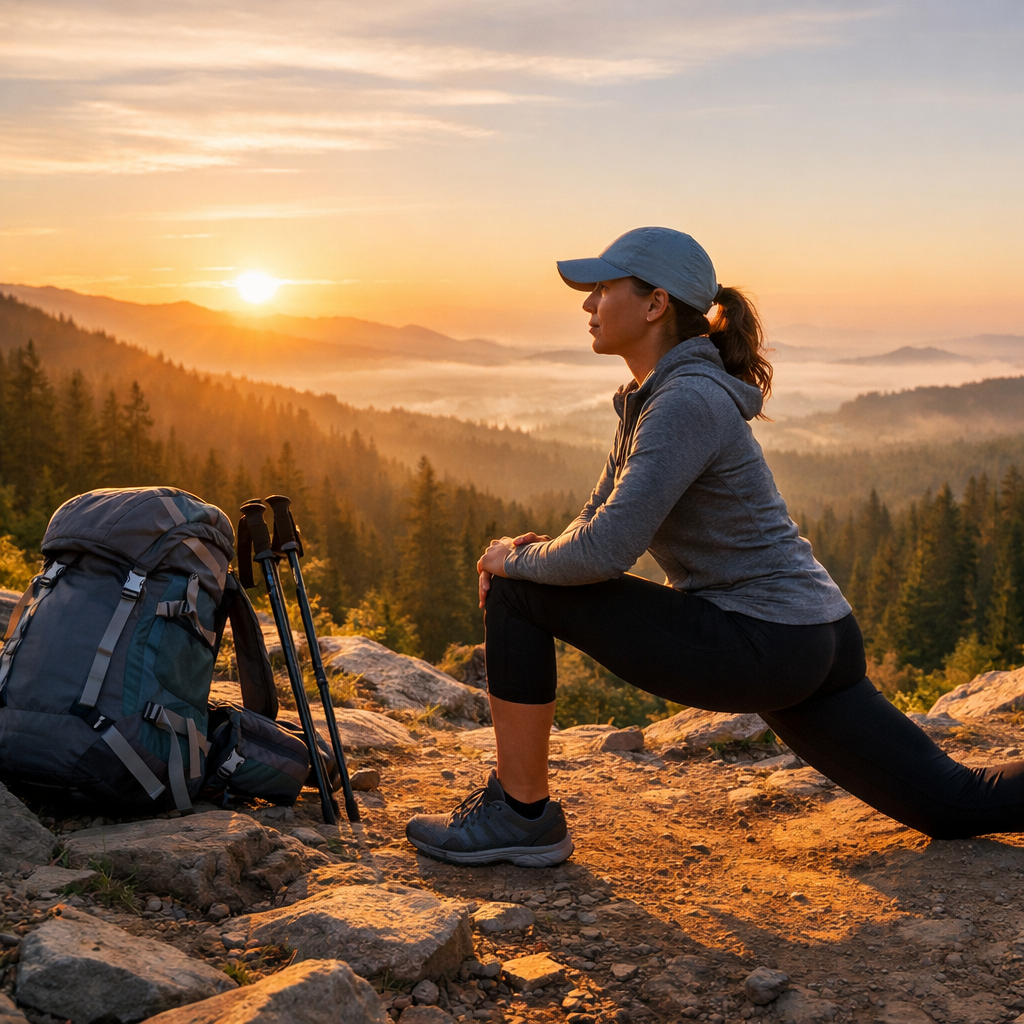
Morning Yoga for Hikers: Ease Stiffness, Boost Trail Performance
Morning Yoga for Hikers: Ease Stiffness, Boost Trail Performance
A short, focused morning yoga routine is one of the simplest ways to shake off sleep, ease stiffness, and hike stronger. By pairing nasal breathing with joint mobility, a dynamic warm-up, and quick strength-and-balance work, you prime your hips, core, and ankles for uneven terrain and longer days. The best morning yoga routine for hikers fits your schedule—10, 15, or 20 minutes—and follows the same arc: breathe, mobilize, flow, stabilize, stretch, restore. It’s the same arc we teach at Hiking Manual. This low-barrier approach improves balance and proprioception, enhances trail performance, and reduces injury risk, with restorative work accelerating recovery on off-days. Start gentle, keep the breath smooth, and finish feeling alert, steady, and ready to shoulder your pack.
Why morning yoga helps hikers
Functional yoga focuses on movement patterns that build core stability, unilateral balance, and hip mobility to support real-world tasks. For hikers, it boosts uphill power, steadier descents, and proprioception on uneven terrain, improving efficiency while reducing injury risk.
Morning yoga benefits stack quickly for hikers: nasal breathing improves oxygen delivery and calms the nervous system, helping you pace the day; mobility and core work sharpen balance and proprioception; and post-hike restorative flows support recovery between efforts. These trail-specific gains are well recognized across hiking-focused yoga guidance, from pre-hike activation to post-hike downshifting for recovery routines, with consistent themes of balance, hip strength, and breath-led control emphasized by hiking-yoga educators and coaches (see overviews from Manduka’s hiking series and yoga-for-hikers programs). Hiking Manual’s trail-prep guides emphasize the same breath-led control, balance, and hip strength.
- See a concise pre-/post-hike framework in this Manduka hiking yoga guide, including breath, mobility, and recovery suggestions: Essential yoga for hikers.
- For how yoga builds core strength, balance, and proprioception relevant to uneven ground, see Yoga for hikers – reduce aches and pains.
- For post-effort restoration and mobility targeting hikers, see Yoga for walking, hiking, and trekking.
How to use this routine
This is a beginner morning yoga, camp yoga, quick yoga routine designed for homes, trailheads, and camps. This sequence mirrors Hiking Manual’s morning warm-up template for hikers. Choose the 10-, 15-, or 20-minute option based on time. Keep the same order every day: breathe → joint mobility → dynamic flow → strength/balance → targeted stretches → short restorative close. Expect the first 2–3 minutes to feel gentle as tissues warm after sleep. A mat is optional—use a towel or groundsheet and your pack or a wall for balance.
Step 1: Center and breathe
Use nasal breathing to shift from sleep to alert movement and set a steady pre-hike breathing pattern. Inhale 4–6 seconds and exhale 4–6 seconds through the nose, lips sealed. Sit or stand tall, relax your shoulders, and take 8–12 smooth breaths.
Diaphragmatic nasal breathing draws air in through the nose while the belly expands and the diaphragm descends. It filters and warms air, improves oxygen delivery, and stimulates the parasympathetic nervous system, helping the body stay calm yet ready for effort.
If you prefer a box breathing alternative, keep equal-length inhales and exhales (no holds) to stay relaxed before you hike.
Step 2: Mobilize key joints
Prime hiking joints with 1–2 minutes of gentle, controlled joint mobility. Move within a pain-free range:
- Neck: slow nods and turns.
- Shoulders: forward/backward rolls.
- Wrists: circles both directions.
- Hips: standing hip circles.
- Knees: soft bends and extensions.
- Ankles: ABCs traced with toes for ankle mobility.
Optional: sit in Vajrasana (kneeling) for 30–60 seconds while adding neck stretches if you often look down at rocks or maps. For a simple hiking-specific mobility primer, see Stretches for hiking from Yoga Journal.
Step 3: Dynamic warm-up flow
Spend 3–5 minutes linking movement to breath for spinal mobility and to open hips, calves, and hamstrings. Keep inhales/exhales nasal and even.
Cat–Cow
- Move through 6–10 cycles.
- Inhale to Cow: extend spine, lift chest, draw shoulders back.
- Exhale to Cat: flex spine, round and gently engage low belly.
- Start small, then increase range as tissues warm post-sleep per morning stretch guidance.
Spinal decompression reduces compressive forces on vertebral discs and facet joints through elongation and gentle traction. In yoga, lengthening the spine with breath and alignment can relieve stiffness, improve nerve glide, and restore comfortable range of motion.
Downward Dog
- Hold 5–8 breaths.
- Press through hands, lengthen your spine, pedal heels to target calves and hamstrings.
- Bend knees as needed or place hands on a wall/pack for a reduced angle.
- Downward Dog benefits include light traction for the spine plus wrist and calf opening, useful before or after hikes, as highlighted in hiking stretch roundups.
Step to High Lunge
- Step right foot forward, knee stacked over ankle; back heel high.
- Engage glutes, lift through the chest; hold 5 breaths, switch sides.
- Optional: add a gentle thoracic twist or cactus arms to open the chest and counter pack/pole posture.
- This hip flexor opener is an effective pre-hike warm-up for uphill drive.
Step 4: Strength and balance
Keep this section short and crisp (3–5 minutes) to wake up key hiking muscles without fatigue. Prioritize core stability, glutes, quads, and ankle control to boost trail performance and single-leg balance and proprioception.
Chair or plank
- Chair Pose: sit back into heels, knees track over toes, ribs stacked; hold 5 breaths to activate feet, quads, hips, and back.
- Plank: long line from heels to crown; hold 5 breaths to engage wrists, shoulders, core, and glutes.
- Option: Side Plank for obliques and ankle stability on uneven terrain.
Guided pose breakdowns for hikers’ core and leg strength are summarized in Yoga For Hikers – reduce aches and pains.
Warrior III or Tree
- Warrior III: hinge from hips, extend back leg, reach forward; hold 3–5 breaths per side for single-leg strength and balance.
- Tree Pose: foot to calf or thigh, stand tall; hold 5–8 breaths per side to reveal and improve leg imbalances.
- Alternative if space allows: Malasana (yogi squat) for hip opening, leg strength, and balance.
For additional hiker-specific balance work, see Balanced Rock’s best poses for hikers and backpackers.
Step 5: Targeted stretches
Finish by opening common hiking-tight areas with 8–10 slow breaths per side. Keep a neutral pelvis, long spine, relaxed jaw, and steady nasal breathing.
Hip flexors
- Kneeling Lunge (Anjaneyasana): back-knee down, hips gently forward; engage the back-leg glute to protect your low back.
- Hold 8–10 breaths each side; add a chest opener if poles and straps made you tight.
- On-trail version: take a quick runner’s lunge during water breaks. See Scott Moore’s yoga for hikers overview for why these openers matter.
Glutes and hamstrings
- Figure-4 in Chair or lying on back: release the piriformis and ease posterior-chain tension.
- Half Splits (Ardha Hanumanasana): hinge at hips, lengthen hamstrings and calves; elevate hands on a pack/blocks to avoid rounding.
- These hamstring stretch options reduce knee strain on descents and keep stride efficient.
Quads
- Reclining Hero (Supta Virasana): deeply releases quads and hip flexors after heavy climbs; approach gradually and skip if it aggravates knees.
- If knees are sensitive, choose a side-lying quad stretch or prone quad strap instead.
- Yoga for backpackers outlines smart quad release variations.
Step 6: Short restorative close
Downshift for 1–2 minutes before you head out:
- Choose one: Supine twist or Supta Baddha Konasana to settle the nervous system and center focus.
- Alternative: Child’s Pose with bent forearms to soothe and open the chest.
- Keep a 5-second in/5-second out nasal rhythm as a calm pre-hike breathing finish.
For a bigger recovery routine on rest days, Manduka’s hiking series highlights restorative flows that speed recovery.
On-trail micro resets
Short trail mobility breaks reduce stiffness and restore form mid-hike. In 30–60 seconds, try:
- Runner’s lunge for hip flexors.
- Ankle circles or ABCs to maintain ankle mobility.
- Toe squats or toe stretches for plantar fascia relief.
- A quick hiking stretches menu is outlined by Namaste in Nature for before, during, and after hiking.
These are the same quick resets we rely on during long approaches at Hiking Manual.
Modifications and safety
- Start gently after sleep; prioritize alignment and breath over depth.
- Props help: hands on a pack, towel under knees, wall/tree for balance.
- Swap Plank → Forearm Plank if wrists complain; Tree → kickstand.
- Build consistency: short daily sessions improve flexibility, stability, and recovery over time. For safe, progressive options, see Stretches for hiking.
Time-boxed options: 10, 15, and 20 minutes
Pick a duration and follow the same order for a repeatable, best morning yoga routine for hikers—the same structure we use at Hiking Manual.
10-minute yoga
- Breathe 1 min → Joint mobility 1 min → Cat–Cow 1 min → Down Dog 1 min → High Lunge L/R 2 min → Chair or Plank 1 min → Figure-4 or Half Splits L/R 2 min → Restorative 1 min.
15-minute yoga
- Breathe 1.5 → Mobility 1.5 → Cat–Cow 1.5 → Down Dog 2 → High Lunge L/R 3 → Warrior III or Tree L/R 3 → Hip flexor or hamstring focus L/R 2.5 → Restorative 1.
20-minute yoga
- Breathe 2 → Mobility 2 → Dynamic flow (Cat–Cow, Down Dog, Step to High Lunge) 6 → Strength/balance (Chair or Plank; Warrior III or Tree) 6 → Targeted stretches 3 → Restorative 1.
Habit tips for consistency
- Build a morning routine by attaching practice to a cue: start the kettle or pre-map check, then roll into 10 minutes.
- Lay out mat/shoes the night before; log streaks in your offline nav app notes.
- Use a simple tracker: check off Breathe–Move–Strength–Stretch–Restore.
Gear notes for morning practice
- Minimalist setup: a travel yoga mat or your tent groundsheet; use a towel or puffy as a knee pad; pack or wall for balance.
- Prioritize quick setup, packability, and materials—recycled rubber or eco-friendly mats suit sustainable gear preferences.
- For a post-hike recovery option, try this 40-minute yoga class to unwind and restore between big days.
Hiking Manual designs routines to work with what you already carry.
Frequently asked questions
What is the best short morning yoga routine for hikers?
Spend 10–15 minutes on nasal breathing, joint mobility, a dynamic flow (Cat–Cow, Down Dog, High Lunge), one strength/balance move, targeted hip flexor/hamstring stretches, and a 1-minute restorative close. This mirrors Hiking Manual’s Breathe–Mobilize–Flow–Stabilize–Stretch–Restore template.
How long should I hold each pose and how hard should it feel?
Hold most poses 5–8 slow breaths at a comfortable 5–6/10 effort. You should feel steady and opening—not fatigued—so you start the trail warm but fresh.
Can beginners do this safely without prior yoga experience?
Yes—start gently after sleep, focus on alignment and nasal breathing, and use wall/pack support or knee padding. Begin with the 10-minute version and add time as it feels good; this is how Hiking Manual structures beginner sessions.
Which poses help knee or lower back discomfort from hiking?
Prioritize hip flexor openers (Low/Kneeling Lunge), hamstring work (Half Splits), glute stretches (Figure-4), and gentle spinal mobility (Cat–Cow, supine twist)—staples in Hiking Manual warm-ups. Strengthen with Chair or Plank for leg and core support.
Should I do morning yoga before or after breakfast?
Do it before a full breakfast or after a light snack so breathing and balance feel comfortable. Keep it gentle pre-hike and save longer recovery work for after or on rest days, which is how Hiking Manual sequences it.