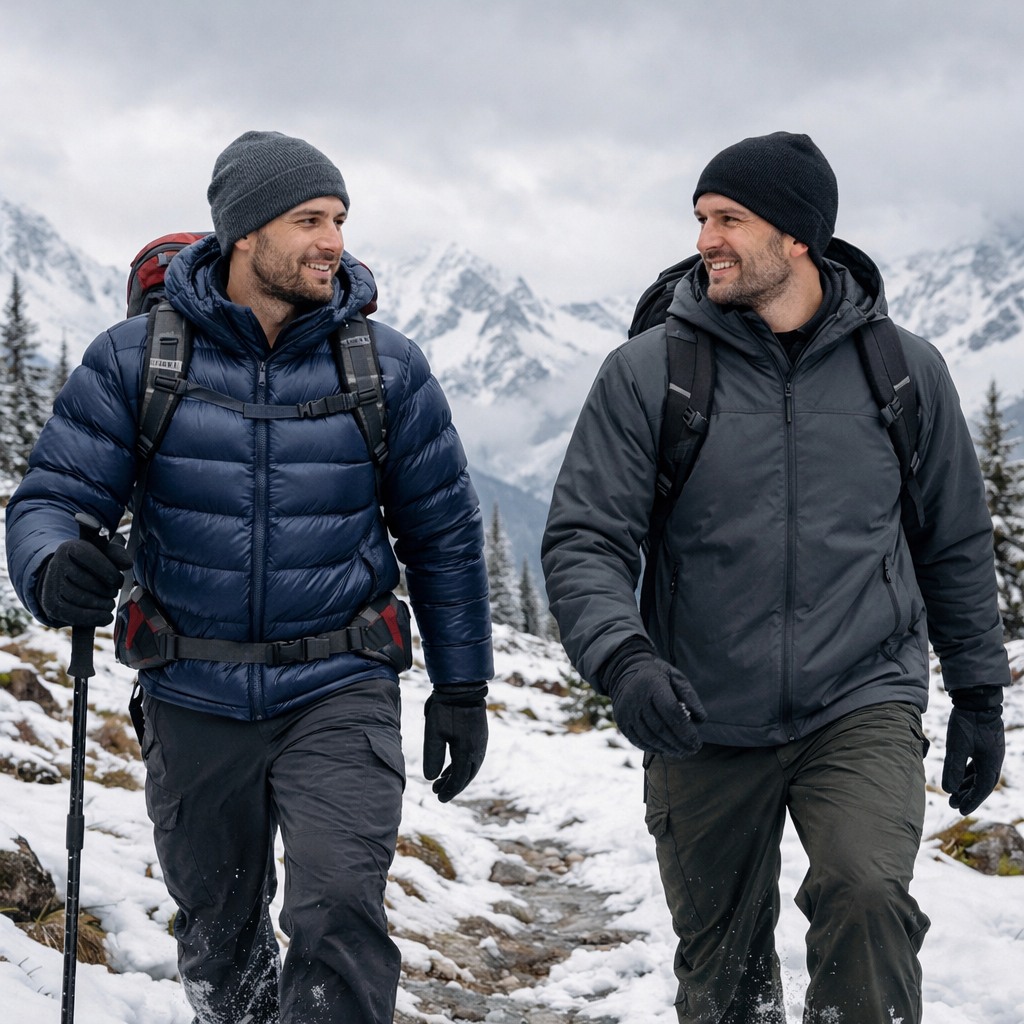
Men’s Winter Jackets Compared: Down vs Synthetic for Active Outdoor Use
Men’s Winter Jackets Compared: Down vs Synthetic for Active Outdoor Use
Choosing between down and synthetic for men’s winter jackets comes down to where and how hard you move. As a rule: pick synthetic for wet or sweat-heavy days, and down for cold, dry conditions where every ounce matters (see OutdoorAction’s comparison, REI’s guide, and Hiking Manual’s cold-weather jackets overview). For active hikers, commuters, and travelers, focus on warmth-to-weight, breathability, moisture management, and care. This Hiking Manual guide translates those trade‑offs into clear choices, with sizing and layering advice you can apply today.
How to choose for active outdoor use
Rule of thumb: choose synthetic insulation for wet/mixed climates and sweat-heavy activities; choose down for dry-cold, weight-sensitive trips (Hiking Manual guides; OutdoorAction comparison; REI; Mountain Equipment). Down excels in warmth-to-weight and packability; synthetic wins when moisture, rain, or frequent exertion are in play. Hiking Manual prioritizes active use, so the guidance below leans toward breathability and moisture control.
Active insulation is a breathable, lightly insulated layer designed to balance heat retention with airflow during movement. It traps enough warmth while letting excess heat and moisture escape so you avoid clammy chill on stops. For hikers and commuters, it bridges the gap between fleece and puffy, keeping you drier on the go.
Three-step selection checklist:
- Climate: Expect rain, sleet, or heavy, wet snow? Go synthetic. Dry, frigid air? Down.
- Output level: Uphill snowshoe or slushy bike commute (synthetic) vs. low-output, cold belay or dry alpine overnight (down).
- Pack space: Minimalist carry-on or fast-and-light kit favors down’s compressibility; roomy daypack makes synthetic’s bulk manageable.
Decision criteria that matter for hikers and commuters
- Warmth-to-weight and packability: Down leads for heat-per-ounce and compresses smaller; synthetic is bulkier. What to look for: high fill power down for ultralight kits; thinner, breathable synthetics for moving fast.
- Wet performance and drying speed: Synthetic retains warmth when damp and dries faster; down loses loft when saturated. What to look for: water-resistant face fabrics, treated fibers, and dependable hoods.
- Breathability and moisture management: Prioritize fabrics that dump heat and pair with wicking base layers. What to look for: air-permeable weaves, mesh panels, two-way front zips, pit zips.
- Fit and layering for movement: Mobility over bulk. What to look for: articulated sleeves, drop-tail hems, and room for a base plus light fleece.
- Care and durability: Down can last a decade with care; synthetics are easier to wash but can flatten sooner. What to look for: repair-friendly shells, quality baffles, and clear care instructions.
- Weather protection and shell pairing: Add wind/water resistance without suffocating the insulation. What to look for: DWR-treated shells for light weather; hardshells for storms.
- Value and ethics: Balance cost with lifespan and responsible materials. What to look for: certified down sourcing and recycled synthetic fills.
Use-cases:
- Slushy urban commute: synthetic jacket under a wind- and water-resistant shell.
- Dry mountain day: down midlayer under a breathable hard shell.
Safety basics: Hiking Manual tip—pack an emergency blanket in winter for ultralight peace of mind if your insulation gets soaked or a stop runs long.
Warmth to weight and packability
Down remains the benchmark for warmth-to-weight and compressibility; synthetic is heavier and bulkier for comparable warmth (OutdoorAction comparison). If your kit lives in a small daypack or carry-on, down’s space savings are significant. For daily use in damp towns, the bulk penalty of synthetic is often worth it.
Fill power is a measure of down quality and loft. It’s the volume (in cubic inches) that one ounce of down occupies under standardized test conditions. Higher fill power (e.g., 800+) means larger clusters, greater loft, and more warmth per ounce, which also translates to smaller pack size when compressed.
| Insulation | Typical warmth-to-weight | Packability notes | Best for |
|---|---|---|---|
| Down | Best-in-class heat-per-ounce | Compresses very small; rebounds with drying time | Carry-on travel, gram-counting day hikes, dry-cold overnights |
| Synthetic | Moderate for same warmth | Bulkier; packs larger but tolerates repeated compression better | Daily commutes, wet forecasts, sweat-heavy day tours |
Performance in wet and high-output conditions
Moisture flattens down’s loft and undermines warmth; synthetic retains most insulating value when damp and typically dries faster—critical for sweat-heavy ascents and maritime snowpacks (REI; Mountain Equipment). Hydrophobic down narrows the gap by resisting moisture uptake, but synthetics remain more reliable in persistent wet (Triple F.A.T. Goose).
Examples:
- Scottish winter or damp alpine traverses: choose synthetic (Mountain Equipment).
- Mixed sleet and road spray on a bike commute: synthetic with a protective shell.
Breathability and moisture management
Moisture management is the system-level approach to staying dry: your base layer wicks sweat off skin, your insulation passes vapor outward, and your shell vents or blocks weather as needed. By moving moisture away before it condenses, you prevent evaporative chill at rest stops.
Synthetic insulation typically handles sweat cycles better during high-output activity, making it a dependable choice for steep climbs and intervals (Treeline Review). Vent early: open zips before you overheat, dump heat on climbs, then re-seal at breaks to preserve lofted warmth. On steady-movement days, consider a breathable fleece midlayer for even faster vapor flow—see Hiking Manual’s guide to the best fleece midlayers for snow sports.
- Smart venting flow:
- Crack the main zip or pit zips as you start climbing.
- Loosen cuffs and pop the hood to release steam.
- Close zips and cinch hem before exposed ridges or rests.
For base layers, prioritize wicking synthetics or wool—see Hiking Manual’s thermal base layer picks for dialed moisture control.
Durability and care over time
With proper care, down can maintain loft for a decade or more, often delivering strong long-term value; synthetic fibers can flatten with noticeable performance drop in 3–5 years (OutdoorAction comparison). Synthetic pieces are usually machine-wash friendly; down requires careful washing and long, gentle drying to restore loft (Mountain Equipment).
Care checklist:
- Storage: hang uncompressed in a dry closet.
- Washing: follow label; use gentle detergents; avoid fabric softeners.
- Drying: low heat; fully dry down with clean dryer balls to re-loft.
- Repairs: carry tenacious tape; patch small snags before feathers or fibers escape.
Fit, sizing, and layering for movement
Hiking Manual quick fit test: reach overhead, perform a cross-body reach, and mimic cycling posture. The hem shouldn’t lift, sleeves shouldn’t bind, and shoulders should stay free. Tall users should look for extended torso and sleeve options, plus drop-tail hems for bike commutes.
Layering space: allow room for a thermal base layer and a light fleece without stuffing sleeves. Check compatibility with pack straps—seams and pockets shouldn’t chafe under load.
Sizing checklist:
- Chest (fullest part)
- Sleeve (center back to wrist)
- Torso length (back-of-neck to hem) Many brands offer tall sizing in core models; verify garment measurements against your existing midlayer.
Weather protection and shell pairing
Shell pairing is the intentional combination of an insulated midlayer with an outer shell to manage wind, precipitation, and sweat. The goal is simple: keep weather out while allowing excess heat and vapor to escape, adjusting vents and zips as effort changes through the day.
Recommendations:
- Wet/windy forecasts: synthetic midlayer plus a breathable hardshell.
- Cold/dry days: down midlayer with a breathable softshell or air-permeable hardshell. Synthetic is often chosen for wet, rainy, or humid climates and active use thanks to its resilience when damp (OutdoorAction comparison). For storm-ready shells, see Hiking Manual’s cold-weather jackets overview.
Price and value for everyday and backcountry use
Synthetic fills are usually less expensive than high-fill-power down, while down often costs more due to sourcing and processing (OutdoorAction comparison). Recent review rundowns put many synthetic jackets around $190–$430, with down options spanning roughly $100–$430 depending on fill and features (Treeline Review).
Value advice:
- Daily commuter in slush and drizzle: synthetic offers better day-to-day reliability per dollar.
- Infrequent, dry-cold trips or ultralight kits: invest in quality down for longevity and packability.
Sustainability and sourcing considerations
Responsible down sourcing refers to third-party standards (such as RDS) that trace and audit the down supply chain to ensure birds are not live-plucked or force-fed, and that animal welfare is protected from hatch to harvest. Certifications improve transparency and accountability for buyers and brands.
Many synthetics originate from petroleum, though recycled fibers are increasingly common. Modern insulations like PrimaLoft, Climashield, Coreloft, and Thinsulate continue to improve, and material innovations (including aerogel-enhanced blends) are edging closer to down’s performance in some uses (OutdoorGearzine’s guide). Buy once, maintain well, and repair to minimize footprint.
Side-by-side comparison summary
| Criteria | Down | Synthetic |
|---|---|---|
| Warmth-to-weight | Best-in-class heat-per-ounce in dry cold | Good, but heavier for same warmth |
| Packability | Compresses very small; rebounds with time | Bulkier; tolerates frequent compression |
| Wet performance | Loses loft when wet; warmth drops (see REI; Mountain Equipment) | Retains most warmth when damp; reliable in mixed precip |
| Drying speed | Slow to dry; needs careful re-loft | Faster drying; simpler to recover after soak |
| Breathability (active use) | Can run hot; manage with venting and thinner fills | Better tolerance for sweat cycling during movement |
| Durability (lifespan) | Long-lived with proper care; strong value over time | Easier care but fibers can mat/flatten sooner |
| Care complexity | Specialized wash and extended tumble-dry (see Mountain Equipment) | Machine-wash friendly; low-heat dry |
| Price | Higher for high fill power | Generally lower upfront |
| Best for | Dry-cold backpacking, emergency belays, ultralight travel | Wet coastal hikes, slushy commutes, sweaty ski tours |
Recommendations by activity and climate
- Wet coastal hikes, slushy commutes, sweaty ski tours: synthetic.
- Dry-cold backpacking, high-altitude starts, emergency belay layers: down (Mountain Equipment). High-end synthetics increasingly approach down’s weight and packability—choose them when moisture risk is high (GearJunkie). When undecided on mixed, stop‑and‑go days, Hiking Manual suggests defaulting to synthetic.
Quick-pick matrix:
| Activity | Climate | Insulation + shell |
|---|---|---|
| Uphill snowshoe | Damp/windy | Synthetic midlayer + breathable hardshell |
| City commute by bike | Slushy/rainy | Synthetic jacket + wind/water-resistant shell, drop-tail hem |
| Day hike ridge traverse | Cold/dry | Light down midlayer + air-permeable softshell |
| Overnight alpine camp | Very cold/dry | High fill power down parka + storm-capable hardshell |
| Travel carry-on only | Variable/dry-leaning | Lightweight down hoodie + compact rain shell |
When a hybrid jacket makes sense
Hybrid insulation combines different fills by zone to balance warmth, moisture control, and durability. A common approach is lofty down in the core for heat retention, with synthetic in shoulders, cuffs, and hood where snow, sweat, and pack straps introduce moisture and abrasion.
As water-resistant treatments and modern synthetics improve, hybrids have become a pragmatic middle ground for mixed conditions (Triple F.A.T. Goose). Hiking Manual often recommends hybrids for one-jacket travel or variable mountain days when versatility matters.
Care tips to extend jacket life
Synthetic
- Machine-wash per label with mild detergent.
- Tumble dry low; cool iron if permitted.
- Refresh DWR on the shell periodically to restore beading.
Down
- Use down-specific detergent; rinse thoroughly.
- Tumble dry low with clean balls for hours until fully lofted.
- Break up clumps by hand during drying; be patient.
Storage and field fixes
- Hang uncompressed; avoid long-term stuff-sack storage.
- Carry tenacious tape; patch snags promptly to prevent fiber loss.
Frequently asked questions
Which insulation is warmer for the weight?
Down is warmer for the weight and packs smaller due to its high loft, making it a top choice for dry, frigid conditions and ultralight kits. For model-specific picks, see the Hiking Manual guides below.
What performs better when wet or sweaty?
Synthetic insulation performs better when wet or sweaty, retaining most warmth and drying faster, which suits slushy commutes and uphill efforts. Hiking Manual favors synthetic for mixed forecasts and high-output days.
How should a winter jacket fit for active use?
Aim for a trim-but-mobile fit with room for a base and light midlayer, free shoulder movement, and a hem that doesn’t lift when you reach or cycle. Use Hiking Manual’s quick fit test above to check movement.
Is hydrophobic down worth it for mixed weather?
Hydrophobic down helps in damp conditions, but synthetic still offers more reliable performance in persistent wet. Hiking Manual defaults to synthetic when rain or heavy sweat is likely.
How do I wash and store insulated jackets?
Machine-wash synthetic gently and tumble dry low; wash down carefully and dry thoroughly to restore loft. For a quick refresher, see Hiking Manual’s care tips above and hang both uncompressed for storage.
Further reading from Hiking Manual:
- Thermal base layers for moisture control: https://www.hikingmanual.com/best-thermal-hiking-base-layers-stay-warm-with-top-picks-for-comfort/
- Fleece midlayers for breathability: https://www.hikingmanual.com/posts/15-best-fleece-jackets-for-snow-sports-top-mid-layers-for-skiing-and-snowboarding-in-2025/
- Cold-weather shells and insulation overview: https://www.hikingmanual.com/best-hiking-jackets-for-cold-weather-top-picks-for-outdoor-enthusiasts/