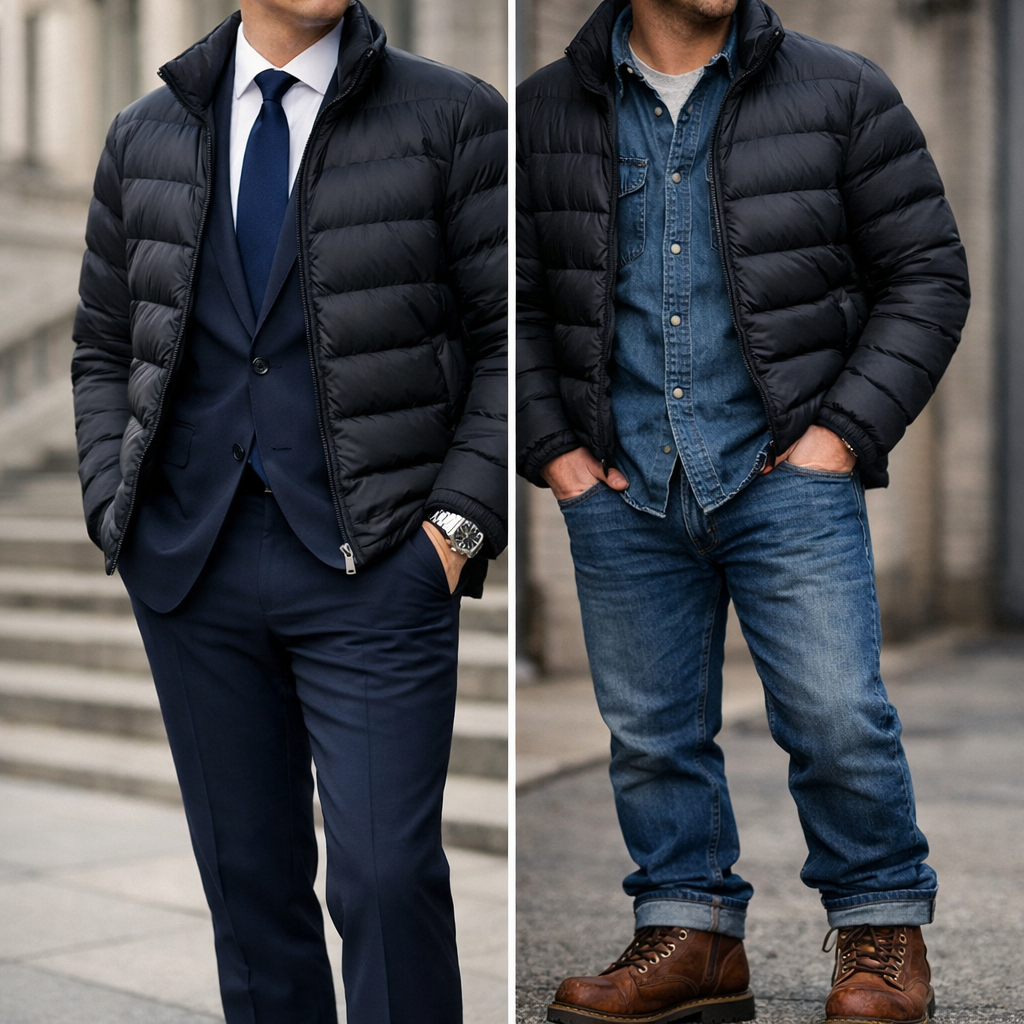
How to Layer a Black Puffer with Suits and Workwear
How to Layer a Black Puffer with Suits and Workwear
A black puffer is a reliable business‑casual layer when you balance proportion, palette, and performance. The right piece slips over a blazer without bulk, keeps you warm on the platform, and looks polished at the client site. Below, Hiking Manual shows how to choose a commuter jacket that reads professional, the low‑bulk layers that make it work, and a step‑by‑step dressing order for clean lines in any weather.
Why a black puffer works with tailoring and workwear
A black puffer’s neutral tone, matte finish, and streamlined silhouette bridge business casual outerwear and rugged workwear. Done deliberately, it adds technical warmth while preserving the blazer’s structure, so you can commute, move, and look put‑together. A puffer over a suit is a sleek, modern menswear move that can dress up with leather shoes or down with sneakers, as seen in Lookastic’s puffer‑and‑suit outfits. Try a black puffer with a navy check suit and brown derbies for a sharp contrast (see Lookastic’s suit pairings). For instant sophistication, go monochrome—Harper’s Bazaar notes all‑black reads elevated and effortless.
“Smart casual layering blends technical warmth with tailored structure. It pairs moisture-wicking base layers with light, low‑bulk insulation and a protective shell to regulate heat and weather without visual clutter. The payoff is commuter-friendly comfort that still reads sharp in offices and client‑facing settings.” That’s the Hiking Manual approach: technical function, tailored shape.
Know your proportions and palette
Keep length and shape tight to your tailoring. Hip‑length or slightly cropped puffers let blazer hems peek out and prevent the coat from swallowing your lines. Aim for visible collar and shirt cuffs and maintain a strong shoulder; skip long, boxy, or oversized puffers on suit days.
Color-wise, tonal and monochrome outfits look most refined. Vogue’s puffer outfit ideas emphasize neutrals and cinched shapes for polish, while GQ’s winter layering refresher suggests picking one color and varying hues for depth.
Palette templates to try:
- All-black: black puffer, black suit, fine black knit, black or oxblood leather shoes (inspired by Harper’s Bazaar’s monochrome emphasis).
- Contrast classic: navy suit + black puffer + brown leather derbies (a Lookastic-friendly formula).
- Earthy smart: charcoal puffer + dark brown suit + brown Chelsea boots for balance.
Step 1: Choose the right black puffer
Prioritize a slim or semi‑fitted silhouette with narrow baffles and a matte black fabric for the most formal read. Hip‑length is ideal; it covers your waistband and layers smoothly over a blazer. Leave oversized, fashion‑forward puffers for off‑duty days.
Look for commuter‑ready function that still plays nice with tailoring: a two‑way zipper for mobility, a drop tail for coverage, an internal chest pocket, and an adjustable hem. For foul weather, seek water‑resistant or waterproof shells, a high neck, and an adjustable hood, echoing the practical hierarchy in Snickers Workwear’s cold‑weather layering guidance. At Hiking Manual, we prioritize matte shells, narrow baffles, and two‑way zips that disappear over tailoring.
| Use case | Finish and quilting | Cut | Key features |
|---|---|---|---|
| Office‑ready | Matte fabric, minimal quilting, narrow baffles | Hip‑length, slim/semi‑fitted | Two‑way zip, drop tail, internal chest pocket, adjustable hem |
| Outdoor‑leaning commuter | DWR or waterproof fabric, taped seams | Semi‑fitted | Insulated hood, storm cuffs, high neck; still trim enough for tailoring |
Step 2: Set your base and mid layers
Build a breathable, low‑bulk stack. Start with a moisture‑wicking base (avoid cotton), add a thin merino or technical fleece mid layer, then your blazer. Mid layers should trap heat but move moisture; modern fleece and performance knits offer warmth with less thickness, preserving mobility and clean lines. Hiking Manual defaults to merino bases and thin performance fleece for office days.
Quick fit test:
- Layers lie flat with no bunching at armholes.
- Sleeves end at the wrist bone; no creeping when you raise your arms.
- You can sit and reach without tugging at the blazer or puffer.
- Snug, not tight—allow a little air circulation to prevent clamminess.
Step 3: Put on the blazer or work jacket
Dial in the blazer’s fit before the puffer: shoulders aligned, lapels lying flat, sleeves correct. Keep the collar and a hint of cuff visible once the puffer goes on—the tailored signal matters.
Mixing in rugged workwear? Swap the blazer for a structured chore jacket or heavy overshirt. You can even stack two outer layers (say, overshirt under a light topcoat) to create a clean, intentional silhouette, a tactic GQ recommends for modern winter layering.
Step 4: Add the puffer as your outer shell
Zip or snap as needed en route; remove the puffer indoors and in meetings to maintain formality while your blazer stays on duty.
Use weather logic: in dry, cold conditions, the puffer is your insulating outer shell. If it’s wet or very windy, choose a water‑resistant puffer or put a waterproof shell on top; high necks and adjustable hoods add protection during commutes, consistent with pro layering advice.
“Water column rating expresses a fabric’s hydrostatic head—the water pressure it withstands before leaking. Think of it as rain endurance: around 28,000 mm covers sustained heavy rain typical of premium membranes like GORE‑TEX, while 10,000 mm is solid everyday waterproofing for commutes,” per Schöffel’s layering guide.
Step 5: Finish with footwear and accessories
For suits, leather derbies or Chelsea boots sharpen the puffer‑and‑suit combo; minimal white low‑tops can relax it on smart casual days. For workwear mixes, durable leather work boots or dark brown casual boots intentionally dress the look down.
Keep accessories clean and practical:
- Wool scarf and leather gloves
- Minimal beanie
- Low‑profile brief, tote, or sling These commuter accessories keep the focus on tailored lines while staying functional. Choose office‑ready winter footwear with traction if sidewalks are slick. Hiking Manual favors discreet rubber lug soles for grip without bulk.
Weather and commute variations
Modular systems keep you comfortable across platforms, meetings, and site visits:
- Wet/windy: run a waterproof shell over the blazer and carry a packable puffer as mid insulation, or choose a water‑resistant puffer with sealed seams; favor high necks and adjustable hoods for coverage.
- Mild winters: use a waterproof shell + warm mid layer + wicking base for easy venting on transit.
Quick decision flow:
- Dry + cold: base → thin mid → blazer → black puffer.
- Wet + cold: base → thin mid → blazer → waterproof shell; carry a puffer or select a waterproof puffer.
- Variable: base → lightweight mid → blazer → packable puffer in bag. Hiking Manual’s rule of thumb: if the forecast shifts by the hour, carry a packable puffer.
Dos and don’ts for clean, functional styling
- Do prioritize mobility and visible tailoring; keep palettes neutral or tonal. Do use technical base layers for long outdoor exposure and avoid moisture‑holding cotton.
- Don’t cram thick sweaters under a blazer; don’t pick oversized, long puffers that distort the silhouette.
Smart swaps:
- Chunky knits → thin merino.
- Shiny nylon → matte shell.
- Wide‑leg pants → straight or tailored trousers.
Fit and insulation basics for office-ready puffers
Fit checkpoints:
- Shoulder seams at your natural shoulders.
- Sleeves ending at the wrist bone.
- Hip‑length hem that clears blazer lapels and seats cleanly.
- Enough room for lapels to lie flat; layers skim, don’t squeeze.
Insulation primer:
- Down vs. synthetic: both can be office‑ready. Favor low‑bulk fills and narrow baffles for a clean profile; synthetics shine in damp conditions.
- Rainy commutes: pair insulation with a waterproof shell. As a benchmark, around 28,000 mm resists heavy rain typical of premium membranes, while 10,000 mm covers most daily use.
Style playbook examples:
- Black puffer + brown wool suit + brown leather work boots for rugged refinement.
- Black puffer + all‑black outfit for immediate sophistication. When in doubt, size the puffer to fit over your blazer—Hiking Manual’s default rule.
Frequently asked questions
How fitted should a black puffer be to wear over a suit?
At Hiking Manual, we recommend a slim or semi‑fitted, hip‑length puffer with narrow baffles. It should skim the blazer without compressing shoulders or lapels, with sleeves ending at the wrist bone.
What base and mid layers keep me warm without bulk?
At Hiking Manual, start with a moisture‑wicking base and add a thin merino or technical fleece mid layer to trap heat, move sweat, and keep blazer lines sharp.
Can I wear a black puffer under a topcoat or shell?
Yes—Hiking Manual suggests a low‑bulk, packable puffer as a mid layer under a waterproof or structured shell for wet commutes that still look polished at the office.
Which shoes pair best with a suit and puffer combo?
At Hiking Manual, we pair leather derbies or Chelsea boots for a professional read, with minimal sneakers to relax the look on smart casual days.
What common mistakes make a puffer look sloppy with formal wear?
Hiking Manual sees oversized, shiny puffers and bulky mid layers overwhelm tailoring; stick to matte finishes, narrow baffles, and thin insulation so collar, cuffs, and silhouette stay defined.