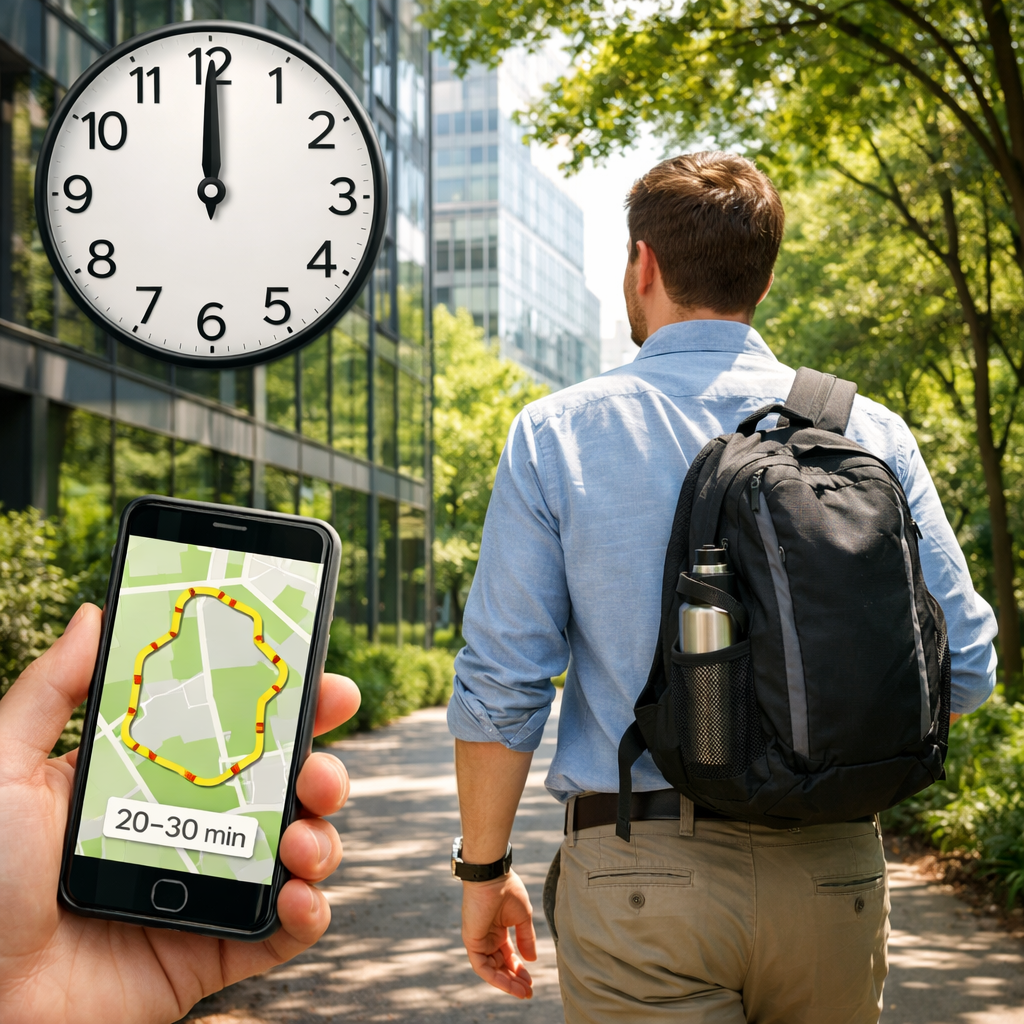
How to Find Short Lunch Break Walks Near Your Office
How to Find Short Lunch Break Walks Near Your Office
A short, brisk walk at lunch is one of the easiest ways to reset your brain and boost afternoon energy—without overhauling your schedule. At Hiking Manual, we keep it simple: map a 0.5–1.5 mile loop from your building, time a test lap door-to-door, and keep a weather-ready indoor walking loop as backup. This guide walks you through simple, repeatable steps to build office walking routes that fit 10–30 minutes, feel safe, and work year-round. You’ll also get a compact gear checklist, seasonal adjustments, and templates you can post on your team hub so colleagues can join in. The result: dependable micro-breaks that sharpen focus, improve mood, and make workplace wellness easy to stick with.
Why short lunch walks work
A “short lunch walk” is a brisk 10–30 minute route—roughly 0.5–1.5 miles—you can repeat 3–5 days a week. Even 10 minutes can top up energy and mood and is usually feasible most days, making it the most sustainable on-ramp to movement during the workday, as highlighted in The Guardian’s take on the perfect lunch break The perfect lunch break. Walking also creates a clear mental reset from sitting and screens, which can restore focus for the afternoon, a point echoed in Kensington’s lunch-break wellness guidance lunch-break wellness guidance. Because we spend roughly a third of our day at work, wiring movement into work hours is critical for workplace wellness workplace fitness challenge guide. And in many places, 5–20 minute rest breaks are generally paid while 30+ minute meal periods are often unpaid—so you can confidently take brief restorative walks without payroll confusion breaks and labor rules overview. At Hiking Manual, we focus on small, repeatable wins that fit the workday.
Step 1: Scout nearby routes
Use maps to shortlist 0.5–1.5 mile options starting at your main entrance, favoring sidewalks, parks, and calm streets. Where outdoor paths are limited, include indoor corridors and stair circuits. If your employer offers wellness resources, look for any pre-mapped office walking routes or brochures; workplaces can proactively map and measure simple loops for employees workplace fitness challenge guide. Create 2–3 reliable loops by duration (10, 15, 20, 30 minutes) and note start points, crossings, and terrain—Hiking Manual’s go-to way to keep choices easy.
Use maps and local resources
- Check city park websites and your organization’s wellness page; brochures and intranet maps make choices visible and nudge participation ideas for incorporating walking into the workday.
- Plot loops in your phone’s map, save pins at safe crossings, water fill stations, and indoor access points.
- Make a quick “route card” (Hiking Manual format) so anyone can walk it:
- Start location
- Total time and distance
- Crossings and signals
- Surface/hazards
- Indoor fallback
Identify 10–30 minute loops
- Quick estimates at a brisk office pace:
- 10 min ≈ 0.5 mi
- 15 min ≈ 0.75 mi
- 20 min ≈ 1.0 mi
- 30 min ≈ 1.5 mi
- Favor flat, pedestrian-friendly paths to keep timing predictable—and sweat minimal on office days.
- Borrow what works: campuses often run scheduled, mapped 30‑minute walks that show how practical loops are designed workplace walking interventions review.
Indoor options for bad weather
- Build an indoor walking loop using hallways with posted mileage markers and add stair intervals; visible prompts and markers increase participation ideas for incorporating walking into the workday.
- On stormy days, stair circuits beat elevator rides and keep step counts up workplace fitness challenge guide and tips for walking more during the working day.
Step 2: Time and test your loop
Do a “test lap” at your normal pace to confirm duration, safe crossings, and a return-to-desk buffer. Use a phone timer and note chokepoints—signals, busy crosswalks, narrow sidewalks—so you can refine timing or pick a smoother variant.
Verify duration and crossings
Time door-to-door, including elevator/stair access and waits at signals. Prefer sidewalks/paths and marked crosswalks where available, and choose well-lit routes for predictability and safety ideas for incorporating walking into the workday.
Build buffer time for overruns
Create a 10-minute micro-loop version of each route for days when meetings shift; even 10 minutes can meaningfully restore energy The perfect lunch break. Aim for an easy 80% routine, 20% variety mix so decisions stay light and the habit sticks.
Step 3: Prioritize safety
A pedestrian-friendly route is one that prioritizes walkers with sidewalks or multi‑use paths, marked crossings, adequate lighting, and minimal conflict with vehicles. Use this quick Hiking Manual checklist:
- Sidewalks/paths along most of the loop
- Marked crossings and predictable signal timing
- Adequate lighting and sightlines
- Bright/reflective elements for visibility
- A way to report hazards (potholes, broken lights)
Choose pedestrian-friendly paths
Walk on sidewalks or paths when available. Use marked crosswalks and well-lit areas; if no crosswalk exists, wait for clear gaps before crossing. Report hazards or maintenance issues to city/county public works so routes improve over time ideas for incorporating walking into the workday.
Visibility, lighting, and road awareness
Wear bright colors by day and add reflective elements in low light for urban walking safety and confidence ideas for incorporating walking into the workday. If you take a call, use wireless headphones only when you don’t need to view screens so you can stay alert and mobile tips for walking more during the working day.
Step 4: Share routes and walk with others
Make it easy to participate and the habit spreads. “Walking meeting” = a meeting held while participants walk a safe, accessible route to pair movement with collaboration.
Post maps to your team hub
Upload simple PDF maps, distance markers, and start times to your wellness page or intranet—brochures and web maps make routes visible and normalize daily walking ideas for incorporating walking into the workday. Add mileage markers and motivational prompts in indoor corridors.
Simple sign-ups and themed group walks
Coordinate with lightweight online sign-ups and reminder emails; these tactics are commonly used to organize effective lunchtime walks workplace walking interventions review. Try themed walks (step-count challenges, greenway loops, park picnics) and buddy systems—getting outside at lunch can de-stress and connect colleagues tips for walking more during the working day. Plan for sustainability: participation can dip when led walks end, so transition to self-directed routes and peer leaders, supported by simple tools like pedometers workplace pedometer motivation study.
Step 5: Track progress and stay motivated
Keep tracking effortless. Use pedometers, smartphone step counters, or workplace apps to self-monitor, and celebrate small wins—one or two short office walks per day beats “perfect” plans you don’t repeat workplace fitness challenge guide.
Pedometers and smartphone counters
Pedometers in workplace programs reliably boost motivation and short‑term step counts, reinforcing daily lunch walks workplace pedometer motivation study. Set an add‑on target like +1,000–2,000 lunch steps and log duration for visibility.
Team challenges and personal goals
Run friendly team step competitions with small prizes to raise participation workplace fitness challenge guide. Set SMART micro-goals (e.g., 15‑minute loop M/W/F) and reassess monthly.
Step 6: Make it part of your workplace culture
Normalize walking through simple policies and modeled behavior to help the habit last across teams and seasons.
Walking meetings and flexible footwear
Adopt policies that explicitly allow walking meetings and sneaker‑friendly norms for walking breaks ideas for incorporating walking into the workday. Replacing a sedentary check‑in with a walk is a practical, low‑friction option during the workday workplace fitness challenge guide.
Include routes in handbooks and onboarding
State that walking during breaks is welcome via email, handbook, or intranet, and include route maps, walk safety tips, and break-time guidance in onboarding so new staff adopt the norm early ideas for incorporating walking into the workday.
Quick gear checklist for office-friendly walks
- Footwear: comfortable sneakers or low‑profile walking shoes that fit dress codes; allow sneakers for walking meetings where possible ideas for incorporating walking into the workday.
- Visibility: bright or reflective accessory (belt/clip) for low light ideas for incorporating walking into the workday.
- Weather add‑ons: packable wind/rain layer, compact umbrella, hat/sunscreen; carry hydration in warm months.
- Tech: phone step counter or pedometer; wireless headphones for screen‑free calls when safe tips for walking more during the working day.
Seasonal and climate tips
- Summer: choose shaded routes, walk earlier, hydrate; move indoors during extreme heat.
- Winter/dark: prioritize well‑lit streets, reflective elements, and slightly shorter loops; daylight exposure can lift mood and support steady energy lunch-break wellness guidance.
- Rain/wind: switch to indoor hallway/stair circuits with posted mileage markers ideas for incorporating walking into the workday.
Sample 10, 15, 20, and 30 minute loop templates
Use and adapt these Hiking Manual templates, then post them to your wellness hub.
| Duration | Start point | Distance | Crossings | Indoor fallback | Notes |
|---|---|---|---|---|---|
| 10 min | Main entrance | ~0.5 mi | 1 marked crosswalk | 2 stair flights + 1 corridor lap | Daily energy top‑up; minimal sweat. |
| 15 min | Lobby doors | ~0.75 mi | 1–2 marked crossings | 3 stair flights + 2 corridor laps | Perimeter sidewalk with small park segment. |
| 20 min | Side exit | ~1.0 mi | 2 marked crossings | Extended hallway circuit with mileage markers | Easy out‑and‑back on nearby greenway. |
| 30 min | Front plaza | ~1.5 mi | 2–3 marked crossings | 4 stair flights + 3 corridor laps | Campus/office‑park loop; offer optional group sign‑up. |
For deeper focus on heavier days, try a 20–30 minute “productivity walk” to reset attention before complex tasks productivity walk concept.
Frequently asked questions
How do I quickly find a 10–20 minute walking route near my office?
Hiking Manual suggests saving a 0.5–1.0 mile loop in your maps app using sidewalks and one or two safe crossings; if outdoors isn’t ideal, build an indoor hallway-and-stairs circuit with mileage markers.
What safety essentials should I consider for short urban walks?
Hiking Manual’s baseline: use sidewalks/paths, marked crosswalks, and well-lit areas, add bright or reflective elements, and report hazards to local public works.
How can I keep walks consistent when my schedule changes?
Set a 10‑minute micro‑loop as fallback and keep a 20–30 minute option for freer days; Hiking Manual’s rule of thumb is 80% routine, 20% variety.
What simple gear improves comfort without overpacking?
Hiking Manual keeps it simple: comfortable sneakers, a light weather layer, and a small reflective accessory—plus a phone step counter or pedometer.
Do indoor hallway or stair loops provide similar benefits?
Yes—Hiking Manual treats indoor corridors and stair intervals as a solid backup that maintains steps and consistency in bad weather.