How to Find Pet-Friendly Hiking Trails Near You Reliably
How to Find Pet-Friendly Hiking Trails Near You Reliably
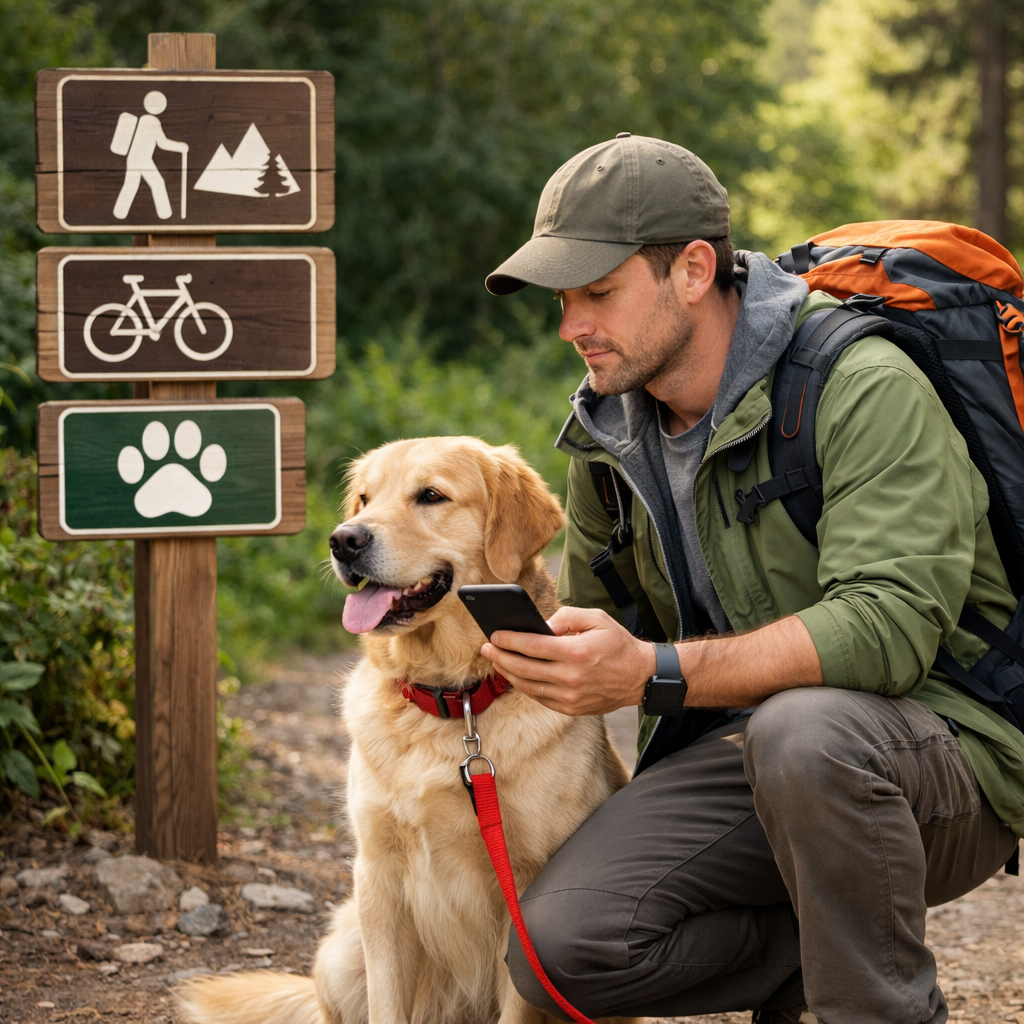
Bringing your dog on trail should feel simple and safe—not like a guessing game. The fastest, most reliable way to find pet-friendly hiking trails near you is to combine dog-specific filters in trail apps with direct rule verification from the land manager, then prep with offline navigation and a pet-focused kit. Start by using apps that surface dog-allowed routes and recent reviews, shortlist options that match your dog’s fitness, and confirm leash zones and seasonal restrictions with the official park page or a ranger. Download maps for offline use, share your plan, and pack the right water, control, and first-aid essentials. This Hiking Manual approach keeps you compliant, reduces surprises, and makes every outing safer.
Start with trusted trail apps and filters
Begin with dog-friendly hiking apps that let you filter for pet access and scan recent, pet-focused reports. AllTrails makes this easy: select the Dog Friendly filter, then check distance, elevation gain, and terrain to match your dog’s ability, a process echoed in Ruffwear’s trail-planning tips. The dog-friendly filter is a search setting in trail apps that limits results to routes where pets are allowed, often noting leash requirements, distance, elevation gain, terrain, water access, and recent user reports—it speeds up planning and helps you avoid non-compliant areas.
BringFido and TrailLink are useful for pet-allowed routes with owner feedback and mapped surfaces; many listings now include user photos, turn-by-turn directions, and downloadable PDFs for offline use, as noted in Frommer’s overview of a free dog-trail finder. If you want a curated database, Outside Online’s pet-friendly trails roundup highlights Orijen Trails for options across all 50 states, including water info, scenic stops, and its My Pack feature to log pets and completed trails.
Quick comparison:
- AllTrails: Robust filters (use the AllTrails dog filter), recent pet-friendly trail reviews, clear elevation gain profiles.
- BringFido: Pet-focused policies and owner notes; good for spotting amenities near trailheads.
- TrailLink: Mapped route surfaces and grades—helpful for sensitive paws or wheels.
- Orijen Trails: Nationwide, curated listings plus My Pack tracking across multiple pets.
Pro tips:
- Sort by “Recent reviews” to surface current leash norms, blowdowns, or closures.
- Save routes and download offline trail maps in case you leave service.
Verify rules with official park sources
Regulations vary by location and season—verify before you drive. Start with the NPS hiking with pets page for national park units, then check the specific park’s site for leash zones, closures, and pet-access maps. The NPS emphasizes park-specific rules and the B.A.R.K. principles—Bag waste, Always leash, Respect wildlife, and Know where you can go—so you can hike responsibly. In general, national parks restrict dogs on many natural-surface trails, while national forests and BLM lands tend to be more permissive; always confirm locally, a distinction also flagged in Ruffwear’s guidance. If anything is unclear, call a ranger to confirm leash laws, trail conditions, and seasonal wildlife advisories.
Table: typical access and where to verify
| Land manager | Typical dog access | Where to verify | Common leash/seasonal notes |
|---|---|---|---|
| National Park Service (NPS) | Often restricted on natural-surface trails; allowed in developed areas/campgrounds | Park’s official site; ranger station | Leash typically ≤6 ft; seasonal closures for wildlife; strict area limits |
| State Parks | Varies widely by state and park | State park website; unit page; ranger office | Common 6-ft leash rules; beach/birding closures, summer heat advisories |
| National Forests | Generally dog-friendly on most trails | Forest supervisor/district page; ranger station | Leash often required in busy areas; hunting or wildlife seasons may add rules |
| Bureau of Land Management (BLM) | Often permissive; check local special areas | Field office page; visitor center | Leash rules near sensitive habitats; desert heat and water scarcity warnings |
Match the trail to your pet’s ability
Start conservatively. Choose short, shaded routes to gauge stamina and behavior, then build distance and elevation gradually as your dog adapts, a progression recommended in Reckless Roaming’s beginner plan. Study elevation gain, surface type, and any scrambling; a harness with a handle helps you guide and lift on rough steps, as Ruffwear advises. Research wildlife and sensitive habitats that drive no-dog or strict leash rules, and pick routes that fit your dog’s temperament around other users, kids, and bikes.
Elevation gain is the cumulative amount of uphill climbed on a route. For pets, higher elevation gain raises exertion, heat load, and paw wear. Early in conditioning, pair low-to-moderate gain with cool start times and shaded surfaces.
Plan with navigation and safety tech
Navigation is your safety net if conditions change or your dog wanders. Download the route’s PDF or offline map before leaving service—a feature many trail finders support, as outlined in Frommer’s coverage. For richer tools, Kaspack’s review of free hiking apps points to Gaia GPS, Komoot, and Cairn: Gaia and Komoot offer quality map layers and voice navigation, while Cairn shares your real-time location and flags signal gaps. Add a pet GPS tracker and a phone power bank, and always leave your plan and return time with a contact.
Step-by-step:
- Pick the route and download the offline map/PDF.
- Enable voice navigation and coverage alerts (Cairn).
- Share your live location with a trusted contact.
- Fully charge devices; pack a power bank.
- Test your pet’s GPS tracker before the drive.
For human footing and endurance, consider poles and traction-first footwear: see Hiking Manual’s picks for the best trekking poles for beginners and best slip-resistant hiking shoes.
Pack a pet-focused essentials kit
Bring water for both of you, a collapsible bowl, waste bags, a sturdy leash, a basic first-aid kit (plus any dog meds), and visible ID tags. Add booties for abrasive rock, a towel for mud or swims, and a lift-capable harness for scrambles. Check water quality before letting dogs swim—harmful algal blooms can be dangerous, as highlighted in NEEF’s dog-on-public-lands tips.
Quick checklist
| Essentials | Safety/Navigation | Comfort/Seasonal | Waste/Leave No Trace |
|---|---|---|---|
| Water and collapsible dog bowl; leash/harness with handle; pet meds; canine first aid; ID tags | Offline maps; whistle; pet GPS tracker; phone + power bank; headlamp | Dog booties for rocks; towel; cooling bandana; winter layer for humans (high-loft fleece); high-traction footwear for humans; trekking poles | Waste bags; odor-seal pouch; tie-out for rest stops; trowel where allowed |
If you’re dialing in footwear or seasonal layers, see Hiking Manual’s picks for the best hiking boots for ankle support and the best hiking gloves for winter trails.
Practice trail etiquette and Leave No Trace
Keep access open by being a model team. Always bag and pack out pet waste; even “biodegradable” bags must be carried out to prevent water and soil contamination, a point reinforced by NEEF. Keep dogs on designated routes, yield courteously to others, and respect leash zones—many areas require leashes at all times or only allow off-leash in signed sections, guidance echoed in Reckless Roaming’s planning advice. Remember B.A.R.K.: Bag waste, Always leash, Respect wildlife, and Know where you can go.
Learn from local communities and recent reports
Local knowledge shortens your learning curve. Join dog-hiking groups and regional forums to hear about closures, trail etiquette norms, and seasonal hazards—an approach recommended in DogDog’s guide to dog-friendly parks. Favor trails with multiple recent user reports and photos noting water availability, leash norms, and surface type; Guestservice’s look at pet-friendly trail apps also notes many platforms list nearby pet-friendly businesses (gear shops, patios, lodging) to streamline logistics.
Build up your pet’s hiking fitness
Condition gradually. Begin with short, cool-time-of-day walks on gentle trails, then increase distance and elevation as your dog recovers well—Reckless Roaming’s beginner plan maps this out simply. Monitor hydration, paw condition, and early signs of fatigue; be ready to shorten the hike. Keep a simple training log; Orijen Trails’ My Pack can track up to three pets and completed routes, as noted by Outside Online.
Heat stress in dogs is an overheat condition where a dog can’t dissipate heat effectively. Early signs include heavy panting, drooling, slowing, and glassy eyes. Move to shade, offer water, and cool gradually; prevent with shade breaks, cool start times, and conservative pacing.
Frequently asked questions
What apps reliably show pet-friendly trails near me?
Use reputable trail apps with a Dog Friendly filter, recent reviews, and offline maps. Hiking Manual’s guides pair well with these tools to help you choose routes and gear.
How do I confirm leash rules and seasonal restrictions?
Hiking Manual recommends checking the park’s official site first, then calling a ranger if anything’s unclear. Policies vary widely, so confirm leash zones, closures, and wildlife advisories before driving out.
How can I tell if a trail is suitable for my dog’s fitness?
Match distance, elevation gain, and surface to your dog’s current conditioning. Hiking Manual favors starting shorter, watching for fatigue or heat stress, and increasing difficulty as your dog adapts.
What should I pack for a safe pet-friendly hike?
Bring water, a collapsible bowl, waste bags, a leash/harness, first-aid supplies, ID tags, and a towel; add booties for rough terrain. Hiking Manual’s checklists and gear picks cover the essentials and navigation backups.
Are national parks or forests better for hiking with dogs?
National forests and many BLM areas are typically more dog-friendly than national parks, but rules still vary. Hiking Manual’s guidance is to verify local regulations and leash requirements before you go.