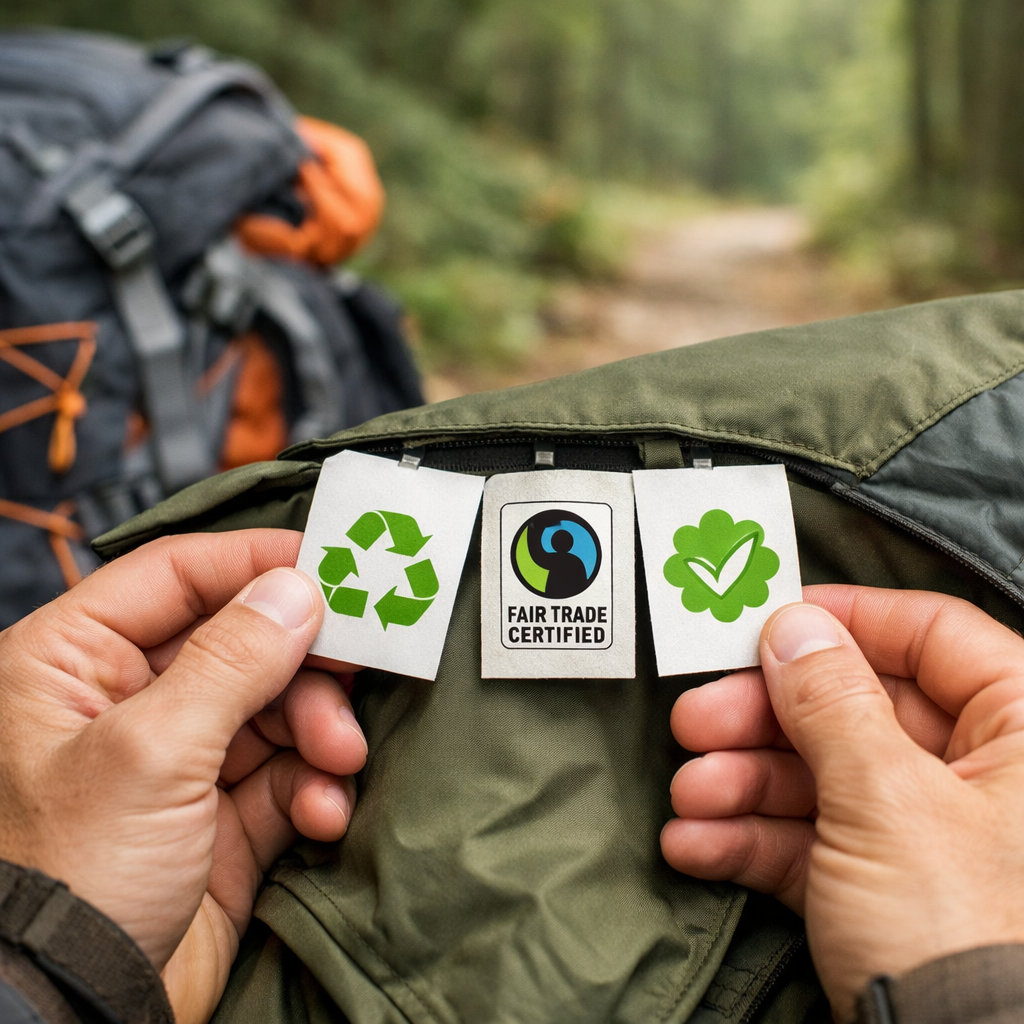
How to Choose Truly Sustainable Outdoor Brands: Certifications That Matter
How to Choose Truly Sustainable Outdoor Brands: Certifications That Matter
Choosing the best sustainable outdoor brands for hikers starts with two filters: credible certifications and real-world durability. Look for labels that audit chemicals, labor, and governance—and then confirm brands back that up with long-lasting materials, repair programs, warranties, and end-of-life options. Below, we explain which certifications matter most, how to evaluate eco-friendly hiking gear without getting greenwashed, and which brands are leading with circular repair and resale. We also compare value, because sustainability only works if your gear performs season after season. At Hiking Manual, we use these criteria to compare options so you can buy once, repair when needed, and keep gear in use longer.
Which outdoor certifications actually matter?
bluesign: A textile standard that screens chemicals at the input stage and enforces safer, lower-impact manufacturing across the supply chain. It helps reduce harmful substances and resource waste in finished fabrics. Learn how the system works on the official bluesign overview.
- Source: bluesign system explainer
Fair Trade Certified: Focuses on fair wages, safer working conditions, and a worker-controlled premium that funds community projects. Look for this on cut-and-sew categories like apparel, packs, and accessories.
- Source: Fair Trade Certified program basics
B Corp Certification: A company-level certification that evaluates social and environmental performance, legal accountability, and transparency. It’s broader than a product label and signals a governance commitment beyond a single line of gear.
- Source: B Lab’s B Corp overview
Together, these cover chemical safety (bluesign), worker welfare (Fair Trade), and whole-company responsibility (B Corp). None is a silver bullet—use them as strong signals alongside a brand’s repair, warranty, and materials choices. In Hiking Manual guides, we treat these as a baseline, then weigh longevity and access to repairs.
How should I evaluate sustainable brands beyond labels?
- Materials that last and lower impact: Recycled nylon and polyester for abrasion-prone items; traceable natural fibers; PFC-free DWR on shells; components designed for disassembly and recycling.
- Durability and field performance: Reinforcements in high-wear zones, proven weather protection, and sensible weight-to-strength trade-offs.
- Repair and circular programs: Easy access to parts, affordable repairs, and resale/trade-in so gear stays in use.
- Warranty and spare parts: Clear coverage and readily available buckles, zips, straps, and patches.
- Transparency: Impact reports, factory lists, and explanations of trade-offs (e.g., when virgin materials are used for safety-critical components).
- End-of-life: Take-back, recycling guidance, and materials marked for sorting.
- Value: Price aligned with lifespan and repairability; budget pathways like certified pre-owned. Hiking Manual prioritizes gear you can maintain on the trail and fix affordably at home.
Best sustainable outdoor brands for hikers right now
These brands blend credible certifications with durable, repairable designs and circular services. We highlight what stands out and where each offers the best value for eco-friendly hiking gear. Selections reflect Hiking Manual’s emphasis on durability, repair pathways, and clear accountability.
Patagonia
Patagonia pairs robust trail performance with one of the most mature circular systems in the industry. Through its Worn Wear program, the brand repairs, trades in, and resells gear to extend product life, keeping functional kit in circulation rather than in landfills (see Patagonia’s Worn Wear). Many garments use recycled nylon and polyester and Fair Trade Certified sewing. Bluesign-approved fabrics are common in technical lines. Net result: strong durability, easy repairs, and meaningful resale value.
VAUDE
VAUDE’s sustainability program is unusually deep for a full-line European brand, anchored by its Green Shape product label and rigorous material and chemical standards. The company details climate goals, materials choices, and social initiatives in its sustainability hub (see VAUDE sustainability). Expect bluesign-approved materials in technical pieces, PFC-free waterproofing in many shells, and a growing emphasis on repair and spare parts. Great balance of weather protection and responsibility, with solid value in the mid-to-premium range.
Arc’teryx
Known for alpine-grade durability and repairable construction, Arc’teryx backs products with its ReBird circularity initiative, which bundles repairs, resale, and upcycling (see Arc’teryx ReBird). Many shells use bluesign-approved materials and PFC-free DWR is expanding across lines. You pay premium prices, but ReBird repairs and strong secondhand value help amortize cost over a long trail life—ideal for hikers who punish their outerwear and midlayers.
Osprey
Packs face relentless trail abrasion; Osprey designs for that reality and supports it with the All Mighty Guarantee—lifetime repair or replacement for manufacturing defects, with robust in-house repair capacity (see Osprey All Mighty Guarantee). The brand uses recycled nylons across many series and offers spare parts and quick-turn repairs that keep packs out longer. For load-hauling hikers, this warranty plus durable recycled materials is a compelling sustainability-value combo.
Cotopaxi
A certified B Corp with an impact-first mission, Cotopaxi allocates at least 1% of revenue to its foundation and publishes project outcomes in its impact portal (see Cotopaxi impact). Expect recycled fabrics, Fair Trade Certified factories across several products, and hard-wearing designs that still feel light on the trail. Great choice for colorful daypacks and layers with credible social impact baked in.
tentree
As the name promises, tentree plants ten trees for every item and reports on reforestation progress and lower-impact materials in its impact dashboard (see tentree impact). While best known for lifestyle apparel, tentree’s hiking-adjacent layers use recycled and plant-based fibers and emphasize traceability. Strong choice for casual-to-light-hike kits with clear, verifiable impact.
Fjällräven
Fjällräven builds for decades of use: dense, field-repairable fabrics, classic hardware, and care guides that keep gear alive. Its sustainability portal outlines material choices, animal welfare, and longevity-first design (see Fjällräven sustainability). The G-1000 fabric family is a standout for abrasion resistance and reparability, making it a durable option for rugged trekking with straightforward field maintenance.
Side-by-side: certifications, circularity, and value
| Brand | Key certifications/standards | Circularity & repair programs | Warranty strength | Typical price | Best for |
|---|---|---|---|---|---|
| Patagonia | bluesign, Fair Trade; B Corp | Worn Wear repairs, trade-in, resale | Strong, with repair focus | $$$ | All-around hikers seeking top-tier circularity |
| VAUDE | bluesign (select), Green Shape | Repairs, spare parts (select) | Solid, product-dependent | $$–$$$ | Technical apparel with low-impact materials |
| Arc’teryx | bluesign (select) | ReBird repairs and certified resale | Strong, premium support | $$$ | Harsh-weather hikers needing durability |
| Osprey | Recycled materials | In-house pack repairs | All Mighty Guarantee | $$–$$$ | Load haulers; long-term pack ownership |
| Cotopaxi | Fair Trade (select); B Corp | Repairs (via service partners), resale | Good, product-dependent | $$ | Social impact with trail-ready designs |
| tentree | Lower-impact materials; B Corp | Take-back pilots, care guides | Standard | $–$$ | Budget-friendly layers with verified tree-planting |
| Fjällräven | Longevity-first materials | Care & Repair, waxable fabrics | Good, product-dependent | $$–$$$ | Rugged trekking with easy field repairs |
Notes:
- “Select” indicates not all products carry the same certification; check product pages.
- Price ranges reflect typical MSRP tiers and resale availability.
Certifications explainer: what each does well (and doesn’t)
- bluesign: Strong on chemical management and resource efficiency during textile production. It does not address labor or company governance directly. See the official bluesign system.
- Fair Trade Certified: Strong on worker premiums and safer conditions at the factory level. It’s not a materials or chemical standard. Learn more at Fair Trade Certified.
- B Corp: Evaluates the company’s overall social and environmental performance and legal accountability. It’s not a product safety or materials label. See B Lab’s B Corp overview.
Real-world trade-offs to expect
- Durability vs. recycled content: High-denier recycled nylon can rival virgin durability, but ultra-high-stress components (zippers, foams) may still be virgin for safety and longevity.
- Waterproofing vs. chemistry: PFC-free DWRs keep improving but often need more frequent care; prioritize brands that provide clear reproofing guidance.
- Ultralight vs. repairability: Featherweight fabrics are harder to repair in the field; if you’re rough on gear, pick slightly heavier weaves and modular parts you can replace.
Quick picks by need
- Most circular ecosystem: Patagonia (repairs, trade-in, resale via Worn Wear).
- Hard-use shells, lasting value: Arc’teryx (ReBird + premium construction).
- Packs you can keep forever: Osprey (lifetime repair support).
- Social-impact leader at fair prices: Cotopaxi (B Corp and Fair Trade lines).
- Euro-built technical apparel with strong chemical standards: VAUDE.
- Budget-friendly lifestyle-to-trail layers with verified planting: tentree.
- Rugged trekking with field-repairable fabrics: Fjällräven.
FAQs
Q: How do I spot greenwashing in outdoor gear? A: Look for third-party certifications, repair access, and transparent reporting; avoid vague claims like “eco-friendly” without specifics. Hiking Manual’s checklists use these signals to vet brands.
Q: Are recycled materials as durable as virgin ones? A: In many mid-to-high deniers, yes; prioritize reinforced zones, quality stitching, and brands offering repairs. Hiking Manual flags models with proven reinforcements and easy fixes.
Q: bluesign vs. Fair Trade—what’s the difference? A: bluesign governs chemicals and processes in textiles, while Fair Trade focuses on worker welfare and a community premium. Hiking Manual looks for both across core trail categories.
Q: What’s the most eco-friendly waterproofing right now? A: PFC-free DWR is the lower-impact choice; expect more frequent reproofing to maintain beading. Hiking Manual guides include simple care steps to extend performance.
Q: What should I do with worn-out gear? A: Use brand take-back or resale, repair where possible, and follow brand guidance for fiber-specific recycling. Hiking Manual’s disposal tips summarize common take-back and recycling options.
Sources cited in-line:
- Patagonia’s Worn Wear
- bluesign system explainer
- Fair Trade Certified program basics
- B Lab’s B Corp overview
- VAUDE sustainability
- Arc’teryx ReBird
- Osprey All Mighty Guarantee
- Cotopaxi impact
- tentree impact
- Fjällräven sustainability