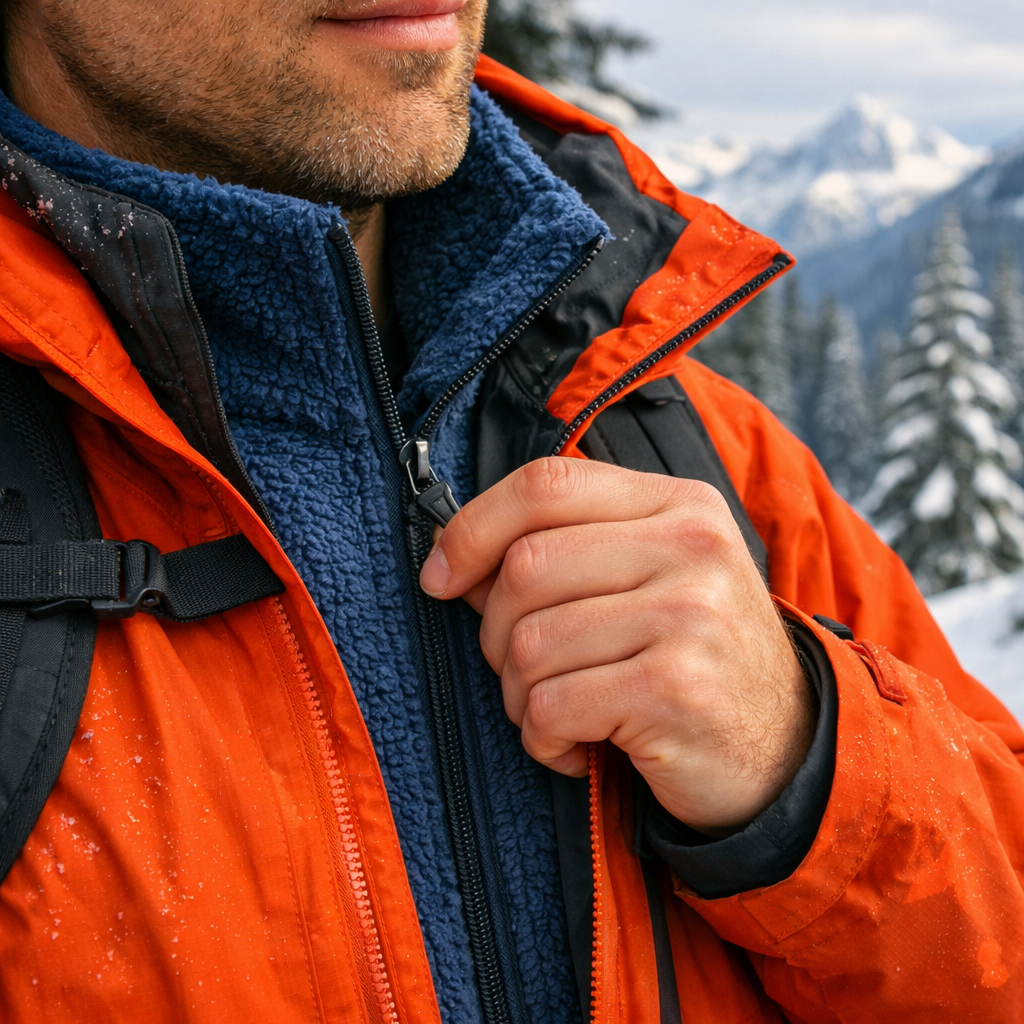
How to Choose the Warmest Fleece for Reliable Winter Layering
How to Choose the Warmest Fleece for Reliable Winter Layering
Picking the warmest fleece for winter isn’t about thickness alone—it’s about matching weight, fabric, fit, and features to your activity level and weather. For high-output hikes, a breathable grid fleece under a windproof shell often feels warmer than a bulky layer that traps sweat. For low-output cold, heavyweight or high‑pile fleeces deliver cozy warmth. Most hikers find a midweight fleece is the core of a winter layering system, with a shell added for wind and wet. This Hiking Manual guide breaks down the tradeoffs so you can build a reliable, budget‑savvy setup.
Tip: See the Snow+Rock fleece buying guide for a quick refresher on categories and features [1].
Start with your use case and activity level
Fleeces are generally categorized as lightweight, midweight, and heavyweight, each designed for different activity tempos and warmth needs [1].
Hiking Manual quick chooser:
- Lightweight: Best for high-output ascents or as a breathable mid-layer under a shell [1].
- Midweight: Most versatile; wear as an outer layer in cool temps or a mid-layer in cold [1].
- Heavyweight: Maximum on-the-spot insulation; best as a standalone in cool, dry conditions; least breathable [1].
“Fleeces work best as part of a layering system to extend comfort into harsher conditions” [6]. See GearJunkie’s fleece roundup for context on how testers assemble systems [6].
Pick the right fleece weight for your temperatures
Aim for enough insulation to stay warm while moving, without trapping sweat that chills you at rest. Midweight is the do‑it‑all choice for most winter layering [1]. Hiking Manual typically builds winter kits around a midweight fleece plus a shell for wind and wet.
Table: Weight classes, temperatures, and best use
- Temperature bands assume a windproof shell in wind; shift ±5–10°F based on your metabolism.
| Weight class | Typical GSM range | Active use (moving) | Casual/static use | Notes |
|---|---|---|---|---|
| Lightweight | ~100–170 g/m² | 35–55°F hikes, ski touring climbs | 50–65°F around town | High breathability; dries fast; minimal bulk [1] |
| Midweight | ~180–260 g/m² | 20–40°F hikes with a shell | 35–50°F casual | Do‑it‑all warmth-to-weight; broad comfort window [1] |
| Heavyweight | ~300+ g/m² | 10–30°F with a shell, low-output | 20–40°F static, dry cold | Warmest but least breathable; bulky for packs [1] |
A midweight fleece tested around 248 g/m² performed well in the 30s–50s°F, landing in the sweet spot for all‑around winter layering [5]. See BetterTrail’s lab notes for more on weight-to-warmth ranges [5].
GSM/weight class (definition): Grams per square meter (GSM) indicates fabric density and relative warmth-to-weight. Higher GSM generally increases insulation and wind resistance but reduces breathability and adds bulk. Match GSM to your activity level so you stay warm without accumulating sweat during sustained movement.
Choose fabric construction for warmth and breathability
Warmth and breathability pull in opposite directions. Pick construction that fits how hard you work on winter days.
Grid fleece (definition): Grid fleece uses a patterned interior that creates channels to move moisture and dump heat while trapping warmth in raised squares. The design significantly improves breathability and dry times versus traditional fleece, making it ideal for active winter layering [4]. See Treeline Review’s testing on grid fleeces [4].
High-pile fleece (definition): High-pile or deep-pile fleece uses longer, plush fibers to trap more air, delivering standout warmth and softness. It excels for static warmth but can attract debris and dries more slowly than low‑pile or grid options, so it suits casual or low‑output cold days [2]. CleverHiker’s fleece jacket reviews echo these tradeoffs [2].
Construction comparison:
- Grid/low‑pile: Prioritizes breathability and fast drying for uphill or aerobic use [4][2].
- High‑pile/deep fleece: Traps more heat; cozier for static or casual winter wear; slower to dry [2].
- Hybrid panels: Weather‑resistant front with breathable back/underarms for on‑the‑move protection in mixed conditions [2].
Dial in fit for layering without bulk
Choose a snug fit for active sports and a looser cut for casual extra warmth [1].
A close fit as a mid‑layer maximizes warmth and breathability; leave room to fit base layers [1].
Hiking Manual fit check:
- Try it over your typical base layer; lift your arms to confirm the hem doesn’t ride up and sleeves move freely.
- Ensure the torso covers your low back when you bend and that the collar/hood doesn’t bunch under a shell.
Select winter-ready features that seal in heat
Full‑length zips enable rapid venting and easy on/off in variable conditions [2][1]. Close‑fitting cuffs and hem drawcords help lock in heat and minimize convective loss [3]. Thumb loops keep sleeves anchored and add wrist coverage under gloves [1]. For a feature-by-feature look, see Switchback Travel’s fleece comparison once you’ve narrowed your needs [3].
Features checklist
| Feature | What it does in winter | Best for | Trade-offs |
|---|---|---|---|
| Full zip | Fast venting; easy on/off over hats and packs [2][1] | Variable conditions, skiing | Slightly heavier than half-zip |
| Half zip | Lighter; simpler; good for steady output | Long climbs, running | Less venting range |
| Hood | Adds wind and heat retention at the neck/head | Windy ridgelines, hat-free hikers | Bulk under snug shells |
| Handwarmer pockets | Warmth for hands; stash for liners/maps | Hiking, camp | Can add bulk under harness/hipbelt |
| Hem drawcord | Seals heat; blocks drafts [3] | Cold, windy days | Minor weight/bulk |
| Elastic/bound cuffs | Traps heat; layers cleanly under gloves [3] | All winter use | None significant |
| Thumb loops | Keeps sleeves from riding; wrist coverage [1] | Skiing, snowshoeing | Slight cuff tightness in some gloves |
Plan your outer layers and weather protection
Fleece is water‑resistant and quick‑drying but not fully waterproof or windproof [1]. To stay warm and dry when conditions turn, pair your fleece with a windproof or waterproof shell [1].
Scenario guidance:
- High‑output in cold wind: Breathable grid fleece + light wind shell to limit convective heat loss without overheating [5].
- Static cold: Heavyweight/high‑pile fleece + insulated or hardshell as temps drop.
Care and sustainability essentials
Simple care extends warmth and reduces pilling.
- Wash on a gentle, cold cycle; avoid fabric softeners that clog fibers [1].
- Air dry or tumble on low to reduce shrinkage/pilling [1].
- Use a fabric shaver occasionally to remove pills and refresh the surface [1].
Sustainability signals:
- Many fleeces now use recycled polyester, and some brands offer garment take‑back or repair services [1][3]. Choosing recycled fleece lowers environmental impact while maintaining reliable insulation.
Budget-friendly fleece picks from trusted retailers
The value picks below from Hiking Manual prioritize warmth-to-weight, reliable availability, and clean layering under shells. Prices vary by season; check REI, Amazon, Backcountry, Moosejaw, and brand sites.
Active/grid options (light to midweight)
- Eddie Bauer High Route Grid Fleece Hoody (midweight, grid)
- Best use: Cold hikes and ski touring climbs under a windproof shell.
- Fit/features: Trim athletic cut; versions vary (hooded/half‑zip/full‑zip). Elastic cuffs; soft chin guard.
- Outdoor Research Vigor Grid Fleece Hoodie (midweight, grid)
- Best use: High-output winter layering where breathability matters.
- Fit/features: Athletic fit; full‑zip; elastic cuffs; stretch panels for mobility.
Versatile midweight jackets (all‑around winter layering)
- REI Co‑op Trailmade Fleece Jacket (midweight, low‑pile)
- Best use: Daily hiking and travel; mid‑layer with a waterproof shell in cold.
- Fit/features: Regular fit; full‑zip; hand pockets; easy layering over a base.
- Columbia Steens Mountain 2.0 (men) / Benton Springs (women) (midweight, low‑pile)
- Best use: Budget mid‑layer for cool-to-cold hikes and camp.
- Fit/features: Relaxed fit; full‑zip; hand pockets; simple and durable.
- Marmot Rocklin Full‑Zip (lightweight microfleece)
- Best use: High‑output movement or mild‑cold layering under a wind shell.
- Fit/features: Regular fit; full‑zip; minimal trim for low bulk.
Cozy high‑pile options (static/camp/commute)
- REI Co‑op Trailmade Sherpa Fleece (heavyweight, high‑pile)
- Best use: Camp and casual cold; throw under a hardshell when temps plummet.
- Fit/features: Relaxed; full‑zip; soft hand; very warm but slower to dry.
- Columbia Fire Side Sherpa Full‑Zip (high‑pile)
- Best use: Everyday warmth and cabin wear; occasional low‑output walks.
- Fit/features: Relaxed; full‑zip; plush hand; consider a wind shell in gusts.
Sizing tip: For active layering, choose your true size or size down if between sizes; for casual warmth, size true or up for room to stack under a parka.
Frequently asked questions
Which fleece weight is warmest for winter layering?
Heavyweight fleece provides the most on‑the‑spot warmth but is least breathable; Hiking Manual generally recommends a midweight as the core winter mid‑layer with a shell for wind and wet.
Is high-pile warmer than grid fleece?
Yes—high‑pile traps more air for greater warmth, while grid fleece breathes better for uphill efforts; Hiking Manual suggests matching fabric to your pace.
Should I choose a hooded or non-hooded fleece for winter?
Choose a hood if you frequently hike in wind or skip a separate hat; Hiking Manual prefers non‑hooded layers under snug shells.
How should a fleece mid-layer fit under a shell?
Aim for a close, comfortable fit that traps heat without bunching—snug in the torso and sleeves with room for a base layer and full arm mobility.
Do I still need a shell if my fleece feels warm?
Yes—fleece isn’t fully windproof or waterproof, so a windproof or waterproof shell keeps you warmer and drier when conditions turn [1].