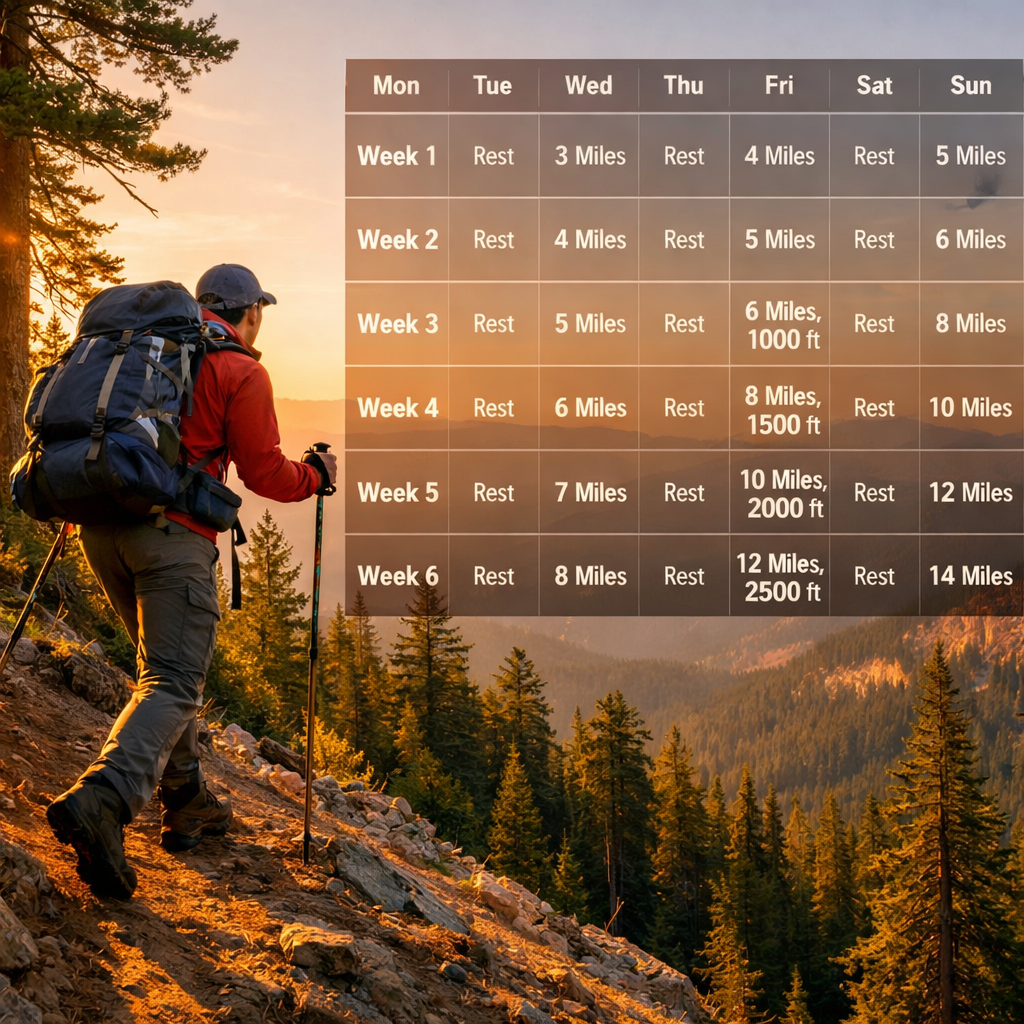
How to Build Backpacking Endurance: A Proven Week-by-Week Plan
How to Build Backpacking Endurance: A Proven Week-by-Week Plan
Building backpacking endurance is about smart, steady progress—not hero workouts. Over 8–12 weeks, you’ll blend conversation-pace cardio, simple strength, mobility, and pack-specific practice to turn day-one nerves into reliable trail stamina. This plan guides you from base fitness to peak week, showing exactly how to nudge duration, elevation, and pack weight while protecting recovery. “Backpacking endurance is your ability to sustain hours of hiking with a loaded pack across varied terrain by combining aerobic capacity, leg/core strength, and resilient joints and tissues.” Follow the phase-by-phase steps below and you’ll arrive at your trip fit, confident, and ready. At Hiking Manual, we favor steady, practical progress you can sustain on real trails.
What backpacking endurance requires
Backpacking endurance grows from three pillars: aerobic base, strength for hiking, and mobility that keeps tissues resilient. Balance strength, endurance, and mobility work, aiming for at least two strength sessions each week alongside your aerobic training, as outlined in this practical Backpacking Training Plan from Step Massive (stepmassive.com). Your aerobic threshold—the intensity you can hold for hours—is roughly 60–70% of max heart rate; estimate max HR as 208 − (0.7 × Age) and use the Talk Test: if you can converse in full sentences, you’re likely under threshold, a cue emphasized in Adventure Alan’s training guide for hiking and backpacking. Steady aerobic work builds hiking endurance and injury prevention capacity; simple, consistent strength raises backpacking fitness so the pack “feels lighter,” while mobility preserves range for uneven terrain. This mirrors Hiking Manual’s trail-tested approach: grow the aerobic engine, add basic strength, and keep joints moving well.
How to use this plan
We’ll progress through base, build, peak, and taper—the same phased structure most structured hiking plans use over 8–12 weeks, as noted in a comprehensive guide from BattlBox. Track distance, elevation, pack weight, and perceived effort; plan and log routes with GPS apps so you can match elevation gain and monitor progress—Adventure Alan’s methodology underscores the value of planned elevation and conversation-pace control in week-to-week training. At Hiking Manual, we keep most training conversational and measurable.
Progressive overload is the gradual increase of training stress—via duration, elevation, or pack weight—to stimulate adaptation without injury. For hikers, increase just one variable at a time each week (for example, add 10–15 minutes to the long hike or 2–3 lb to the pack) while keeping recovery intact.
Weeks 1–4 base
Build your aerobic base at conversation pace, start simple strength, and introduce light-pack hikes. Keep it easy and consistent—foundation over speed.
- Weekly targets: 3–4 cardio sessions (30–45 minutes), 2 strength sessions, and one easy hike, aligning with 8–12 week plans highlighted by BattlBox.
- Test gear early: break in boots and dial backpack fit now to catch hot spots before the miles stack, a tip echoed in Monkeys and Mountains’ hiking endurance plan.
Aerobic foundation at conversation pace
Use the Talk Test and target 60–70% of max HR for most cardio work, as taught in Adventure Alan’s training guide. Prioritize duration first with brisk walking, incline treadmill, stair climbing, or mellow hiking. In weeks 1–4:
- Two short aerobic sessions (30–35 minutes)
- One medium session (40–45 minutes)
- One easy hike (60–90 minutes)
Strength basics for load bearing
Twice weekly, train squats, lunges, step-ups, and single-leg deadlifts. Move with control: 2–3 sets of 8–12 reps, plus front/side planks for 30–60 seconds. Getting stronger makes a pack feel lighter and helps reduce injury risk, a principle reinforced in Couch to Trail’s 12-week AT prep plan.
Light pack and footwear break-in
Carry a light pack (5–10 lb of water/soft goods) on easy hikes to practice strap and hip-belt adjustments and fine-tune pack fit. Break in boots and pair with moisture-wicking hiking socks to curb blisters; our guide to the best hiking socks for blister prevention at Hiking Manual can help you choose.
Mobility, warm-ups, and recovery habits
Before sessions, do 5–8 minutes of ankle circles, hip openers, calf raises, and glute bridges. After, spend 8–10 minutes on calves, quads, and hip flexors, and keep one easy recovery walk each week. If you’re injured or in pain, stop and consult a qualified professional, consistent with safety-first advice from Adventure Alan.
Weeks 5–8 build
Extend your long hike, add controlled hills or intervals, and raise pack weight gradually. Keep two strength days, biasing specificity (actual hiking) over generic HIIT if time is tight, as recommended in Move Your Story’s backpack training approach.
- Goals: nudge most cardio to ~60 minutes and add one hill or interval session weekly; maintain two strength days, in line with multi-week plans detailed by BattlBox.
Longer hikes and hill repeats
Progress the long hike to 2.5–3.5 hours. Add 4–6 x 3–5 minute hill repeats at a moderate-hard effort with full recovery. Keep other sessions at conversation pace to protect recovery. Use fast-paced hikes for speed and longer, slower hikes for endurance—a pacing split highlighted by Voyageur Tripper’s hiking and backpacking training guidance.
Heavier functional strength
Maintain two sessions. Increase load slightly or add a set on squats, step-ups, lunges, and hinge patterns, keeping a single-leg focus. Three-month plans often emphasize strength early, then blend strength-plus-conditioning; mirror that by using crisp form with lower reps (6–8), as seen in Couch to Trail’s 12-week thru-hike plan. Add farmer’s and offset carries to train trunk stability for pack handling.
Pack weight and elevation progression
A practical example from Move Your Story suggests weeks 5–6 at roughly 29–33 miles weekly with a 17–20 lb pack, and weeks 7–8 at about 24–29 miles while practicing near full/max pack weight. As a safe starting rule of thumb, aim for a pack near 20% of body weight and adjust for water and duration. Increase elevation gain gradually—add 200–400 feet on the long hike each week if joints tolerate it.
Route practice with navigation apps
Plan routes to target specific elevation and surfaces, and track distance, vertical gain, and time on feet. Reliable offline-capable options: Komoot, OsmAnd, and Strava/Bikemap; design routes that replicate your trip’s elevation profile and export GPX as needed. This GPS-first approach supports the thoughtful planning emphasized by Adventure Alan’s training framework.
Weeks 9–12 peak
Now simulate trip demands with longer durations, near-trip pack weight, and terrain specificity. Include at least one back-to-back long-hike weekend to rehearse recovery between days, a tactic also encouraged by Monkeys and Mountains.
Back-to-back long hikes
Schedule two consecutive days of 3–5 hours each, keeping day two a touch easier in pace. Practice steady fueling and hydration, then prioritize recovery tactics between days: feet up, gentle mobility, and a longer warm-up before day two. Keep intensity aerobic—this is not race-pace work.
Near-trip pack weight on varied terrain
Build pack weight progressively and test near your realistic trip load before departure. Start from the ~20% body-weight rule of thumb (per Move Your Story), then adjust for trip length, food, and water carries. Seek mixed terrain—roots, rocks, and off-camber paths—to build ankle and knee resilience.
Technical descents and pole skills
Dial trekking pole technique: shorten poles slightly for climbs, lengthen a notch for descents, and time plants with steps on steeps. Add controlled downhill repeats on soft trails to train eccentric braking and precise foot placement.
Nutrition and hydration dress rehearsal
Treat long hikes as dress rehearsals: test snacks, electrolytes, and water treatment, and note what still tastes good at hour four. Eat small amounts every 30–45 minutes and sip regularly; track fluid needs by heat and sweat rate. Taper in the final week to arrive rested and injury-free, a practical note reiterated by Monkeys and Mountains.
Final week taper
The goal this week is to shed fatigue while keeping light movement, then finalize logistics and nutrition so you start fresh.
Reduce volume and keep easy movement
Cut total volume by roughly 40–60% from peak. Keep 2–3 easy walks (20–40 minutes) and one short mobility session. Skip hard intervals and heavy strength; a few light strides or easy stairs are fine for circulation. Taper in the week before your trip to arrive rested.
Sleep, fueling, and stress management
Aim for 7.5–9 hours nightly. If it agrees with you, front-load carbohydrates in the final 48 hours. Hydrate consistently and avoid new foods or high-fiber experiments. Keep life stress low; brief nightly breathwork or stretching helps.
Gear, fit, and safety checks
Inspect laces, insoles, and socks, and confirm pack straps and padding create no hot spots during a 30–45 minute walk. Verify offline maps in Komoot/OsmAnd and check power banks and cables. Pack first-aid and weather-ready layers that match the forecast.
Sample weekly schedule
Use this template across phases; scale duration, elevation, and pack weight as you progress. Voyageur Tripper’s approach to mixing steady work with select speed elements informs this simple structure. It also matches Hiking Manual’s keep-most-easy rule.
- Mon: 30–45 min cardio on incline or stairs
- Tue: Strength or yoga
- Wed: 30–45 min cardio on stairs/incline
- Thu: Strength
- Sat: Long hike with pack (progress duration/vert)
- Sun: Active recovery or rest
Note: Increase long-hike duration and pack weight per phase while keeping most sessions at conversation pace.
Progression rules and how to adjust
- Change one variable per week: duration (+10–15 minutes), elevation (+200–400 ft), or pack (+2–3 lb).
- If morning heart rate or perceived effort stays elevated for 2+ days, hold or reduce training by 10–20% the following week.
- Example 8-week load progression (inspired by Move Your Story):
- Weeks 1–2: 19–23 miles/week with ~10 lb pack
- Weeks 3–4: 23–28 miles/week with 12–15 lb pack
- Weeks 5–6: 29–33 miles/week with 17–20 lb pack
- Weeks 7–8: 24–29 miles/week practicing full/max pack weight Recheck pacing with the Talk Test and keep most work under your aerobic threshold, as emphasized by Adventure Alan.
Injury prevention and recovery
Warm-ups, cool-downs, and short mobility blocks protect tissues. Keep at least one rest day per week. If you’re sore, swap a hard session for an easy walk; if you’re injured or in pain, stop and consult a qualified professional. REI’s conditioning guidance stresses learning simple strength exercises and sticking to a consistent plan to minimize overuse risk. Add controlled downhill work to build eccentric strength for knees, and rotate footwear and socks to reduce blister risk.
Essential gear for efficient training
- Footwear: comfortable, beginner-friendly hikers (for example, Merrell) plus moisture-wicking hiking socks; break in during base phase. See Hiking Manual’s best hiking socks for blister prevention for top picks.
- Trekking poles for stability and reduced knee load, especially on descents.
- Weather-ready layers: breathable sun/rain shells that vent well.
- Hydration: bottles or reservoirs, electrolytes, and simple, carb-rich trail foods.
- GPS watches or phone apps to monitor pace, elevation, and HR; carry offline maps for safety. If you’re considering a device, our guide to the best hiking GPS watches at Hiking Manual is a reliable starting point.
- Optional: compact first-aid kit and a waterproof pack liner or dry bag to keep layers and sleeping gear dry.
Route planning and tracking tools
Use Komoot, OsmAnd, and Strava/Bikemap for route discovery, offline mapping, and safety features. Build GPX routes that mirror your trip’s elevation profiles and surfaces so training matches reality. Plan elevation gain and structure workouts with GPS guidance—a principle championed in Adventure Alan’s training framework. Keep a simple log: distance, time, elevation, pack weight, average HR, RPE, and notes on fueling and feet.
Frequently asked questions
How heavy should my training pack be and how fast do I increase it
Start light and build toward a pack around 20% of your body weight, adding 2–3 lb per week only if recovery and joints feel good. At Hiking Manual, we aim to test near your realistic trip weight in the final phase.
How many days per week should I train to build endurance safely
Most hikers do well with 3–4 cardio sessions and 2 strength days weekly, plus one long hike and at least one easy/rest day. Keep most work at conversation pace to protect recovery—our default at Hiking Manual.
Do I need intervals or is steady hiking enough
Steady, longer hikes build your aerobic base and should be the priority; add short hill repeats or intervals in the mid-phase for efficiency. When time-crunched, Hiking Manual favors hiking-specific work over high-intensity gym sessions.
How do I pace climbs and descents to avoid fatigue
Use the Talk Test and keep a pace where you can speak in full sentences on climbs; shorten steps on steeps. On descents, use poles, keep a soft knee bend, and focus on controlled foot placements—the simple cues we emphasize at Hiking Manual.
What should I eat and drink during long training hikes
Practice fueling every 30–45 minutes with simple carbs and sip fluids regularly, adding electrolytes in heat. At Hiking Manual, we treat every long hike as a dress rehearsal to confirm what your stomach tolerates.