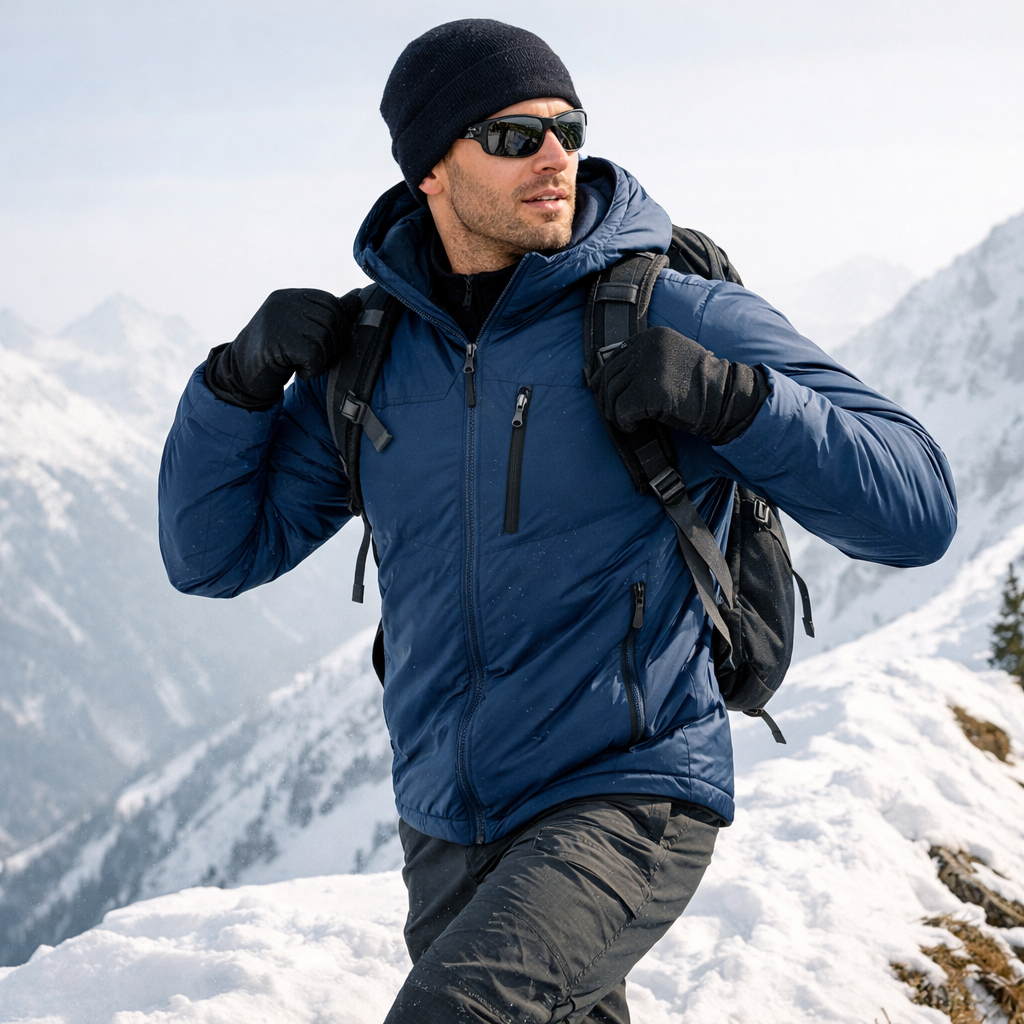
Expert Guide: Lightweight Men’s Winter Jackets That Stay Warm and Flexible
Expert Guide: Lightweight Men’s Winter Jackets That Stay Warm and Flexible
A good men’s winter jacket can be both warm and flexible—if you match insulation, shell, and fit to your conditions and activity. For most active commutes, dry cold hikes, and winter travel, a lightweight puffer with the right fill and a protective shell will deliver cozy warmth without restricting movement. When you’ll be standing still in deep cold, a longer, heavier parka wins. This guide translates specs like fill power, fill weight, and waterproof-breathable membranes into plain-English choices, with scenario builds and value picks grounded in real testing from independent reviewers and Hiking Manual’s field testing. The bottom line: yes, you can get a jacket that balances warmth and flexibility—choose high-efficiency insulation, a breathable shell that matches your weather, and a cut that moves with you.
What warm and flexible really means
Warmth is how effectively a jacket traps body heat relative to its weight. Flexibility is twofold: freedom of movement (athletic cut, articulated patterning, and stretch panels) and adaptability to changing activity levels without overheating. Waterproof-breathable membranes block liquid water while letting sweat vapor escape through microscopic pores, helping prevent clamminess during activity, a key comfort factor in winter exertion, according to BetterTrail’s jacket primer (see the waterproof-breathable explanation in BetterTrail’s winter jacket guide: https://bettertrail.com/outdoor-gear/best-mens-winter-jackets).
Independent test editors consistently find that a lightweight puffer suits active commutes and day hikes, while a winter parka excels for long, stationary exposure in deep cold—think watching a game in subzero wind or shoveling at low exertion (see OutdoorGearLab’s winter jacket tests: https://www.outdoorgearlab.com/topics/clothing-mens/best-winter-jacket-men). At Hiking Manual, we evaluate jackets across commutes, snowy trails, and ski travel days to benchmark real-world warmth-to-weight, flexible fit, and weather protection.
How to choose the right jacket for your winter
Define your primary use and typical temperatures
List your main days: urban commute, active outdoor (hiking, snowshoeing), or travel; then note common lows and whether you face dry cold or mixed precipitation (helpful framing from Kosha’s buying guide: https://kosha.co/blogs/explore/winter-jackets-made-easy-a-smart-buying-guide-for-first-timers).Pick insulation
- High fill-power down (700–800+) for top warmth-to-weight in dry to moderately damp cold.
- Synthetic or hybrid (down + synthetic in high-sweat zones) for mixed precipitation, stop‑and‑go commutes, or high exertion.
Check shell protection
- Waterproof-breathable membranes (Gore‑Tex, H2No) and seam‑sealing for wet snow/sleet or long, stormy exposure.
- Durable water repellent (DWR) is enough for cold, dry days and often breathes better.
Test mobility
Raise your arms, crouch, and simulate wearing a midlayer. Look for articulated sleeves, gussets, and stretch baffles. Shorter, streamlined puffers boost mobility for active use.Confirm features
Insulated hood, cuff/hem adjusters, glove‑friendly zips, and pockets that fit a phone and beanie. For travel, prioritize packability and a compressible stuff pouch.
Quick examples:
- Active commuter in slush: synthetic or hybrid insulation with a waterproof-breathable, seam-sealed shell.
- Daily walker in dry cold: 700–800+ fill down puffer with DWR and a breathable face fabric.
- Traveler: a packable puffer that compresses small and layers easily over a fleece.
Down vs synthetic for warmth and mobility
| Down | Synthetic |
|---|---|
| Best warmth-to-weight; 700–800+ fill traps more heat per ounce; compresses small. Hydrophobic treatments help retain loft in damp climates. | Retains warmth when wet and dries faster; better for high-exertion days and mixed precipitation; typically more breathable. |
| More sensitive to saturation; pair with a water-resistant or waterproof shell. | Slightly heavier for the same warmth; bulk can increase with higher insulation levels. |
Hybrid setups place synthetic in moisture-prone zones (shoulders, cuffs, side panels) to maintain warmth when damp while keeping down where it performs best. GearJunkie highlights modern synthetic fills like Arc’teryx’s low‑weight, breathable Coreloft and hydrophobic down treatments such as Nikwax that protect loft when humidity rises (see GearJunkie’s winter jacket roundup: https://gearjunkie.com/winter/best-winter-jackets).
Understanding fill power, fill weight, and real warmth
Fill power is a measure of down loft—the space one ounce of down occupies. Higher numbers (700–800+) trap more air per ounce, boosting warmth-to-weight. But fill power alone doesn’t equal warmth: total fill weight and construction (baffles, draft control) determine real heat retention. Pair high fill power with enough fill for your climate and activity.
As an example of balanced design, Patagonia’s Jackson Glacier combines 700‑fill down with a protective H2No shell to blend warmth, weather resistance, and everyday mobility noted by comparative testers (see OutdoorGearLab’s winter jacket tests: https://www.outdoorgearlab.com/topics/clothing-mens/best-winter-jacket-men).
Suggested ranges:
| Expected temps | Activity level | Suggested FP | Notes on fill weight |
|---|---|---|---|
| Around freezing (25–35°F) | Active (steady walking/hiking) | 700–800 | Moderate fill is fine; prioritize breathability and venting. |
| 10–25°F | Active to mixed (stop‑and‑go) | 750–800+ | Add fill or use hybrid synthetic in high‑sweat areas. |
| 0–10°F | Mixed to light activity | 800+ | Higher total fill; consider longer cut to block drafts. |
| Below 0°F | Mostly static | 800+ | Substantial fill weight and a parka-length cut for wind shielding. |
Shell protection and breathability in wet snow
Waterproof-breathable membranes like Gore‑Tex block liquid water while allowing vapor to escape, keeping you drier during exertion (see the definition in BetterTrail’s winter jacket guide: https://bettertrail.com/outdoor-gear/best-mens-winter-jackets). For full‑storm protection, look for seam‑sealing and windproof construction. Travel + Leisure points to rare waterproof down options such as the fully seam‑sealed Cotopaxi Calidez Down Parka, which pairs down warmth with true storm protection (see Travel + Leisure’s winter jacket picks: https://www.travelandleisure.com/style/best-mens-winter-jackets-and-coats). Patagonia’s Stormshadow Parka marries 700‑fill down to a 2‑layer Gore‑Tex shell—testers reported staying dry on pow days.
Guideline: DWR‑only shells shed light snow and breathe well; waterproof-breathable plus seam‑sealing is the safer choice for persistent wet snow, sleet, or windy commutes.
Fit and mobility features that matter
Use this quick checklist:
- Articulated sleeves, gusseted underarms, and stretch baffles/panels. Shorter, trim puffers move best for active use.
- Two‑way front zipper for seated comfort, adjustable hem/cuffs for draft control, and pocket layouts that don’t block arm swing or harness/waistbelt.
In comparative reviews, the Patagonia Tres 3‑in‑1 Parka is noted for a flexible fit and pliable shell that moves naturally, while the Jackson Glacier’s minimal pocket layout (two hand pockets, one chest) keeps bulk down—helpful when layering under a shell (as discussed in OutdoorGearLab’s winter jacket tests: https://www.outdoorgearlab.com/topics/clothing-mens/best-winter-jacket-men).
Layering for lightweight warmth
A simple, reliable system:
- Base: thermal, moisture‑wicking layer to keep skin dry. See Hiking Manual’s guide to thermal base layers: https://hikingmanual.com/best-thermal-hiking-base-layers-stay-warm-with-top-picks-for-comfort/.
- Mid: breathable fleece or light synthetic for active insulation.
- Shell/insulation: a puffer or parka matched to your weather and exertion.
Add‑ons: A lightweight down vest boosts core warmth under most jackets with minimal bulk; style‑meets‑function guides endorse this modular approach for changing temps (see Oreateai’s overview: http://oreateai.com/blog/the-ultimate-guide-to-mens-winter-jackets-style-meets-functionality/d232021e66d52b7f9591f978c24db876). For travel, pack compact jackets that compress into a hood or pouch, and consider a vest as a small, high‑impact layer. For more modular layers, Hiking Manual’s vest picks are here: https://hikingmanual.com/best-hiking-vests-for-layering-top-picks-for-outdoor-adventures/.
Use cases and recommended builds
Urban commute in wet snow (30°F–40°F, stop‑and‑go)
- Synthetic or hybrid insulation; waterproof-breathable shell (Gore‑Tex/H2No), seam‑sealed if slushy.
- Features: insulated hood, cuff adjusters, and deep pockets for gloves and phone.
Active hiking in dry/cold (10°F–32°F, steady movement)
- 700–800+ fill down puffer with DWR and a breathable face fabric; venting via front zip; consider hydrophobic down for humidity swings.
Stationary cold or long spectating (0°F and below)
- Heavier parka with more fill and a longer cut for wind block. Top performers like the Canada Goose Langford are built for wind, rain, sleet, and snow under prolonged exposure, as noted by comparative testers.
Across reviews and user reports, many lightweight puffers kept wearers comfortable commuting and shoveling between 10°F and 30°F when moving steadily.
Budget and value considerations
You’ll get the best value from solid 700+ fill down or proven synthetic insulation, a practical hood and cuffs, and a durable shell—those matter more than luxury trims. OutdoorGearLab’s value notes consistently highlight the REI Co‑op Stormhenge Down Hybrid Parka as a standout for features and warmth at a moderate price. Men’s Health also flags budget‑friendly mixes like Columbia’s 650‑fill designs that pair HeatSeal baffles with Omni‑Shield for added moisture resistance (see Men’s Health’s winter coat roundup: https://www.menshealth.com/style/g19535493/best-winter-coats-for-men/).
Value vs Premium at a glance:
- Value: 650–700 fill or quality synthetic; robust DWR; essential features; solid warranty from co‑op/major brands.
- Premium: 800+ fill, lighter/breathable face fabrics, fully seam‑sealed waterproof shells, and refined articulation—costlier but lighter and often more weatherproof.
Care and longevity for lightweight insulation
- Refresh DWR on shells when water stops beading; reproof periodically. Hydrophobic down treatments can be reapplied as directed.
- Wash per label; tumble dry low with clean dryer balls to restore loft; store loosely on a hanger or in a large sack—never compressed long‑term.
- Keep zippers clean and lightly lubricated; always dry garments fully before storage to prevent odor and clumping.
Hydrophobic down is down treated to resist moisture uptake so it maintains loft longer in damp conditions, reducing heat loss during light precipitation or sweat exposure—an advantage noted in modern jacket testing and overviews.
Hiking Manual picks under clear constraints
Selected from long-term use and comparative testing by Hiking Manual; weights are manufacturer-stated unless noted.
Under 2 lbs, active use
- Arc’teryx Nuclei SV Parka (~1 lb 5.2 oz): synthetic Coreloft with excellent warmth-to-weight and breathability for movement (see GearJunkie’s winter jacket roundup: https://gearjunkie.com/winter/best-winter-jackets).
- Rab Cubit Stretchdown (~18.7 oz): very packable with stretch baffles that enhance mobility on brisk hikes.
Waterproof down parka for wet winters
- Patagonia Stormshadow Parka: 700‑fill down with 2‑layer Gore‑Tex; testers reported staying dry on pow days noted in BetterTrail’s overview (see BetterTrail’s winter jacket guide: https://bettertrail.com/outdoor-gear/best-mens-winter-jackets).
- Cotopaxi Calidez Down Parka: fully seam‑sealed, windproof, and waterproof—rare among down parkas (see Travel + Leisure’s winter jacket picks: https://www.travelandleisure.com/style/best-mens-winter-jackets-and-coats).
Best value, versatile warmth
- REI Co‑op Stormhenge Down Hybrid Parka: frequently highlighted as best value by comparative testers for feature set vs price.
- Outdoor Research Coldfront Down Hoodie (~20.6 oz): versatile, relaxed fit that layers easily and punches above its weight.
Honorable mentions for balanced warmth/flex
- Patagonia Jackson Glacier (700‑fill, H2No shell) for urban‑friendly protection without bulk.
- Canada Goose Langford for severe-weather performance when you’ll be standing still in the cold.
Frequently asked questions
Are lightweight winter jackets warm enough for below-freezing temps?
Yes—if you match insulation and shell to your activity. See Hiking Manual’s picks above for examples that work well below freezing.
What fill power should I look for to balance warmth and weight?
Aim for 700–800+ fill power for strong warmth-to-weight, then ensure there’s enough total fill and a suitable shell for your temperatures. Hiking Manual’s ranges above can help you match fill and shell to your climate.
Do I need waterproof or is water resistant enough for winter?
If you face wet snow or sleet, choose a waterproof-breathable, seam‑sealed shell. Hiking Manual favors DWR‑only shells for cold, dry climates where breathability matters more.
How should a winter jacket fit for layering and movement?
It should accommodate a base and midlayer without tight spots, with articulated sleeves, a hem that doesn’t ride up, and room to raise your arms freely. Hiking Manual’s fit checklist above covers what to look for.
How do I keep a down jacket warm and lofty over time?
Wash per the label, dry with clean tennis or dryer balls to restore loft, store uncompressed, and refresh the DWR so the shell keeps moisture off the down. Hiking Manual’s care steps above help preserve loft and warmth longer.