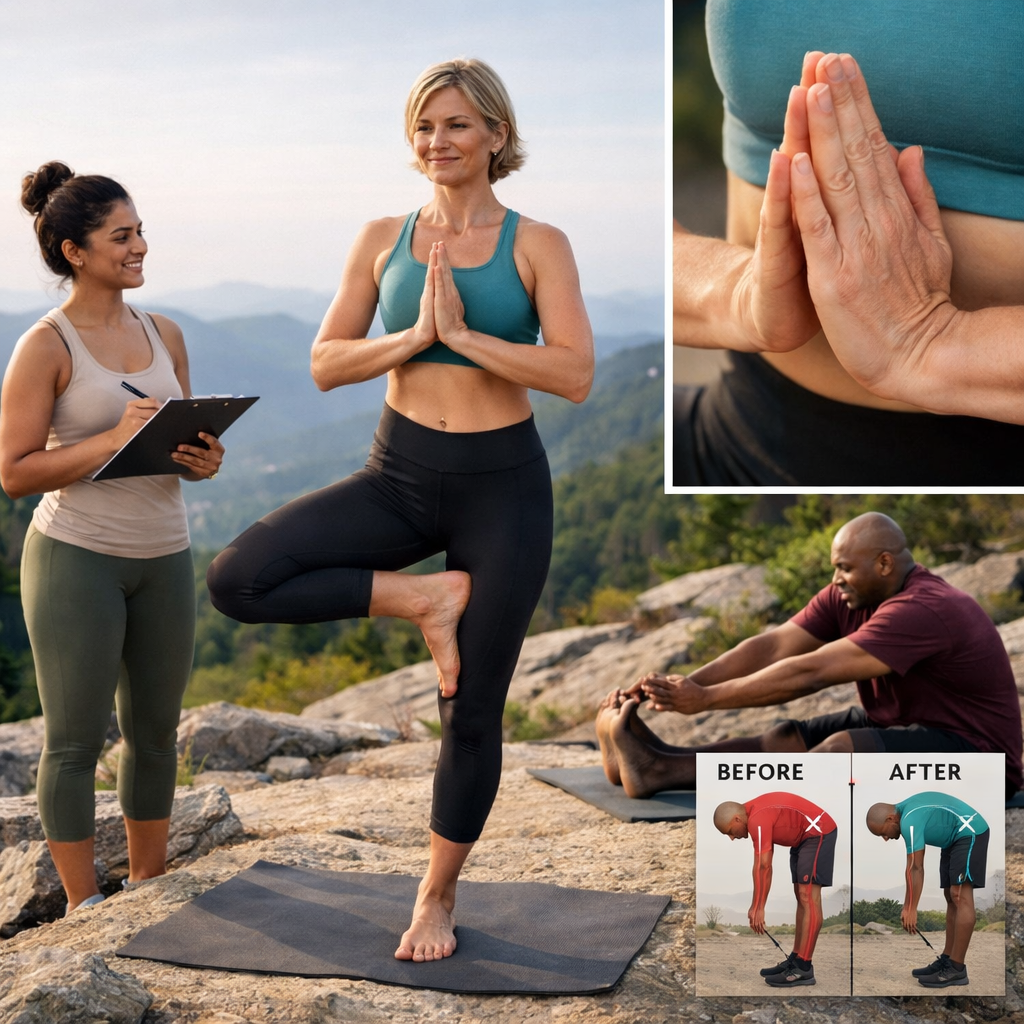
Expert-Curated Yoga Case Studies: Real People, Measurable Transformations
Expert-Curated Yoga Case Studies: Real People, Measurable Transformations
If you’re looking for personal yoga transformation stories you can trust, start with case reports that pair real-life narratives with clear, measurable outcomes. This guide curates credible examples and shows you how to vet them, what outcomes to track, and how to translate results into safer, smarter hiking and outdoor practice. You’ll find evidence-backed stories (from balance and strength gains to better breathing and sleep) and reliable sources to explore more, plus a simple framework to judge credibility before you commit time, money, or training cycles.
Why expert-curated case studies matter
“Expert‑curated case studies” are first‑person stories selected and reviewed for rigor: they combine a clear baseline, a defined protocol (postures, breathwork, pacing), qualified instruction, and repeatable outcome measures at set intervals. The goal is reproducible change you can audit—not hype or vague inspiration.
Consider a single‑participant, one‑to‑one yoga intervention for chronic traumatic brain injury that reported balance (+36%), balance confidence (+39%), lower‑extremity strength (+100%), and endurance (+105%) after the program, all quantified with standardized tests (source: Yoga-based rehabilitation in chronic TBI, PubMed).
High‑quality yoga evidence is growing but uneven. Many studies are small, protocols vary, and teacher qualifications are inconsistently reported—limits that make it hard to isolate what caused change (see Yoga’s health benefits overview from Vox).
How we select and validate transformation stories
At Hiking Manual, we use a transparent, repeatable framework designed for real-world hikers and outdoor generalists:
- Screen for a documented baseline with objective measures.
- Verify teacher qualifications (training hours, therapy credentials, scope).
- Document intervention components: asana selection, pranayama type, pacing, progression, and safety modifications.
- Require post measures at defined intervals (e.g., 4, 8, 12 weeks), plus adherence and any adverse events.
“Baseline assessment” means the initial, standardized snapshot of function before training begins. It specifies exactly what is measured (for example, shoulder flexion degrees, single‑leg stance time, 6‑minute walk distance, or strength repetitions), how it’s measured, and under what conditions, so later comparisons are valid and transparent—best practice given common reporting gaps.
Recommended evidence table for each story:
| Baseline | Protocol Summary | Duration | Outcome Measures | Results | Limitations |
|---|---|---|---|---|---|
| e.g., Shoulder flexion 110°, SLS 8s | 1:1 yoga; ROM, isometrics, box breathing | 8 weeks | ROM (degrees), mCTSIB, 6MWT | Flexion 150°, SLS 20s | Single case; no control |
Physical outcomes you can measure
Focus on domains that translate to trail performance and safety:
- Range of motion: Joint angles like shoulder flexion/abduction in degrees to improve overhead reach (trekking poles, pack access).
- Balance: mCTSIB or single‑leg stance to lower fall risk on scree and roots.
- Strength: Repetition counts or sub‑max holds as 1RM proxies to support pack carrying.
- Endurance: 6‑minute walk test distance to predict sustained hiking pace.
A TBI case using one‑to‑one yoga documented balance (+36%), balance confidence (+39%), lower‑extremity strength (+100%), and endurance (+105%), showing how granular metrics spotlight meaningful, functional gains (PubMed TBI case).
Example comparison table:
| Metric | Baseline | Week 8 | Change |
|---|---|---|---|
| Single‑leg stance (dominant) | 10 s | 22 s | +120% |
| Shoulder flexion (R) | 120° | 150° | +25% |
| 6‑minute walk | 480 m | 560 m | +80 m |
- Why it matters: Better single‑leg stance helps on uneven steps and river crossings; increased shoulder flexion eases donning packs and reaching water bottles; 6MWT gains indicate improved trail stamina.
Breathing and respiratory function gains
“Pranayama is the intentional regulation of breath—controlling length, volume, and cadence to influence physiology and attention. Through structured ratios, holds, and nostril emphasis, it can calm or energize the nervous system, improve gas exchange, and enhance postural support through coordinated diaphragmatic mechanics.”
Targeted breathwork ties to autonomic regulation and anxiety reduction, strengthening recovery and stress resilience (Global Wellness Institute). In a bronchiectasis case, a 65‑year‑old regained normal speech and stamina, discontinued nebulizer and inhalers, and reduced infections after tailored yoga therapy emphasizing breathing mechanics and pacing (Yoga Therapy Greece case stories). Pure pranayama classes are also growing as people address sub‑optimal breathing habits, a trend echoed in consumer roundups (Restless trend guide).
For hikers, yoga breathing improvements translate to calmer starts on cold mornings, smoother altitude transitions, and steadier pacing under load.
Mental health and sleep improvements
A 63‑year‑old with low energy and poor sleep onset/quality reported better mood and sleep after a tailored program combining gentle sequences and breath pacing; the client highlighted reduced stress and anxiety alongside easier breathing and fuller nights of sleep (Yoga With Uzma case studies).
“Autonomic regulation refers to improving the balance and responsiveness of the body’s sympathetic and parasympathetic systems—shifting efficiently between activation and recovery. Through breath, posture, and mindful pacing, it reduces hyperarousal, supports calm focus, and enhances sleep continuity, which aligns with anxiety reductions documented in wellness initiatives.”
Track mental health and sleep with validated tools: PHQ‑9 (depression), GAD‑7 (anxiety), daily sleep diaries, and wearables for sleep efficiency. Compare pre/post over 4–12 weeks to see whether your protocol and dose are working.
Older adults and progressive adaptations
A 79‑year‑old practicing short, tailored daily sessions for five months improved flexibility, breathing regularity, and calm—despite more than a decade of inconsistent results before the intervention (Yoga With Uzma cases). The keys: small, consistent doses; breath‑linked motion; and gradual loading.
8‑week progression example:
| Week | Focus | Example Elements |
|---|---|---|
| 1 | Gentle ROM + breath pacing | Supine shoulder sweeps; 4‑6 breathing |
| 2 | Postural support | Seated spinal mobilization; diaphragmatic lifts |
| 3 | Isometric foundations | Wall pushes; glute sets with exhale focus |
| 4 | Light balance | Heel‑to‑toe holds; chair‑supported single‑leg stance |
| 5 | Dynamic control | Step‑backs with nasal breathing; slow sit‑to‑stands |
| 6 | Endurance trickle | 5–7‑minute walk blocks; cadence breathing |
| 7 | Load integration | Light pack holds; lateral stepping on lines |
| 8 | Consolidation | Mini‑circuits mixing breath, balance, and ROM |
Suitability notes: For arthritis and stiffness, keep ranges pain‑limited, emphasize slow eccentrics, and monitor next‑day soreness. Progress only when form and breath remain steady.
Chronic conditions and function restoration
Clear baselines and goal‑driven plans enable functional wins:
- Lymphedema (axillary node removal, age 51): Limited overhead reach with short‑term goals of swelling reduction and upper‑body flexibility; avoided compression at work due to discomfort. Drainage‑aware mobility (open‑chain shoulder clocks, scapular slides), gentle rib expansion, and pacing helped restore reach while respecting volume management (Yoga With Uzma cases).
- Shoulder arthritis (age 70): Couldn’t lift left arm beyond halfway; imaging showed wear‑and‑tear; right side stiffening. Plan: graded exposure (pain‑free arcs), scapular control (posterior tilt, upward rotation), isometric holds before light bands, tracking flexion/abduction degrees weekly (Yoga With Uzma cases).
- Respiratory recovery: The bronchiectasis example above underscores how individualized breath mechanics and postural support can cut medication reliance and restore daily function (Yoga Therapy Greece).
What trends are shaping therapeutic yoga delivery
- Hybrid delivery (online + in‑studio), micro‑sessions (5–15 minutes), trauma‑informed methods, and tech‑enhanced tools like AI posture feedback, wearables, and VR are expanding access and adherence (Trimurti 2025 trends).
- Inclusivity, accessibility, and personalization are central themes for 2025, with therapy‑style approaches replacing one‑size‑fits‑all classes (Marianatek industry roundup).
- Expect expanded roles in mental health, aging, recovery, and autonomic regulation benefits (Global Wellness Institute initiative).
- AI‑enabled guidance and real‑time feedback may help reduce injury risk and improve technique consistency, supporting safer self‑practice at home (Restless trends overview).
How to read a yoga case study critically
Use this quick checklist:
- Clear baseline and exact measures (ROM degrees, balance scores, strength reps, 6MWT distance)
- Listed intervention components and progression
- Teacher qualifications (training hours, therapy credentials)
- Objective outcomes with defined timeframes
- Adherence and any adverse events
- Stated limitations and conflicts of interest
- Applicability to your age, condition, and goals
“An active control group is a comparison cohort that receives a credible alternative intervention matched for time, attention, and expectation. It helps distinguish true treatment effects from placebo, novelty, or instructor attention—without it, causal claims from small yoga studies remain tentative.” These gaps are common in yoga research reporting.
Model a side‑by‑side read:
| Element | Case A (Balance focus) | Case B (Shoulder ROM) |
|---|---|---|
| Baseline | SLS 8s; 6MWT 500 m | Flexion 110°; pain 6/10 |
| Protocol | 1:1 yoga; stance drills; box breathing | Scapular control; isometrics; paced breathing |
| Duration | 8 weeks | 8 weeks |
| Outcomes | SLS 18s; 6MWT 560 m | Flexion 150°; pain 2/10 |
| Limits | Single case; no control | Home adherence self‑reported |
Where to find credible personal transformation stories
Hiking Manual cross‑references these sources with trail‑specific priorities so hikers can apply findings safely.
- Yoga With Uzma: Diverse case write‑ups on lymphedema, arthritis, older adults, mood, and sleep with concrete goals and progress notes (yogawithuzma.com/case-studies/).
- Yoga Therapy Greece: Respiratory‑focused cases (e.g., bronchiectasis) with functional outcomes and medication changes (yogatherapygreece.com/case-studies-real-life-stories-of-transformation-through-yoga-therapy/).
- PubMed pilots/feasibility reports: Small studies quantifying balance, strength, and endurance shifts, including chronic TBI yoga interventions (pubmed.ncbi.nlm.nih.gov/26208245/).
- Trend hubs: Trimurti, Global Wellness Institute, Restless, and Marianatek surface delivery innovations and inclusive offerings that often host or link to story portfolios.
How Hiking Manual uses case studies to inform safe practice and gear picks
We translate measurable outcomes into field‑ready plans: add breathing‑focused micro‑sessions to cold starts, run mobility warm‑ups before rocky approaches, and build progressive loading into trip prep. We pair these with conservative route choices, steady pacing, and recovery windows shaped by your baseline and progress. Our field team test‑drives protocols across terrain and seasons before we recommend them.
Gear integrations:
- Thermal base layers that breathe well during pranayama‑heavy warm‑ups
- UPF sun shirts for hybrid outdoor classes and mid‑day treks
- Footwear tuned for rocky terrain to capitalize on new balance capacity
- Winter setups—4‑season or hot tents and snow boots—for year‑round practice and cold‑weather conditioning
Expect clear side‑by‑side comparisons and budget‑friendly tools in our guides—including a 2026 black puffer jacket review for seamless urban‑to‑trail versatility.
Frequently asked questions
How do I tell if a yoga transformation story is credible
Look for a clear baseline, a described protocol, teacher qualifications, and objective before/after measures with timeframes; credible stories also note adherence and limitations. Hiking Manual applies this checklist to every story we share.
What measurements are most useful for tracking change
Track range of motion, balance tests, strength or endurance benchmarks, and validated mental-health or sleep scales; use the same measures at baseline and after 4–12 weeks. Our guides use these same measures for consistency.
Can short daily sessions deliver measurable results
Yes—well‑structured micro‑sessions can improve flexibility, breathing regularity, and calm in older adults within months when tailored and consistent. Hiking Manual programs favor short, repeatable blocks you can sustain.
How do teacher qualifications influence outcomes
Qualified teachers who document protocols and adapt for health conditions improve safety and replicability; their training helps match techniques to goals and monitor load. We prioritize such instruction in Hiking Manual recommendations.
Are there risks or limits to generalizing from case studies
Yes—single cases may not apply broadly and often lack controls. Treat them as prompts and verify with your own baseline and follow‑ups; Hiking Manual guides show how.