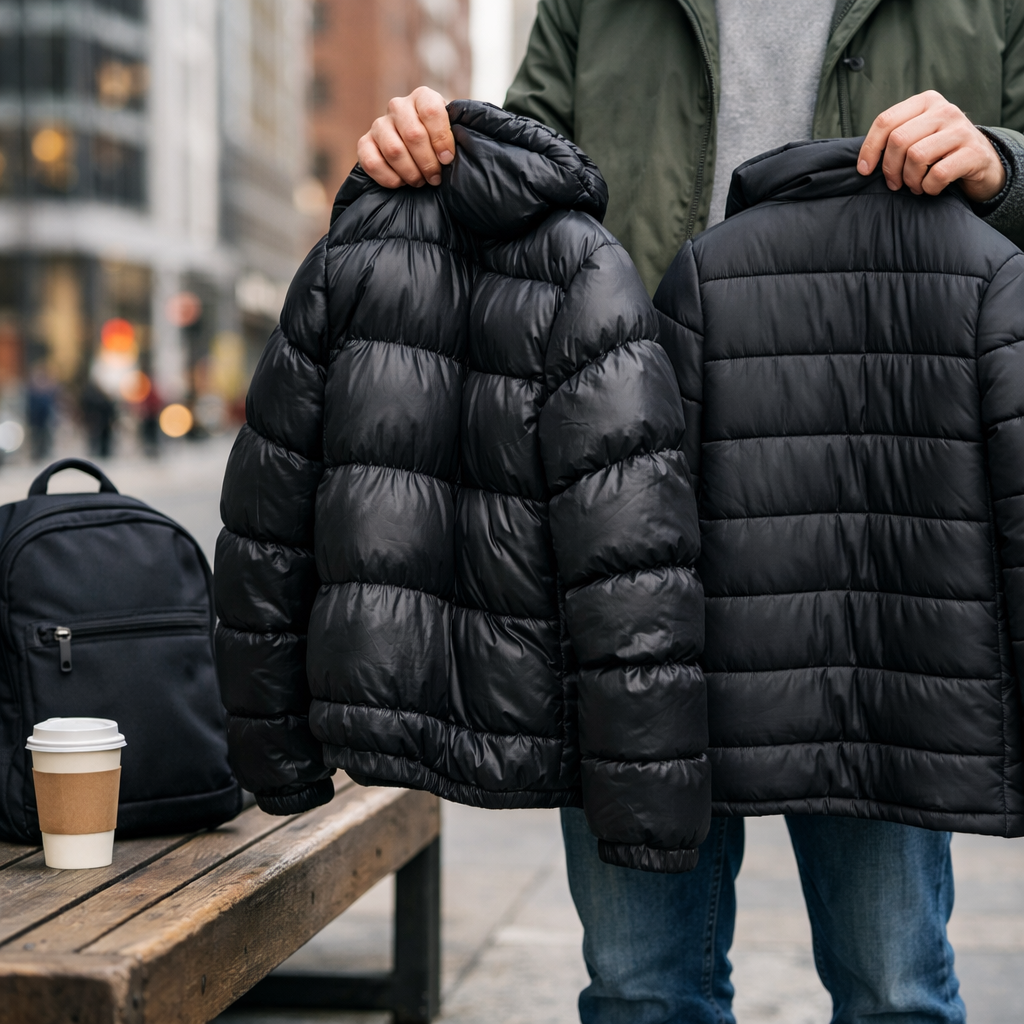
Down vs Synthetic Black Puffers: Most Comfortable for Daily Commutes
Down vs Synthetic Black Puffers: Most Comfortable for Daily Commutes
A black puffer jacket works for office days, late buses, and quick trail detours—if you match insulation to your climate and activity. For most commuters, synthetic or hybrid puffers are most comfortable because they stay warm when damp and manage sweat better. In cold, dry, low-exertion weather, a high-fill down puffer offers the coziest warmth-to-weight and compact carry. Below, we break down how to choose the most comfortable black puffer jacket for commuting, with clear guidance on insulation, breathability, layering, features, and value.
How to choose a comfortable black puffer for commuting
Use Hiking Manual’s quick decision flow:
- Wet, humid, or sweaty commute? Choose synthetic. Synthetic insulation keeps insulating when damp and dries faster, while down loses loft when wet, which can feel clammy on arrival, according to REI’s insulated outerwear guide. REI’s insulated outerwear guide
- Cold, dry, low-activity days? Choose down for the best warmth-to-weight ratio and a lighter, cozier feel. Triple Fat Goose’s down vs. synthetic explainer
- Mixed conditions (drizzle, snow flurries, stop-and-go movement)? Choose hybrid insulation to blend down’s core warmth with synthetic’s wet-weather reliability.
“Warmth-to-weight ratio describes how much thermal insulation you feel per ounce of material. Down excels because lofty clusters trap more air with less mass, so a jacket can be lighter yet warmer. Synthetic fibers sacrifice some efficiency but stay reliable in wet, sweaty commutes.”
If your black puffer jacket for commuting needs to handle routine drizzle or perspiration, prioritize breathable synthetic insulation or hybrid insulation. In drier climates, consider hydrophobic down paired with a water-resistant shell. Hiking Manual generally leans synthetic or hybrid for mixed, stop-and-go commutes.
Comfort criteria for commuters
Comfort comes from more than just warmth. Use Hiking Manual’s checklist for daily travel:
- Wet-weather warmth: retains heat when damp and dries quickly
- Breathability during motion: vents excess heat and moisture to avoid clamminess
- Fit: trim enough to reduce drafts, roomy enough for a fleece without compressing insulation (fit that’s too loose leaks heat; too tight crushes down and reduces warmth, as noted in GearJunkie’s testing). GearJunkie’s best down jackets roundup
- Cuff and hem seals: elastic or adjustable to block wind
- Hood comfort: insulated, adjustable, with a soft chin guard
- Pocket accessibility: handwarmer pockets plus a secure phone pocket that won’t interfere with a backpack strap or bike
- Fabric noise/feel: softer, quieter face fabrics are less distracting in office settings
Loft is the fluffiness of insulation that traps warm air; more loft usually means more warmth for the weight, especially in high fill-power down. Synthetic fills keep insulating when damp and generally handle sweat spikes better during high-output commutes.
Down black puffers
Down often feels exceptionally comfortable on cold, dry commutes because it’s lighter, warmer for the weight, and highly packable—qualities that make it feel cozy without bulk. Down’s efficiency and long-term durability are key advantages when cared for properly.
Limitations and solutions: down loses insulating loft when wet. For light precipitation, mitigate with hydrophobic down and a water-resistant shell; in steady rain, add a rain shell layer.
Quick spec cues for down:
- Fill power: 700–900+ indicates better loft; higher fill power yields more warmth per ounce and smaller packed size (see Switchback Travel’s fill power explainer). Switchback Travel’s fill power explainer
- Construction: box or baffled patterns resist cold spots; stitch-through is lighter but can be less warm at seams
- Shell fabric: a light DWR-treated ripstop balances weather resistance and packability
Synthetic black puffers
Synthetic puffers are the safer, easier choice for damp, variable, or sweaty commutes. They retain warmth when wet, dry faster, and typically cost less than down at comparable warmth—though they’re usually heavier and less compressible at the same warmth level. BetterTrail’s down vs. synthetic comparison
Activity comfort: active synthetic fills are engineered to breathe and vent heat during movement so you arrive drier. Look for fills labeled “Active” (e.g., PrimaLoft Gold Active) highlighted in independent gear tests. Field & Stream’s synthetic jacket tests
Labeling basics: synthetic insulation is often listed in grams per square meter (g/m²). As a rule of thumb:
- 40–60 g/m²: best for high-output, shoulder-season or urban cycling
- 60–100 g/m²: better for colder, slower walks and longer waits on the platform
Hybrid down and synthetic puffers
Hybrids place down where loft matters—usually the core—and synthetic in moisture-prone zones (shoulders, cuffs, hem) to keep warmth more reliable in drizzle or sweaty transitions. Hybrids reduce clamminess during activity without sacrificing core warmth—ideal for riders who face spitting rain, then walk. Expect premium hybrids to cost more than all-synthetic jackets due to more complex construction and higher-grade fills.
Weather and climate fit
Match your climate to insulation and shell:
- Wet or humid: synthetic or hybrid; pair with a water-resistant shell to preserve performance.
- Cold, dry: down for sustained warmth and superior packability; use hydrophobic down or carry a shell.
Comparison at a glance:
| Factor | Down | Synthetic | Hybrid |
|---|---|---|---|
| Wet Warmth | Poor without shell | Good (insulates when damp) | Good to Very Good (wet-zone synthetics) |
| Dry Warmth | Excellent | Good to Very Good | Very Good |
| Packability | Excellent (packs much smaller) | Fair to Good | Good |
Down jackets pack much smaller than equivalent synthetics, which is handy for commuting and travel stowage in a bag or desk drawer.
Activity level and breathability
- Cycling or fast walking: prioritize synthetic or active synthetic fills for better venting and moisture control during high output.
- Slow walking or long transit waits: down’s lighter, cozier feel excels for low exertion in dry cold.
Breathability is how well a jacket lets heat and moisture escape to prevent clamminess. More breathable synthetics feel drier during movement; down shines in still, cold conditions.
Layering basics for warmth and comfort
Use a simple three-layer system:
- Moisture-wicking base layer to pull sweat off skin
- Breathable mid-layer like fleece for adaptable warmth
- Weatherproof shell over your puffer when precipitation is likely
Flow for variable weather:
- Start with base + fleece on cool mornings
- Add a synthetic puffer for wet or cycling days
- Swap to a down puffer for cold, dry days
- Top with a rain shell if the forecast is uncertain
Fill power measures how much space one ounce of down fills. Higher ratings (800–900) capture more air in each cluster, boosting warmth and compressibility for the weight. For commuting, high fill power keeps jackets light, trim, and easy to stash without sacrificing insulating performance overall.
For deeper base layer tips, see Hiking Manual’s base layer guide: https://www.hikingmanual.com/best-thermal-hiking-base-layers-stay-warm-with-top-picks-for-comfort/
Features that improve commute comfort
Look for:
- Insulated, adjustable hood and a high collar with a soft chin guard
- Drop-tail hem, elastic cuffs, and draft-blocking baffles
- Handwarmer pockets, an interior dump pocket, and a secure high-set phone pocket that avoids hip-belt or bike interference
Fit matters: the right fit preserves warmth—too loose leaks heat; too tight compresses down and reduces loft.
Packability, care, and durability
Down jackets typically pack smaller for travel and desk storage, and with proper care can outlast many synthetics. Synthetics tolerate damp and dry quickly, but may need more frequent washing if they absorb urban grime and sweat.
Care expectations:
| Category | Down | Synthetic |
|---|---|---|
| Wash frequency | Infrequent; gentle detergent | More frequent if sweaty; standard detergent |
| Dry time | Slow; tumble low with clean tennis balls | Faster; air- or low-tumble dry |
| Wet-performance | Poor without shell | Good; insulates when damp |
| Storage tips | Hang loose; avoid long-term compression | Can be stored folded; avoid crushing fibers |
Budget and value considerations
Price snapshots: synthetic picks often range roughly $190–$430, while down spans about $100–$430 depending on fill and construction, per Treeline’s testing. Treeline Review’s synthetic jackets guide Budget down options, including some Decathlon models around $149, are noted in The Hazel Storm’s buying guide. The Hazel Storm’s puffer buying guide
Examples to frame tiers (not endorsements by Hiking Manual):
- Premium down: Feathered Friends Eos, 900-fill, ~11.8 oz
- Mid-premium down: KÜHL Spyfire Hoody, 800-fill (~$299)
- Value down: Marmot Hype, 800-fill (~$275) Independent testing shows that budget down can deliver solid warmth if you accept heavier weight or simpler fabrics. OutdoorGearLab’s best down jackets review
Commuter advice:
- Choose synthetic for affordability, easy care, and reliable wet-weather comfort
- Choose down for long-term value and superior packability if your climate is cold and dry
Recommendations by commute scenario
- Wet or uncertain weather, or bike commuting: synthetic or hybrid; pick active synthetic fills for better venting
- Cold, dry, low-output walks and transit waits: down for lighter, cozier warmth and pocketable carry
- Mixed rain/snow week: hybrid with down core and synthetic at shoulders and cuffs
Quick comparison:
| Comfort Factor | Winner |
|---|---|
| Comfort in Wet | Synthetic/Hybrid |
| Comfort in Dry Cold | Down |
| Comfort in Motion (fast) | Synthetic |
Safety and preparedness for urban-to-trail transitions
A black puffer that commutes well can also support quick post-work trail loops. Carry a compact compass, offline maps/GPS on your phone, and a small first-aid kit; stow them in interior dump pockets to keep them warm and extend battery life. Layer a breathable fleece, and pack a lightweight rain shell. Synthetic insulation keeps you warmer if a surprise drizzle hits, while down needs shell protection to avoid losing loft.
Micro-checklist:
- Compass and offline maps/GPS
- Headlamp
- Gloves and warm hat
- Portable charger
- Slim first-aid kit
Frequently asked questions
Are synthetic black puffers more comfortable than down for daily commutes?
Often yes. Synthetic puffers stay warm when damp and manage sweat better during movement, and Hiking Manual generally recommends synthetic or hybrid for most commutes.
What down fill power is best for cold, dry city winters?
Aim for 750–900 fill power for excellent warmth-to-weight and compressibility. Hiking Manual targets this range for long, low-activity commutes in dry cold.
How should I layer a puffer with fleece and a rain shell for variable weather?
At Hiking Manual, we favor a wicking base, a breathable fleece mid-layer, then your puffer. Carry a thin rain shell to deploy in precipitation—synthetic for wet or active days, down for cold and dry.
Will a down puffer keep me warm if it gets wet on the way to work?
Not reliably—down loses loft and insulating power when wet. If rain is likely, Hiking Manual recommends wearing a shell over it or choosing a synthetic or hybrid puffer.
What features matter most if I bike to the office?
Hiking Manual prioritizes breathable synthetic insulation, an adjustable hood or helmet-compatible collar, wind-blocking cuffs and hem, and secure high-set pockets that don’t interfere with pedaling.