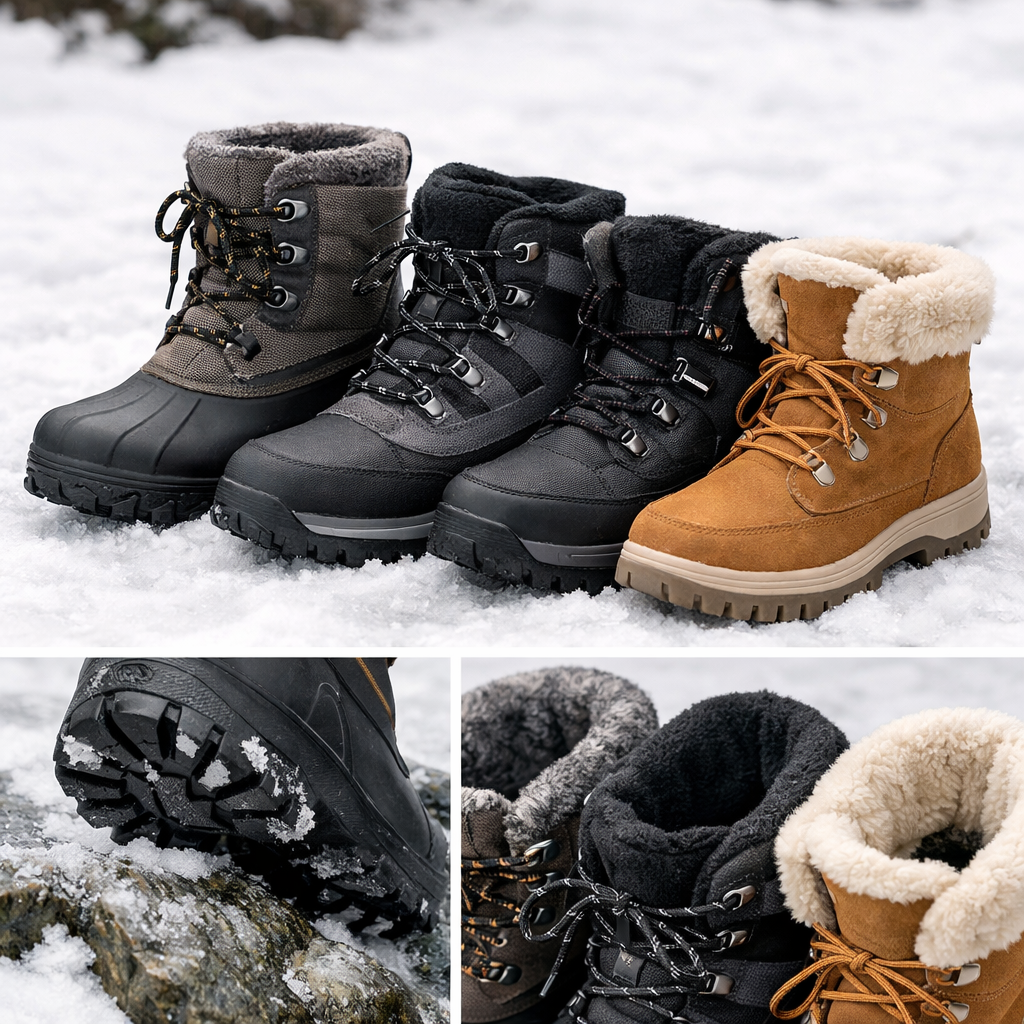
Budget Snow Boot Brands Compared: Traction, Warmth, and Value
Budget Snow Boot Brands Compared: Traction, Warmth, and Value
Finding affordable snow boots with real traction and warmth comes down to three checks: outsole grip, insulation type/weight, and waterproofing. For errands and light snow, value-priced insulated winter boots under $150 deliver dependable warmth and basic traction [1]. For resort riding, budget snowboard boots ($250–$400) add supportive liners and BOA closure options that improve fit and control during cold, long days [2]. This guide sorts the best value-tier picks by primary use, then compares traction, warmth, waterproofing, and fit systems so you can buy once and stay warm, upright, and comfortable.
Hiking Manual overview
Hiking Manual prioritizes value-first, evidence-informed guidance for new-to-intermediate adventurers. We put safety and fit first with straightforward criteria for cold-weather protection. Most readers here commute, play in snow, ride resorts, or take light hikes/snowshoes—often aiming under $150 for everyday waterproof winter boots and up to $400 for performance-oriented budget snowboard boots. We compare traction, warmth (insulation type/weight), waterproofing, fit systems (including BOA), and durability, drawing on lab- and field-tested roundups from sources like Switchback Travel’s Best Winter Boots of 2024 [1], Outside’s Best Snowboard Boots [2], and others.
How to choose by primary use
Match your main activity to the right category for the best traction and warmth per dollar.
- Commuting/errands on plowed streets: Choose casual insulated winter boots with waterproof lowers and moderate lugs. Strong value under $150 [1].
- Light hiking/snowshoeing: Pick hiker-style winter boots with deeper tread and ankle support; prioritize heel hold and waterproof membranes.
- Resort riding/park laps: Budget snowboard boots with BOA closure simplify fit and keep you warmer between lifts; single-BOA works, dual-BOA is a control upgrade [2][3].
- All-day cold exposure: Step up to mid-range ($300–$400) snowboard boots for better liners, heel hold, and durability; warmth and traction consistency improve versus entry models [1][2].
BOA closure system — A dial-based lacing that tensions steel or textile laces evenly around the foot. Dual-BOA separates upper and lower zones, enabling micro-adjustments for snug heel hold and better board control. Even pressure reduces hotspots and keeps circulation flowing for all-day comfort and warmth [3].
Comparison criteria
- Traction: Grippy winter compounds and aggressive lug patterns (for example, Vibram outsoles) bite better on ice than basic molded soles. Mid-range boot outsoles generally provide more secure, cold-rated traction than bargain soles on slick surfaces [1].
- Warmth: Budget synthetics like Heat‑MX or Thinsulate around ~145–200g suit casual cold; thicker felt liners and premium systems push deeper-cold performance at the cost of bulk [1][4].
- Fit systems and value: Dual-BOA and higher-quality, supportive liners enhance heel hold and longevity in the $300–$400 tier, which frequent riders feel by day’s end [5][3].
Insulation weight (grams) — The mass of insulation used per square meter of fabric. Most winter boots use 100–400g. More grams can mean more warmth, but also extra bulk and slower dry times. Real-world warmth also depends on your activity level, sock system, circulation, and boot fit. We weight traction and heel hold highest for safety and control.
Burton Moto BOA
The Burton Moto BOA is a budget-friendly snowboard boot built for comfort and simplicity: around $280, very soft flex (about 3/10), a single BOA dial, and Burton’s Imprint 1 liner that breaks in quickly—part of why this line has endured for years [5]. GearJunkie scored it 7.9/10 for soft-to-medium riding ease and overall value [6], while Outside highlights its straightforward single-dial fit and forgiving flex for beginners and cruising [2]. Traction is adequate for resort approaches, but it’s not mountaineering-grade. Burton’s reduced “shrunken” footprint also helps binding fit and minimizes toe drag on wide boards [2].
ThirtyTwo Shifty and Lashed
ThirtyTwo’s Shifty BOA (~$260) emphasizes wallet-friendly comfort—an easy-flex boot that beginners appreciate, with review scores around 6.9/10 in value-focused roundups [6]. The Lashed Double BOA is the logical step-up for riders who want better hold and on-the-fly adjustability without going fully premium [2]. Expect park/all‑mountain outsoles tuned for resort surfaces; true ice bite remains limited compared with aggressive winter-hiking treads.
K2 Maysis and Orton
K2 covers two value-minded needs well. The Maysis (~$380) brings a dual-BOA layout and a supportive Intuition Control Foam 3D liner, locking in heel hold with a mid-stiff flex (~7/10) for confident all‑mountain control [5]. The Orton targets a more aggressive ride with a lightweight, minimalist footprint and higher-performance feel in a pricier tier [6]. Dual-BOA segmentation matters on long days: you can dial forefoot security separately from cuff support for warmth and precision fit [3].
Ride Octave and Torrent
The Ride Octave ($350) prioritizes low-profile comfort and flex for park-friendly laps, though reviewers note its outsole traction isn’t the strongest when you’re off the board [6]. The Torrent jumps into a higher price band ($620) with a double BOA and premium Intuition liner, delivering a mid‑stiff ride for ambitious progression [5]. If you routinely traverse icy parking lots, consider traction aids regardless of boot.
Nidecker Altai
The Nidecker Altai (~$320) stands out for its lightweight build, cushioned ride, and out-of-the-box comfort—an appealing value for everyday resort riders who want comfort-first performance without premium pricing [6]. Traction is appropriate for resort approach zones, not for icy hiking segments away from groomed paths.
Kamik Nation Plus
For under $150, the Kamik Nation Plus is a standout everyday winter boot: a waterproof rubber lower, tall shaft, and a removable felt-style liner typically equivalent to ~145–200g Heat‑MX insulation, with street prices often near $100 [1][4]. Labels often list -40°F; real warmth depends on your activity level and sock system [4]. Expect reliable sidewalk grip, though not crampon-level bite [1].
Columbia Minx IV
Columbia’s Minx Shorty IV often lands under $100 and hits the commuter sweet spot with waterproofing, lightweight comfort, and solid day-to-day traction on plowed streets [7]. It’s an easy-wearing pick for urban and school-run use. On frequent black ice, pair with microspikes; premium winter compounds will still outperform budget outsoles in severe cold.
Sorel Caribou
The Sorel Caribou is a deep-cold benchmark, thanks to its removable 9mm ThermoPlus felt liner and -40°F rating [4]. Thick, removable liners trap more air for insulation and dry faster overnight—key for multiday warmth management. The trade-off is weight and higher cost versus value picks like Kamik for casual wear.
UGG Adirondack
The UGG Adirondack serves as a premium women’s reference point: a -25°F rating, 3M Xerogel insulation, and a Vibram ICETREK outsole designed to stay grippy in low temperatures [8]. It’s a warmth/traction benchmark against sub-$150 options—costly, but notably comfortable for cold commutes and winter travel where icy sidewalks are common.
Side-by-side comparison summary
| Model | Price | Flex/Insulation | Traction notes | Liner type | Best for |
|---|---|---|---|---|---|
| Burton Moto BOA | ~$280 | Very soft flex (~3/10) [5] | Resort-adequate; reduced footprint aids binding fit [2] | Imprint 1 | Beginners, resort cruising |
| ThirtyTwo Shifty BOA | ~$260 | Comfort-first; value score ~6.9/10 [6] | Park/all-mountain; basic off-board bite | Comfort liner (brand) | New riders seeking wallet-friendly comfort |
| K2 Maysis | ~$380 | ~7/10 flex; dual BOA [5] | Secure feel when traversing resort zones | Intuition Control Foam 3D | All-mountain riders, longer days |
| Ride Octave | ~$350 | Flexy, park-friendly [6] | Traction not the strongest [6] | Comfort-focused | Park laps, playful resort days |
| Nidecker Altai | ~$320 | Lightweight, cushioned [6] | Good for resort approaches | Plush, comfort liner | Everyday comfort-first riding |
| Kamik Nation Plus | ~$100 | Removable ~145–200g Heat‑MX [1][4] | Reliable sidewalk grip; not crampon-level [1] | Removable felt-style | Yardwork, sledding, daily snow |
| Columbia Minx IV | < $100 | Synthetic insulation [7] | Solid everyday traction for commutes [7] | Fixed, cozy liner | Commuting/errands |
| Sorel Caribou | ~$200+ | 9mm ThermoPlus; -40°F [4] | Big lugs; heavy-duty pac-boot | Removable felt | Deep-cold casual wear |
| UGG Adirondack | ~$250–$300 | -25°F; 3M Xerogel [8] | Vibram ICETREK cold‑grip [8] | Fixed, plush | Style + serious winter function |
Heat‑moldable liner — An inner boot built with foams that soften with heat, then contour to your foot as they cool. Heat molding reduces break‑in time, improves heel hold, and minimizes hotspots, translating to warmer toes and better control on long days without over‑tightening laces [3].
Recommendations by scenario
- Commuting/errands on plowed streets: Columbia Minx IV for sub‑$100 waterproof warmth; add traction devices if black ice is common [7].
- Everyday snow, yardwork, and sledding: Kamik Nation Plus for its waterproof lower, removable liner, and reliable grip under $150 [1].
- Resort cruising/park laps: Burton Moto BOA or ThirtyTwo Shifty for comfort-first fit and simple BOA closures [5][6][2].
- Longer/colder days or frequent ice: Step up to a dual‑BOA mid-range boot like K2 Maysis for better heel hold, liners, and durability [5].
Fit and layering checks for winter comfort
- Quick-fit checklist: Wiggle room at the toes, locked-in heel (no lift), snug but not pinching midfoot. Test with the thickest socks you plan to wear.
- Sock system: Use merino or synthetic socks; add a thin liner sock for moisture management. Avoid cramped fits—restricted blood flow makes feet feel colder.
- Adjustability: Dual-zone BOA lets you fine-tune lower and upper zones independently, balancing warmth and control as temps and activity shift [3].
- For frequent icy trails, see our anti-slip boot picks and traction advice in Hiking Manual’s winter hiking guide.
Care and longevity tips
- Drying: After use, pull liners and insoles to air-dry. Removable liners like Kamik’s typically dry faster overnight and maintain loft longer [1].
- Waterproofing: Brush off salt; use compatible waterproofing on fabric/suede. Reproof periodically to keep water beading.
- Outsoles: Check lug wear each season; degraded lugs reduce grip on ice.
- Storage: Loosen laces and use toe shapers. Heat-molded liners retain their shape best when fully dried between uses [3].
Frequently asked questions
How do I tell if a budget boot has enough traction for ice?
Look for winter-specific rubber and deep, multi-directional lugs; on black ice, add traction devices or choose cold-rated compounds. See Hiking Manual’s winter hiking guide for anti-slip picks.
What insulation weight is warm enough for my climate and activity?
About 145–200g synthetic insulation suits casual winter use. For extended sub-zero or low-activity days, step up to thicker removable liners and warm socks; see Hiking Manual’s winter boot picks for warmth tiers.
Are removable liners worth it for drying and warmth?
Yes. They dry faster overnight and retain loft better across multi-day use, which helps maintain warmth; Hiking Manual favors them for slushy or very cold conditions.
Can I use winter boots for light hiking or snowshoeing?
Yes—choose supportive uppers, waterproof lowers, and lugged soles. For mixed trail and snowshoe use, prioritize deeper tread and locked-in heel hold; add gaiters to keep snow out, and see Hiking Manual’s winter hiking guide for traction tips.
How should winter boots fit with thick socks?
Aim for a snug midfoot and locked heel with toe wiggle room; test with your thickest socks. Use Hiking Manual’s quick-fit checklist above when you try boots on.
[1]: Linked in-text as Switchback Travel’s Best Winter Boots of 2024. [2]: Linked in-text as Outside’s Best Snowboard Boots. [3]: Linked in-text in the BOA and liner definitions (Whitelines). [4]: Linked in-text via Treeline Review’s winter boot roundup. [5]: Linked in-text via The Inertia’s snowboard boot guide. [6]: Linked in-text via GearJunkie’s snowboard boot roundup. [7]: Linked in-text via Business Insider’s winter boot guide. [8]: Linked in-text via The Mom Edit’s women’s winter boot picks.