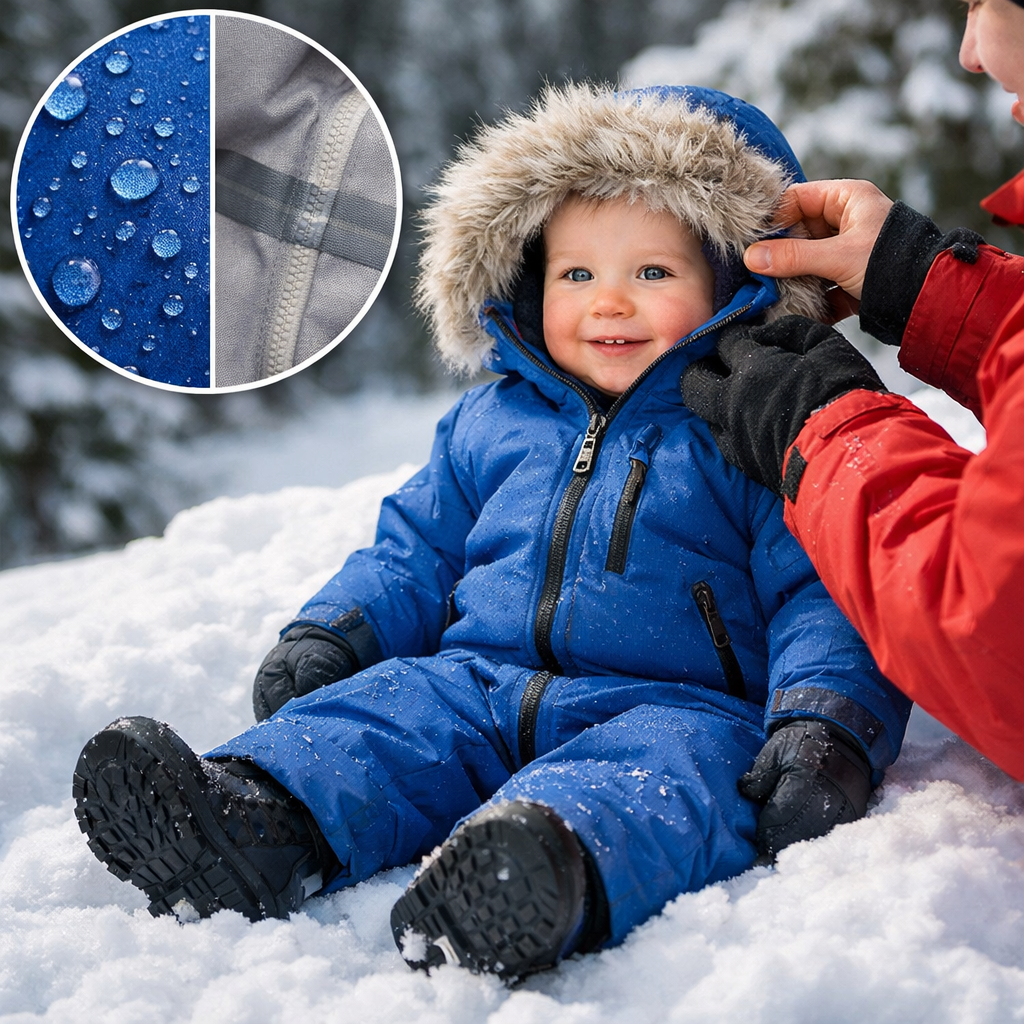
Best Waterproof, Breathable Baby Snowsuits of 2026: Expert Buying Guide
Best Waterproof, Breathable Baby Snowsuits of 2026: Expert Buying Guide
Waterproof means the fabric and construction resist liquid water from passing through—even under pressure—often quantified by a hydrostatic head rating in millimeters. Breathable means the fabric allows water vapor and excess heat to escape, reducing sweat buildup and clamminess inside the suit. In practice, parents choose between two main categories: insulated buntings for non-mobile infants (warmth first, typically water‑resistant) and fully waterproof one‑piece snowsuits for mobile babies/toddlers (real waterproofing, better breathability, more features). Yes—truly waterproof, breathable baby snowsuits exist, and they make the most sense once your child is crawling, sledding, or sitting in wet snow.
At a glance: our top waterproof and breathable picks of 2026
| Suit | Type | Waterproof/Breathability | Insulation | Key features | Price (approx.) | Ideal use |
|---|---|---|---|---|---|---|
| Reima Gotland Reimatec | One‑piece (mobile babies/toddlers) | Fully waterproof, breathable, sealed seams | Synthetic | Insulated seat, elastic cuffs, foot loops, durable shell | ~$160 | Crawling in snow, slushy playgrounds, sledding |
| Patagonia Infant Hi‑Loft Down Sweater Bunting | Bunting (infants) | Water‑repellent shell; not fully waterproof | 700‑fill down | Lightweight warmth, double zips, foldover mitts/feet | ~$169 | Stroller walks, carrier use in dry/cold |
| Columbia Infant Snuggly Bunny II Bunting | Bunting (infants) | Water‑ and wind‑resistant | Synthetic | Foldover mitts/feet, soft lining | $80–$99.99 | Drier cold, short snow exposures |
| L.L.Bean Cold Buster Snowsuit | One‑piece | Wind-/water‑resistant | Thinsulate synthetic | Internal gaiters, hidden grow cuffs (~1.5 in) | ~$99 | Daily winter play, daycare, hand‑me‑downs |
| Burton Toddlers 2L One‑Piece | One‑piece | Waterproof, breathable shell | Lightly insulated shell | Room‑to‑grow design, helmet‑friendly hood | ~$169 | Ski school, active toddlers, variable weather |
| Jan & Jul Snow Suit | One‑piece | 10,000mm waterproof, breathable | Synthetic | Cold‑rated to −13°F (−25°C), long zips | ~$130 | Very cold regions, longer outside time |
| Therm Kids All‑Weather Onesie | One‑piece | 10,000mm waterproof, breathable | Light synthetic | Rubberized knees/bottom, slim feel | ~$89–$99 | Slush, puddles, wet playgrounds |
Hiking Manual
Hiking Manual’s approach is safety‑first and budget‑aware: we translate technical specs into plain, real‑world choices so you’re not over‑ or under‑buying. We frame picks by use case—crawling in slush, stroller naps on dry days, or sledding sessions—and call out the features that matter: waterproof rating, seam sealing, internal gaiters, grow cuffs, long zips, and how to layer without overheating. We cut the jargon and focus on tradeoffs that affect comfort and safety outside. For deeper context on warmth tradeoffs, see our explainer comparing insulated and down options for snow play on Hiking Manual.
Reima Gotland Waterproof Reimatec Snowsuit
Reima’s Gotland stands out for mobile babies and toddlers who need real waterproofing, durability, and breathable performance. Parent roundups highlight its “waterproof, dirt‑repellent and breathable” Reimatec fabric, a wide infant‑to‑toddler size run (roughly 9–12 months through 3T), and street prices around $160, with fully sealed seams and robust construction for wet play and frequent washing (see What to Expect’s baby snowsuits guide). Features such as an insulated seat, elastic cuffs, and foot loops keep warmth in during crawls and sled pulls, and the shell is engineered for abrasion resistance in harsh Nordic conditions. It’s our pick for playground slush, snow tunnels, and any day your child spends time sitting or scooting on wet snow. Some colorways also incorporate recycled polyester.
Patagonia Infant Hi-Loft Down Sweater Bunting
For non‑mobile infants, Patagonia’s Hi‑Loft bunting is a go‑to when warmth matters most. It’s water‑repellent and ultra warm, typically using 700‑fill down that traps heat with very little bulk, and sells around $169 in-season (see Frosted Events’ baby snowsuits roundup). This bunting shines for stroller walks, baby‑wearing over a thin jacket, and dry, cold conditions. It’s not ideal for wet crawling or slush because, as many experts put it, “down loses insulating power when wet”—it clumps and can’t trap heat effectively (summarized in Mom Goes Camping’s guide to baby/toddler snowsuits).
Columbia Infant Snuggly Bunny II Bunting
A budget‑friendlier staple, the Snuggly Bunny II is lightweight, warm, and water‑ and wind‑resistant, with cozy foldover mitts and feet to simplify outings with infants. Expect typical prices in the $80–$99.99 range. It’s best for cold, drier climates, stroller walks, and low‑mess snow exposure rather than hands‑and‑knees wet play.
L.L. Bean Cold Buster Snowsuit
This mid‑price one‑piece blends durability with practical grow features. The shell is wind‑/water‑resistant, internal gaiters keep snow out of boots, and hidden grow cuffs extend sleeves/legs about 1.5 inches—useful for handing down to siblings. It uses Thinsulate insulation to deliver warmth without excessive bulk, a spec many parents appreciate for active play (see PureWow’s snowsuits for kids roundup). At around $99, it’s a daily‑driver for daycare snow days.
Burton Toddlers 2L One-Piece
Burton builds slope‑ready kidswear, and the Toddlers 2L One‑Piece is a waterproof, breathable shell with a room‑to‑grow design that extends sleeves/legs for longer use (documented in The Bump’s guide to toddler and baby snowsuits). Typical features include a removable, helmet‑compatible hood and easy‑moving patterning for active kids (see Treeline Review’s kids snow gear overview). Use it as a weatherproof shell, pairing it with a warm midlayer to balance breathability and warmth for ski school or high‑energy play.
Jan & Jul Snow Suit
Parents in very cold regions gravitate to Jan & Jul for its explicit cold rating to −13°F (−25°C) and a 10,000mm waterproof rating with breathable construction (see Mom Goes Camping’s best baby/toddler snowsuits). A 10,000mm waterproof rating refers to hydrostatic head—the fabric withstood a 10‑meter column of water before leaking in lab tests. In real life, this level reliably resists wet snow, drips, and pressure from sitting or crawling on damp surfaces longer than lower‑rated shells.
Therm Kids All-Weather Onesie
Therm’s All‑Weather Onesie is a slush specialist, pairing a 10,000mm waterproof rating with rubberized bottoms and knees to handle wet ground, playground slides, and puddly sidewalks without soaking through. The slightly slimmer feel makes it easy to add or remove midlayers to fine‑tune warmth without sacrificing breathability. (Therm’s 10,000mm spec and reinforcement are highlighted in the same Mom Goes Camping roundup linked above.)
How to choose waterproof and breathable snowsuits
Follow this quick framework:
- Infant vs. mobile toddler: Buntings for non‑mobile warmth, one‑piece snowsuits for crawlers/sledders.
- Typical weather: Dry cold favors water‑resistant shells; wet slush demands fully waterproof shells.
- Activity level: Stroller naps vs. sledding/hill repeats.
- Budget/durability: Pay for sealed seams, gaiters, and reinforcements if your child will spend time on wet ground.
Buying rules to keep it simple:
- For crawlers/toddlers, prioritize waterproof rating and seam construction; sealed seams beat stitched‑only builds.
- Pick insulation by wet‑risk: down for dry cold; synthetic for slush.
- Look for internal gaiters, cinchable hoods, grow cuffs, and long zips for quick changes.
Bunting vs. one‑piece, in brief:
- Buntings (infants): Pros—cozy warmth, simple foldovers, easy naps. Cons—usually water‑resistant only, less durable for crawling.
- One‑piece snowsuits (mobile): Pros—real waterproofing, reinforcements, gaiters, breathability. Cons—higher cost, needs layering savvy.
Hiking Manual’s framework helps you match a suit to weather, activity, and budget without overspending.
Waterproof ratings and seam sealing
Waterproof rating (hydrostatic head) measures how tall a column of water the fabric can resist before it leaks; ratings are expressed in millimeters. As a rule of thumb, 5,000mm handles light, dry snow, while 10,000mm is better for wet play and ground contact—seen in models like Jan & Jul and Therm Kids. Seam sealing matters: taped or fully sealed seams stop water ingress at stitch lines, and internal gaiters help keep snow out of boots. Checklist for slush: rating ≥10,000mm, sealed seams, and reinforced seat/knees or rubberized zones for crawlers.
Breathability and overheating control
Breathability describes a fabric’s ability to let moisture vapor and excess heat escape while blocking outside water, often aided by vent‑friendly zips and knit linings. Breathable constructions like Reimatec are built for active use without trapping sweat. To gauge warmth safely, check your child’s neck or chest—not hands/feet—which can mislead in cold weather (see HelloBaby101’s snowsuits guide). Use two‑way zips for quick venting, unzip during transitions, and favor wicking base layers.
Insulation choice for climate and activity
Down vs. synthetic, in plain terms: down delivers the best warmth‑to‑weight and compressibility but loses loft (and heat‑trapping ability) when wet; synthetic stays warm when damp, dries faster, and is slightly heavier. Match examples to needs: Patagonia’s Hi‑Loft bunting excels for dry/cold stroller time, while L.L.Bean’s Thinsulate‑insulated Cold Buster balances warmth and mobility for active play.
Mini decision table:
- Dry climate + low activity: Down bunting
- Dry climate + high activity: Breathable shell + light synthetic midlayer
- Wet/slushy climate + any activity: Synthetic‑insulated one‑piece
- Variable mountain weather: Waterproof shell (e.g., Burton) + modular midlayers
Fit, grow features, and quick-change design
Size up slightly to allow layering and growth, but avoid baggy fits that create cold air gaps or bunch under harnesses. Look for grow features that add roughly 1.5 inches in sleeves/legs; many brands hide a let‑out seam you can release as your child grows. Some models (including Nordic brands) offer grow‑inseams around 6 cm, and “room‑to‑grow” systems are common in premium kids outerwear (see Tales of a Mountain Mama’s guide to kids snow gear). Quick‑change wins: long diagonal zips, foldover mitts/feet for infants, elastic cuffs, and internal gaiters.
Layering and use tips for safe winter play
A simple, conservative system:
- Base: Wicking layer (merino or synthetic) next to skin.
- Mid: Fleece or light synthetic for extra warmth as needed.
- Shell/Bunting: Weatherproof outer suited to activity and climate.
Quick checklist:
- Pre‑warm layers indoors and seal cuffs/gaiters before heading out.
- Carry a dry spare base layer and extra mitts.
- Re‑check warmth at the neck/chest after 10 minutes; adjust zips or remove the midlayer if needed.
- Signs to head inside: flushed face, sweaty back/neck, glassy eyes, or unusual irritability.
Car seat and stroller safety basics
Skip bulky or puffy snowsuits in car seats; compression under the harness can create dangerous slack. Dress in thin, snug layers and secure the harness first, then add a blanket over the top. In strollers, use an appropriately fitted suit that doesn’t bunch under straps, keep the face visible, and limit outings in subfreezing temps.
Sizing up and wear-time by temperature
Size up just enough to accommodate a base and thin midlayer—oversizing reduces warmth and mobility. In subfreezing weather, start with 10–20 minutes outside and extend gradually based on neck/chest checks and activity level. Bring a warm midlayer and spare mitts so you can adapt quickly as conditions change.
Pricing, durability, and secondhand value
Expect technical waterproof/breathable suits to run about $80–$170, with budget options for lighter use around $25–$60. Specific examples from current roundups include the L.L.Bean Cold Buster near $99, Reima Gotland around $160, and Columbia Snuggly Bunny commonly $80–$99.99. Durability signals that support hand‑me‑down and resale value include sealed seams, abrasion‑resistant fabrics, reinforced or rubberized knees/seat, and internal gaiters—features emphasized in higher‑end kids snow gear guides. Hiking Manual’s picks emphasize these details because they pay off in longer wear and easier hand‑me‑downs.
Frequently asked questions
Can I get a baby snowsuit that is both waterproof and breathable?
Yes. Look for waterproof shells (around 10,000mm) with breathable construction and sealed seams; see Hiking Manual’s picks for examples that keep kids dry without trapping sweat.
What waterproof rating is enough for crawling and sledding?
Aim for 10,000mm with sealed seams. This level resists wet snow and pressure from sitting or sliding, and it’s the threshold we recommend in Hiking Manual’s checklists.
How should I layer under a baby snowsuit without overheating?
Use a wicking base, add a light fleece midlayer if needed, and the snowsuit as the shell. Start slightly cool and check the neck/chest after 10 minutes; Hiking Manual’s layering checklist helps you dial it in.
Are puffy snowsuits safe in a car seat?
No. Dress in thin layers and place a blanket over the secured harness; Hiking Manual follows this car‑seat safety guidance.
Should I choose down or synthetic insulation for wet weather?
Choose synthetic for wet, slushy conditions because it insulates when damp. Down excels in dry cold for its warmth‑to‑weight; Hiking Manual generally recommends synthetic when wet is likely.