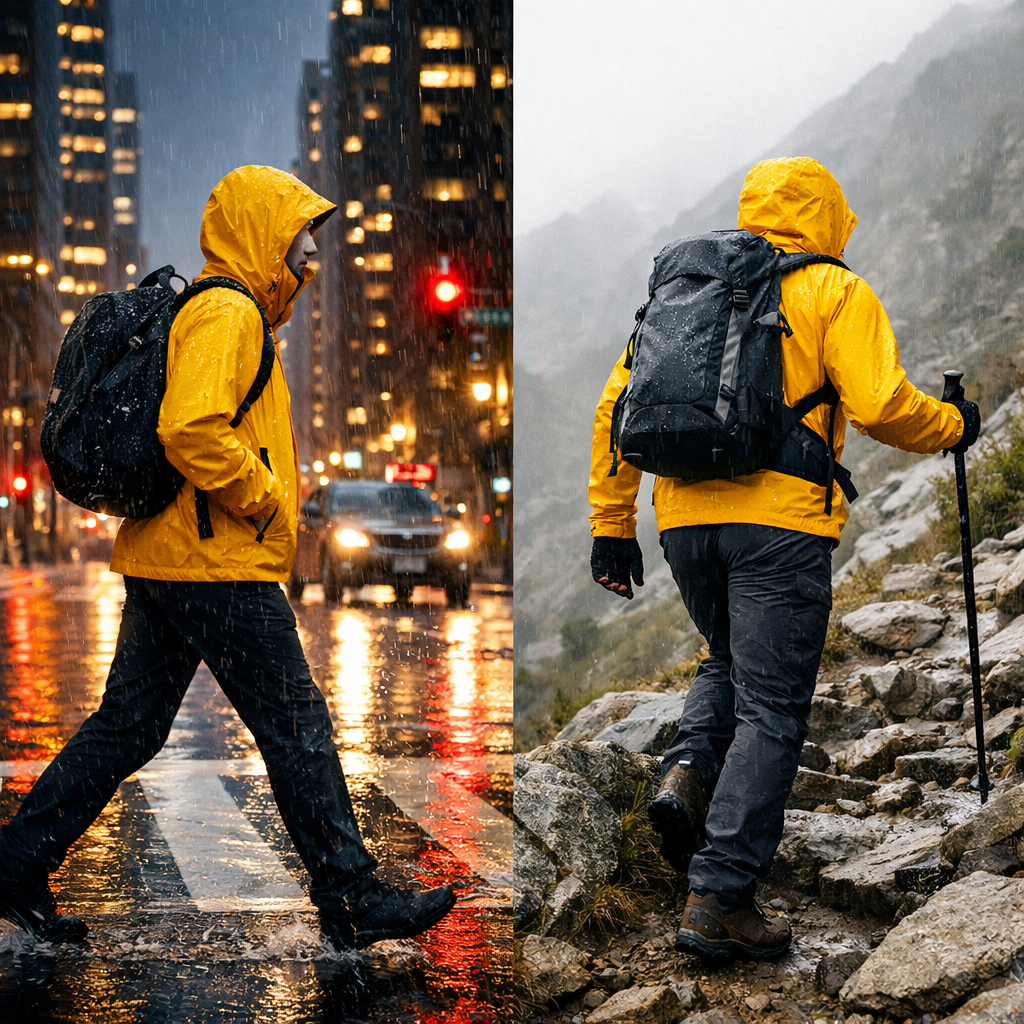
Best Versatile Rain Jackets for Urban Commutes and Mountain Hikes 2026
Best Versatile Rain Jackets for Urban Commutes and Mountain Hikes 2026
A jacket that handles subway drizzles and summit deluges saves money, space, and hassle. In 2026, the most versatile picks pair dependable 3-layer performance—or a high-quality 2.5-layer membrane with real ventilation—with urban-ready durability, commuter-friendly pockets, and trail-grade storm protection. “Versatile rain jacket: a waterproof-breathable shell that provides reliable storm protection, efficient moisture venting, abrasion resistance for daily carry, and compact storage for commuting or daypacks.” Expect terms like 3-layer rain jacket, 2.5-layer membrane, waterproof rating, breathability (MVTR), pit zips, packable rain jacket, hiking shell, helmet-compatible hood, PFC-free DWR, and 50D face fabric to matter. Below, we explain how to choose, then spotlight trusted models that transition cleanly from city to trail. Each pick reflects Hiking Manual’s safety-first, field-tested approach.
Hiking Manual
Our point of view is safety-forward and field-tested in cold, shoulder-season, and mountain conditions. We prioritize: stormworthiness; mobility over high-loft fleece midlayers; pocket usability with hipbelts and messenger straps; and long-term durability for urban abrasion. This list is curated from multi-day use in mixed weather and cross-checked against lab specs and leading comparative reviews to weigh membrane type, breathability (MVTR), and the durability-versus-packability trade-off, aligning with recurring themes in Switchback Travel’s testing and buyer’s advice and CleverHiker’s long-term kit evaluations (Switchback Travel’s best rain jackets, CleverHiker’s rain jacket guide). Where sources differ, we privilege repeatable field results and safer storm margins over marginal weight savings.
Patagonia Torrentshell 3L
Buy-it-once reliability for city-trail crossover. Patagonia’s 3-layer H2No Performance Standard membrane with a 100% recycled nylon face delivers credible storm protection and everyday toughness. The men’s medium weighs around 14.1 oz, and it’s widely recognized as a best overall value performer with strong scores for weather resistance and features. A thicker 50D face fabric shrugs off urban abrasion from shoulder bags and bus doors, while pit zips and a structured hood make it trail-ready. Ideal for commuters who need durability and hikers who want proven storm protection without premium pricing, with durability corroborated by BetterTrail’s durability notes on 50D faces (BetterTrail’s best rain jackets). It remains a Hiking Manual staple for dependable city-to-trail coverage.
Arc’teryx Beta
A premium alpine-first shell that still looks and functions in the city if budget allows. The Beta line uses 3-layer GORE-TEX ePE for high waterproofing and good breathability; the lighter Beta SL variant hovers near ~12 oz yet keeps a protective cut and helmet-compatible hood. Performance benchmarks often cited for the broader Beta platform include a 28,000 mm hydrostatic head and ~24,000 g/m²/24h breathability—top-tier numbers that translate to excellent storm reliability and interior dryness when moving. Trade-offs: significantly higher cost, sometimes less packable than mid-range shells, and some ePE garments may need more frequent DWR reproofing to keep beading strong (as noted in GearJunkie’s rain jacket roundup).
Montane Phase
For foul-weather mountain days that also see city abuse. The Phase’s 3-layer build, rugged face fabrics, and secure hood/brim architecture shine in sustained rain and wind. Independent testing highlighted its durable shell performance and strong beading in harsh conditions, marking it a standout for stormy hill days (Live For The Outdoors testing). Fit is accommodating over a high-loft fleece, and while it’s not the lightest, you feel the extra weather shedding when the sky opens.
Black Diamond Fineline Stretch
A comfortable, budget-friendlier 2.5-layer pick that moves with you. The Fineline uses BD.dry in a stretchy 2.5L package—about 11.2 oz—with pit zips for fast venting on climbs and bike commutes. About $189, it’s praised for lightweight protection and active mobility and has been singled out as a top lightweight stretch option; the trade-off is that 2.5L can feel clammy in sustained storms versus a true 3L build (BikeHikeSafari’s rain jacket overview).
REI XeroCloud
A value-driven 3-layer jacket that punches above its price. The HydroWall 3-layer membrane provides dependable waterproofing, and the shell packs into its own pocket—great for small office bags and daypacks. At roughly ~$190, it’s a “3-layer on a budget” option. Check that hood and hem adjustments seal well and that pocket placement keeps your phone and transit card accessible off the hipbelt line.
REI Rainier
A true budget choice for casual city use and light trail duty. Often around $100, the Rainier’s 2.5-layer design is best for fair-weather hikes, shoulder-season commutes, and short cloudbursts. In heavier, prolonged rain or during high-output hiking, step up to a 3-layer shell with better venting for comfort and safety.
Zpacks Vertice
For ultralighters prioritizing packability above all else. Around 5.4 oz and ~$299, the Vertice adds pit zips and a chest pocket to rarefied weight savings, making it excellent for fastpacking, thru-hiking, and emergency carry—and less ideal for abrasive urban wear and tear (Adventure Alan’s lightweight jacket guide). Handle carefully around brick walls and bag straps.
Montbell Versalite
An ultralight alternative that still carries real features. The Versalite’s high-performance 2.5–3L tech (model-year dependent) aims for stronger weather protection than minimalist “emergency-only” shells while keeping weight very low. Venting (often via pit zips) and solid hood adjustments improve comfort on climbs and bike commutes. Expect thinner face fabrics and correspondingly lower abrasion resistance for daily carry.
Outdoor Research Helium
A benchmark emergency layer that disappears in a bag. The Helium stuffs into its own pocket and uses ultralight Pertex Shield with Diamond Fuse yarns to reduce snags at minimal weight. It’s excellent as a backup for surprise squalls, trail runs, and minimalist city carry—just know it’s not meant for day-long storms or routine abrasion. Hiking Manual treats it as a backup, not a daily driver.
Rab Arc Eco
Sustainability-forward without giving up real protection. The Arc Eco uses recycled 50D 3-layer Pertex Shield Revolve with a PFC-free DWR and weighs around 428 g. That durable 50D face fabric stands up better to commuter abrasion than many ultralights. Plan on periodic DWR renewal to sustain beading, especially with PFC-free finishes.
Fjällräven Keb GTX
Rugged and storm-proven for the worst weather—urban or alpine. With GORE-TEX construction and heavier, more durable fabrics, the Keb GTX feels unstoppable in foul conditions and thrives under pack straps and daily carry. It’s a premium, durability-first choice when protection matters more than weight or pack size.
How to choose a versatile rain jacket for city and trail
Start with the weather you actually face, then match membrane tech, ventilation, and face fabric to your daily carry and trail ambitions.
- Quick comparison
| Type | Storm protection | Breathability | Durability | Packability | Typical price |
|---|---|---|---|---|---|
| 3-layer | Excellent for sustained rain/wind | High (varies by membrane) | High (40–70D faces common) | Moderate | $$$ |
| 2.5-layer | Good for mixed/light storms | Moderate–high; add pit zips | Moderate | Good | $$ |
| Ultralight | Fair for brief/emergency use | Moderate with vents | Low (10–20D faces common) | Excellent | $$–$$$ |
- 4-step decision flow
- Forecast exposure: brief showers vs sustained mountain rain.
- Activity output: mellow walks vs aerobic climbs/commutes.
- Carry/pack needs: daily bag space vs all-day wear.
- Budget/sustainability: price ceiling, recycled fabrics, PFC-free DWR.
Hydrostatic head explained (40–50 words): Hydrostatic head is a lab measure of waterproofness indicating how tall a water column (in millimeters) fabric withstands before leaking. Higher numbers (above ~20,000 mm) resist heavy rain well, but seam taping, DWR performance, hood design, and construction also drive real-world storm protection.
Protection level and membrane type
Top versatile picks commonly use reliable 3-layer membranes or high-performance 2.5-layer builds with pit zips for venting, reflecting recommendations in Outhaus’s 2026 picks (Outhaus’s 2026 best rain jackets). Choose 3-layer for sustained mountain storms and frequent foul-weather use; 2.5-layer with vents for lighter, mixed conditions; and ultralight shells for emergency carry. As a benchmark, Beta AR-type shells post ~28,000 mm waterproof ratings—robust protection for prolonged exposure. When exposure is uncertain, Hiking Manual errs toward 3-layer for safety.
Breathability and ventilation
MVTR explained (40–50 words): MVTR (Moisture Vapor Transmission Rate) measures how much water vapor passes through fabric over 24 hours, reported as g/m²/24h. Higher MVTR suggests better breathability, but fit, temperature, humidity, and mechanical vents (like pit zips) often matter as much for staying dry from the inside.
A ~24,000 g/m²/24h reference (seen on top-tier alpine shells) sets a high-performance bar. For mixed city-trail use, prioritize pit zips—especially on 2.5-layer and ultralight jackets—to dump heat instantly during climbs and bike sprints. Black Diamond’s Fineline Stretch includes pit zips, a notable advantage for commuters. Hiking Manual favors reliable vents over chasing small MVTR differences.
Durability and face fabric thickness
Denier explained (40–50 words): Denier (D) indicates the thickness of individual fibers in a fabric; higher denier generally means thicker, tougher material that better resists abrasion but can add weight and stiffness. For frequent commuting with shoulder bags and transit, 40–50D faces usually outlast ultralight 10–20D shells.
Patagonia’s Torrentshell uses a thicker 50D face, a good example of daily-hardwearing construction. For heavy urban use, look to 3-layer shells with 40–70D faces; reserve ultralights for packability-first scenarios with mindful handling.
Fit, hood, and pocket layout
- Aim for a slightly roomier cut to layer a high-loft fleece under the shell; confirm reach without hem lift and sleeves that cover gloves.
- Choose a helmet-compatible hood with a stiff brim and one-handed adjustments for bike commutes and mountain gusts.
- Keep hand/chest pockets high to clear hipbelts; add an internal zip pocket for phones on transit.
Weight, packability, and commuting convenience
- Pack-friendly designs that stuff into a pocket speed loading and protect contents; OR’s Helium is a classic pocket-stow example.
- Weight ranges: ultralight 5–8 oz (e.g., Zpacks Vertice ~5.4 oz); durable everyday 12–16 oz (e.g., Torrentshell ~14.1 oz).
- Commuter niceties: quiet fabrics, a soft chin guard, and an easy-access chest pocket for cards and phones.
Sustainability and price-value balance
- Prefer recycled fabrics and PFC-free DWR when available; Rab’s Arc Eco combines recycled 50D face fabric with a PFC-free finish.
- Value tiers: ~$100 entry (REI Rainier) → ~$190 value 3L (REI XeroCloud) → premium technical shells for high exposure.
- Plan on DWR upkeep, especially with PFC-free or newer ePE constructions, to maintain beading and comfort.
Testing methodology and what matters in real use
We test in prolonged rain and gusts across cool-to-cold temps, then repeat in milder city commutes with pack straps, desks, and transit abrasion. We cross-check lab specs (hydrostatic head, MVTR), confirm full seam taping and zipper sealing, and track real-wear DWR beading. The through line: choose membrane and vents for your output, then balance packability with the durability your routine demands.
Weather resistance and storm handling
3-layer shells shine in sustained rain and wind, keeping you warmer as layers stay drier. High hydrostatic head figures (e.g., ~28,000 mm) indicate robust waterproofing, but hood retention, brim stiffness, and seam integrity decide comfort in a squall. Storm checklist:
- DWR beading persists under steady rain
- Hood stays put in gusts, brim sheds off face
- Cuffs and hem seal without riding up
Mobility, comfort, and layering with fleece
Look for articulated patterns or stretch where possible. The Fineline Stretch exemplifies active comfort for climbs and sprints. Ensure the cut fits over a high-loft fleece and gloves without binding. For heat management, pit zips or two-way center zips keep you moving between train platforms and steep grades.
Abrasion resistance for daily commuting
Shoulder bags, metro turnstiles, and brick walls are harder on shells than you think. Aim for 40–50D faces for frequent city use; Patagonia’s 50D Torrentshell is a reference point. Minimize repetitive rub points by adjusting strap positions and periodically inspecting high-wear zones.
Packability and emergency use
An “emergency layer” like the OR Helium stuffs tiny and deploys fast; a “daily driver” 3L is bulkier but far more comfortable in all-day storms.
- Emergency: 5–8 oz, minimal features, handle gently
- Daily driver: 12–16 oz, robust face fabric, better hood/brim Try a fist-size compressibility check, pocket stow speed, and glove-on redeployment.
Maintenance and safety notes
A cared-for shell lasts longer and keeps you safer in cold rain. Follow a simple cadence: clean, restore DWR, inspect. If water stops beading, wet-out accelerates heat loss—dangerous in wind and cold.
Washing, DWR renewal, and storage
- Wash with technical detergents, then low-heat tumble to reactivate DWR; periodically use spray- or wash-in reproofers. Some ePE and PFC-free finishes may need more frequent touch-ups.
- Store fully dry, loosely hung; avoid long-term compression that can crease membranes.
- Quick checklist: beading test after rinse, zipper slider lube, and a careful seam tape inspection.
Field repairs and when to retire a shell
Carry Tenacious Tape; clean, apply, and press for 24 hours for small tears. Retire the shell if you see delamination, widespread seam tape failure, or persistent leaks despite proper cleaning and reproofing. For city-trail users, replace if abrasion exposes face yarns or wet-out persists after two full care cycles.
Safety-first tips for storms and cold conditions
Pair shells with high-loft fleece or synthetic insulation in cold rain, and keep a dry midlayer in a sealed bag. In severe storms, cinch hoods and hems, keep glove-friendly adjustments ready, avoid exposed ridgelines, and have a bail-out plan. Commuters: favor reflective details and avoid traffic-side adjustments in gusts.
Frequently asked questions
Should I choose 3-layer or 2.5-layer for mixed city and mountain use?
Choose 3-layer for frequent storms and colder, windier mountain days; pick a high-quality 2.5-layer with pit zips for lighter, mixed conditions where weight and cost matter. Hiking Manual leans 3-layer when storms or cold are likely.
How important are pit zips if the fabric is labeled highly breathable?
Very important. Hiking Manual treats pit zips as essential for mixed use because even breathable fabrics can feel clammy during climbs or fast commutes.
What hood features help for both bike commutes and helmet use?
Look for a helmet-compatible hood with a stiff brim and multi-point or one-handed adjustments that seal without blocking peripheral vision. Hiking Manual prioritizes hoods that stay put in gusts and shed water cleanly.
How do I balance packability with durability for daily carry?
If your jacket lives in a bag, ultralight shells pack tiny but require gentler handling; for routine urban abrasion, a slightly heavier 3-layer with a 40–50D face is the better long-term value. Hiking Manual advises choosing durability when daily carry and straps are in the mix.
How often should I reproof DWR and what are signs it is needed?
Reproof when water stops beading and the fabric darkens or feels clammy in light rain; frequent users should clean and renew DWR every few months or after several wet outings. Hiking Manual recommends a quick beading check after wash cycles to time reproofing.