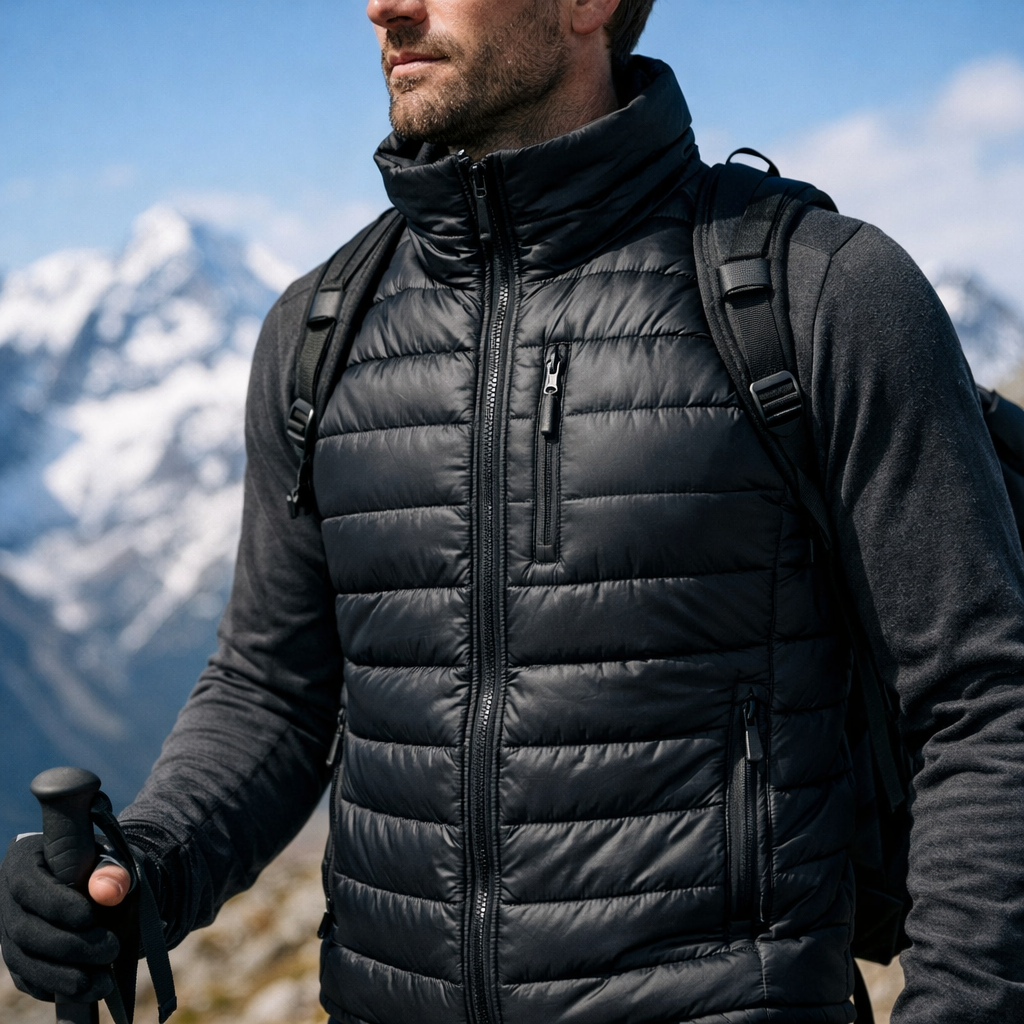
Best Puffer Vest Features for Mountain Sports in 2026
Best Puffer Vest Features for Mountain Sports in 2026
Mountain days are changeable: you’ll sweat on the climb, shiver in a ridge wind, and need fast, fumble‑free adjustments. The best puffer vest features for mountain sports in 2026 focus on smart insulation (down, synthetic, or hybrid), real breathability and venting, wind and drizzle resistance, low weight and packability, movement‑ready fit with draft control, and pocket layouts that work under a pack. Below, we map those choices to trail running, ski touring, alpine climbing, and ultralight backpacking, with clear tradeoffs and use‑case picks—so you can move fast, stay warm, and keep stress low outside.
Hiking Manual
Hiking Manual blends low‑stress route planning with concise, budget‑savvy gear advice for hikers, ski tourers, and climbers who want lightweight, weather‑resistant, packable layers. Our trip plans use multi‑tool mapping, crossing audits, and bailout options; our gear shortlists are tuned to your use case—solo, ultralight, or family. If you’re comparing a mountain sports vest for fast hiking or ski transitions, start with our checklist below, then see our take on layering in cold weather in our guide to the best hiking jackets for cold conditions (internal: best hiking jackets for cold weather). Our shortlists keep costs and grams in check without fluff.
Key factors for mountain performance
Six pillars define a high‑performing lightweight insulated vest in 2026:
- Insulation: Down for maximum warmth‑to‑weight; synthetic for wet‑weather resilience; hybrids blend both.
- Breathability: Fabrics and design that let moisture escape under effort.
- Weather resistance: Windproofing and a DWR finish to shed drizzle and spindrift.
- Weight/packability: Low ounces and compressibility to disappear in your pack.
- Fit/mobility/draft control: Athletic cut, stretch panels, and sealed hems/armholes to keep heat without binding.
- Pockets/usability: Secure, glove‑friendly storage that works under hipbelts and chest straps.
Trendline for 2026: ultralight down leads warmth‑to‑weight, synthetics excel in wet and breathable performance, while PFAS‑free DWRs and recycled content are becoming standard, as seen in Treeline Review’s down vest testing (Treeline Review) and 2026 fabric forecasts (2026 outdoor fabric trends).
Hiking Manual’s checklist below keeps you focused on these pillars for your sport.
Activity-to-feature priorities:
| Activity | Priority features |
|---|---|
| Trail running | Synthetic insulation, stretch side panels, two‑way zip, slim/athletic fit |
| Ski touring | Down or hybrid, tougher 20D+ face, robust DWR, hem/armhole draft control |
| Ultralight backpacking | 800–1000+ fill down, 4–6 oz total weight, minimal features, stuffs into pocket |
| Alpine climbing | Breathable synthetic or hybrid, trim fit, high chest pocket, durable shoulders |
Insulation types and tradeoffs
Fill power measures down’s loft—how many cubic inches one ounce of down occupies. Higher fill power (e.g., 800–1000) traps more air, giving more warmth for less weight and better compressibility, but often costs more. It doesn’t directly equal total warmth; fill weight also matters too.
Down dominates warmth per gram and compressibility, while synthetic insulations are generally more breathable and keep moving moisture away from your base layers—advantages highlighted in Treeline Review’s field notes on vests (Treeline Review). On‑trail examples show the spread: an ultralight Zpacks‑style vest around ~119 g/4.2 oz with 900+ water‑resistant down demonstrates just how little you can carry, while a budget‑friendly REI Co‑op 650‑fill vest leans on recycled materials for value, as a long‑distance hiker’s guide observes (BikeHikeSafari down vest overview). Meanwhile, modern down‑like synthetics such as “Air Flake” aim to mimic down’s loft with better wet performance, a trend called out in Blister Review’s 2026 picks (Blister Review’s 2026 picks).
Bottom line: choose down for maximum packable warmth in cold/dry(ish) conditions; pick synthetic for damp, high‑output days; consider hybrids (down core, synthetic sides) when your plans straddle both.
Breathability and heat management
Breathability is what keeps you from soaking your midlayer and shivering later; cycling, running, and alpine climbing all demand fast vapor release during efforts. Look for non‑insulated or stretch side panels (think Atom‑style designs) for airflow and arm mobility, and two‑way zips to vent without fully doffing layers, features recommended by comparative guides on insulated vests. Synthetic insulations typically move moisture better than down, which helps manage sweat during steady climbs.
Quick venting checklist:
- Unzip top a few inches to dump heat from the collar.
- Loosen the hem drawcord to release trapped warmth.
- Crack the two‑way zip from the bottom for core venting while hiking uphill.
- Remove gloves to fine‑tune zips/snaps; mod your pace before you overheat.
Weather resistance and shell fabrics
“A vest should block breeze and repel drizzle to work as an outer layer in mild weather,” a criterion emphasized in Wirecutter’s testing of insulated vests (Wirecutter’s insulated vest guide). Thin ripstop polyester or nylon offers the best mix of packability and tear resistance, and many shells now use recycled plastic content, a shift seen across recent down‑vest roundups (Treeline Review).
Product signals to watch: proven DWR finishes on stalwarts like the Down Sweater‑style vests and 20D ripstop shells used on popular mid‑price options (e.g., Fuego‑style designs). Long‑distance testers note these constructions resist light precip and wind well for their weight (BikeHikeSafari).
Durable Water Repellent (DWR) is a coating that makes fabric bead water. PFC‑free DWRs avoid per‑ and polyfluorinated chemicals (PFAS), using silicone or plant‑based chemistries while maintaining beading and wind protection, reducing environmental impact versus legacy fluorinated finishes and aiding future recyclability in supply chains.
Weight and packability
Ultralight benchmarks are clear: aim for 4–6 oz total weight, roughly 2–3 oz of 900+ fill down, and 5–10 denier ripstop shells; many vests self‑stuff into a pocket—targets popularized in Adventure Alan’s ultralight guide (Adventure Alan’s ultralight vests). In practice, mainstream UL models like the Ghost Whisperer land around ~5.6 oz with fully recycled nylon, illustrating how little you need to carry for shoulder seasons.
Use window: true UL down vests excel for backpacking when overnights hover above ~50°F; colder or wetter plans warrant hybrids or synthetics.
Example targets by scenario:
| Scenario | Target weight | Packed size | Notes/examples (non‑exhaustive) |
|---|---|---|---|
| Day tour, variable temps | 6–9 oz | ~0.5–1 L (softball) | Hybrid or light synthetic; keep two‑way zip |
| Summer overnight (UL backpacking) | 4–6 oz | ~0.3–0.5 L (soda can) | High fill‑power down; minimal features |
| Shoulder‑season backpacking | 6–10 oz | ~0.5–1 L | Down with tougher face or hybrid for damp starts |
| Ski tour midlayer | 8–12 oz | ~1–1.5 L (grapefruit) | Synthetic/hybrid; 20D+ shell and strong draft control |
Fit, mobility, and draft control
The right cut keeps warmth in while preserving range of motion under a pack or shell. Prioritize:
- Adjustable hem drawcords to seal the waist against spindrift.
- Elasticated armholes that hug without pinching under shoulder straps.
- Articulated baffles or stretch panels that prevent lift when you reach.
Hoods add head/neck warmth but bring bulk, weight, and cost—choose based on whether you already carry a hooded midlayer or shell. For activities, go slim/athletic for climbing and running, regular for ski layering, and avoid boxy cuts that billow and trap moisture (a fit caveat echoed in Travel + Leisure’s vest roundup: T+L outdoor vests).
Pockets and on‑trail usability
Dial your pocket layout to the mission:
- Two zippered hand pockets for warmth and security under a hipbelt.
- A zip or drop chest pocket sized for a phone/GPS, accessible with a pack on.
- An internal pocket that doubles as a stuff sack for clean stowage.
Activity adds: an internal stash pocket for thin climbing gloves; fast‑packers and bike tourers may appreciate vests that pack into a front pocket with strap or frame attachment—an approach highlighted by innovators noted in Blister Review’s 2026 gear picks.
Reinforced overlays or heavier fabric at pocket edges and zipper garages improve abrasion resistance where hands and straps rub.
Durability at pack contact zones
Puffer vests see the most wear at shoulders and lower back under straps and hipbelts. Look for:
- Higher‑denier or reinforced overlays at contact zones; stretch‑weave down (e.g., “Stretchdown”‑style) can boost comfort and resilience under shells.
- Tight seam density and bar‑tacks at pocket corners and hem drawcord exits—details veteran testers call out in Rocky Mountain use.
- Balance denier with weight: 20D+ for frequent ski/rock abrasion; 10D or less for ultralight missions with careful handling.
Sustainability and material transparency
Recycled shells and insulations are now common across top vests, with many brands using recycled plastics in fabrics or fill (a trend echoed in recent down‑vest testing and 2026 fabric reports). Expect more PFAS‑free DWRs, Digital Product Passports (QR/NFC) that reveal supply chain and repair history, and early bio‑based synthetics like mycelium membranes or sugar‑cane polyamides—signals tracked in 2026 fabric trend reporting (2026 outdoor fabric trends). The broader 2026 theme is sustainability plus adaptive performance and transparency, while over‑complexity remains a buying risk—favor multi‑functional designs you’ll actually use (2026 outdoor gear trends UK).
Matching features to your mountain sport
- High‑intensity (trail running, alpine climbing):
- Synthetic insulation, stretch side panels/vents, two‑way zip, slim/athletic fit.
- Backcountry skiing/cold alpine:
- Water‑resistant shell/DWR, down or hybrid insulation, tougher 20D+ face, strong draft control.
- Ultralight backpacking/summer nights:
- 800–1000+ fill down, minimal features, integrated stuff pocket, 4–6 oz total weight.
These priorities mirror Hiking Manual’s route‑first planning.
Layering with shells and mid layers
Build systems that balance wind block, moisture control, and mobility.
- Cool/dry: wicking base + down vest + wind shell.
- Wet/sweaty: wicking base + synthetic vest with stretch panels + breathable rain shell.
Examples: stretch‑weave down styles layer comfortably under shells; the goal is a stable core micro‑climate and unrestricted shoulders. On ascents, open vents and crack the hem; at rests, zip up, cinch the hem, add a shell, or use a hood if equipped.
Sizing and fit checks for low‑stress movement
Quick fit tests (at home or in‑store):
- Reach overhead with your pack on; the hem shouldn’t lift enough to expose lower layers.
- Cinch the hem; confirm no cold gaps at the kidneys, and ensure armhole binding doesn’t cut circulation under straps.
- Try your shell over the vest; zippers should glide and shoulders shouldn’t bind.
Oversized, boxy cuts can hinder performance and trap moisture; choose athletic profiles for movement (as noted by T+L’s testers).
Route planning context and vest readiness
Let your route dictate your vest:
- Map multiple route options and note elevation, exposure, and likely wind corridors; choose breathability and draft control to match.
- Audit water and snow crossings; if splash or sleet risk is high, prioritize synthetic or down with robust DWR and tougher face fabric.
- Add decision points to your directions for adding/removing layers before climbs to avoid sweat‑through.
This is the low‑stress approach we build into every Hiking Manual route card.
Pre‑trip vest checklist:
- Re‑activate DWR (low‑heat tumble or spray‑on) and check zipper function.
- Confirm the stuff pocket is functional and accessible with gloves.
- Pack a tiny repair kit (tape/patch) for snags.
For deeper layering ideas, see our guide to breathable waterproofs for high‑output days (internal: best hiking jackets with ventilation).
Frequently asked questions
What insulation is best for damp or sweaty mountain conditions?
Choose synthetic insulation for damp or high‑sweat days because it breathes and handles moisture better than down. In Hiking Manual’s checklists, hydrophobic down with a strong DWR shell is the backup when you need maximum packable warmth.
How light should a mountain puffer vest be for all‑day use?
Target 4–10 oz depending on conditions. Hiking Manual targets 4–6 oz for UL trips and adds ounces for tougher fabrics and better draft control in shoulder season or ski days.
What shell features improve wind and light precip protection?
Look for thin ripstop nylon or polyester with a PFC‑free DWR to block breeze and shed drizzle, plus a snug hem and arm bindings to seal drafts. That spec lets the vest serve as a mild‑weather outer layer in Hiking Manual’s systems.
How should a puffer vest fit under a pack and hard shell?
Aim for an athletic fit that doesn’t bunch at the shoulders, with stretch side panels or articulated baffles for reach. Test with your pack and shell on—no hot spots at straps, no hem lift when you raise your arms—as in Hiking Manual’s fit checks.
How do I maintain loft and DWR over multiple seasons?
Air and dry the vest after trips, wash with down/synthetic‑safe detergents, and tumble with clean tennis balls to restore loft. Refresh DWR with a spray‑on or wash‑in treatment when water stops beading on the surface—Hiking Manual’s maintenance basic.