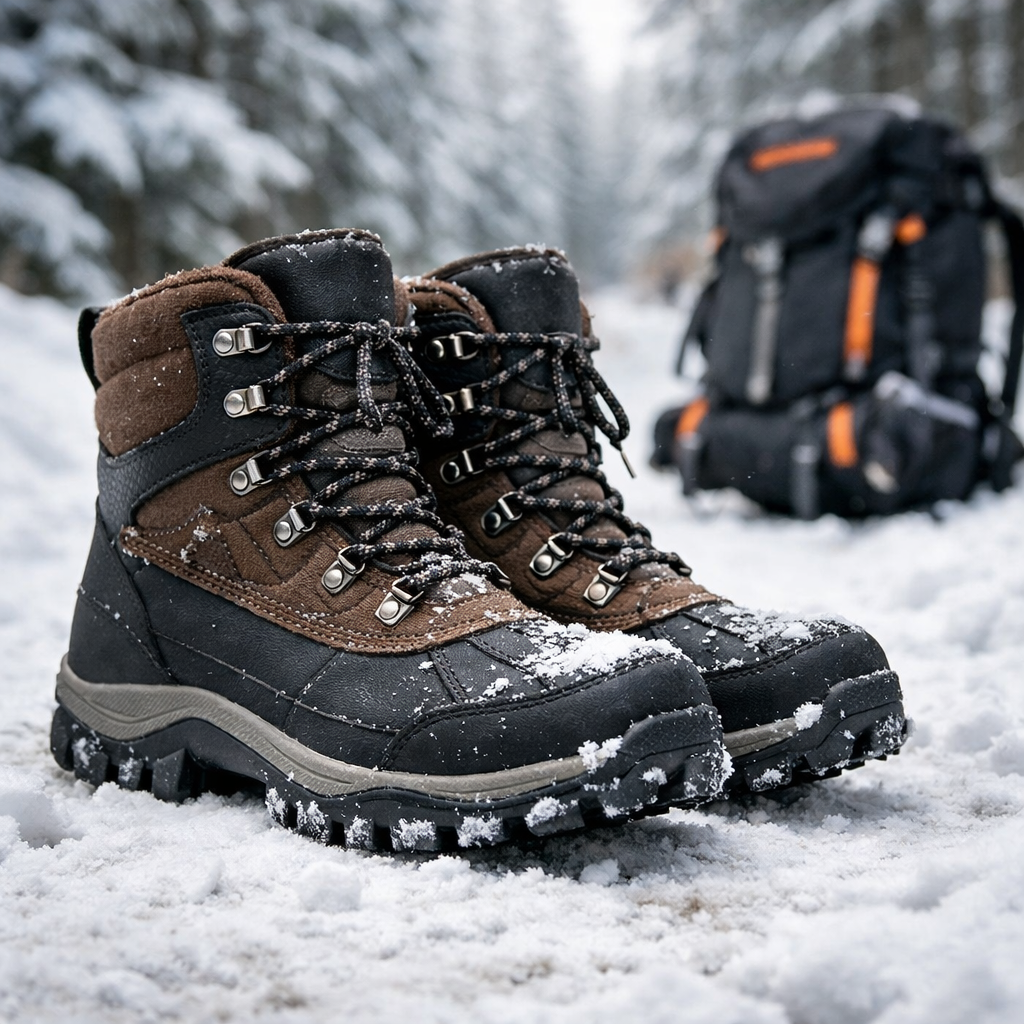
Best Places To Buy Durable Men’s Snow Boots In 2026
Best Places To Buy Durable Men’s Snow Boots In 2026
Finding durable and affordable men’s snow boots for heavy use comes down to smart buying: choose proven models, shop retailers with strong return policies, and time purchases around late-fall launches and post-holiday markdowns. For 2026, start with Hiking Manual’s buying guides, then check brand sites (Sorel, Danner, Baffin, L.L.Bean) and outdoor retailers with easy returns and frequent sales, and compare price history across a few big-box and specialty stores. Below, we highlight trusted places to buy and the winter boots our team sees hold up to ice, slush, and hardpack—backed by testing-informed criteria and independent reviews—plus a quick framework to match insulation, traction, and waterproofing to your climate and activity.
Hiking Manual
We test winter boots with a safety-first lens: durability, traction on ice, and waterproofing under repeated slush, salt, and freeze–thaw cycles. Pac boot: A winter boot with a waterproof rubber lower and leather or textile upper, often using a removable felt liner. It excels in deep snow and prolonged wet exposure but is heavier and less agile than insulated hiking boots.
What to prioritize:
- Durability: premium leather with seam sealing or rubber lowers resist salt and abrasion over seasons, as field-tested by reviewers like GearJunkie’s winter boots guide (noting rubber’s resilience in slop and slush).
- Traction: carbide-studded outsoles and specialized Arctic-grip compounds lead on ice for security when sidewalks glaze over, a consistent theme in Outside’s winter boots roundup.
- Insulation: most heavy-use boots land between 200–400 g synthetics, while removable felt liners handle deeper cold or longer stationary stints, ranges echoed in Good Housekeeping’s best men’s winter boots.
Where to buy with confidence: Use Hiking Manual’s buying guides to shortlist models, then buy from:
- Brand sites (Sorel, Danner, Baffin, L.L.Bean) for full size runs, warranty clarity, and occasional site-exclusive promos.
- Major outdoor retailers for generous returns and member perks; look for late-fall rollouts and post-holiday price drops.
- Cross-check two or three retailers for price history before you pull the trigger.
If you also hike snowy trails, see our internal guide to top anti-slip choices for mixed terrain: Best Winter Hiking Boots for Snow and Ice.
Sorel Caribou
The Caribou remains a benchmark pac boot for deep snow and subzero slush, prioritizing warmth and longevity over agility. It uses a removable 9 mm felt liner, carries a manufacturer rating around -40°F, and has roughly a 9.25-inch shaft; Treeline Review named it a best overall for extreme cold and slush with typical pricing around $225 at the time of their testing see Treeline Review’s men’s winter boots.
Who should buy: deep-snow users, snowblower duty, long subzero commutes, and job sites where standing still in cold is common. Expect more weight and less ankle mobility than hiking-style boots.
Where to buy and value: check Sorel’s site for full sizes and colorways, and compare against outdoor retailers and department stores for seasonal sales.
Pros:
- Outstanding warmth with replaceable liners
- Rubber lower shrugs off slush and salt
- Wide availability and consistent sizing
Cons:
- Heavy and less nimble on stairs or long walks
- Warmth can be overkill for mild winters
Kamik Nation Plus
The Nation Plus is a standout value for daily winter traction and warmth without the bulk or cost of premium pac boots. Wirecutter named it the best all-around men’s snow boot and recorded pricing around $84 during testing, making it a rare under-$100 winner for performance-to-price see Wirecutter’s winter boots review. The Inertia likewise highlights it as a top value pick under $100 for dependable winter use see The Inertia’s picks.
Traction/fit: the nubby tread and wide base add stability on hardpack, and speed lacing helps dial fit with gloves on. Buying tip: sizes move fast mid-season—check multiple retailers for full runs.
Danner Arctic 600
A hybrid winter hiking/casual boot for those who want mobility with real ice confidence and waterproofing. It pairs a Vibram Arctic Grip outsole for icy traction with 200 g PrimaLoft insulation and a waterproof suede upper; many versions include a side-zip for quick on/off in cold garages, a feature set reflected in Good Housekeeping’s best men’s winter boots. Switchback Travel positions the Arctic 600 in the premium mid-to-high tier with typical pricing around $290, setting expectations for shoppers seeking performance with polish see Switchback Travel’s best winter boots.
Use-case: active winter walking, snow-packed trails, and mixed urban slush where agility and ice traction matter.
Quick compare: traction tech vs insulation
| Model | Traction tech | Insulation system | Best for |
|---|---|---|---|
| Danner Arctic 600 | Vibram Arctic Grip (no studs) | 200 g synthetic | Active walking, packed snow, icy sidewalks |
| Sorel Caribou | Rubber lug sole | Removable 9 mm felt liner | Deep snow, subzero slush, low-activity |
| Icebug Boda BUGrip | 17 carbide steel studs | Light synthetic | Glare ice and freeze–thaw neighborhoods |
| UGG Adirondack XXV | Vibram ICETREK | UGGplush (approx. 17 mm) | Urban slush with premium finish |
| TNF Chilkat V 400 | Aggressive rubber lugs | 400 g synthetic | Colder temps, all-day errands, light trails |
| Kamik Nation Plus | Grippy, nubby lugs | Synthetic + felt blend | Budget daily use on packed snow |
| Baffin Snow Monster | Rugged lugs | Multi-layer removable liner | Extreme cold and arctic work days |
| L.L.Bean Leather Snow Boots | Rubber-lower lugs | Removable liner (select models) | Slushy commutes, driveway duty |
Baffin Snow Monster and Cloud
Baffin’s multi-layer removable liners excel in brutal cold. The Snow Monster is built for arctic duty, with some variants advertised down to -94°F and a listed weight around 3.15 lb per pair—overbuilt for warmth and weather sealing, as highlighted by The Inertia and Switchback Travel (noting Baffin’s extreme-cold specialization) see Switchback Travel’s best winter boots. The Cloud line trades extreme bulk for packability and comfort out of the box—better for travel or city snow days rather than sustained exposure—an approach mirrored in Outside’s coverage of lighter winter picks see Outside’s winter boots roundup.
Buying guidance: choose Snow Monster for multi-hour subzero use and Cloud for portable, warmer-urban commutes. Try with thick socks; liner volume can change fit.
Icebug Boda BUGrip
For frequent ice, the Boda BUGrip is purpose-built: it uses 17 carbide steel studs that bite into glare ice, plus waterproof construction and easy on/off ergonomics see Outside’s winter boots roundup. Tradeoffs: they can feel loud and grabby on ice-free pavement—best to limit indoor wear.
Who should buy: hilly, icy neighborhoods; freeze–thaw regions; dog-walking on black ice.
Carbide studs: Hardened metal points embedded in outsole lugs that bite into ice. They dramatically increase grip on glare ice but may feel noisy or abrasive on bare floors and dry pavement.
L.L.Bean Leather Snow Boots
This traditional leather/rubber pac-boot pattern is known for service life and all-weather reliability. GearJunkie notes the rubber lowers are “supremely waterproof,” the leather is pre-softened, and many versions include removable liners for easy drying—details that matter in slush and salt see GearJunkie’s winter boots guide. Functional touches like a cuff that fits over snow pants and fully gusseted tongues help block snow, details also praised by broader winter-boot roundups.
Buying angle: ideal for snowblower duty, cabin access, and slushy commutes where rubber lowers and seam sealing pay off.
The North Face Chilkat V 400
A versatile insulated hiking-style boot that balances warmth and mobility with 400 g synthetic insulation. CleverHiker lists a pair weight around 3 lb 2 oz and highlights it as a top all-around winter boot at roughly $159, offering strong value for colder daily wear see CleverHiker’s best winter boots for men.
Use-case: all-day errands, winter trails, and colder temps where 400 g insulation is warranted. If you run warm or move fast, compare against 200 g options.
UGG Adirondack XXV
A stylish yet capable winter boot for mixed urban conditions that doesn’t skimp on outsole tech. The Inertia highlights its light weight (about 1.65 lb per pair), 17 mm UGGplush insulation, waterproof leather, and a Vibram ICETREK outsole for cold-weather grip—pairing fashion with functional traction. Pricing stays premium; monitor end-of-season sales if budget-sensitive.
How to choose durable snow boots
Use this quick flow before you buy:
- Temperature range (lowest morning and evening wind chills)
- Activity level (stationary vs steady walking)
- Surface type (glare ice vs packed snow vs slush)
- Exposure duration (minutes vs hours)
- Budget and replacement cycle
Purpose-built traction and waterproofing pay off in safety and durability; independent testing consistently shows specialized ice compounds or studs improve grip on icy and packed snow surfaces, a trend reflected across Outside’s multi-boot comparisons. Waterproof membrane: A thin, breathable barrier laminated to the boot’s upper that blocks liquid water but allows vapor to escape, helping keep feet dry during slush and repeated exposure.
Match insulation to activity level
- 200 g synthetic (e.g., Danner Arctic 600) suits active winter walking and mixed urban use, as outlined by Good Housekeeping.
- 400 g (e.g., Chilkat V 400) fits colder temps or lower activity days, a pairing echoed by CleverHiker.
- Extreme cold: removable felt or multi-layer liners (Sorel, Baffin) excel for subzero or stationary tasks per Treeline Review and The Inertia. Tip: Plan for your coldest typical hour, not the daytime high.
Prioritize traction for ice and packed snow
- Ice specialists: carbide-studded soles (Icebug BUGrip) offer the most sure-footedness on glare ice.
- Compounds: Vibram Arctic Grip and ICETREK provide sticky, low-temp traction without studs (seen on Danner and UGG).
- Packed snow: aggressive lugs grip well but may feel noisy or clunky on bare pavement. Arctic-grip rubber: A specialized cold-weather rubber compound engineered to maintain softness and friction at low temperatures, improving traction on wet and dry ice compared to standard rubber.
Waterproofing, seam sealing, and shaft height
Sealed waterproof constructions like the Arctic 600 resist slush, and sealed seams make side-zips practical in cold. Pac-boot builds—rubber lowers plus leather uppers—deliver multi-season waterproofing and durability. Fully gusseted tongues and over-pant cuffs block snow entry.
Shaft height vs snow depth (guideline)
| Shaft height | Typical snow depth/use |
|---|---|
| 6–7 in | Light snow, plowed sidewalks, short slush crossings |
| 8–9 in | Daily winter use, moderate drifts, deeper curb slush |
| 10–12 in | Consistent deep snow, snowblower duty, off-plow paths |
| 13–15+ in | Backcountry drifts, frequent post-holing, sustained subzero |
Fit, sock systems, and foot volume
Try boots with your intended winter socks and leave toe wiggle room to preserve circulation. Pac boots with liners (Baffin/Sorel) add volume—size accordingly. Side-zips speed on/off in cold entryways. Sock systems: thin liner plus midweight wool; scale up or down with 200 g vs 400 g insulation.
Value and pricing tips
- Budget anchor: Kamik Nation Plus often lands under $100–$130; Wirecutter logged ~ $84 while naming it a best all-around performer.
- Premium tiers: UGG, Danner, and some Baffin models commonly exceed $250–$330 for advanced traction, materials, and extreme-cold liners.
- Shopping flow: list must-haves (traction and waterproofing), filter by insulation weight, then compare total cost of ownership—replaceable liners, resoling or part repairs, and warranty support.
Care and longevity essentials
- Routine: after slushy days, rinse off salt, air-dry at room temp (no direct heat), and condition leather quarterly; reproof waterproof uppers as needed.
- Pac-boot care: pull liners to dry fully; inspect stitching, foxing bands, and welts monthly during peak season.
- Storage: clean, dry, loosely laced in a cool, dark spot; avoid compressing insulation to preserve loft.
Frequently asked questions
What insulation level is enough for daily winter use versus extreme cold?
For active daily use, 200 g synthetic often balances warmth and mobility. For extreme cold or low-activity days, step up to 400 g or removable felt/multi-layer liners; that’s the benchmark we use in Hiking Manual’s testing.
How do I tell if a boot’s waterproofing will hold up in slush and repeated soakings?
Look for waterproof construction with sealed seams, fully gusseted tongues, and rubber lowers on pac boots—designs that typically stay dry through repeated slush exposure. These are the durability checks we emphasize at Hiking Manual.
What outsole tech works best on ice and hardpack?
Carbide-studded soles provide the most secure bite on glare ice, while Arctic-grip compounds like Vibram Arctic Grip or ICETREK excel on icy and packed snow without studs. Hiking Manual prioritizes these traction systems in winter boot picks.
How should men’s snow boots fit with winter socks and foot warmers?
Aim for a snug heel with toe wiggle room in your thickest socks. Leave a bit of extra volume for circulation and occasional toe warmers; this fit prevents cold spots in our field testing at Hiking Manual.
How can I extend the lifespan of leather and pac-style snow boots?
Rinse salt after use, air-dry liners, and condition leather quarterly. Reapply waterproofing as needed and store clean, dry, and loosely laced—the same steps we recommend at Hiking Manual.