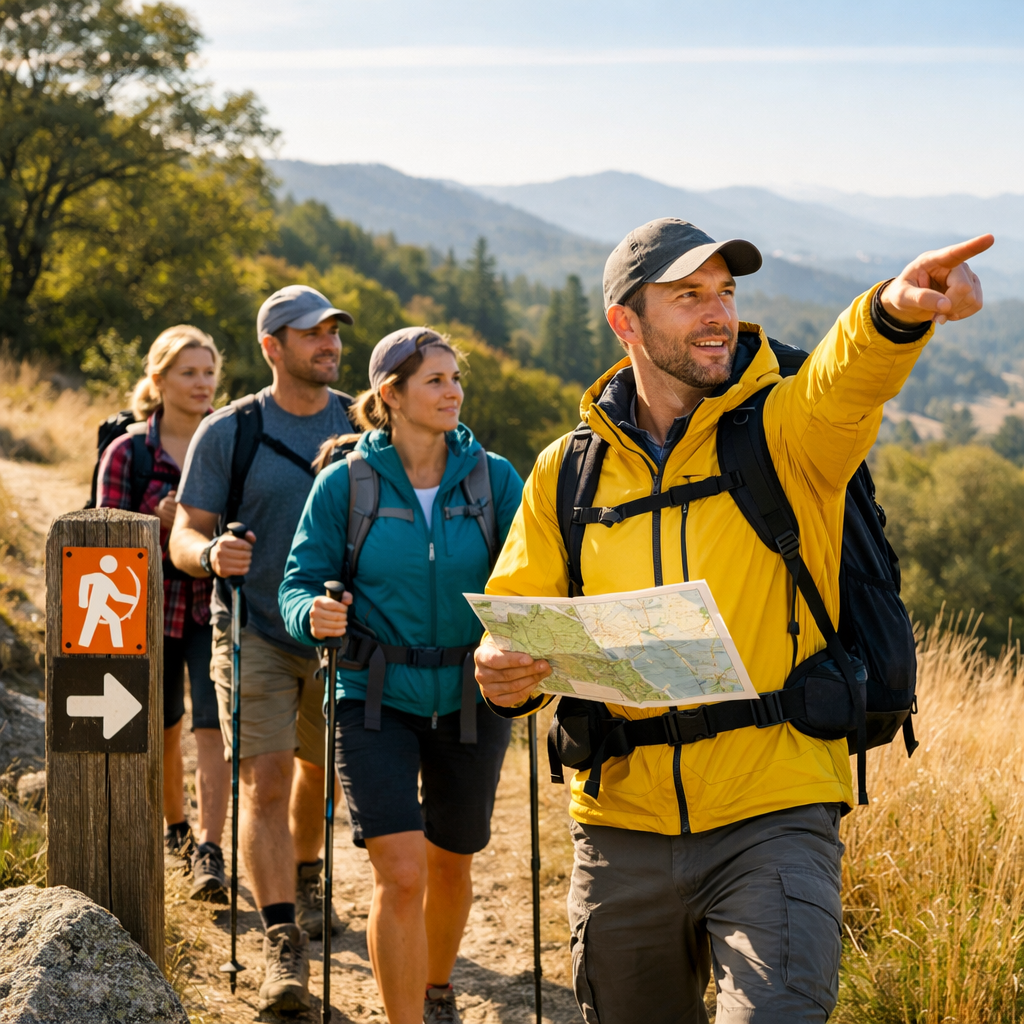
Best Local Guided Walking Tours Near You: Start Exploring Safely
Best Local Guided Walking Tours Near You: Start Exploring Safely
Guided walking tours are short, instructor-led urban or nature walks with a set route, schedule, and real-time commentary. They reduce planning stress, add rich context, and make exploring safer—especially when you join a small-group walking tour with a local expert who manages pace and logistics (see the small-group approach used by operators like the LS Top Tours small-group policies). Hiking Manual favors this format for steadier pacing and situational awareness. If you’re searching for the best local guided walking tours near me—from a guided city tour to park-led hikes—this guide helps you pick the right format, book with confidence, and show up prepared.
Popular tour categories and where they fit:
- City landmarks and history: 60–90 minutes, ~1–2.5 miles; great first look at key sites and stories.
- Neighborhood culture: 2–4 hours with food or street art stops; deeper dives with locals.
- Ghost/interactive: evening fun with storytelling; check group minimums and lighting.
- Small-group expert: capped sizes for pace, safety, and learning.
- Guided hikes/nature walks: nonprofit- or park-led, family-friendly ability ranges.
- Budget/free: pay-what-you-wish formats to orient quickly before upgrading.
Hiking Manual
Hiking Manual brings a safety-forward, evidence-led lens to urban and nature tours. We emphasize navigation confidence, traction on wet or icy surfaces, cold-weather layering (including high-loft fleece for superior warmth-to-weight), and bug/weather protection so new-to-intermediate walkers can choose well and arrive prepared. You’ll get graded, actionable advice that balances value, durability, and comfort—with clear tradeoffs between public versus private formats, and cost versus customization, grounded in cited facts throughout.
City historical and landmark tours
City landmark tours give first-timers a structured overview with short distances and foundational stories. For example, the Freedom Trail’s Walk Into History runs about 90 minutes and covers roughly 1–1.6 miles (1.6–2.6 km); a historic pub crawl variant is also 90 minutes but only around 0.25 miles (0.4 km), and some offerings are seasonal, per Freedom Trail Walk Into History. City listings often highlight specific landmarks and consolidate options with pricing—see Fort Lauderdale walking tours listings for routes featuring Esplanade Park and the Stranahan House.
Good for/Watch out for:
- Good for: first visits, limited time, flat terrain, short walking tour schedules.
- Watch out for: crowding at popular sites, weather exposure on open plazas, and occasional steps in older districts.
Secondary keywords to consider: city walking tour, landmark tours, history tours near me, short walking tour.
Neighborhood cultural walks
Neighborhood walks go deeper on everyday culture—food stalls and bakeries, street art corridors, markets, and living heritage. In Miami, for instance, personalized neighborhood tours commonly run 2–4 hours and lean on insider knowledge and adaptable pacing, as seen in Caro the Tour Guide’s Miami neighborhood tours. When comparing:
- Culinary stops add time and cost but bring local flavor.
- Street-art routes may include photo pauses and backstreet transitions.
- Language-friendly guides can expand access and comfort.
- Accessibility varies; assess curbs, narrow sidewalks, and crossing frequency.
Public small-group vs private tours
| Format | What to expect | Best when |
|---|---|---|
| Public small-group | Lower cost, set route/schedule, social vibe; capped sizes improve pace and learning | You want value and structure without planning |
| Private | Custom route and timing, more photo/meal stops, higher price | You need accessibility tweaks, specific themes, or flexible pacing |
Paid/private experiences are often longer or more bespoke than free tours, which excel for quick orientation, per Travel Lemming’s guide to free walking tours. Hiking Manual typically starts with public small-group tours for value and structure, then opts for private when accessibility or timing require it.
Secondary keywords: cultural walking tour, food tours, street art tour, private neighborhood tour.
Themed ghost and interactive tours
Ghost and interactive tours add immersive storytelling—think Haunted History walks or seasonal holiday themes, as offered by Spirit of Plymouth tours. These often run in the evening and may require advance booking, a participant minimum, and come with variable distances. Review cancellation and accessibility policies up front, then verify:
- Start time and expected lighting/visibility.
- Footwear with confident wet-surface grip.
- Crowd levels at peak seasons and weekends.
- Meeting point and end location, especially at night.
Hiking Manual also recommends a small light or reflective layer for low-light routes.
Secondary keywords: ghost tour, haunted walking tour, interactive tour, evening walking tour.
Small-group expert tours
Capped group sizes and expert local guides improve safety, pace, and learning. Many operators advertise intimate caps—often around 10 guests—and sometimes include transit fees on certain routes; see the LS Top Tours small-group policies for examples.
A small-group walking tour limits attendance—often around 10 guests—to keep pacing comfortable, questions flowing, and safety awareness high; expert local guides tailor commentary and micro-stops to the group while moving at a steady, non-rushed clip that balances learning with regular rest and photo breaks. Hiking Manual generally prefers caps around 10 for comfortable pacing and awareness.
Pros and cons:
- Pros: personalized attention, flexible pacing, insider access; often longer but timed to reduce fatigue.
- Cons: higher per-person cost than large groups.
Before booking, scan recent reviews and guide bios to confirm credentials and consistency.
Secondary keywords: small-group walking tour, local expert guide, intimate tour.
Guided hikes and nature walks
Nonprofit- and park-led outings are accessible, family-friendly ways to explore green spaces with clear ability ranges and educational value. The Trustees’ guided hikes invite explorers of all abilities across 100+ places and hundreds of miles of trails, with programs that also include seasonal adventures, as outlined by The Trustees’ guided hikes.
Consider:
- Family programs (e.g., owl prowls, junior ranger walks).
- Fitness-focused outings with steady, moderate pacing.
- Seasonal wildlife etiquette and leave-no-trace reminders.
- Trail surface notes (mud, roots, boardwalks).
Ask for elevation gain, surface type, and pace. Hiking Manual’s simple difficulty key:
- Easy: <2 miles, mostly flat, smooth paths.
- Moderate: 2–5 miles, rolling terrain, uneven surfaces.
- Challenging: >5 miles and/or notable climbs.
Secondary keywords: guided nature walk, park-led hikes, family hikes, accessible trails.
Budget and free walking tours
A free walking tour is a tip-based group walk led by local guides who share history, culture, and practical area advice; you don’t pay upfront—participants tip at the end based on value—making it a budget-friendly way to orient quickly and choose places to revisit, per Travel Lemming’s guide to free walking tours.
Major cities typically list multiple free/tip-based options, and they’re ideal to “get a feel” for a city on a budget, as noted in the U.S. News round-up of Chicago walking tours. Choose paid or private when you want longer durations, bespoke themes, smaller groups, or tailored accessibility. Hiking Manual treats free tours as fast orientation before booking a focused small-group option when you want depth.
Secondary keywords: free walking tour near me, budget city tour, tip-based walking tour, pay-what-you-want tour.
How to choose a safe, suitable tour near you
Use this quick, evidence-led flow from Hiking Manual:
- Match the theme to your interest (history, culture, nature, evening ghost).
- Confirm duration/distance and group size; urban tours often run 60–90 minutes and ~1–2.5 miles, per Freedom Trail Walk Into History.
- Check pricing, cancellation, and accessibility; small-group caps (≈10) improve intimacy and flexibility (see the LS Top Tours small-group policies).
- Read recent reviews for guide quality and crowd management.
- Pack water, weather layers, and a charged phone.
Also scan city/DMO listings that bundle highlights and prices to compare quickly, like the Fort Lauderdale walking tours listings.
Secondary keywords: how to choose a walking tour, safe walking tours, accessible walking tours, small-group cap.
What to bring for comfort and safety
Carry:
- Water (0.5–1 L) and quick calories.
- Sun protection (hat, SPF), sunglasses.
- Light gloves/hat in cool weather; high-visibility layer for evenings.
- Compact power bank and cable; ID and contactless payment.
- Basic blister kit (tape, spare socks).
Hiking-forward extras that suit city walks: a packable rain shell, high-loft fleece midlayer, and a lightweight umbrella. Hiking Manual’s packing approach is light, safety-first, and city-to-park compatible. Some operators include transit or admissions, but still bring a contactless card and ID, as noted in the LS Top Tours small-group policies.
Secondary keywords: what to bring on a walking tour, city walk packing list, tour essentials.
Winter walking readiness and cold-weather layering
Run a three-layer system for city streets and park paths alike:
- Base: wicking top to stay dry.
- Mid: high-loft fleece for warmth-to-weight efficiency.
- Shell: wind/waterproof layer to block chill.
Add traction options when sidewalks glaze (see footwear section), protect hands/ears, and consider a small thermos below freezing. Quick thresholds: add fleece below ~45°F with wind; add an insulated parka for prolonged standing or nighttime ghost tours.
Secondary keywords: winter walking layers, high-loft fleece, expedition-ready insulation, cold-weather city walking.
Navigation confidence on urban and park tours
Even on guided outings, navigation tools add redundancy and peace of mind. Hiking Manual favors redundancy: pre-download map areas, pin start/finish points, and carry a charged phone with a compact power bank. GPS Watch: a wrist-worn device using satellite positioning to record and follow routes, show pace/distance/elevation, and trigger safety alerts—useful on urban grids and park paths. Some expert operators time routes to avoid fatigue and include transit segments; still confirm meeting points and transfer details (see the LS Top Tours small-group policies).
Secondary keywords: navigation confidence, GPS watch, altimeter/compass, urban navigation.
Footwear, traction, and durability for mixed terrain
Choose cushioned walking shoes or light hikers with durable outsoles and confident wet-surface grip (think smooth stone, painted crosswalks). For winter, add removable traction (microspikes/light crampons) if ice is likely. For longer 2–4 hour cultural walks, prioritize boot durability, midsole support, and dialed-in socks to prevent hot spots. Hiking Manual prioritizes wet-surface grip and fit to prevent hot spots and slips.
Surface-to-traction guide
| Surface | Outsole pattern | Add-on suggestion |
|---|---|---|
| Pavement/sidewalk | Moderate lug, siped rubber for wet grip | None; microspikes only if icy |
| Cobbles/brick | Smaller, closely spaced lugs for contact | None; consider ankle support if uneven |
| Park dirt/gravel | Moderate lugs with rockered profile | Light gaiters in mud; microspikes on frozen trails |
Secondary keywords: winter traction, boot durability, walking shoes for city tours, mixed-terrain grip.
Bug and weather protection on shoulder-season walks
Pack a waterproof shell, brimmed hat, and light gloves for variable temps. In buggy greenways, use permethrin-treated clothing or EPA-registered repellents. For longer nature walks, simple shelters—compact umbrellas, windproof layers—make picnicking or passing showers comfortable. Note that dusk ghost tours and river-adjacent neighborhoods can spike mosquito exposure; apply repellent beforehand.
Secondary keywords: bug protection, weather protection, shoulder-season walking, rain shell.
Booking tips, pricing, and accessibility checks
Set expectations before you pay:
- Pricing example: Spirit of Plymouth group tours start at $150 for up to eight people, standard walks run 90 minutes, and themes include Haunted History and seasonal strolls—see Spirit of Plymouth tours.
- Confirm inclusions (some operators include transit fees), group cap, and whether routes are wheelchair/stroller-friendly (see the LS Top Tours small-group policies).
- Use city listings that bundle sights and prices to compare quickly, such as the Fort Lauderdale walking tours listings.
Secondary keywords: walking tour prices, tipping walking tours, accessible city tours, cancellation policy.
Quick selection checklist
- Pick your theme (history, culture, nature, evening ghost).
- Verify duration/distance; 60–90 minutes and ~1–2.5 miles are common for city routes (per Freedom Trail Walk Into History).
- Confirm group size; aim for ≤10 for more interaction (see the LS Top Tours small-group policies).
- Check price, inclusions, cancellation, and accessibility; note free/tip-based options (see the U.S. News round-up of Chicago walking tours).
- Read recent reviews; pack water, layers, and a power bank.
Reminder: Evening tours need visibility and extra warmth, even in cities.
Frequently asked questions
Can I find guided walking tours in my neighborhood?
Yes—most cities and many suburbs host guided city walks, themed tours, and park-led nature hikes year-round. Use Hiking Manual’s criteria in this guide to vet small-group and free/tip-based options.
How much do local guided walking tours cost and should I tip?
Prices range from free/tip-based group walks to private tours starting at modest group rates; tipping is customary on free tours and appreciated on paid tours. Hiking Manual recommends reviewing inclusions, cancellation terms, and group caps before booking.
How do I match a tour’s distance and difficulty to my fitness level?
Start with 60–90 minute city routes covering about 1–2.5 miles, then step up to longer 2–4 hour neighborhood walks. Hiking Manual suggests checking elevation, surface type, and group size; choose small groups for more pacing flexibility.
Are guided tours safer than self-guided options?
Often. Trained local guides manage pacing, logistics, and situational awareness, and small groups add accountability; Hiking Manual still advises bringing layers, water, and a charged phone.
What should I wear and pack for a winter or wet-weather city walk?
Wear a wicking base, high-loft fleece midlayer, and a waterproof shell, plus grippy footwear (add traction if icy). Hiking Manual also recommends gloves, a hat, a compact umbrella, water, and a power bank.