Best Cold Weather Survival Tips for Hikers in 2026
Best Cold Weather Survival Tips for Hikers in 2026
Winter hiking rewards those who plan like mountain weather: precisely and without ego. Here are the best cold weather survival tips for hikers right now—field-proven moves and budget-aware gear choices that keep you drier, warmer, and safer when daylight is short and mistakes cool fast. Prioritize moisture control, ground insulation, reliable heat and light, and first-aid awareness. Start cool, manage sweat on climbs, and build redundancy for sleep, cooking, and illumination. This Hiking Manual guide pairs practical tactics with affordable picks so you can move with confidence in subfreezing forests, wind-scoured ridgelines, and shoulder-season snowfields.
Hiking Manual
Hiking Manual takes a practical, test-informed, and budget-aware approach. We focus on durable, value-forward layers, winter-ready tents, sleeping systems, and stove setups matched to real trails and conditions. Our guidance scales for entry-level to intermediate hikers and varies by climate (wet snow vs. cold/dry), trip length (day hikes vs. overnights), and skill level. Core principles drive every recommendation: manage moisture, trap warm air, insulate from the ground, and maintain dependable heat and light. Ahead you’ll find concise comparisons of base layers, midlayers, shells, sleeping pads, stoves, tents, and insulated outerwear—plus quick-response first-aid cues for hypothermia prevention and winter camping safety.
Layer smart to manage moisture and heat
A layered clothing system stacks a moisture-wicking base, an insulating midlayer, and a wind- and water-resistant shell. The base layer moves sweat off skin, the midlayer traps warm air (loft), and the shell blocks wind and precipitation. Adjust layers to your effort so you don’t sweat—and later chill. See principles in Winter Camping Essentials 2025 for field context (Outdoor Tech Lab).
- Start cool at the trailhead to avoid an early sweat dump.
- Vent early on climbs—open zips and loosen cuffs before you overheat.
- Add insulation at breaks and at exposed, windy sections.
- Pack a spare base layer if you sweat heavily; swap at lunch or camp (LandTrust’s cold weather hunting gear essentials).
Choose winter-ready base layers
Merino vs. synthetic comes down to budget, drying speed, odor control, and skin feel.
- Merino: wicks well, insulates when damp, excellent odor resistance; dries slower and needs gentler washing. Smartwool’s 150-weight contours and wicks; Merino.tech’s 250g superfine wool (17.5 micron) is itch-free and odor-resistant.
- Synthetic: faster drying, lower cost; tends to smell sooner. Ideal for high-output, stop-start hiking in the cold. See comparative notes in this best survival gear guide (Outdoor Life).
Fit-by-condition guide
| Temperature | High output (steady climbs) | Moderate output (rolling) | Low/static (slow pace, camp) |
|---|---|---|---|
| 20–32°F | 150–200 g/m² (merino or synthetic) | 200–260 g/m² | 200–260 g/m² (merino for odor) |
| 0–20°F | 200–260 g/m² | 200–260 g/m² | 260–320 g/m² |
| <0°F | 200–260 g/m² + light mid | 260–320 g/m² | 260–320 g/m² (heavier knit) |
Build insulation with efficient midlayers
Midlayers provide adaptable warmth. Choose fleece or breathable “active insulation” (synthetic with air-permeability) while moving; reserve puffy layers—down or synthetic—for static warmth at camp. Down offers superior warmth-to-weight when dry; synthetic retains more warmth when damp and handles mixed-weather abuse better. For example, down pants like the Rab Argon (800 fill, roughly 5.6 oz of down in a 13.2 oz pant) deliver outsized camp warmth for minimal pack weight. Carry a light fleece for motion plus a packable puffy for breaks to avoid sweaty over-insulation.
Seal out wind and wet with a protective shell
Wind chill is the apparent cold you feel when moving air strips heat from your skin faster than still air. Greater wind speeds ramp up convective heat loss, making the air feel much colder and increasing hypothermia risk without windproof layers. Choose a windproof, water-resistant or waterproof shell with real venting.
Shell checklist
- Pit zips or core vents for climbs
- Hem, hood, and cuff adjustments that seal easily with gloves
- Glove-friendly zips and toggles
- Durable face fabric (≥30D) for brush and ice abrasion
- Room to layer midlayers without restricting movement
Protect hands, feet, and face
Carry spares and protect skin barriers.
- Pack extra socks and mittens; rotate damp pairs promptly. Darn Tough Light Hiker socks are durable (hundreds of miles reported) and backed by a lifetime replacement—solid value for cold-weather hiking.
- Use barrier salves (petroleum jelly) to reduce windburn and consider disposable hand/toe warmers as backups.
- Watch for early cold-injury cues: numbness, pale/gray skin, shivering, confusion, drowsiness, and slurred speech—act fast to rewarm and protect.
- Boot fit: allow room for a liner plus thick sock without toe compression; warm blood flow beats too-snug boots every time.
Sleep warmer with high R-value pads
R-value is a sleeping pad’s resistance to heat flow from your body to the ground. Higher R-values slow conductive heat loss to frozen soil or snow, which can sap warmth faster than air. In winter, prioritize a high R-value and durable fabrics (≥30D) over bag fill alone. Stacking works: put a closed-cell foam pad (e.g., NEMO Switchback—zero puncture risk) under an insulated inflatable to add R and create redundancy if the air pad fails. Example of a tough, winter-ready insulated pad: Exped Dura 8R.
Pick a sleeping bag and liner that match conditions
Choose a bag rated at least 10–15°F below the forecast low and note EN/ISO differences—women’s ratings often reflect colder sleepers. Down bags excel in cold/dry climates for warmth-to-weight; synthetic bags are safer in wet-prone areas. Add a liner for a 5–10°F boost and hygiene. Test at home or in the backyard to dial drafts, hood tension, and pad integration before committing on trail.
Use the right stove for subfreezing temps
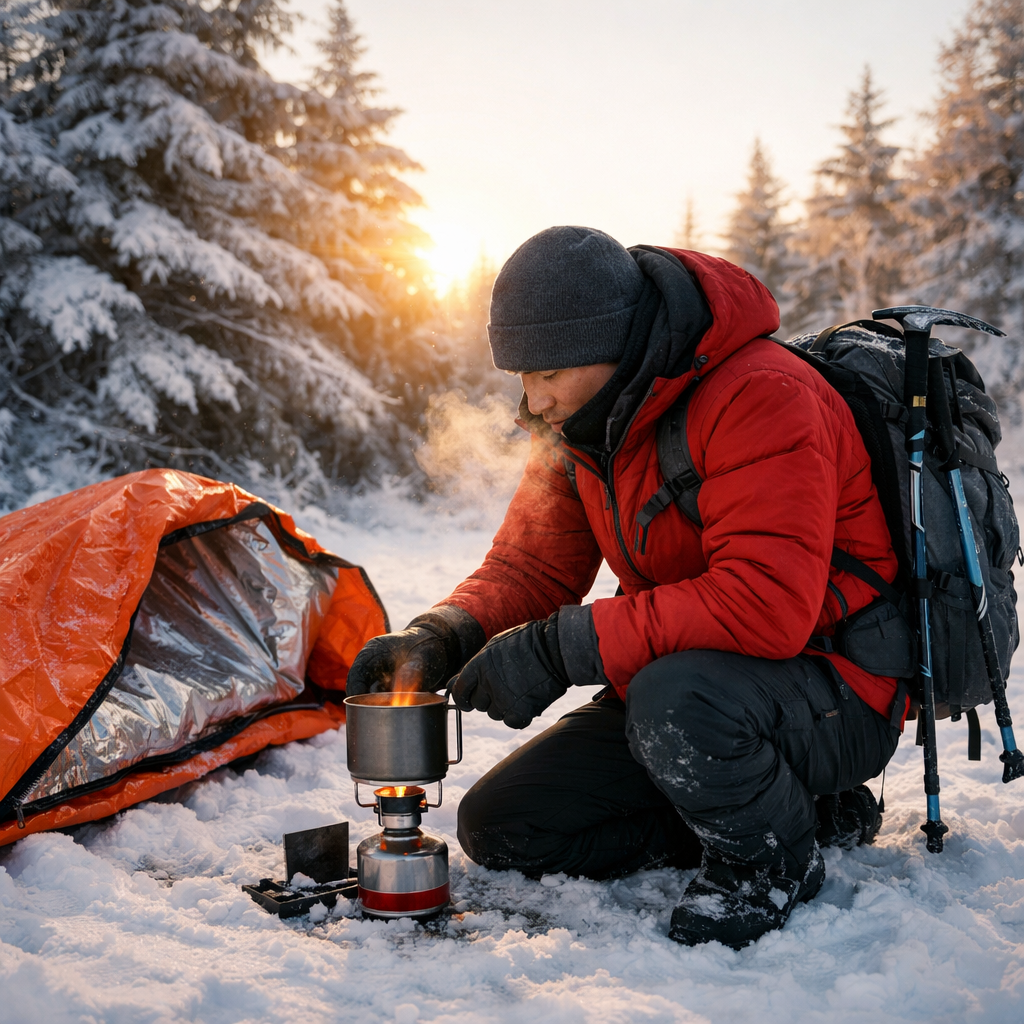
Canister stoves lose pressure near and below ~20°F. Keep canisters warm in your jacket, choose pressure-regulated burners (e.g., PocketRocket Deluxe) for steadier output, and insulate stoves from snow. For consistent subzero trips, a liquid-fuel stove like the MSR WhisperLite remains a reliability king. Integrated heat-exchange pots can trim boil times by roughly 30% (for example, Fire-Maple’s Fixed Star 1 system), a real fuel saver in the cold. See cold-weather stove tactics field-tested in Northern Michigan (Outdoor Tech Lab). Hiking Manual defaults to pressure-regulated canisters for shoulder seasons and liquid fuel when true deep cold is forecast.
Quick operating flow
- Insulate stove from snow with a board or foam square
- Use a warm-water bath for canisters; do not overheat
- Build an appropriate windscreen per manufacturer guidance
Keep water liquid and safe to drink
Wide-mouth insulated bottles ride upside-down in sleeves so the ice forms near the “top.” A quality insulated bottle can keep liquids hot for many hours and often carries a lifetime warranty—value that matters when your hydration system doubles as a hand warmer at camp. Melt snow completely before purifying; then boil or filter as appropriate. Keep filters warm in an inner pocket to prevent ice damage. Add electrolytes to encourage drinking and tuck a “night bottle” in your sleeping bag to prevent freezing.
Select a winter-capable tent
A true 4-season tent handles heavy snow, strong wind, and sustained cold with heavier poles and fabric—at a weight penalty. A reinforced 3-season design can work for shoulder-season snow, trading some storm-worthiness for ventilation. Expect figures like ~4.4 lbs and a 3000 mm waterproof rating on budget-friendly 4-season options (e.g., OneTigris Stella), suitable for wet snow loads.
Tent checklist
- Strong poles and ample guy-out points
- Snow flaps if camping on wind-scoured terrain
- Vestibule space for emergency cooking with maximum ventilation and strict CO safety
- High/low vents you can operate with gloves
Manage light and power in the cold
Pick compact headlamps with a red-light mode to preserve night vision (and reduce insect attraction in shoulder seasons). Examples cover varied needs: Petzl Swift RL (USB-C, up to 1,100 lumens) for high output, and Coast WPH30R (IP68, simple single-button) for gloved reliability; see headlamp reviews (GearJunkie). Use lithium cells in the cold, keep spare batteries in your jacket, and insulate power banks from freezing. Hiking Manual prioritizes red-light modes, glove-friendly controls, and cold-tolerant lithium cells.
Move safely on ice and snow
Adopt the “walk like a penguin” tactic: short steps with feet slightly outward to lower slip risk on slick ice, a tip echoed in winter storm preparation guidance (Livingston Daily). Match traction to terrain: microspikes for packed snow and low-angle ice, crampons for steep alpine ice, and trekking poles with winter baskets for balance. On descents, shorten strides, test each step, and avoid glazed rock when possible.
Recognize and treat hypothermia and frostbite
Hypothermia occurs when core temperature drops below 95°F (35°C), impairing body and brain function. Early signs include shivering and mild confusion; advanced stages bring drowsiness and slurred speech. Act immediately: shelter the person, replace wet clothing, warm the core, and seek medical help. See concise Red Cross cold weather safety tips (American Red Cross).
Watch for
- Numbness and skin color change (white, gray-yellow, or bluish)
- Uncontrollable shivering, confusion
- Drowsiness and slurred speech
Immediate actions
- Hypothermia: get dry, insulate, warm the trunk first, give warm sweet drinks if fully alert.
- Frostbite: rewarm gently (skin-to-skin or warm water 99–104°F), never rub, protect from refreezing, and seek care.
Pack a fast-access winter emergency kit
Stash critical items high in your pack where you can grab them with cold hands.
- Spare base layer, warm mittens, and hat
- Heat packs, headlamp with red mode, and extra batteries
- Space blanket or bivy, reliable fire starters, and repair tape/patch kit
- High-calorie snacks and a compact first-aid kit
- Sleeping pad repair plus a closed-cell foam backup
- A compact, fixed-blade or stout folder for repairs and fire prep; see our best hiking knives for bushcraft for picks that balance weight and utility (Hiking Manual)
Home and vehicle safety basics: never use ovens, generators, or grills indoors, and keep heaters/open flames at least 3 feet from combustibles.
Plan routes and communication for winter conditions
Leave a written trip plan with a reliable contact, schedule check-ins, and set a firm turnaround time. Cut daily mileage in deep cold—short daylight and snow travel slow everything. Pre-identify bailout routes, warming centers, and shelters. For families, dress children in several thin layers; infants generally need one more layer than adults—practical guidance in experts share lifesaving tips (Cook Children’s).
Field-tested micro tactics that save heat and energy
- Keep fuel canisters warm in your jacket; help cold canisters with a gentle warm-water bath. Consider pressure-regulated canisters or liquid-fuel for true deep cold.
- Pack a sealed “dry-change” kit for quick swaps at breaks.
- Take shorter strides on ice; test each step.
- Share your route plan and check in regularly with companions.
- Vehicle contingency: stash snacks, water, blankets, and prep ahead of storms by sealing drafts, protecting faucets, and replacing filters—common-sense moves reinforced by survival educator Creek Stewart.
Frequently asked questions
What is the best layering system for cold hikes?
Wear a moisture-wicking merino or synthetic base, a breathable insulating midlayer, and a windproof, water-resistant shell. Hiking Manual recommends adjusting early to avoid sweating and carrying a spare base layer for camp.
How cold should my sleeping bag be rated for winter camping?
Hiking Manual suggests choosing a bag rated 10–15°F below your expected overnight low and pairing it with a high R-value pad. Add a liner for an extra 5–10°F boost and test the setup at home before your trip.
Are canister stoves reliable below freezing?
Canister stoves lose pressure near and below 20°F, so keep the canister warm or use a pressure-regulated model. For consistent subzero trips, Hiking Manual recommends switching to a liquid-fuel stove for reliable performance.
How do I prevent and treat early frostbite on the trail?
Keep extremities dry and warm with spare socks and mittens, use windproof layers, and watch for numbness and color changes. If you suspect frostbite, rewarm gently, protect from refreezing, and seek medical care.
What common cold-weather packing mistakes should I avoid?
Avoid cotton layers, under-insulated sleeping pads, and untested stoves. Hiking Manual also sees missed spares (base layers, redundant light) and a lack of a true windproof shell as common comfort and safety issues.