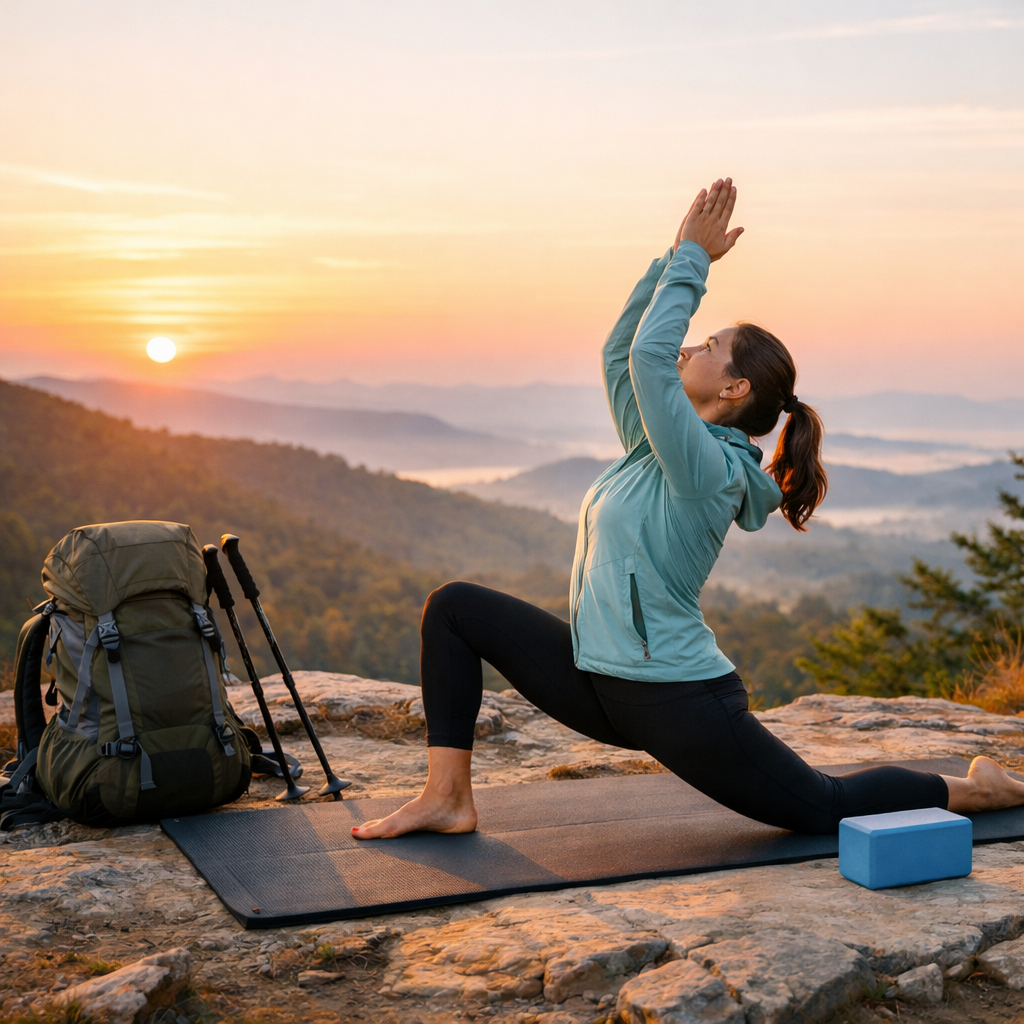
Best Beginner Yoga Sequences: Simple Flows To Start Safely
Best Beginner Yoga Sequences: Simple Flows To Start Safely
Short, repeatable yoga flows make it easy to build strength, mobility, and calm—without decision fatigue. Below you’ll find the best beginner yoga sequences curated for 5–20 minute sessions you can do at home or at the trailhead. Each flow prioritizes breath, safe alignment, and simple props so you progress without strain. A yoga sequence is an ordered set of poses linked by breath and intentional transitions; good beginner sequences warm up the body, teach safe setup, and end with a cool-down or rest so practice feels sustainable in daily life (5–30 minutes). Start with the flow that matches your energy and time today, and return to it a few times each week to feel measurable gains in comfort and confidence.
Hiking Manual
At Hiking Manual, we pair approachable, step-by-step yoga with hiking realities: pre-hike warm-ups, post-hike recovery, and off-season mobility that keeps you trail-ready. Our itinerary-first lens—destination, safety and seasonality, cost, and packing—keeps beginners confident and equipped with pragmatic gear shortlists that bridge everyday life and the trail.
How to use this list safely
Many sequence-builder apps run about $6–$15/month and host vast libraries, which can overwhelm beginners; favor teacher-curated beginner series (including Hiking Manual’s) and alignment-first instruction as you start, as noted in Swagtail’s guide to sequence-builder apps (https://swagtail.com/yoga-sequence-builders/). For scale, Tummee’s beginner library cites 7,500+ poses and over a million sequences—great for inspiration, but easy to get lost without a plan (https://www.tummee.com/yoga-sequences/beginner-yoga-sequences).
Three safety habits to lock in now:
- Start with 10–20 minutes for several weeks; consistency beats duration as you build skill and tissue tolerance.
- Choose Iyengar, Hatha, or Restorative to learn precise setup and prop use; Iyengar, in particular, emphasizes alignment with blocks, straps, and blankets that make poses accessible to beginners, as explained in Crunch’s Yoga 101 (https://www.crunch.com/thehub/yoga-101-the-basics-for-beginners/).
- Use chair or wall support anytime. Wall-assisted variations improve balance and controlled depth so you learn positions without overreaching.
Quick definition: Alignment-focused yoga uses deliberate joint stacking and supportive props to place the body safely in each pose. Beginners progress faster because clear setup and support turn complex shapes into manageable steps.
1. 20-minute grounding flow
This calming whole-body flow mirrors common short beginner formats—centering, gentle mobility, simple standing work, and rest—like those featured in Yoga Journal’s beginner sequences (https://www.yogajournal.com/practice/beginners/yoga-sequences-for-beginners/).
- Centering (2–3 minutes): Child’s Pose or Savasana. Soften jaw; lengthen exhales.
- Cat–Cow (3–5 breaths each): Stack shoulders over wrists; move slowly.
- Thread the Needle (3–5 breaths/side): Hips over knees; rest head on block if needed.
- Low Lunge (3–5 breaths/side): Front knee over ankle; hands on blocks or chair.
- Half Split (3–5 breaths/side): Hips over back knee; flex front foot; use blocks under hands.
- Mountain → Forward Fold → Half Lift (3 breaths): Soften knees; hinge from hips; hands to shins or blocks, or fold to a chair seat.
- Supported Down Dog at Wall (5 breaths): Hands on wall/chair back; long spine; bend knees to keep length.
- Savasana (2–3 minutes): Lie back, knees supported by a pillow or rolled blanket; breathe naturally.
2. Beginner sun salutation
Intent: Link breath to movement, practice joint-friendly transitions, and build gentle heat. Warm up wrists and shoulders first with a few Cat–Cows and shoulder circles; short home sequences under 20 minutes are standard for beginners. This simplified Sun Salutation can be repeated for 3 easy rounds. For structured strength primers and plank timing, see Yoga International’s short strength sequence (https://yogainternational.com/article/view/a-short-strength-building-yoga-sequence/?srsltid=AfmBOopiWjecmxF7MV2kItL9tFNnxJ4xGa7-57JoDg5fZBsxXjSJrF5r).
| Pose | Breath cue | Key alignment | Prop modification |
|---|---|---|---|
| Mountain | Inhale | Feet hip-width, ribs stacked over pelvis | Stand with back at wall for posture |
| Upward Salute | Inhale | Reach long through sides, soften shoulders | Hands wider or cactus arms |
| Forward Fold | Exhale | Hinge from hips, knees soft | Hands to blocks or chair seat |
| Half Lift | Inhale | Spine long, crown forward | Hands to shins/blocks |
| Step to Lunge | Exhale | Front knee over ankle, back heel lifted | Hands on blocks or chair |
| Knees-Down Plank | Inhale | Wrists under shoulders, core braced | Pad knees with blanket |
| Lower to Floor | Exhale | Elbows hug ribs, shoulders away from ears | Lower in stages: knees–chest–chin |
| Baby Cobra | Inhale | Peel chest up, pubic bone heavy | Forearms down (Sphinx) |
| Downward Dog | Exhale | Hips up, knees bent to keep spine long | Wall/chair L-shape |
| Step Forward → Half Lift | Inhale | Light step; long spine | Step wide to chair or blocks |
| Forward Fold | Exhale | Soften neck; weight even in feet | Bend knees more |
| Mountain | Inhale | Rise with strong legs | Use wall for balance |
Repeat 3 rounds, moving with your breath. Rest as needed.
3. Yin back-release sequence
Yin uses long, passive holds (1–5 minutes) with minimal muscular effort to hydrate tissues and increase comfortable range of motion, especially around hips and spine. Targeted beginner sequences for back relief can be done in short formats. Hold 1–3 minutes per pose; breathe passively and keep the neck neutral.
- Constructive Rest: Knees bent, feet wide, knees knock in; support head and low back with blankets as needed.
- Supine Figure-4: Ankle over opposite knee; thread hands behind thigh; keep tail heavy.
- Bananasana (side bend): Slide legs and arms to one side; place a pillow under the arc.
- Supported Child’s Pose: Torso over a bolster or stacked pillows; widen knees for comfort.
- Sphinx: Elbows under shoulders; pubic bone heavy; exit if your low back pinches (swap for prone rest).
- Supine Twist: Knees over a bolster; arms wide; keep both shoulders grounded.
Finish with 1–2 minutes in Savasana.
4. 5-minute meditation prep
A quick nervous-system downshift you can do on the floor or seated in a chair, modeled on targeted short formats common in reputable beginner libraries.
Three-step micro-sequence:
- Neck and shoulders (2 minutes): Slow neck rolls; then shoulder floss with a strap or belt for 5–8 smooth reps.
- Side bends and spinal wake-up (2 minutes): Seated side bends right/left; then seated Cat–Cow holding shins or chair seat.
- Diaphragmatic breathing (1 minute): One hand on belly, one on chest; inhale low and wide, exhale longer than inhale.
Chair options: Sit tall near the chair’s edge; feet flat, knees over ankles.
5. 12-minute core strength sequence
Build protective strength for hiking posture and low-back support. Move slowly, match effort to your breath, and pad knees/wrists with a blanket or use fists/forearms if wrists are sensitive.
- Supine Marching (1 minute): Neutral spine; lift one knee at a time without rocking.
- Dead Bug (1 minute): Opposite arm/leg reach; keep ribs down.
- Bridge with Block Squeeze (1 minute): Light squeeze at knees; lift hips on inhale, lower on exhale.
- Bird Dog (1 minute): Reach long; keep hips level; 5 slow reps/side.
- Forearm Plank (about 30 seconds or 5 breaths): Heels back, crown forward; drop knees anytime.
- Side Plank on Knees (30 seconds/side): Elbow under shoulder; lift bottom waist.
- Locust (1 minute): Lift chest and legs lightly; keep back of neck long.
- Standing Balance Knee Lift (1 minute): Hands to wall if needed; tall posture, slow lifts.
Rest 30 seconds between moves as needed.
6. Chair and wall-assisted sequence
Wall-assisted poses are standard accessible variations for balance and stretch depth, and many beginner libraries include chair, restorative, prenatal, and therapeutic options—validating this as beginner-first. Use these 8–10 stations with clear, one-line safety cues.
- Seated Cat–Cow (chair): Hold the chair sides; move from pelvis.
- Seated Twist (chair): Inhale tall; exhale gentle twist; keep knees forward.
- Sit-to-Stand (chair): Drive through heels; knees track over toes.
- Supported Lunge (hands on chair): Front knee over ankle; back heel high.
- Wall Calf Stretch: Hands at wall; step one foot back; keep heel down.
- Wall Warrior I: Front knee over ankle; back heel roots; hips square to wall.
- Wall “L” Down Dog: Hands on wall or chair; long spine; bend knees to keep length.
- Chair Hamstring Fold: One heel on seat; hinge from hips; spine long.
- Heel Raises at Wall: Light fingertip support; rise and lower slowly.
- Seated Forward Fold (chair): Feet wide; hinge forward onto thighs or a pillow.
Mini list for seniors: Prioritize Seated Cat–Cow, Wall “L” Down Dog, Chair Hamstring Fold, and Heel Raises for balance and circulation.
7. Restorative bedtime sequence
Prop-supported, slow work improves relaxation and sleep. Iyengar/Restorative styles lean on simple props and precise setup that beginners can trust. Keep lights low, breathe through the nose, and lengthen the exhale.
- Supported Child’s Pose (2–4 minutes): Torso over pillows; forehead supported.
- Reclined Bound Angle (3–5 minutes): Soles of feet together; pillows under knees; optional light blanket over hips.
- Legs Up the Wall (3–5 minutes): Hips a few inches from wall; bend knees if hamstrings are tight.
- Supported Seated Forward Fold (2–4 minutes): Torso draped over pillows; round gently.
- Side-Lying Twist (2–3 minutes/side): Pillow between knees; relax shoulders.
- Savasana (3–5 minutes): Pillow under knees; blanket over you; quiet, steady breath.
Safety, seasonality, and pacing tips
- Pacing: Aim for 10–20 minutes, 3–5 days a week for a month; consistency matters more than long sessions.
- Seasonality: Choose warming flows (Sun Salutations, core) in winter or before morning hikes; pick Yin/Restorative on recovery days or hot evenings; chair/wall options are perfect when fatigue or balance is a concern.
- Motivation: Saga’s summary of a 2020 Westminster study of ~2,500 people reported that over 80% saw physical and mental health improvements from yoga and more than half slept better—evidence that small, regular practices pay off (https://www.saga.co.uk/magazine/health-and-wellbeing/yoga-for-beginners?srsltid=AfmBOor1xvteEWHGRRTN7EtuuzOZUwdh3gLX1CUcoqQiIt6yPfUfrZUZ).
Budget-friendly props and starter gear
Many apps cost $6–$15/month; start with vetted free or low-cost beginner series before subscribing, as noted in Swagtail’s guide to sequence-builder apps. Essential, low-cost props:
- Two yoga blocks (or two sturdy books)
- Strap (or belt/towel)
- Blanket or towel for padding
- Stable chair
- Open wall space
Iyengar-style teaching relies on these simple tools to teach alignment you can trust. If you’re building a minimal kit that also works for hiking life, see the Hiking Manual Beginner Gear List for budget picks that cross over from home to trail.
Packing checklist for home or trail practice
Home setup essentials:
- Yoga mat or rug, strap/belt, two blocks (or books), blanket/towel, stable chair, timer/phone in airplane mode
Trail/campsite setup essentials:
- Groundsheet or lightweight mat, band/strap, compact towel, lightweight “blocks” (full water bottles), headlamp, timer/phone in airplane mode
Nice-to-haves for recovery days:
- Eye pillow or buff, extra warm layer or blanket
Print or save this list. Visual or printable sequences from trusted sources can help you maintain flow during pauses; save the Hiking Manual Beginner Gear List to your phone for quick packing notes.
Frequently asked questions
How long should a beginner yoga session be?
Start with 10–20 minutes, 3–5 days each week; Hiking Manual’s beginner flows are timed in that window to make consistency easier.
Which yoga styles are best for beginners?
Iyengar, Hatha, and Restorative emphasize alignment, slower pacing, and smart use of props, making them ideal for learning safely. Hiking Manual teaches with alignment-first cues common to these styles.
How often should I practice to see benefits?
Aim for 3–5 times per week for a month. Our sequences are built for quick repeats so you can stay consistent.
What common alignment mistakes should I avoid?
Don’t rush transitions, lock joints, or shrug shoulders. Hiking Manual cues emphasize joint stacking, breath, and using props to avoid these pitfalls.
When should I use a chair, wall, or props?
Anytime you want more balance, support, or comfort—especially in standing poses, forward folds, or deeper stretches. Hiking Manual builds these options into every sequence so you can scale up or down.