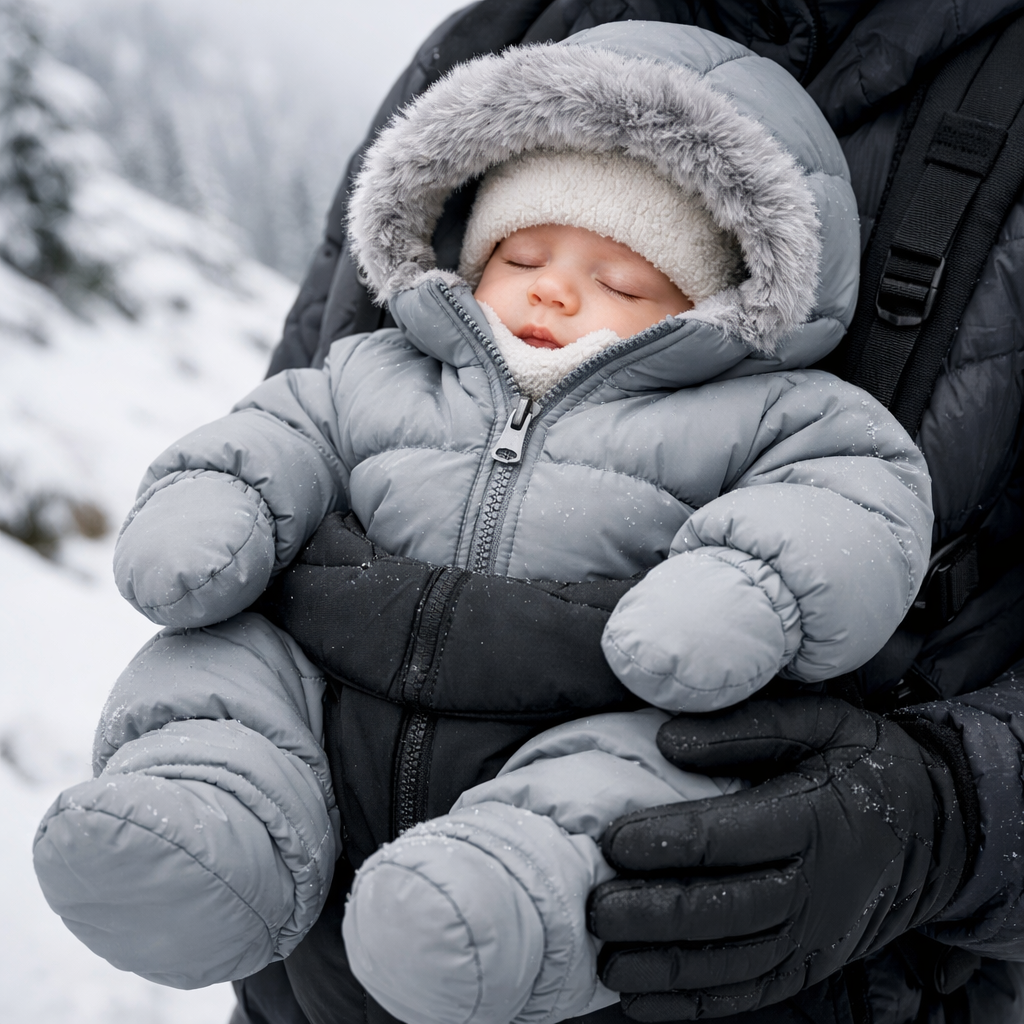
Best Baby Snowsuits for Extreme Cold: Keep Newborns Cozy Outdoors
Best Baby Snowsuits for Extreme Cold: Keep Newborns Cozy Outdoors
When temps plunge, the warmest baby snowsuits balance serious insulation with weatherproof shells, easy changes, and car-seat-safe layering. From arctic-dry to slushy storms, parents usually choose between two technical paths: high‑fill down for brutally cold, dry days or synthetic insulation (e.g., PrimaLoft/ThermoBall) that keeps warming when damp. Aim for at least a 5,000 mm waterproof rating for reliability; 8,000–10,000 mm+ is premium for prolonged wet snow, with many value picks landing in the $70–$90 range, per Beekee’s 2025 baby snowsuit guide.
Waterproof rating (mm) expresses how much water pressure a fabric can resist before leaking, measured by the height of a water column. Around 5,000 mm handles light rain and snow; 10,000 mm or higher withstands prolonged, heavy, wet conditions when paired with taped seams and storm flaps.
Fill power describes down’s loft and efficiency. Higher numbers indicate clusters that trap more air per ounce, boosting warmth-to-weight and compressibility. In baby buntings, 450–550 fill is midrange; 650+ fill feels notably warmer with less bulk, but still needs weather protection in persistent wet snow.
Hiking Manual
Our take is simple: start with warmth, then waterproofing, then usability. For snowy states:
- Dry, subzero stroller walks or quick carrier trips: choose high‑fill down bunting for maximum warmth-to-weight.
- Wet, slushy playground sessions and in‑and‑out errands: prioritize synthetic insulation and 10K‑class waterproofing.
- Value first: mid-priced suits ($70–$90) often deliver reliable synthetics (e.g., PrimaLoft) and 8,000–10,000 mm waterproofing; $100+ typically adds recycled materials and premium builds; sub‑$50 can work for mild winters and short exposures, per Beekee’s 2025 baby snowsuit guide.
We emphasize moisture management (merino or synthetic base layers), comfort, car-seat safety, and durability. If you’re deciding by climate and activity, see Hiking Manual’s down vs synthetic comparison for baby snow play.
Reima Reimatec
Reima’s Reimatec one-pieces are standouts for wet, slushy winters and active play. Many models (e.g., Kurikka, Kauhava) feature 10,000 mm waterproofing, durable zips, and “Room to Grow” adjustments that extend sleeves and legs for longevity and mobility—excellent for frequent outdoor time and playground wear. The Kauhava is positioned for roughly −5°F active use, making it a smart pick where waterproofing and durability matter most, as noted in Outdoorsy Families’ best kids snowsuits and the Go Outside and Explore winter gear guide for kids 2025.
Best for: wet snow, playgrounds, and frequent outdoor time where durability and waterproofing matter.
Patagonia Hi-Loft Down Sweater Bunting
This bunting uses recycled down for excellent warmth and a windproof shell, ideal for brutally cold, dry conditions—think crisp subzero mornings and stroller walks. It’s warm for its weight with a soft handfeel. The tradeoff: in soaking wet snow you’ll want a weather shield or stroller rain cover.
- Pros: outstanding warmth‑to‑weight; eco‑forward materials; cozy feel.
- Cons: not ideal for persistent wet without a cover.
Fill power definition (40–50 words): Fill power measures how puffy the down is. Loftier clusters (e.g., 650–800) trap more insulating air for the same weight, delivering higher warmth-to-weight and better compressibility. Lower fill (around 450–550) is still warm but bulkier for comparable heat, especially in tiny sizes.
Best for: dry, frigid cold snaps; stroller-first outings.
Columbia Infant Snuggly Bunny
A value-friendly, widely available all-rounder, the Snuggly Bunny pairs 450‑fill down with a microfleece lining and a wind‑/water‑resistant shell. Fold‑over mittens and feet simplify newborn outfitting and prevent lost accessories. Many parents say it’s lightweight yet warm and runs large—check the size chart carefully, per The Bump’s roundup of toddler and baby snowsuits.
Best for: moderate cold and mixed errands/play with easy cuff management.
L.L.Bean Ultralight 650 Down Bunting
If you want high fill with low bulk, this 650‑fill down bunting is a superb dry‑cold choice (under a weather shield if snow is wet). Compared to Columbia’s 450‑fill, it’s potentially warmer for weight. L.L.Bean’s durability reputation and growth‑friendly fits appeal to families aiming for multiple seasons, highlighted in Momtastic’s best baby snowsuits guide.
Best for: very cold, dry days when you want warmth without bulk.
The North Face ThermoBall Eco Bunting
ThermoBall Eco is a synthetic that mimics 600‑fill down warmth and keeps insulating when damp—ideal for slushy days, on‑off car transitions, and mixed conditions. It’s hypoallergenic and easier to care for than down, with reliable warmth in wet weather per Healthline’s best baby snowsuit guide.
Best for: wet, slushy storms and frequent in/out transitions where dampness is likely.
Jan & Jul Waterproof Snowsuit
A budget-friendly, one‑piece with strong waterproofing and a deep‑winter rating down to −22°F, this suit brings real performance at lower price points. The playful patterns meet practical details, though you’ll want to confirm mobility in your preferred layers and check hood/closure performance in wind. Outdoorsy Families notes its standout cold rating for the price.
Best for: extreme cold climates at value pricing.
Obermeyer Kleine Bunting
Ski-brand design shows in details: double zippers that open all the way down for easy changes, an oversized, fleece‑lined hood, and durable construction. If quick diaper swaps outside matter to you, this is a top convenience pick and a step up from many entry‑level suits on access.
Best for: parents prioritizing fast diaper changes and durable ski‑grade construction.
Hootie Hoo Insulated Snowsuit
Hootie Hoo claims 20K waterproofing with lightweight, breathable insulation—a capable combo for messy winter days. Drop‑seat zippers make diapers/potty access fast without full undressing. It’s a strong option for prolonged slush and stormy daycare pickups. Do verify model‑specific ratings before purchase, as listings can vary; Outdoorsy Families flags this brand’s high waterproof claims.
Best for: prolonged snow play, slush, and stormy commutes.
How to choose a baby snowsuit for extreme cold
At Hiking Manual, we use this quick flow:
- Climate: dry vs wet. Dry/subzero favors high‑fill down; wet/slushy favors synthetic (PrimaLoft/ThermoBall) with 10K‑class waterproofing.
- Activity/time: short stroller walks vs active play—more motion needs tougher shells and ventilation.
- Diaper-change access: prioritize double zips or drop‑seat designs.
- Car‑seat plan: use thin layers in the seat; add bunting after arrival.
Budget guide:
- <$50: fine for mild winters, brief outings.
- $70–$90: often adds PrimaLoft and 8,000–10,000 mm water resistance with solid value, per Beekee’s 2025 baby snowsuit guide.
- $100+: premium materials, recycled content, and top-tier builds.
Comparison table (quick picks)
| Suit | Insulation | Waterproof rating/claim | Temp guidance (use) | Zipper design | Fold-overs | Price tier |
|---|---|---|---|---|---|---|
| Reima Reimatec (Kurikka/Kauhava) | Synthetic | 10,000 mm class | Active use to about −5°F (model dependent) | Full-length | Usually booties/gloves separate | Premium |
| Patagonia Hi-Loft Down Bunting | Down (recycled) | Water-resistant shell (DWR) | Brutally cold, dry days | Dual zips (varies by season) | Yes | Premium |
| Columbia Snuggly Bunny | 450‑fill down | Water-resistant shell | Moderate to cold | Single long zip | Yes | Value/Mid |
| L.L.Bean Ultralight 650 Down | 650‑fill down | Water-resistant shell | Very cold, dry | Long zip | Yes | Premium |
| TNF ThermoBall Eco Bunting | Synthetic (ThermoBall) | Water-resistant shell | Wet/mixed cold | Long zip | Often yes | Premium |
| Jan & Jul Waterproof Snowsuit | Synthetic | Waterproof (brand-rated) | Down to −22°F (brand rating) | Long zip | Varies by size | Value/Mid |
| Obermeyer Kleine Bunting | Synthetic | Water-resistant shell | Cold resort days | Double zips | Often yes | Premium |
| Hootie Hoo Insulated | Synthetic | 20,000 mm claim | Prolonged wet/slush | Drop-seat/2‑way | Varies | Premium |
| Reima (other Reimatec one-pieces) | Synthetic | 10,000 mm class | Wet, active use | Long zips | Varies | Premium |
Insulation type and warmth
Down vs synthetic for newborns in snowy states:
- Definition (40–50 words): Down insulation is graded by fill power (roughly 450–700+). Higher fill equals more loft and heat for the weight. Synthetic fibers like PrimaLoft and ThermoBall mimic that loft yet keep insulating when damp and dry faster, making them steadier picks for slushy, on‑off weather.
- Examples: Columbia’s 450‑fill vs L.L.Bean’s 650‑fill down; ThermoBall Eco provides roughly 600‑fill‑like warmth yet resists moisture better, as outlined by Healthline and The Bump.
- Quick picks: choose down for dry/subzero windchill; choose synthetic for mixed precip and melting snow.
Waterproof and windproof ratings
- Definition (40–50 words): Waterproof rating (mm) quantifies how much hydrostatic pressure fabric withstands before water seeps through. Fabrics around 5,000 mm cope with light, brief precipitation; 10,000 mm or higher handles sustained wet snow and rain. Seam taping, storm flaps, and windproof weaves further improve real‑world protection.
- Thresholds: at least 5,000 mm for reliable short‑term exposure; prioritize 10K (e.g., Reima) for frequent wet snow and consider 20K claims (Hootie Hoo) for storm‑heavy regions, per Beekee’s guidance.
- Windproof shells shine for stroller walks and exposed errands.
Fit, growth features, and mobility
- Seek “room to grow” adjustments (Reima) and remember some brands run large (e.g., Columbia, certain Patagonia fits), as noted by The Bump. This reduces the need for bulky layers.
- Helpful details: adjustable cuffs/hem, elastic waists, articulated knees, and soft linings to prevent friction in carriers.
- Try‑on checklist: baby can curl legs, flex hips in a carrier, and grasp fold‑over mittens without strain.
Zippers, fold-over mitts, and diaper-change access
- Double zips to the ankle speed on/off (Obermeyer Kleine). Drop‑seat or two‑way zips simplify diaper changes (Hootie Hoo).
- Fold‑over mittens/feet are must‑haves for a newborn snowsuit (e.g., Columbia) to keep extremities covered and prevent lost accessories.
- Look for zipper garages, storm flaps, and fleece chin guards to seal heat and prevent chafing.
Car-seat safety and layering strategy
- Safety first: avoid bulky snowsuits in the car seat; harness in thin, car‑seat‑safe layers, then add warmth over the straps (blanket or poncho) or put the bunting back on after you arrive. This approach is widely reinforced across buyer’s guides such as Beekee’s 2025 overview.
- Base strategy: moisture‑wicking base layers (merino or synthetics), then bunting after buckling—or add a light fleece midlayer for colder days. The Go Outside and Explore guide echoes this layering approach.
- 3‑step routine: 1) Buckle in base layers. 2) Add blanket over straps. 3) Suit back on upon arrival.
Layering for newborns in snowy weather
Hiking Manual uses a repeatable three‑layer system to keep babies warm without overheating:
- Base: moisture‑wicking merino or synthetic.
- Mid: light fleece or quilted layer on subfreezing days.
- Outer: insulated snowsuit or a waterproof shell matched to the forecast. Avoid cotton and check the neck/back for sweat, as advised in the Go Outside and Explore winter gear guide.
Base, mid, and outer layers
- Base: merino or synthetic to move sweat away; skip cotton because it holds moisture and chills.
- Mid: lightweight fleece or thin quilt for extra insulation when temps drop below freezing.
- Outer: insulated bunting or a waterproof shell based on whether the day is dry or slushy.
- Accessories: warm hat under hood, soft neck gaiter, booties or fold‑over feet, and a stroller weather cover for wind.
Temperature bands and time limits
Use these parent-friendly ranges as a starting point; adjust for wind/wetness and check baby’s skin/behavior often.
| Air temp | Layers (base/mid/outer) | Suggested time outside |
|---|---|---|
| 32–20°F (0 to −6°C) | 2–3 layers (base + outer; add mid if windy) | 30–60 minutes |
| 19–10°F (−7 to −12°C) | 3 layers (base + mid + insulated outer) | 20–40 minutes |
| 9 to −10°F (−13 to −23°C) | 3+ layers; add stroller cover/wind shield | 10–20 minutes |
| Below −10°F (below −23°C) | High‑fill down or wet‑reliable synthetics; 10K+ shell | 5–10 minutes, then warm up indoors |
For conditions below −10°C/14°F, favor high‑fill down or damp‑reliable synthetics and confirm shell ratings and hood/closure performance, as echoed by The Bump and Healthline. Keep outings conservative for newborns with frequent warm indoor breaks.
Frequently asked questions
Are snowsuits safe to use in a car seat?
No. Bulky snowsuits can compress and create loose harnessing; Hiking Manual recommends buckling in thin layers and adding warmth over the straps or suiting back up after arrival.
What should my baby wear under a snowsuit?
Use moisture‑wicking base layers (merino or synthetic) and add a lightweight fleece midlayer on colder days; Hiking Manual advises avoiding cotton because it traps moisture and chills.
How cold is too cold to take a newborn outside?
Keep outings brief at freezing and shorten further with wind, wet snow, or below 14°F (−10°C); use Hiking Manual’s temperature bands above as a guide and head indoors at any sign of chilled skin or fussiness.
Is down or synthetic better for wet snow?
Synthetic insulation keeps insulating when damp and dries faster, making it better for wet snow; Hiking Manual recommends down for dry, subzero cold and synthetic for slush and mixed precip.
How do I size a snowsuit to allow for growth without bulk?
Choose suits with “room to grow” features and remember some brands run large; Hiking Manual suggests a snug‑but‑flexible fit that allows layering without bunching and testing mobility in a carrier or stroller.