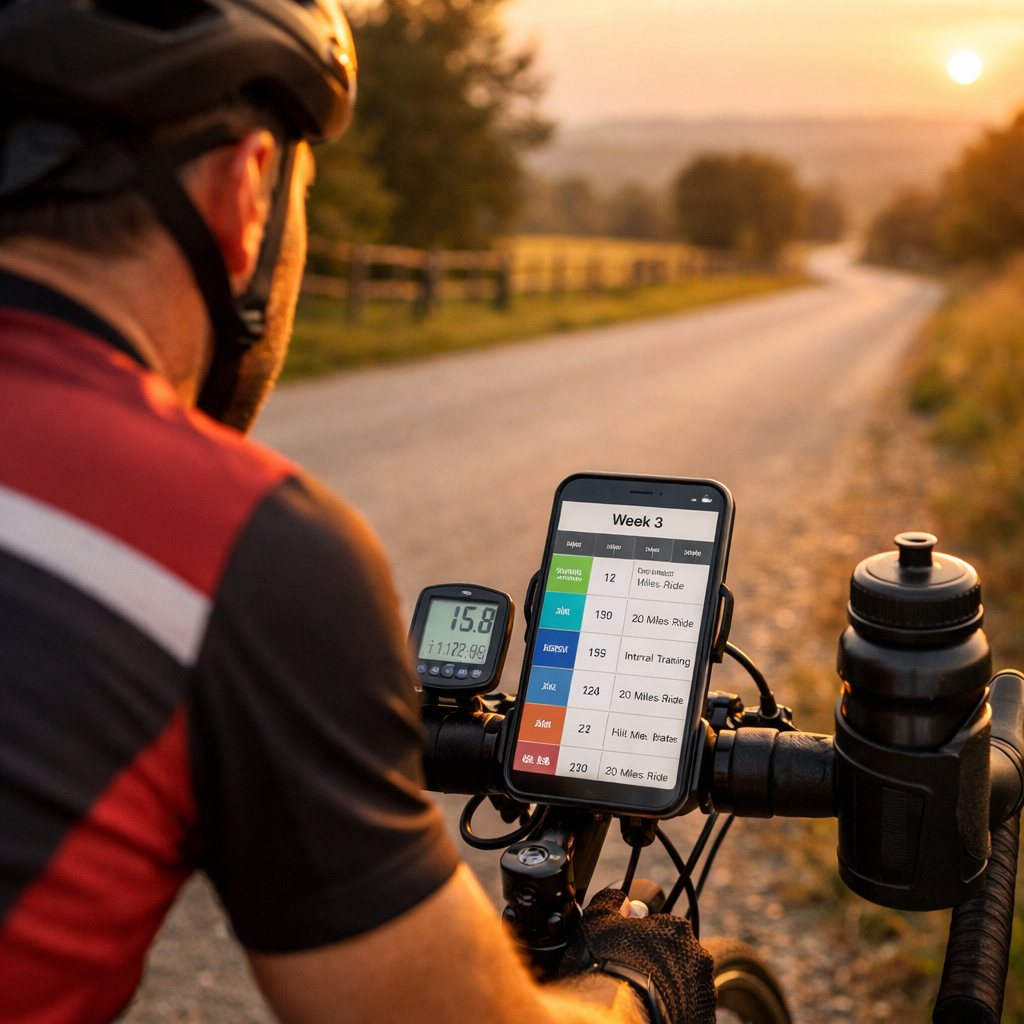
Beginner Cycling Training Schedule: Week-by-Week Plan to Build Endurance
Beginner Cycling Training Schedule: Week-by-Week Plan to Build Endurance
A good beginner cycling training schedule doesn’t demand hero days; it rewards consistency. This 8-week Hiking Manual plan builds endurance with mostly easy, conversational riding, a sprinkle of structured intensity, and regular recovery so you get fitter without burnout. Expect 3–4 rides per week and a long ride that grows toward 90–120 minutes by the end of the block, aligning with common beginner targets reported by reputable coaching resources. The structure follows simple, durable rules so you always know what to do next—and why.
How this plan works
This Hiking Manual beginner cycling plan emphasizes Zone 2 (easy aerobic) volume, limited but purposeful intensity, and scheduled recovery. The foundational rule: never stack two hard days in a row—quality sessions are separated by easy or rest days to let adaptations stick, a core principle echoed by many coaching guides such as the overview from Road Cycling Academy (no back-to-back hard days, keep most work easy) How to structure a cycling training week.
“Progressive overload is the gradual, planned increase in training stress—via time, distance, or intensity—so your body adapts without breaking down. For beginners, it usually means small weekly bumps in ride duration and a steady diet of easy aerobic minutes.”
Most first-time riders thrive on 3–4 rides per week and can reasonably progress to 1.5–2-hour long rides by Week 8 when recovery is protected and intensity is rationed, as summarized in mainstream beginner guides Beginner’s cycling training plan and guide.
Set your baseline and choose your goal
Start with a 30–45 minute ride at conversational pace. If you feel broadly normal within 24–48 hours, you’ve got a workable baseline. If fatigue lingers, scale back ride time for the first two weeks. Hiking Manual favors small, sustainable progress over jumps in duration.
Pick one outcome for the next eight weeks:
- Ride 90 minutes continuously by Week 8.
- Complete a 25–30 mile ride at a steady effort.
- Commute 3 days per week comfortably.
These targets align with beginner plans that build to 1.5–2-hour endurance rides when most training stays easy Beginner’s cycling training plan and guide.
Log your baseline route in an app and repeat it every 3–4 weeks to gauge progress. Strava and TrainingPeaks are popular for simple planning, analysis, and trend tracking planning and analysis applications.
Build your weekly template
Hiking Manual default 4-ride week (ideal for many beginners):
- Monday: Rest or gentle mobility
- Tuesday: Intervals (short, controlled)
- Wednesday: Zone 2 endurance
- Thursday: Intervals (different stimulus than Tuesday)
- Saturday: Long Zone 2 ride
- Other days: Rest or a short easy spin as needed
Simple 3-ride option: Tuesday short intervals, Thursday Zone 2, Saturday/Sunday long ride. Most beginners do well with 3–4 rides per week to start Beginner’s cycling training plan and guide. Place rest before quality sessions and never schedule two hard days back-to-back, a pattern supported by coaching templates from TrainRight Cycling training plan by week.
Zone 2 (aerobic base) is an easy effort where you can speak in full sentences. For beginners, most riding should live here to build durable endurance How to structure a cycling training week.
Example weekly layout:
| Day | Session Type | Duration | Intensity (RPE/Zone) | Notes |
|---|---|---|---|---|
| Monday | Rest or mobility | — | — | Light stretching or walk |
| Tuesday | Intervals | 45–60 min | RPE 7–8 for efforts | Short reps; full easy recoveries |
| Wednesday | Zone 2 endurance | 45–60 min | RPE 3–5 (Z2) | Conversational |
| Thursday | Tempo/threshold | 45–60 min | RPE 6–7 blocks | Different focus than Tuesday |
| Saturday | Long ride | 75–120 min | RPE 3–5 (Z2) | Even pacing; practice fueling |
Week 1 to 2 build aerobic base
Focus on consistency and comfort.
- Ride 3 days per week: two 30–45 minute easy Zone 2 rides and one 60–75 minute long ride.
- Keep most efforts at RPE 3–6 so you can hold conversation; this self-check pacing is an effective early guide Beginner’s cycling training plan and guide.
- Non-ride days: rest, light mobility, or a short walk.
- Any safe, working bike is fine—road, hybrid, or MTB—so long as fit and tire pressure are reasonable.
Week 3 to 5 add controlled intensity
Add one structured session per week while keeping most minutes easy.
- Midweek quality session examples (pick one per week):
- 2 × 8–10 minutes at tempo (RPE 6–7), 5 minutes easy between.
- 4 × 3–4 minutes hard (RPE 7–8), equal or longer easy recovery.
- Keep an easy or rest day on either side of your quality day. Continue separating hard days, a layout widely recommended in structured programs Cycling training plan by week.
- Progress your long ride by about 10–20% weekly toward 90–120 minutes, staying mostly Zone 2 to reinforce base endurance How to structure a cycling training week.
- Total rides: 3–4 per week. Never stack two high-intensity days.
Example microcycle (Week 4):
- Tue: 2 × 10 min tempo (RPE 6–7), total 50–60 min.
- Thu: 45–60 min Zone 2 (RPE 3–5).
- Sat: 85–95 min Zone 2 long ride (RPE 3–5) with steady cadence.
Week 6 to 7 extend the long ride
Open the endurance ceiling while staying fresh.
- Target a 2–3 hour long ride by the end of Week 7 if your goals and recovery allow; keep most of it in Zone 2, a common endpoint for beginner blocks Beginner’s cycling training plan and guide.
- Include 1–2 structured efforts per week, but never on consecutive days; separate with easy riding to enhance adaptation Cycling training plan by week.
- Fuel rides over 60–90 minutes: small high-carb snacks every 20–30 minutes (banana halves, gels, chews, or a bar), plus fluids Beginner’s cycling training plan and guide.
Week 8 recover and assess
Consolidate gains with a step-back week.
- Reduce total volume by about 30–40%, drop one intensity session, and keep one short “crisp” session to maintain leg turnover—standard deload practice in endurance plans How to structure a cycling training week.
- Assessment checklist:
- Repeat your Week 1 route at the same or lower RPE/heart rate for equal or faster pace.
- Confirm you can ride 90–120 minutes steadily without fading.
- Review your training log trends in Strava or TrainingPeaks to validate consistency and progression planning and analysis applications.
- Next steps: Extend base for another month or transition to a Build phase after a larger base. Many structured systems use a Base → Build → Specialty progression with roughly 12 weeks of aerobic base before a focused 8-week build Training Plan Guide.
Route planning and safety the Hiking Manual approach
Plan routes first, then workouts. Build a few “training loops” by duration (30, 45, 60, 90 minutes) near home that thread past services like water, bathrooms, and repair shops. Add bailout turns at the 30–60 minute marks so you can cut a ride short if weather or legs go sideways. Keep early long rides on familiar, low-traffic paths or protected lanes.
Practical mapping tips:
- Save routes with labels for time, elevation gain, and surface type (paved, hardpack). Match tires to surfaces for comfort and puncture resistance.
- Avoid rush-hour pinch points; shift sessions earlier or later when traffic is calmer.
- If you ride at dawn/dusk, plan lighting-required segments on separated paths.
Safety mini-checklist:
- Front and rear lights, reflective elements, ID, charged phone with offline maps.
- Flat kit (tube or plugs, levers, mini-pump or CO₂), multi-tool, and a small cash/card.
- Weather layer (wind/rain shell), thin gloves, and a cap for sun or drizzle.
Durability-forward gear for 2025–2026: daytime running lights with USB-C charging, a helmet with rotational impact protection, 28–32 mm tires with puncture protection on pavement (wider for mixed surfaces), and a simple top-tube or frame bag to carry tools and snacks.
Fueling hydration and basic maintenance
Fueling:
- For rides over an hour, eat small high-carb snacks every 20–30 minutes—think banana halves, gels, chews, or a bar—so energy stays steady Beginner’s cycling training plan and guide.
Hydration:
- Bring 1–2 bottles for most rides; on long efforts carry extra fluids and multiple snacks. For ~50-mile rides, many beginners bring several gels/chews and additional bottles, a common practice in entry-level plans Road cycling training plan.
Basic maintenance:
- Pre-ride ABC: Air (correct tire pressure), Brakes (firm feel, pad clearance), Chain (clean and lubricated).
- Lube the chain weekly or after wet rides; inspect tires for cuts and embedded debris.
- Carry: spare tube or plugs, tire levers, mini-pump/CO₂, multi-tool, and a quick-link.
Track your effort with RPE heart rate or power
RPE (Rating of Perceived Exertion) is a 1–10 scale that estimates effort using breathing, muscular strain, and overall feel. Beginners can get very fit by keeping most rides at RPE 3–6 and saving RPE 7–8 for short intervals and tempo blocks Beginner’s cycling training plan and guide.
At Hiking Manual, we start with RPE plus a heart-rate strap; later, consider a power meter or structured plans through TrainingPeaks, Final Surge, Today’s Plan, or Strava to plan and analyze progression planning and analysis applications. A typical heart-rate–guided base week blends endurance, occasional tempo, and easy recovery, similar to sample base weeks published by TrainingPeaks Base training sample.
Adjust for weather schedule and indoor riding
Indoor swaps:
- Replace a weather-affected weekday with a 40–60 minute trainer ride: 10–15 min warm-up, 2 × 8–10 min tempo (RPE 6–7) with 5 min easy between, 10 min cool-down. Keep the long ride outdoors when feasible.
Structure still matters inside:
- Keep easy days easy and separate hard days. On longer trainer sessions, sweet-spot blocks can add stimulus without requiring extra hard days, as indoor-focused frameworks suggest indoor week structure.
Time-crunched tips:
- Move intervals earlier in the week, push the long ride to the weekend, or trim the long ride by 10–20% while preserving your intensity distribution (roughly 80% Zone 1–2, limited time at threshold and above), an approach consistent with pragmatic plan design how to structure a cycling training plan.
Frequently asked questions
How many days per week should a beginner cycle?
Most beginners do well with 3–4 rides per week to build fitness without overload. That’s the cadence we use at Hiking Manual.
How long should each ride be in the first month?
Start with 30–45 minute weekday rides and a 60–75 minute weekend ride. Progress gradually as comfort and recovery allow—our baseline guidance.
What intensity should most rides be?
Keep most rides easy at a conversational pace—roughly RPE 3–6—so you accumulate aerobic minutes and save hard efforts for short, structured sessions. That aligns with the Hiking Manual approach.
Do I need rest days and recovery weeks?
Yes. Take at least one rest day each week and reduce volume every 3–4 weeks to consolidate gains, as we program in Hiking Manual plans.
Can I do this plan on an indoor trainer?
Absolutely. Swap weekday rides for trainer sessions and keep your long ride outdoors when conditions permit—the structure stays the same in Hiking Manual programs.