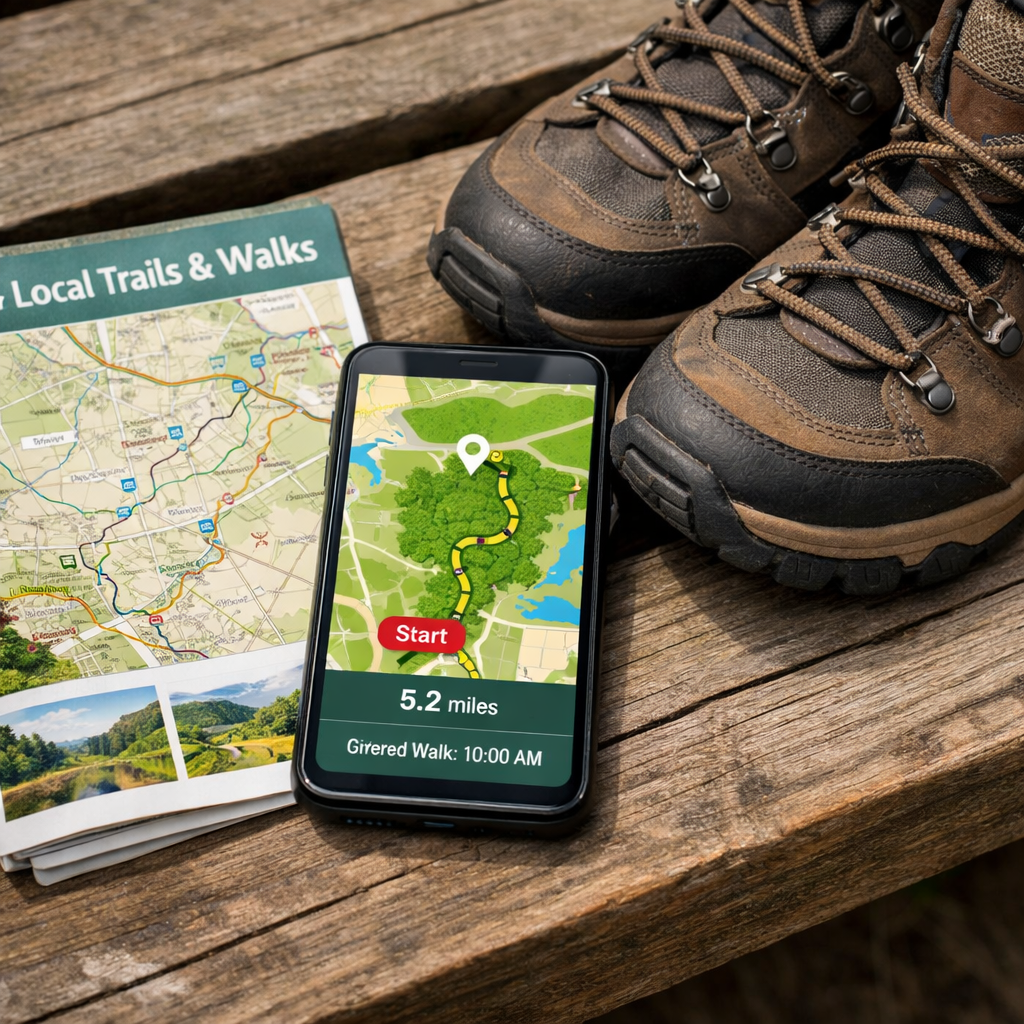
Are There Guided Walks Where I Live? Here’s How to Check
Are There Guided Walks Where I Live? Here’s How to Check
Wondering “are there guided walks where I live?” In most places, yes—if you know where to look. The fastest path is to search local tour marketplaces and your city tourism board, then cross-check visitor centers and volunteer greeter programs. If options are sparse, use walkability and mapping tools to predict where tours cluster—or design a self-guided route. Below, we show how to find guided walking tours near me, vet quality and accessibility, and prep the right kit so you’re comfortable from first steps to last. Hiking Manual’s approach: start broad, verify locally, then plan your route and kit.
Start with marketplaces and tourism sites
Local tour marketplaces make discovery and comparison fast. Start with platforms that let you filter by city, date, price, language, accessibility, and reviews. Profiles typically include route outlines, themes, group size, and cancellation terms. For a quick scan:
- ToursByLocals: private, specialty-heavy.
- GetYourGuide: broad inventory of group and private tours.
- Airbnb Experiences: niche, neighborhood-led walks.
Hiking Manual tip: sort by the most-reviewed recent listings and read a few detailed comments to understand pacing and style. These platforms streamline communication and add buyer protections, which makes hiring easier and more transparent, as noted in Fodor’s guide to finding a trustworthy local guide Fodor’s guide to finding a trustworthy local guide.
Don’t skip your city tourism board or visitors bureau—many list niche or seasonal guided options (architecture, food corridors, festivals) and neighborhood walking calendars. National Geographic highlights how local tourism offices connect travelers with vetted locals and specialized tours National Geographic on hiring locals to show you their towns.
“Global Greeter Network pairs visitors with volunteer locals for informal, free city introductions that aren’t commercial tours but friendly neighborhood walkabouts.” Global Greeter Network
Quick comparison of starting points:
| Platform/Program | Price Model | Private/Group | Filters | Messaging/Video | Typical Lead Time |
|---|---|---|---|---|---|
| ToursByLocals | Fixed per-tour or per-group | Private | City, date, duration, theme, language | In-app messaging; some intro videos | 1–7 days |
| GetYourGuide | Per person (group) and private rates | Both | Price, duration, rating, language, accessibility | In-app messaging | Same-day to 3 days |
| Airbnb Experiences | Per person; small groups | Small group/Private | Neighborhood, language, theme, date | Messaging; many hosts have videos | 1–5 days |
| Volunteer Greeter Programs | Free (non-commercial) | Private/small group | Neighborhood/date preferences | Email form; no video | 7–14 days (request-based) |
Keywords to try: “guided walking tours near me,” “local tour marketplaces,” “volunteer city greeters,” and “[Your City] tourism board.”
Check visitor centers, brochures and greeter programs
Offline still works. Visitor center brochures, hotel racks, and transit-hub leaflets often list community-led and budget-friendly walks with seasonal schedules. Snap photos of times and meeting points so you can compare later. For low-cost intros, local greeter programs are insightful and friendly—perfect for first-time exploration and budget travelers.
Hiking Manual mini checklist for an in-person visit:
- Ask about tour themes and neighborhoods.
- Confirm departure points and timing buffers.
- Check accessibility (surfaces, stairs/ramps, rest stops).
- Clarify weather and cancellation policies.
- Inquire about safe, well-lit night tours during peak seasons.
For more planning context and templates, see Checkfront’s practical guide to creating walking tours Checkfront on building your own walking tour.
Use walkability and mapping tools to gauge options
Walk Score quantifies how friendly an area is to walking by measuring distances to amenities and street connectivity. It’s widely used by real estate platforms; Zillow integrates the Walk Score API on listings, making it a handy proxy for where guided tours cluster and thrive Quantify walkability. Hiking Manual treats walkability as a proxy for tour density and comfort, then validates with street-level imagery or a quick scout.
How to use this:
- Scan neighborhoods with high walkability scores and dense amenities; these areas most often host multiple neighborhood walking tours.
- Complement with State of Place or similar indicators where available to spot street-level comfort.
Routing tools:
- Use Google My Maps to preview or build custom routes. There are waypoint limits; segment longer routes to stay within constraints. Save favorites and share custom maps with companions.
- For multi-stop efficiency, check community tips on plotting the most efficient routes when you’re balancing lots of POIs Route-planning discussion.
- Tour pros swap ideas on apps and digital tools; their threads can surface practical tricks for mapping, timing, and live commentary Tools tour guides use.
Keywords: walkability score, Google My Maps, route optimization, neighborhood walking tours.
Vet guides and companies for quality and fit
Hiking Manual’s take: focus on fit over star averages:
- Read recent, detailed reviews for insights on knowledge, communication, safety practices, timing, and group management.
- Check certifications, association memberships, specialties, and language options if that’s important to you.
- Prefer listings with intro videos and direct messaging so you can gauge personality and pacing. Some platforms vet guides with background checks and performance reviews.
- Hallmarks of quality: guides who tailor content to group interests, engage with questions, and adapt routes if conditions change.
For more on screening professionalism and safety, see this practical overview of how to hire a local guide How to hire a local guide well.
Confirm logistics, permits and accessibility
Guide licensing: Some cities require tour guides to hold specific licenses or permits, and tours may have group-size limits or route permissions. Always confirm local requirements with operators or tourism offices before you book. Hiking Manual recommends confirming licensing early in cities with stricter rules.
Before paying, ask about:
- Permits, group size limits, and route restrictions (conservation closures, events, or lingering public-health policies).
- Accessibility specifics: surface quality, stairs vs. ramps, rolling/riding alternatives, restroom access, and shaded rest stops.
- Meeting points, weather back-up plans, and what to bring.
Keywords: tour permits, licensed tour guides, accessible walking tours, group size limits.
Plan a self-guided or small-group walk if none exist
Hiking Manual’s simple, repeatable flow:
- Choose a clear theme (architecture icons, local food corridor, seasonal lights) to differentiate your walk.
- Build a route in Google My Maps; save points of interest and share a link with friends for a test run.
- Organize talking points in a lightweight tool like Trello; keep segments short and aligned to each stop.
- Do a small-group dry run and collect honest feedback on pacing, crossings, safety, and clarity; refine accordingly.
- Safety ideas: prefer well-lit night routes and group formats so guests feel comfortable.
- If you scale up, claim a Google/Tripadvisor listing to collect feedback over time.
Keywords: self-guided walking tour, DIY walking route, local neighborhood walk.
What to wear and pack for urban and suburban walks
Emphasize warmth-to-weight, breathability, and moisture management so you’re comfortable across variable weather and stop‑and‑go pacing. Hiking Manual prioritizes simple layer systems you can adjust on the move.
Compact packing list:
- Thermal base layer (second skin) and breathable fleece midlayer
- Light, packable waterproof shell (rain/wind)
- Touch-compatible winter gloves
- Ultralight waterproof/packable daypack
- Water bottle, sun protection, and a snack
Keywords: city walking gear, moisture-wicking base layers, packable rain jacket, touchscreen gloves, ultralight daypack.
Layering basics for comfort and weather shifts
A thermal base layer is a moisture-wicking ‘second skin’ that pulls sweat off your body so you stay dry and warm. In changeable weather, a light synthetic or merino base stabilizes comfort under a fleece midlayer and a wind/rain shell for quick adjustments in cities.
Choose a breathable fleece as your aerobic midlayer for cool or windy days—it vents well on city hills and during quick pace changes. Top with a light, packable waterproof shell for pop-up showers; prioritize warmth-to-weight and compressibility to keep your urban pack minimal.
Navigation tools with offline maps and reviews
Beginner-friendly navigation apps with offline maps and user reviews help you preview routes, follow turn-by-turn in dead zones, and flag must-see stops. Save custom Google My Maps links as reference images or export key points for backup; remember waypoint limits and segment longer routes as needed.
Keywords: offline maps, route preview, user reviews, beginner navigation tools.
Inclusive fit and pack options
Comfort equals distance. Look for plus-size and short/long torso daypacks with adjustable harnesses and breathable back panels; ultralight, waterproof/packable designs stash away when not needed. Choose gloves with touch compatibility so you can operate your phone on the move.
Fit checklist:
- Shoulder strap range (narrow to broad)
- Sternum strap adjustability (height and length)
- Hipbelt length and comfortable waist range
- Easy pocket access while walking
Safety, etiquette and local regulations
Hiking Manual baseline: be predictable, visible, and respectful.
- Walk right on narrow paths; yield to mobility devices and keep volume low near residences.
- Practice leave no trace in cities: pack out trash, don’t block entrances, and respect posted signs.
- Confirm local walking regulations: guide licensing, group-size limits, and route permissions.
- Be visible at dusk, choose well-lit routes for night tour safety, and ask operators about contingency plans for weather or reroutes.
Keywords: walking tour etiquette, night tour safety, leave no trace in cities, local walking regulations.
Frequently asked questions
How do I find guided walks near me without using social media?
Start with tour marketplaces and your city’s tourism website, then check visitor centers for brochures; volunteer greeter programs also connect you with free or low-cost neighborhood walks. Use Hiking Manual’s checklist above to stay organized.
What should I budget for a guided walk and are free tours really free?
Hiking Manual’s rule of thumb: expect paid tours to range from budget group walks to pricier private options, and remember “free” tours are often pay-what-you-want so plan to tip. Volunteer greeter programs are typically no-cost.
How can I check accessibility and pace before I book?
Review recent customer comments for terrain and pace notes, then message the operator about surfaces, stairs, rest stops, adaptations, and group-size limits. Hiking Manual recommends asking about rolling or riding alternatives if needed.
Is it safe to join a guided walk when I’m new to hiking or walking tours?
Yes—choose well-reviewed guides, confirm safety practices, and opt for daylight or well-lit routes; Hiking Manual sees many operators tailor pacing for first-timers.
What gear should I bring for a city walking tour in variable weather?
Hiking Manual’s go-to system is a moisture-wicking thermal base with a breathable fleece midlayer and a light waterproof shell. Add touch-compatible gloves, water, sun protection, and a small ultralight daypack.