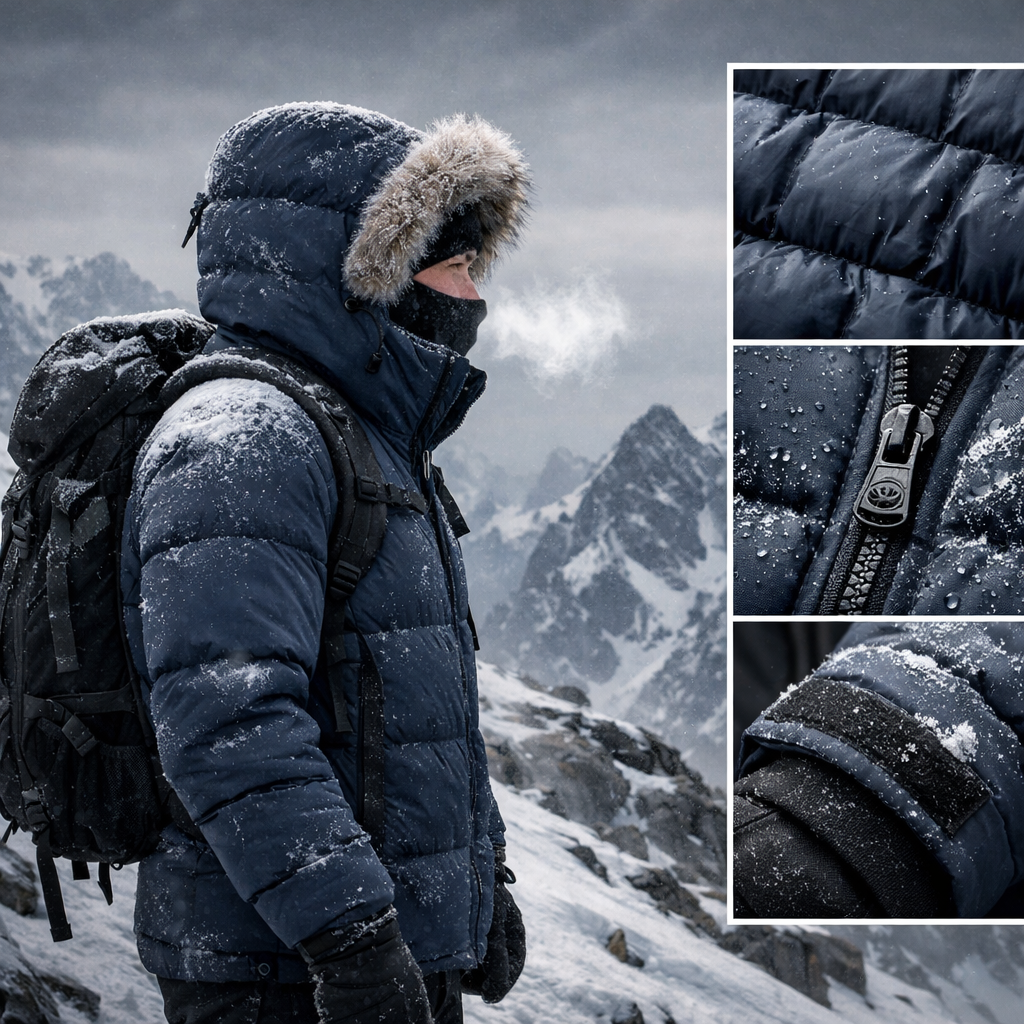
2026 Winter Jacket Guide: Reliable Picks for Brutal Sub-Zero Conditions
2026 Winter Jacket Guide: Reliable Picks for Brutal Sub-Zero Conditions
When the forecast drops below zero, the right jacket can be the difference between dreading winter and owning it. The best winter jackets for sub-zero temperatures combine high-efficiency insulation, a protective shell, a heat-trapping cut with an insulated hood, and details that seal out wind and wet. For messy, wind-whipped commutes and sidelines, long waterproof parkas like the Fjällräven Nuuk shine. For alpine-level warmth-to-weight, the Arc’teryx Alpha Parka is a benchmark. Value hunters should start with the REI Co‑op Stormhenge Down Hybrid Parka. Below, Hiking Manual explains exactly how to choose between down and synthetic, when full waterproofing matters, and which proven models fit common use cases—so you can buy once and stay warm.
How to choose a winter jacket for sub zero conditions
Start with climate, then activity, then budget—the same triage we use at Hiking Manual. Use this quick checklist to narrow choices in under a minute.
- Prioritize high fill power or hybrid insulation for efficient warmth; look for longer cuts with insulated hoods, seam‑sealed shells in wet snow, and heat-trapping neck baffles and adjustable cuffs. Independent testing consistently flags these as the biggest warmth wins in real weather, per OutdoorGearLab and others.
- Decision flow:
- Dry, very cold, and mostly stationary (bus stops, coaching, spectating): choose a mid‑thigh or longer parka with 700–900 fill down or high‑loft synthetic, an insulated hood, and a seam‑sealed shell.
- Wet/cold or active (walking fast, shoveling, hiking): go synthetic or hybrid (down + synthetic), with reliable water resistance and better mobility through the shoulders.
- If you’re building a full system, see our best hiking jackets for cold weather for layering ideas that play well with shell and midlayers.
Fill power: A lab metric of how much space one ounce of down occupies (its loft). Higher numbers, like 800–900, indicate greater efficiency: you need less down for the same warmth, which cuts bulk and weight. High fill power improves packability for sub‑zero travel without sacrificing insulation.
Warmth and insulation explained
Down remains the warmth-to-weight king for deep cold. In short: traditional down in the 700–900+ range delivers the highest warmth-to-weight for long, frigid exposures, while synthetic fills keep performing when damp and during high-output use where sweat or sleet are likely. Gear testers commonly recommend synthetic for soggy regions and stop‑and‑go exertion, a stance echoed in GearJunkie’s winter jacket coverage. That’s the simple rule we use at Hiking Manual for deep‑winter kit.
Emerging materials are shifting what “light but warm” looks like. Alumina aerogel panels, graphene blends, and engineered microloft synthetics can match surprising warmth with less bulk, making lighter parkas viable in brutal cold—especially in travel contexts where space matters, as outlined in Alpargali’s 2026 buying guide.
Hybrid builds are practical for daily life: think down in the core with synthetic in moisture-prone zones, paired to a weatherproof shell. It trims weight yet preserves protection for commuting and travel. In the field, Outdoor Research’s Coze (700‑fill down, oversized hood and neck baffle) had testers saying it felt like “strapping on a down sleeping bag,” a common refrain in OutdoorGearLab’s long-term winter testing. At the technical end, the Arc’teryx Alpha Parka pairs 850‑fill down with a Gore‑Tex Pro shell for elite warmth and stormproofing suited to alpine storms, as profiled by OutHaus.
Warmth-to-weight: A simple way to express how much warmth an insulation system provides relative to its mass. High warmth-to-weight means you retain more heat for fewer ounces, which reduces fatigue and bulk. It’s critical for hikers and travelers who need mobility, all‑day comfort, and smaller packs.
Weatherproof shells and seam sealing
Choose a true waterproof membrane with sealed seams if your winter involves frequent wet snow, sleet, or freezing rain. Otherwise, a well-built water‑resistant shell with robust windblocking often suffices in cold, dry snow and saves weight and cost—guidance consistent with Switchback Travel’s winter jacket reviews. At Hiking Manual, we prioritize seam sealing and hood design ahead of raw mm numbers.
Waterproof rating (mm): A hydrostatic head test that measures how tall a column of water (in millimeters) fabric can resist before leaking. For real winter storms, many experts advise 15,000 mm or higher, with fully taped seams to stop ingress at stitch lines. Ratings don’t guarantee breathability; construction matters too.
Real‑world examples:
- Fjällräven Nuuk: Waterproof membrane plus Microloft insulation; testers report warmth to around −15°F. It’s heavy but famously protective in blizzards, per OutdoorGearLab’s staff notes.
- REI Co‑op Stormhenge Down Hybrid Parka: A tough, storm‑ready shell and high‑loft insulation combine to fight wind and wet snow at a strong value, frequently highlighted by OutdoorGearLab and GearJunkie.
Shell comparison at a glance:
| Model | Shell type | Seam sealing | Waterproof rating (mm) | Weight (size noted) | Best climate use |
|---|---|---|---|---|---|
| Fjällräven Nuuk Parka | Proprietary membrane + DWR | Fully taped | Not published | ~4.6 lb (2XL test) | Wet, wind‑blown urban winters |
| REI Stormhenge Down Hybrid | REI HydroWall membrane + DWR | Fully taped | Not published | ~4 lb 8 oz (M test) | Mixed wet snow, value storm protection |
| The North Face McMurdo | DryVent 2L + DWR | Fully taped | Not published (DryVent) | Heavy (varies) | Windy, messy commutes; long, warm cut |
| Arc’teryx Alpha Parka | Gore‑Tex Pro + DWR | Fully taped | Not published (Gore‑Tex Pro class) | ~2 lb class | Alpine storms; high warmth‑to‑weight |
Note: Brands often don’t publish mm ratings for proprietary or Gore‑Tex shells; focus on membrane presence and seam sealing. For consumer targets, the Yahoo Shopping guide frames 15,000+ mm as a solid winter benchmark.
Fit, length, and hood design for heat retention
Longer cuts trap more heat. A mid‑thigh or longer insulated parka is usually the warmest everyday style because it reduces convective heat loss and blocks drafts up the hem. That’s why many “warmest parkas” run long with drop hems in 2026 buyer’s guides.
An insulated, adjustable hood can be the single warmest feature on a jacket. Pair it with a tall collar or neck baffle, and you protect cheeks, ears, and the carotid area—huge for perceived warmth in windchill. At Hiking Manual, we evaluate hood volume and face‑gasket design as seriously as insulation.
Fit rules for layering:
- Shoulders should lie flat with room for a midlayer; sleeves should cover the wrist base while you reach forward.
- On parkas, the hem should cover the seat without restricting stride.
- Leave two-finger space at the chest to maintain mobility and hold a warm air buffer.
Weight tradeoffs are real. The Nuuk’s cocoon-like feel and roughly 4.6 lb test weight (in 2XL) showcase a warmth‑first fit. In one medium-size test, the Stormhenge parka weighed about 4 lb 8 oz—warm and durable, but consider total carry for long walks.
Key features that boost real world warmth
Must‑have features for sub‑zero comfort:
- Insulated, adjustable hood with brim: seals heat at the body’s most exposed radiator.
- High collar/neck baffle: reduces face windchill; stops drafts at the zipper line.
- Draft‑blocking hem and cuffs: adjustable drawcords and snug cuffs prevent convective loss.
- Fleece‑lined hand pockets: keep fingers warm without gloves; reduce need for chemical warmers.
- Durable, windproof shell and zippers: reliable operation with gloves; fewer failure points in storms.
Nice‑to‑have tech:
- RECCO reflectors and integrated rescue tech increase passive searchability in some regions but are secondary to core insulation and shell integrity.
- Smartphone‑controllable heated panels are emerging for 2026; great for short, high‑comfort windows but add weight and battery dependence.
RECCO reflector: A small, passive transponder embedded in gear. It doesn’t require batteries and reflects a directional signal used by rescue teams with RECCO detectors. It’s not a GPS or avalanche beacon; think of it as a searchable tag that can speed organized rescue in covered areas.
Quick at‑home feature check:
| Feature | Why it matters in sub‑zero | Try this at home |
|---|---|---|
| Hood + collar seal | Protects face/neck heat loss | Cinch hood, rotate head; check visibility |
| Cuff closures | Blocks wrist drafts | Raise arms; feel for leaks at cuffs |
| Hem drawcord | Stops updrafts | Squat and sit; watch for hem lift |
| Draft flap + zipper | Limits wind through zipper | Stand in front of a fan; feel for leaks |
| Hand‑pocket insulation | Warmer hands, less glove use | Warm hands for 2 minutes; feel lining |
Best use cases and what to pick
- Stationary, cold, and windy urban days: We recommend long, insulated parkas with sealed seams and big hoods. The North Face McMurdo and Fjällräven Nuuk are built for wind, snow, and slush, with proven commuter chops in multiple 2026 guides including Alpargali and OutdoorGearLab.
- Alpine/technical, weight‑sensitive: Elite high‑fill down with storm shells—Gore‑Tex Pro plus 850‑fill, as on the Arc’teryx Alpha Parka—delivers rare warmth-to-weight and weatherproofing, highlighted by OutHaus.
- Wet, active climates: Favor synthetic or hybrid designs; GearJunkie consistently recommends synthetic insulation for soggy regions like the Pacific Northwest, noting its resilience when wet and during high output.
- All‑season flexibility: Modular 3‑in‑1 systems, such as Patagonia’s Tres 3‑in‑1, combine a waterproof shell with a removable insulated liner for shoulder seasons, travel, and deep‑winter layering, a versatile approach seen across The Inertia’s gear picks.
- Value reminder: Expedition labels can be overpriced versus comparable insulation and construction. Pay for materials and build quality, not logos—advice repeated in major buying guides.
Budget friendly picks that still perform
Hiking Manual prioritizes cost‑per‑warmth, storm protection, and inclusive sizing in budget picks.
REI Co‑op Stormhenge Down Hybrid Parka — Best Buy value
- Why it works: 850‑fill down hybrid warmth plus a storm‑worthy HydroWall shell at a fair price, with inclusive men’s/women’s sizing.
- Pros: Big warmth for cost; wind/wet‑snow blocking shell; insulated hood; practical pockets.
- Cons: Medium‑heavy; some color/size runs sell out mid‑season.
- Best for: Cold‑weather commuting, travel, and weekend walks in nasty conditions.
Columbia Landroamer II Parka — Warm, waterproof, low price
- Why it works: 200 gsm synthetic insulation and Omni‑Heat Infinity lining create a toasty, weatherproof feel without boutique pricing.
- Pros: Affordable; reliably warm; seam‑sealed waterproof shell; widely available, including youth and extended sizes in Columbia’s range.
- Cons: Heavier feel (~49 oz); bulkier fit; less packable.
- Best for: Budget‑minded commuters who don’t need ultralight gear.
The North Face McMurdo Parka — Long, storm‑ready classic
- Why it works: Long cut, DryVent waterproofing, big insulated hood, and generous pockets make winter city life easier.
- Pros: Excellent wind and slush protection; very warm; broad men’s/women’s runs and frequent sales.
- Cons: Heavy; not the most breathable for fast walking; bulky in transit.
- Best for: Stationary cold, windy bus stops, and snow days.
Columbia Whirlibird IV Interchange — Budget 3‑in‑1 versatility (synthetic)
- Why it works: Waterproof shell plus a synthetic insulated liner worn together or apart; strong value for mixed, wet winters.
- Pros: Modular use cases; good storm protection; easy to find on sale; men’s/women’s/youth availability.
- Cons: Not as warm as a dedicated deep‑winter parka; bulkier when layered.
- Best for: Wet, active climates and families who want one system for all seasons.
Optional high‑efficiency note: New aerogel insulation and graphene jacket designs can cut bulk without losing warmth. Alpargali’s 2026 guide spotlights these as packable alternatives for travelers seeking lighter bags.
Care, repair, and longevity tips
Repair before replace is our standing advice at Hiking Manual.
Seasonal routine:
- After storms, brush off salt and grime; air‑dry fully on a wide hanger.
- Wash sparingly with down‑ or synthetic‑safe detergents; tumble low with dryer balls to restore loft. Reapply DWR to the outer shell when water stops beading.
- Quick fixes: Lube zippers with silicone, replace tired cuff elastic, and re‑tape peeling seams with compatible seam tape.
- Store loosely on a hanger; avoid long‑term compression. Each fall, inspect hood drawcords, hem cinches, and seam tape.
4‑step care checklist:
- De‑salt and air‑dry after storms.
- Gentle wash; restore loft; refresh DWR.
- Fix zips/cuffs/seams promptly.
- Hang for off‑season; no compression.
For system warmth, pair your parka with moisture‑managing base layers—see our base‑layer guides for top thermal picks.
Frequently asked questions
What fill power and fill weight should I look for in extreme cold?
Aim for high fill power (800–900) and enough total fill weight to match your exposure time. At Hiking Manual, we prioritize fill power for efficiency, then fill weight for absolute warmth.
Do I need a fully waterproof jacket or is water resistant enough?
If you see wet snow, sleet, or freezing rain regularly, get a fully waterproof, seam‑sealed shell; in cold, dry snow, a high‑quality water‑resistant shell can be sufficient and saves weight and money—our default rule of thumb at Hiking Manual.
Down vs synthetic for wet, active winters
Down is warmer for the weight in deep cold, but synthetic keeps insulating when wet and breathes better during high‑output activity. Hiking Manual favors synthetic or hybrid designs in soggy regions for lower‑maintenance warmth.
How should a sub zero jacket fit over layers?
Shoulders should sit naturally with room for a midlayer, cuffs cover your wrist base, and the hem shouldn’t ride up when you sit or lift arms— the same fit check we use at Hiking Manual.
Are 3 in 1 modular systems a good option for mixed climates?
Yes. Hiking Manual likes them for travel and variable winters because you can match the system to the day.
Links cited in context:
- See OutdoorGearLab’s winter jacket testing for long‑term, comparative data on warmth and weather protection.
- Alpargali’s 2026 buying guide outlines new aerogel/graphene trends and value notes.
- GearJunkie explains why synthetic shines in wet, active climates.
- OutHaus profiles alpine‑grade shells and insulation pairings.
- Switchback Travel clarifies when water‑resistant shells suffice in dry cold.
- Yahoo Shopping summarizes practical waterproof rating guidance.
- The Inertia highlights versatile 3‑in‑1 options for all‑season wear.