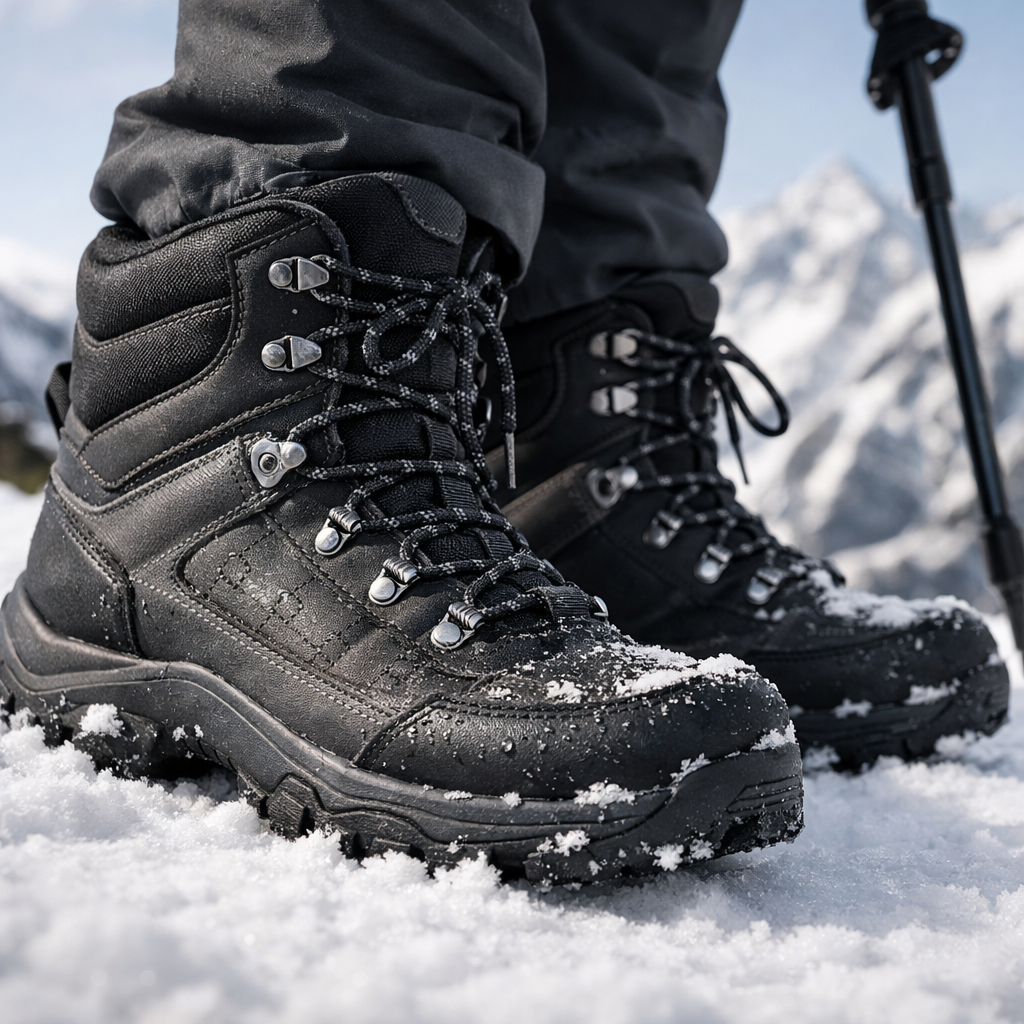
2026 Guide: Waterproof Men’s Snow Boots With Excellent Ankle Support
2026 Guide: Waterproof Men’s Snow Boots With Excellent Ankle Support
Finding waterproof men’s snow boots with real ankle support comes down to three pillars: a weatherproof upper that won’t leak, a supportive chassis that locks the heel, and winter-ready traction. For most UK winters—think sleet, slush, and icy pavements—choose a mid-to-high shaft with a laceable cuff, a firm midsole or internal shank, and either a sealed leather/rubber or membrane-based waterproof system. Pair 200g insulation for active use or step up to 400–600g for long, cold waits. On slick surfaces, winter compounds like Vibram Arctic Grip help, but on true ice, add microspikes or studs. These choices echo findings from large comparative tests and field reviews, including Switchback Travel’s winter boot evaluations and Wirecutter’s durability notes on gusseted tongues and shells. At Hiking Manual, we weight heel lock, waterproofing integrity, and winter traction most heavily in our recommendations.
Quick buying checklist
Make a 30–60 second call using this six-point scan from Hiking Manual:
- Waterproof system: Choose sealed leather/rubber shells or a breathable membrane (e.g., GORE‑TEX, Omni‑Tech). Ensure a gusseted tongue to block slush and top-entry snow, a detail consistently flagged in Wirecutter’s winter boot guide and Switchback Travel’s long-term tests.
- Shaft height: Aim for a mid-to-high shaft (about 6–8 inches) to stabilize the ankle and keep snow out without over-bulking trousers.
- Lacing/cuff: Look for a laceable cuff with speed hooks or dual zones to lock the heel; testers have repeatedly found single-lace pac boots less secure at the ankle in Switchback Travel’s winter boot roundups.
- Midsole/shank stiffness: A firm midsole and internal shank resist torsion and reduce side-roll. This structure underpins stability, especially with loads or on rutted pavements.
- Insulation rating: Use 200g for active hikes and brisk commutes; 400–600g for stationary work or prolonged sub-zero cold, aligning with Treeline Review’s guidance on warmth vs. bulk.
- Outsole/ice-traction compatibility: Prioritize winter-specific rubber (e.g., Vibram Arctic Grip) and ensure compatibility with microspikes or studded devices. Outside’s winter boot testing shows carbide-studded soles dominate on hard ice.
Value picks to consider: NORTIV 8 insulated boots and Merrell’s Thermo series often deliver solid waterproofing and supportive lacing at budget-friendly prices.
How to match insulation to your winter
Insulation weight refers to the grams of synthetic fill used per square meter (e.g., 200g, 400g). More grams typically mean more warmth but also more bulk and less breathability. Active users usually prefer 200g because it balances warmth and moisture management; stationary work or bitter, prolonged cold may warrant 400–600g.
- 200g: Best for moving scenarios—winter hikes, snowshoeing, and fast commutes—reducing sweat build-up that can chill feet later. A representative example is the Columbia Bugaboot III with 200g insulation frequently cited in Switchback Travel’s testing.
- 400–600g: Suited to extended cold exposure with minimal movement (touchline standing, outdoor shifts, dawn setups). Treeline Review emphasizes matching insulation to your most common conditions rather than the absolute coldest day you might see.
Quick example: The KEEN Revel IV Polar uses KEEN.WARM insulation rated to -25°F and combines an EVA midsole with an internal shank for notable support, as highlighted in Treeline Review’s men’s winter boots guide.
Waterproofing that actually stays dry
Waterproof membranes (like GORE‑TEX) are microporous films laminated inside the upper. They block liquid water yet allow water vapor to escape, improving comfort during exertion. Sealed leather/rubber systems use treated leather, molded rubber shells, sealed seams, and gusseted tongues to keep out snowmelt and slush with fewer breathability compromises during low-exertion wear.
Field proof points:
- Traditional rubber/leather boots in the L.L.Bean style stayed waterproof nearly to the top of the shank in GearJunkie’s multi-day soaks, a key advantage in deep slush.
- Some models leaked exactly where fabric/leather meets the rubber lower—watch this junction and the gusset height.
Care tip: If water stops beading on leather, reapply wax or silicone spray to maintain water resistance and protect the upper—a basic routine also underscored in Forbes’ work boot care guidance.
Comparison: common waterproofing builds
| System | Breathability | Weight | Durability in slush | Likely leak points | Care needs |
|---|---|---|---|---|---|
| Membrane (e.g., GORE‑TEX) | Moderate during activity | Light–moderate | Good if seams are sealed | Tongue gusset height; stitching at flex | Clean and reproof DWR as needed |
| Sealed leather/rubber | Low–moderate (less sweat vent) | Moderate–heavier | Excellent; rubber resists salt | Junction of rubber lower to upper if scuffed | Condition leather; inspect seams |
| Neoprene/rubber | Low (very warm, less vent) | Moderate | Excellent in standing water | Top entry if collar is loose | Rinse; avoid heat; check for cracks |
What creates real ankle support
In winter boots, ankle support is the boot’s ability to limit excessive lateral movement and heel lift on uneven ground. It’s driven by shaft height and stiffness, a supportive midsole or internal shank that resists twisting, and a lacing system that locks the heel while cinching the upper securely.
Actionable cues:
- Choose mid-to-high shafts with a laceable cuff or dual-zone lacing to lock the heel. Testers have called single-lace pac boots “washy” at the ankle in Switchback Travel’s comparative reviews.
- Prioritize firm midsoles or an internal shank to curb torsion; the KEEN Revel IV Polar is a good example of EVA plus shank support highlighted by Treeline Review.
- Consider usability: very long single-pull systems can be fiddly with gloves and make precise ankle tensioning harder, a drawback noted in Switchback Travel’s winter trials.
Traction for snow and ice
Cold-weather rubber compounds and deep, open lugs shed snow and grip packed trails. Technologies like Vibram Arctic Grip target slick, near-freezing surfaces; on true ice, carbide-studded soles or add-on devices are a safer bet. Outside’s winter boot roundup consistently ranks studded options (e.g., Icebug BUGrip with 17 carbide studs) at the top for black-ice security.
Step-by-step traction plan:
- Start with an aggressive, winter-specific outsole that stays rubbery in the cold.
- For consistently icy pavements or trails, add microspikes or studded traction devices.
- Check that traction aids and gaiters fit your boot’s outsole and collar without interfering with toe/heel welts or lace hooks.
Fit, sizing, and foot shape
Secure heel hold should come first. A locked-in heel plus adjustable upper tension via hooks equals real support; wide internal volume may feel comfy but can reduce ankle lockdown if not laced firmly, a trade-off discussed in Treeline Review’s fit notes.
Sizing flow:
- Try boots with your intended winter socks and any aftermarket insoles.
- With boots unlaced, aim for no more than a one-finger heel lift; when laced, eliminate slip.
- Ensure toe wiggle room—compressed toes get cold faster.
Width and collar notes:
- Wide-fit brands can accommodate thick socks; avoid overly loose collars that undermine support.
- Narrow collars can cause pressure points—aim for snug, not constrictive, especially over the instep and at the top eyelets.
Use cases and boot types
- Pac boots (rubber lower + leather/nylon upper): Very warm and durable for chores and standing in slush, but often less supportive at the ankle unless there’s an inner lace. This trade-off is frequently noted in Switchback Travel’s boot testing.
- Insulated leather/membrane hikers: The best blend of support and mobility for winter hiking and snowshoeing. Note that very bulky models can be tricky with compact snowshoe bindings.
- Neoprene/rubber slip-ons: Extremely waterproof and fast on/off for saturated days; expect lower ankle support but excellent wet-weather practicality, as seen in GearJunkie’s evaluations of rubberized designs.
Product proof points:
- The North Face Chilkat V 400 uses a protective rubber lower and tall shaft to block most snow entry, highlighted in CleverHiker’s winter boot guide.
- Sorel Caribou’s rubber lower and leather upper remain a durable classic; a high gusseted tongue helps lift you above deeper slush, a detail Wirecutter calls out in its winter boot coverage.
Comfort upgrades and accessories
- Sock system: Use a thin merino or synthetic liner under a midweight wool sock to manage sweat and warmth across stop‑and‑go days.
- Insoles: Aftermarket insoles can improve arch support and heel lock—just confirm the boot’s volume can accommodate them without toe squeeze.
- Gaiters: Choose boots with lace hooks and a firm collar so gaiters seal cleanly, keeping spindrift and slush out during storms or deep snow.
- Traction aids: For icy commutes or trails, microspikes or carbide-studded devices provide a big safety margin; Outside’s testing reinforces studded soles’ dominance on black ice.
Care and maintenance for long-term support
- Drying and cleaning: Remove insoles and dry at room temperature; avoid radiators and direct heat. Rinse off salt and use mild soap to prevent leather cracking.
- Reproofing: When water stops beading, reapply wax or silicone spray to maintain waterproofness and protect stitch lines—a basic regimen echoed in Forbes’ work boot care guide.
- Removable liners: If you run cold or are out daily, boots with removable liners dry faster and extend the life of the insulation—worth shortlisting during selection.
- Durability extras: Some brands offer resoling or rebuild programs; choosing models with rebuildable outsoles and serviceable parts can add years to a boot’s working life.
Testing criteria and how we evaluate
At Hiking Manual, we test for safety, comfort, and value across typical UK conditions—freeze/thaw, sleet, slush, and occasional snow.
- Waterproofing: Submersion/soak tests and slush walks; we inspect leak-prone areas like tongue gussets and the rubber-to-upper junction, mirroring issues documented in GearJunkie’s field notes above rubber shells.
- Support & stability: We assess shaft stiffness, lacing security, and torsional resistance from the midsole/shank; we flag “washy” ankles in single-lace pac boots as seen in Switchback Travel’s comparisons.
- Warmth: Active vs. static use aligned to insulation weights (200g vs. heavier liners) and sock systems to avoid sweat-chill.
- Traction: Packed snow, slush, and ice, with and without traction aids; we align with Outside’s findings on the superior performance of studded options on true ice.
UK context tools: Use Met Office’s local forecasts to spot freeze/thaw windows, and pair with Windy and RainViewer to time commutes and hill walks around incoming precipitation spikes.
Frequently asked questions
How warm should my snow boots be for typical UK winters?
For mixed UK winters near 0–5°C, 200g insulation suits active walks and commutes. At Hiking Manual, we suggest 400g+ only if you’ll be mostly stationary or in prolonged sub-zero cold.
Do I need GORE-TEX or are sealed leather and rubber enough?
Both work: GORE‑TEX adds breathability, while sealed leather/rubber with gusseted tongues can be just as dry and often more durable in slush. At Hiking Manual, we choose membranes for hikes and rubber/leather shells for wet chores.
What shaft height gives the best ankle support without bulk?
A mid-to-high shaft (about 6–8 inches) with a laceable cuff balances support and mobility. At Hiking Manual, we prioritize firm midsoles or internal shanks and upper hooks so you can lock the heel.
How should winter boots fit with thick socks and insoles?
Fit boots with your winter socks and insoles; aim for a locked-in heel, toe wiggle room, and no hot spots when laced. Hiking Manual’s quick check: if the collar feels loose or overly tight, support and comfort will suffer.
How can I boost traction safely on icy pavements and trails?
Choose winter-specific outsoles and add microspikes or studded traction devices on true ice. At Hiking Manual, we also recommend practicing installation at home so you’re not fumbling with cold hands.